A mattress pad is the middle ground of bedding: thicker than a protector, thinner than a topper, and the right answer when your mattress is fine but your sleep is not quite soft enough. The best mattress pads in 2026 add a thin quilted layer of comfort to a bed that feels too firm, smooth out a lumpy surface, and give you a washable layer between you and the mattress, all for a fraction of the price of a new bed.
The confusion comes from the names. Pads, toppers, and protectors are sold side by side and described in almost the same words, yet they do three different jobs, This guide explains what a mattress pad actually is, compares the main fills, and shows you how to choose the thickness, pocket depth, and fabric that suit your bed and your sleep.
Key Takeaways
- A mattress pad adds a thin layer of softness, usually half an inch to an inch and a half thick; it softens a firm bed but cannot rescue a sagging one.
- Cotton and wool pads breathe best and suit hot sleepers; memory foam pads suit side sleepers who want pressure relief.
- Measure your mattress depth before ordering: a pad with a pocket too shallow for your mattress will pop off in the night.
- A washable pad is worth paying for, since the pad is the layer that catches sweat, spills, and dust.
- A pad is not a topper and not a protector: it adds light comfort and light protection, and it should not change how your bed feels dramatically.
Mattress Pad Types Compared
| Fill | Best For | Feel | Cooling | Washing |
|---|---|---|---|---|
| Cotton | Hot sleepers, everyday use | Soft, light cushion | Excellent | Machine wash, cold |
| Memory foam | Side sleepers, sore shoulders | Slow, contouring sink | Poor unless gel or open-cell | Spot clean only |
| Latex | Hot sleepers, back sleepers | Responsive, buoyant lift | Good | Spot clean only |
| Wool | Temperature regulation | Firm, gentle cushion | Excellent | Machine wash, gentle |
| Feather and down | Softness lovers, guest beds | Plush, cloud-like | Good airflow, warm fill | Machine wash, gentle |
| Cooling gel fibre | Hot sleepers on a budget | Soft, light, cool start | Moderate | Machine wash, cold |
What Is a Mattress Pad?
A mattress pad is a thin, quilted layer that fits over your mattress like a fitted sheet, held on by an elastic skirt, and sits under your fitted sheet. It is usually between half an inch and an inch and a half thick, and it does two modest jobs at once: it adds a little softness to the surface you sleep on, and it adds a washable barrier between you and the mattress. That double job is what makes it different from its neighbours. A mattress topper is a thick comfort layer, two to four inches deep, that changes how your bed feels in a serious way. A mattress protector is a thin fitted cover whose only job is protection: it blocks spills and dust mites and should not change how your bed feels at all.
That middle position is also the pad’s limit. A pad will soften a mattress that feels like a park bench, and it will smooth out a surface that has gone slightly lumpy, but it will not fix a mattress that sags in the middle. A sagging mattress needs support underneath it, not softness on top of it, and a pad on a sagging bed just follows the sag down.
The Main Fills, and Who Each One Suits
Fill decides feel, cooling, and washing, so it is the first choice to make, before size or price.
Cotton Pads
Cotton is the default for a reason. It breathes, it washes easily, it feels cool in summer, and it suits almost everyone. A cotton pad will not transform your bed, and that is the point: it adds gentle softness without changing the support underneath.
Memory Foam Pads
Memory foam pads are the thinnest way to get pressure relief. They suit side sleepers whose shoulders and hips ache on a firm mattress, because the foam softens where your body presses hardest. The trade-offs are heat and washing: dense memory foam traps warmth, so hot sleepers should choose an open-cell or gel-infused version, and most foam pads cannot go in the washing machine at all.
Latex and Wool Pads
Latex pads are responsive and cool: they lift rather than sink, they sleep cooler than memory foam, and they last longer than most other fills. Wool pads are the temperature regulators of the group: wool wicks moisture, sleeps cool in summer and warm in winter, and resists dust mites naturally. A wool pad is firmer than a cotton one, so it suits back sleepers better than side sleepers who need deep softness.
Feather, Down, and Gel Fibre Pads
Feather and down pads feel luxurious: soft, plush, and cloud-like, and they suit a guest bed or a household that likes a soft sleep surface. Gel fibre pads are the budget cooling option: a polyester fill with a gel treatment that feels cool when you first lie down, though the cooling fades through the night. They wash well and dry quickly, which makes them a sensible choice for a child’s bed or a household that washes bedding often.
Thickness, Pocket Depth, and Fit
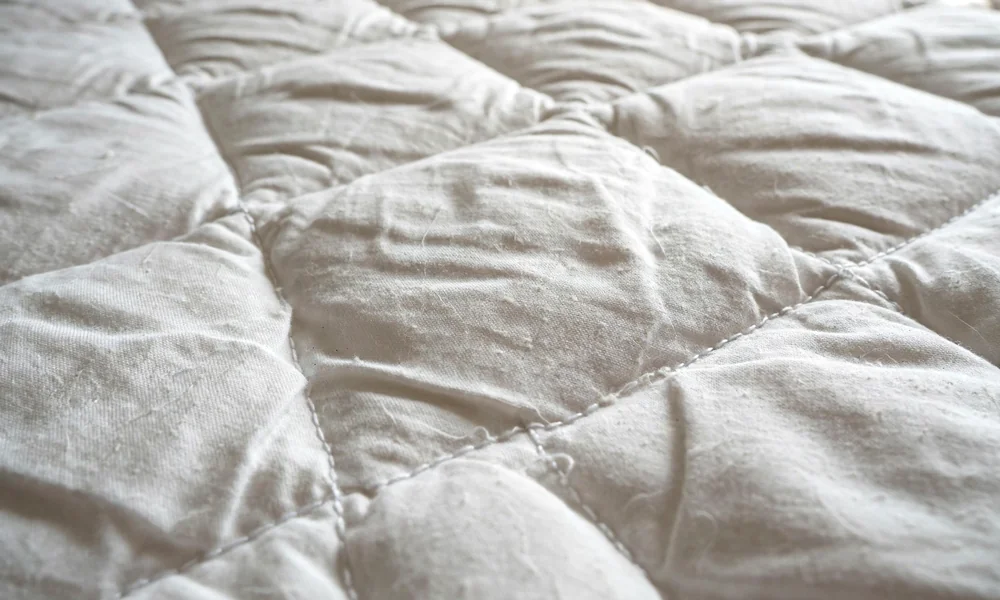
Thickness is the number most people get wrong, because thicker feels like better value and it is not. A pad between half an inch and one inch suits most sleepers: it softens the surface without changing the support, and it fits under a normal fitted sheet. A pad of an inch and a half is the most most people should buy, and it suits a very firm mattress or a side sleeper who needs more give.
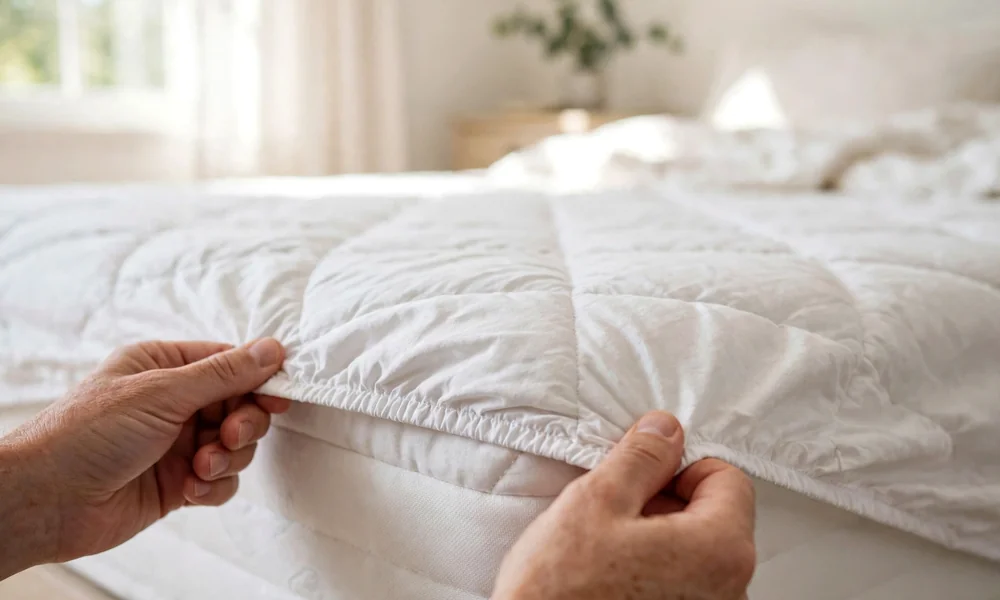
Pocket depth matters more than thickness, and it is the number buyers forget to check. The pocket is the elastic skirt that holds the pad on the mattress, and it has to be deep enough for your mattress plus the pad itself. Measure your mattress from top to bottom, add an inch for the pad, and buy a pocket at least that deep. Deep mattresses, pillow-top mattresses, and mattresses with a topper already on them all need a deep-pocket pad, so measure before you order rather than after the first bad night.
Washing and Looking After a Mattress Pad
The pad is the layer that catches what your sheet lets through: sweat, body oils, the occasional spill, and dust. That is why washability matters more for a pad than for almost any other piece of bedding. Cotton, wool, and gel fibre pads usually go in the washing machine on a cold, gentle cycle, and they should be dried on a low heat or on the line. Memory foam and latex pads usually cannot be machine washed at all, so they need a washable cover or regular airing instead.
Wash a pad every one to two months in normal use, and more often in a hot climate or a household with children or pets. Use a mild detergent, skip fabric softener, and make sure the pad is fully dry before it goes back on the bed: a damp pad is a home for mildew, and mildew in a pad is far harder to remove than a stain on a sheet. And keep the mattress underneath clean too: a pad protects a mattress, but it does not clean one, so a mattress cleaner now and then is still worth having in the house.
Mistakes That Waste a Good Mattress Pad
The most common mistake is buying a pad to fix a broken mattress. A pad softens a sound mattress and smooths a slightly lumpy one, but it cannot rescue a mattress that sags, and it cannot add support where the springs have gone.
The second mistake is buying the wrong size. A pad that is an inch too small in either direction will pull tight, ride up, and leave a corner of the mattress bare. A pad that is too large will wrinkle under your sheet and feel lumpy. Mattress sizes vary between brands and countries, so measure your mattress and buy the pad to match it, not to the size on the label of your sheet set.
The third mistake is ignoring heat. A dense memory foam pad on a hot sleeper’s bed adds warmth to a problem that is already there, and the result is a pad that gets blamed for a bad night’s sleep when the real problem was the fill.
Before You Buy: A Quick Checklist
- Decide what you need: a little softness, a little protection, or both, and do not expect a pad to fix a sagging mattress.
- Choose the fill for your sleep: cotton or wool for hot sleepers, memory foam for sore shoulders and hips.
- Measure your mattress depth and buy a pocket at least an inch deeper than the mattress plus the pad.
- Check the thickness: half an inch to one inch for most sleepers, an inch and a half at most for a very firm bed.
- Confirm the pad is washable, or that it has a removable washable cover if the fill cannot be machine washed.
- Check the size against your actual mattress, not your sheet set, and buy from a seller with a trial or easy returns.
Frequently Asked Questions
Is a mattress pad the same as a mattress topper?
No. A pad is thin, usually half an inch to an inch and a half, and adds light softness and light protection. A topper is two to four inches thick and changes how your bed feels in a serious way.
Do I need a mattress protector as well as a pad?
It depends on the pad. A waterproof pad already protects against spills, so a separate protector is unnecessary. A cotton or wool pad is not waterproof, so a thin protector underneath it, or a waterproof pad instead, is the safer choice for children, pets, and anyone who drinks in bed.
Can I wash a mattress pad in the washing machine?
Most cotton, wool, and gel fibre pads can be machine washed cold on a gentle cycle and dried on low heat. Memory foam and latex pads usually cannot be machine washed, so check the care label and buy a washable cover for those fills.
Will a mattress pad make my bed sleep hotter?
It can, if you choose the wrong fill. Dense memory foam traps heat, while cotton, wool, and latex breathe well and sleep cooler. Hot sleepers should avoid plain memory foam and look for open-cell foam, gel infusion, or a natural fibre fill.
How often should I replace a mattress pad?
Most pads last two to four years with regular washing, depending on the fill. Replace a pad when it goes flat and no longer softens the bed, when the quilting bunches and will not flatten, or when it no longer stays on the mattress.
Can a mattress pad help with back pain?
A pad can help if your mattress is too firm and your shoulders or hips ache, since a little extra softness relieves pressure. It will not help if your mattress sags or your back pain comes from a lack of support, and in that case a new mattress, not a pad, is the answer.
The Bottom Line
A mattress pad is a modest purchase that does a modest job well: a little softness, a little protection, and a washable layer between you and your mattress. Choose cotton or wool if you sleep hot, memory foam if your shoulders ache, and a pocket deep enough for your mattress before you worry about anything else. Get those three things right and the pad will quietly make your bed better every night, which is exactly what a good pad is supposed to do.