Best Soup Containers in 2026 That Keep Soup Hot Till Lunch
The best soup containers in 2026 solve one problem ordinary tubs never quite manage: they carry hot soup from your kitchen to your desk without a single leak, and they keep it properly hot for hours, not minutes. A soup container is not just a smaller food tub. It has to hold liquid that sloshes, stay sealed on its side in a bag, and keep heat in while the world outside is cold.
This guide covers the soup containers worth buying: vacuum-insulated jars, leakproof tubs, glass jars, and sets for soup with toppings.
Key Takeaways
- Vacuum insulation keeps soup hot: a double-walled steel jar holds soup above 60 degrees for four to six hours, while a plain tub loses heat in under an hour.
- The seal matters as much as the insulation: a screw-top lid with a silicone ring is safest, because clip lids can pop open when a bag is squeezed.
- A wide mouth is worth paying for: eat straight from the jar, fit a spoon properly, and wash far easier.
- Buy 500 to 700 millilitres for a main course, 350 for a starter, and 800 or more for a chunky stew.
- Preheat a thermal jar with boiling water for five minutes, and it will hold its heat roughly an hour longer.
What Makes a Great Soup Container
Soup is liquid, so it moves: it sloshes against the lid, finds any gap in a seal, and cools from the surface faster than solid food. A container that works for a sandwich can fail with soup, which is why soup deserves its own buying decision.
Heat retention comes first. A vacuum-insulated food jar has two steel walls with the air pumped out from between them, and because heat cannot travel through a vacuum, the soup inside stays hot for hours. A good one keeps soup above 60 degrees for four to six hours when it is full and the lid stays shut. A plain tub starts cooling the moment you fill it. If you eat within an hour, a simple tub is fine; if lunch is four hours away, only insulation will do.
The seal comes second, and it is the difference between a dry bag and a disaster. The safest design is a screw-top lid with a silicone ring, which holds even when the container lies on its side. Four-clip locking lids with silicone gaskets are nearly as good and open faster with one hand. Press-on lids are the ones to avoid: they hold by friction alone, and a squeeze in a crowded bag is enough to pop them open. Test any container before you trust it: fill it with water, close it, turn it upside down, and shake it hard. If a drop escapes, it is not a soup container.
Size is the third test. A useful soup container holds 500 to 700 millilitres for a main course, which covers a generous bowl of tomato, lentil, or chicken noodle soup. Smaller jars of 350 millilitres suit starters and children, while chunky stews need 800 or more.
The Main Types of Soup Container
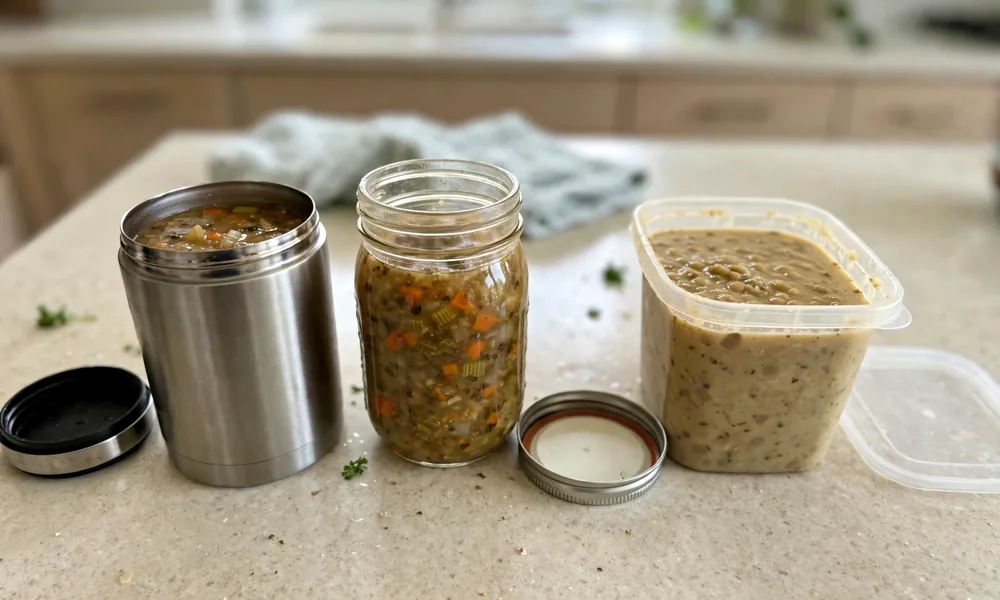
Soup containers fall into four families; most households need two: a thermal jar for hot lunches, and a simple tub for the fridge.
Vacuum-Insulated Food Jars
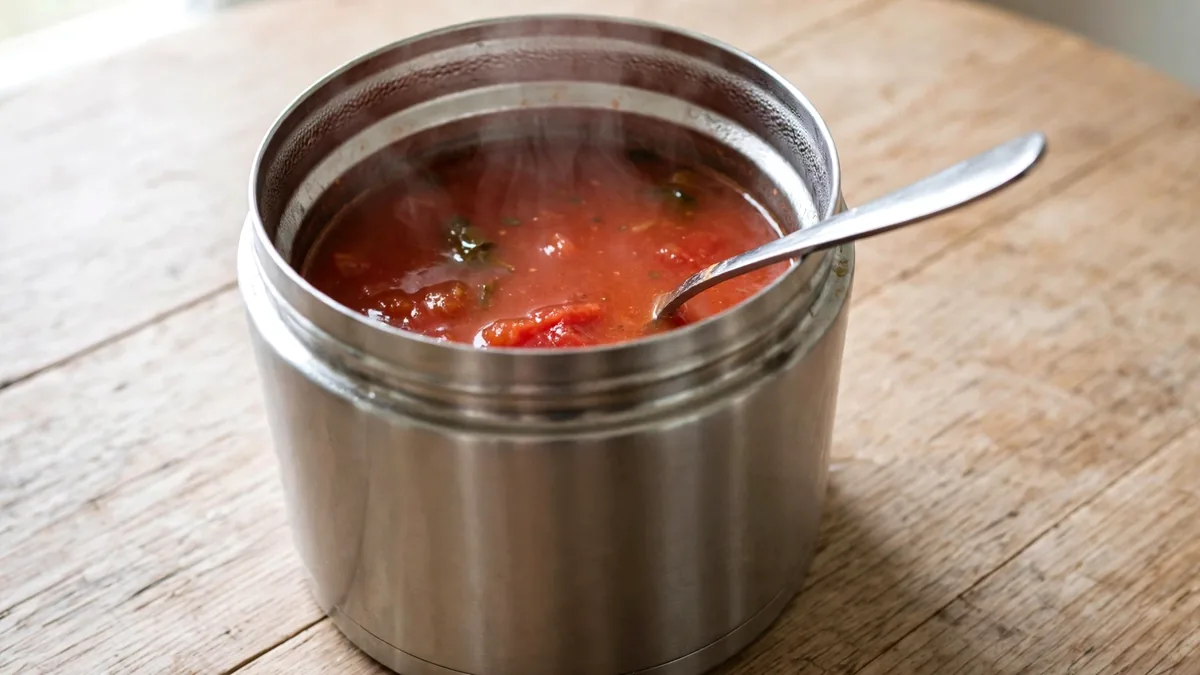
The food jar is the workhorse of hot soup. Short and wide, with a screw-top lid and a vacuum between two steel walls, it keeps soup hot for four to six hours and never leaks in a bag. The best ones have a wide mouth you can eat from, a spoon that clips to the lid, and a body that fits a cup holder. The trade-off is weight and price, and a steel jar cannot go in the microwave. For commuters and school lunches, this is the type to buy first. Our guide to the best food containers explains how the same sealing principles work across the whole container family.
Leakproof Screw-Top Tubs
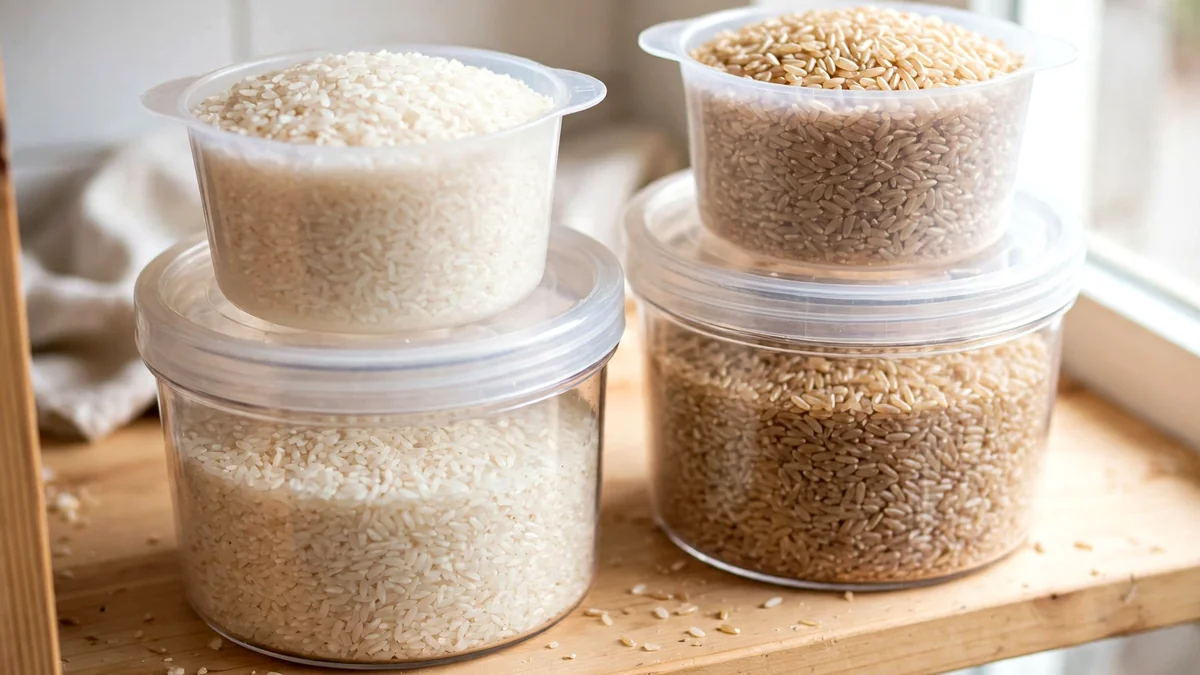
A screw-top tub is a simple plastic or glass container with a threaded lid and a silicone ring. It does not insulate, so it suits soup that will be reheated at work or eaten within the hour, and it is the best choice for the fridge: it stacks neatly, goes in the microwave with the lid vented, and costs very little. Round tubs suit soup best: no corners for food to hide in, and they reheat evenly. The best meal prep containers include a round leakproof pick for soup, and the same logic applies here.
Glass Soup Jars
Glass jars are the best choice for soup you reheat at home or at the office. Borosilicate glass never stains orange after tomato soup, never holds smells, and goes from fridge to microwave without worry. A wide-mouth glass jar is easy to fill and wash, and lets you see inside. The downsides are weight and breakability: a full jar is heavy, and one drop onto tile can end it. Glass is also a poor insulator, so it suits soup that will be reheated, not soup that has to stay hot on its own.
Soup and Sides Sets
Some soup containers come as a set: a main jar for the soup, a smaller pot for toppings such as croutons or sour cream, and sometimes a compartment for bread. The idea is sound, because soggy croutons ruin a good soup. The catch is the extra lids: every extra seal is another place a leak can start, so check each pot separately with the water test.
The 9 Best Soup Containers of 2026
We judged the most popular soup containers on seal strength, heat retention, and durability after months of daily use. These nine stood out.
- Best overall thermal jar. A wide-mouth vacuum-insulated steel jar with a screw-top lid: keeps soup hot for five hours, seals so well you can carry it sideways, and the mouth fits a normal spoon.
- Best budget soup tub. A BPA-free plastic tub with a screw-top lid and silicone ring gives a household full soup storage for the price of one steel jar. Look for thick walls and a lid that turns smoothly.
- Best for school lunches. A small 350-millilitre steel jar with a spoon clipped to the lid is the right size for a child’s portion, light enough for a school bag, and tough enough to survive being dropped.
- Best glass soup jar. A borosilicate glass jar with a wide mouth and a screw-top lid is the best reheating option: it goes from fridge to microwave, never stains, and washes clean in the dishwasher.
- Best large stew jar. An 800-millilitre insulated jar holds a chunky stew or ramen, and the extra volume keeps the broth hot longer.
- Best soup and sides set. A thermal jar with a separate topping pot and a bread compartment keeps croutons crisp and bread dry until serving.
- Best leakproof tub for the fridge. A round container with a four-clip locking lid and silicone gasket stacks neatly, seals against air, and keeps leftover soup fresh for three to four days.
- Best for outdoor eating. A rugged steel jar with a non-slip base and a lid that doubles as a bowl suits picnics and walking days.
- Best premium pick. A double-walled steel jar with a soft-touch coating and a spoon stored in the lid suits daily soup carriers. It costs more, but the seal holds after a year of daily use.
Soup Containers Compared
| Type | Heat retention | Leak safety | Microwave | Best for |
|---|---|---|---|---|
| Vacuum-insulated jar | 4–6 hours | Excellent | No | Hot soup on the move |
| Screw-top tub | Under 1 hour | Very good | Yes | Fridge storage and reheating |
| Glass jar | Under 1 hour | Very good | Yes | Home and office reheating |
| Soup and sides set | 3–5 hours | Good | No | Soup with toppings and bread |
How to Choose the Right Soup Container
Start with the journey, not the jar. If lunch is eaten within an hour of packing, a simple screw-top tub is all you need. If soup has to survive a four-hour morning in a bag, only a vacuum-insulated jar will keep it hot, and the seal becomes the deciding feature. If you reheat at work, glass wins: it microwaves safely and washes clean, while steel cannot go in the microwave at all.
Material is the second decision. Steel is the toughest and best insulator, but it is heavy and opaque, so labelling matters. Glass is the cleanest and best for reheating, but it is breakable and a poor insulator. BPA-free plastic is the lightest and cheapest, but it stains with tomato soup and holds smells over time, so replace plastic tubs when they warp, cloud, or stop sealing. Most households end up with a mix: steel for the commute, glass at home, plastic in the fridge.
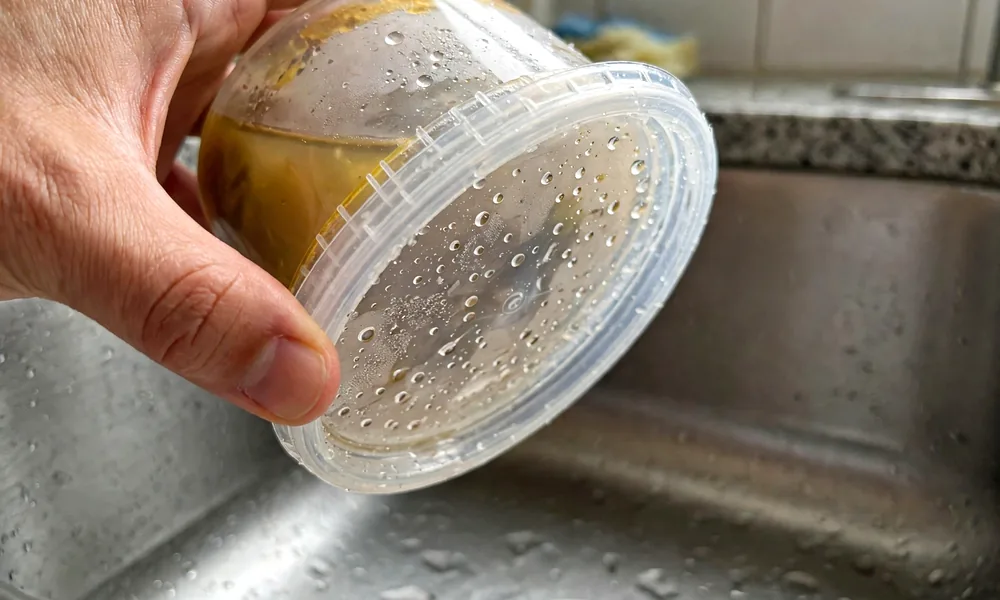
Check the practical details before you buy. The lid should unscrew smoothly even when the jar is full and hot, the body should fit your cup holder and lunch bag, and the base should sit flat. A jar you have to hand-wash every night gets used less than one you can drop in the machine, and a spoon clipped to the lid is worth more than a slightly cheaper jar without one.
Soup Container Checklist: Before You Buy
- Water-test the seal before the first real use: fill it, close it, turn it upside down, and shake it hard.
- Match the size to the meal: 500 to 700 millilitres for a main course, 350 for a starter, 800 or more for a chunky stew.
- Choose a wide mouth for eating and washing.
- Decide on heat first: insulation for soup eaten hours later, a simple tub for soup you reheat.
- Check the spoon situation: a clipped-on spoon beats a separate one you will forget.
- Confirm the practical details: cup-holder fit, dishwasher safety, and a lid that opens easily when hot.
Frequently Asked Questions
How long does soup stay hot in a thermal container?
A good vacuum-insulated jar keeps soup above 60 degrees for four to six hours when full with the lid shut. Preheating with boiling water for five minutes adds roughly an extra hour; a plain tub loses heat in under an hour.
Can I put a soup container in the microwave?
Glass and plastic tubs can go in the microwave with the lid off or vented, but never a steel jar. Check for a microwave-safe mark, and never microwave unmarked plastic.
What size soup container do I need?
For a main course, 500 to 700 millilitres covers most adults. A starter or a child’s portion suits 350 millilitres, while a chunky stew or ramen needs 800 millilitres or more so the solid pieces have room.
How do I stop soup leaking in my bag?
Use a screw-top lid with a silicone ring or a four-clip locking lid with a gasket, and test it with water first. Fill it to about 90 percent and carry it upright when you can.
Are soup containers dishwasher safe?
Most plastic and glass tubs are, and many steel jars too, but lids and silicone rings often need hand washing. Wash the ring separately every week.
How is a soup container different from a food container?
A soup container is built for liquid: it seals against sloshing, often insulates, and usually has a wide mouth for eating and washing. A general food container covers the whole family of boxes for leftovers and dry food, and only some of them are safe for soup. A soup bowl is for serving at the table: our guide to the best soup bowls covers bowls that hold heat while you eat, not containers that carry soup to work.
Bottom Line
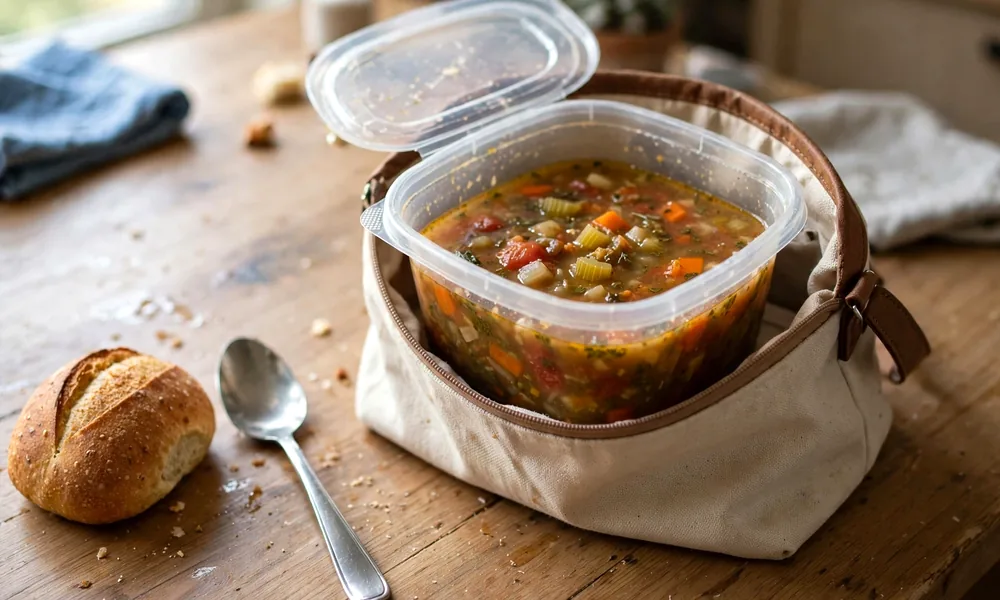
Buy a vacuum-insulated steel jar with a wide mouth and a screw-top lid if you carry hot soup to work or school, and keep a simple round screw-top tub in the fridge for leftovers. Test every seal with water, preheat the jar with boiling water, and match the size to the meal.