Top Salad Containers for Crisp, Leak-Free Packed Lunches in 2026
The best salad containers in 2026 do one thing ordinary lunch boxes cannot: they keep a salad crisp, dry, and separate until you eat it. A salad is the hardest packed lunch to get right, because dressing soaks leaves in an hour, wet ingredients soften crunchy ones, and a warm bag turns a fresh salad limp by noon. A good salad container solves all three: compartments, a leakproof dressing pot, and a seal that holds on its side.
This guide covers the salad containers worth buying: bento-style boxes, layered salad jars, dressing-pot sets, and fork-in-lid designs.
Key Takeaways
- Compartments are the whole point: keeping dressing, wet toppings, and leaves apart until serving is the difference between a crisp lunch and a soggy one.
- The dressing pot matters most: a small leakproof pot with a screw-top lid keeps dressing off the leaves and out of your bag.
- Buy 900 millilitres to 1.2 litres for a main course, 500 to 700 for a side salad, and check the box fits your lunch bag.
- A fork clipped into the lid is worth more than it sounds: a forgotten fork ruins a good packed salad.
- Glass keeps salad freshest and never stains; BPA-free plastic is lighter for a daily commute.
What Makes a Great Salad Container
A salad is mostly water and air: leaves bruise when crushed, dressing soaks them in minutes, and warm air turns them limp. A container that works for a sandwich can fail with a salad, which is why salad deserves its own buying decision.
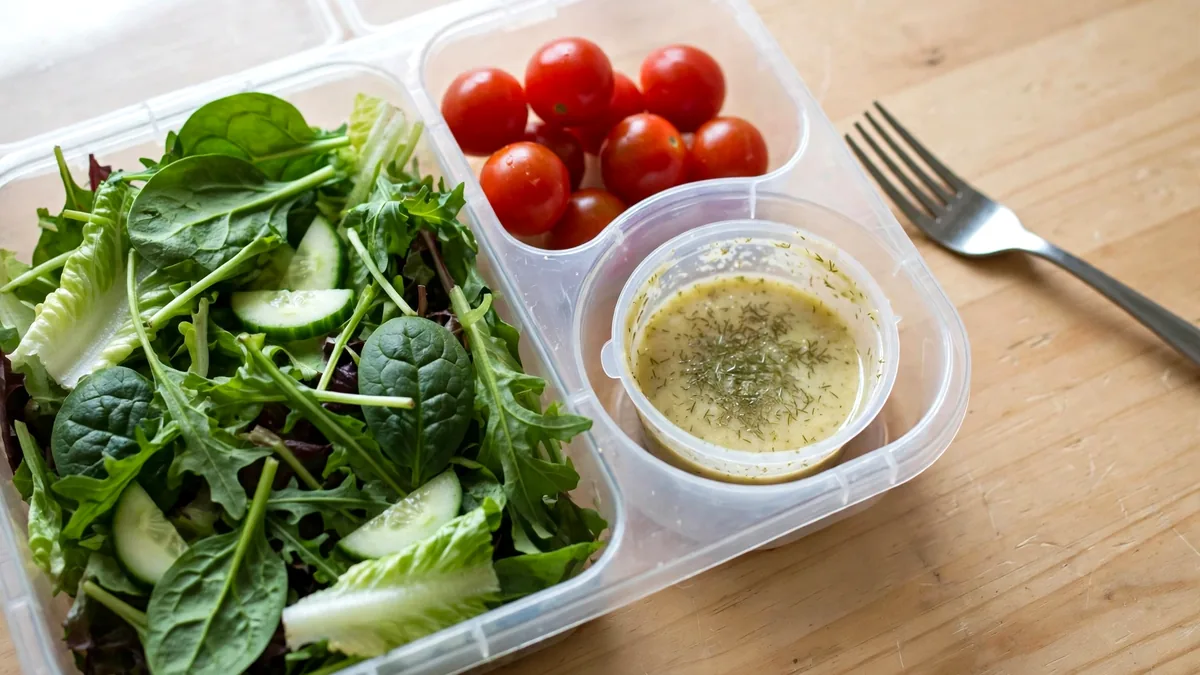
Separation comes first. The best salad containers divide the box into compartments, so wet ingredients such as tomatoes and olives sit apart from dry leaves, and crunchy toppings such as nuts and croutons stay dry until serving. The dressing gets its own small sealed pot, so it cannot leak onto the leaves. A container with no compartments is just a tub, and a tub turns a salad soggy by lunchtime.
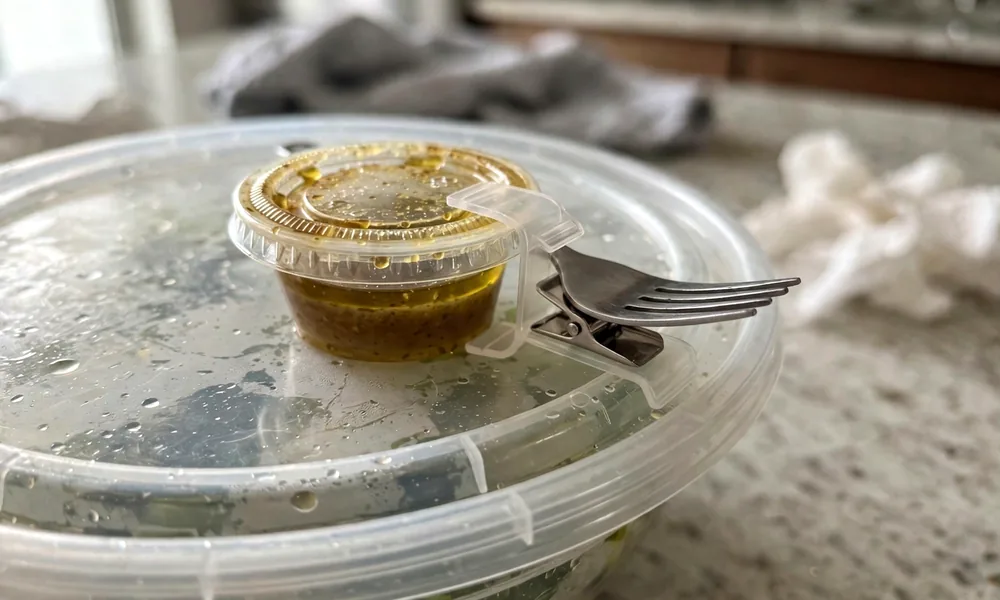
The seal comes second, and it is the difference between a dry bag and a disaster. Dressing is liquid, so it finds any gap, and a tipped box leaks everywhere if the pots are not sealed. The safest design is a screw-top dressing pot with a silicone ring, inside a main box with a four-clip locking lid and a silicone gasket. Press-on lids hold by friction alone, and a squeeze in a crowded bag pops them open. Test any container first: fill the dressing pot with water, close it, turn it upside down, and shake it. If a drop escapes, it is not a salad container.
Size is the third test. A useful salad container holds 900 millilitres to 1.2 litres for a main course, covering a generous lunch of leaves, protein, and toppings. Smaller boxes of 500 to 700 millilitres suit side salads and children, while grain bowls and hearty salads need the larger end of the range. Buy too small and you will need a second tub for dressing and toppings.
The Main Types of Salad Container
Salad containers fall into four families; most households need two: a compartment box for desk lunches, and a jar or glass box for salads that stay cold.
Compartment Bento Boxes
The bento-style box is the workhorse of packed salads. A rectangular box in two or three compartments, with a leakproof dressing pot and often a fork clipped into the lid, keeps wet and dry apart until you eat. The best designs have genuinely separate compartments, with raised dividers and a lid that seals each section. The trade-off is washing: more compartments mean more corners to clean, so look for a box that comes apart and goes in the dishwasher. For office lunches and school bags, buy this type first. The best meal prep containers include a divided bento pick for salads, and the same logic applies here.
Layered Salad Jars
A salad jar is a tall, wide-mouth jar built for layering: dressing at the bottom, hard vegetables next, then protein, then leaves on top. The layers stay separate by gravity, and you tip the whole jar into a bowl at lunchtime, or eat from it directly. Jars suit salads you make the night before, because the leaves sit above the dressing and stay crisp overnight in the fridge. The catch is capacity: a jar that looks large may hold less than a flat box, and eating from a deep jar needs a long fork or a bowl. Choose a wide-mouth jar of at least one litre with a gasket-sealed lid.
Glass Salad Boxes
Glass boxes are the best choice for salads you keep in the fridge and eat at home or at the office. Borosilicate glass never stains, never holds smells, and lets you see exactly what is inside without opening the box. A glass box with a divided insert and dressing pot gives bento separation with glass freshness, and microwaves for grain bowls. The downsides are weight and breakability: a full glass box is heavy, and one drop onto tile can end it. Keep glass at home and in the office; take plastic on the move.
Fork-in-Lid and All-in-One Sets
Some salad containers come as a complete kit: the box, the dressing pot, a fork clipped into the lid, and sometimes a small container for toppings. The idea is sound, because a packed salad without a fork is one you cannot eat. The catch is the extra parts: every piece is another thing to lose and another seal to check, so prefer a kit where the fork clips into the lid and the pot locks onto the box.
The 9 Best Salad Containers of 2026
We judged the most popular salad containers on separation, seal strength, crispness after four hours, and durability after months of daily use. These nine stood out.
- Best overall bento box. A three-compartment box with a screw-top dressing pot and a fork clipped into the lid. Choose 1.1 litres for most lunches.
- Best budget salad box. A BPA-free plastic box with two compartments and a leakproof dressing pot, for the price of one glass box. Look for thick walls, a firm-clipping lid, and dividers that reach the lid.
- Best layered salad jar. A wide-mouth glass jar of one litre or more keeps a layered salad crisp overnight, dressing at the bottom and leaves on top. The wide mouth matters: a narrow jar is hard to fill and wash.
- Best glass salad box. A borosilicate glass box with a divided insert and a dressing pot: the freshest office option, never stains or smells.
- Best for school lunches. A small 700-millilitre box with a dressing pot and a fork in the lid, light enough for a school bag and tough enough to survive drops.
- Best large grain-bowl box. A 1.4-litre box with deep compartments holds a hearty grain bowl, and the extra volume means nothing gets crushed.
- Best leakproof dressing set. A box with two screw-top dressing pots suits salads with more than one wet element. Check each pot with the water test, and prefer pots that lock onto the lid.
- Best for outdoor eating. A rugged plastic box with a non-slip base and a lid that doubles as a plate suits picnics and walking days.
- Best premium pick. A glass box with a steel frame, a silicone-sealed lid, and a fork stored in the lid, for daily salad packers. It costs more, but the seal holds after a year of daily use.
Salad Containers Compared
| Type | Separation | Leak safety | Weight | Best for |
|---|---|---|---|---|
| Compartment bento box | Excellent | Very good | Light | Everyday desk lunches |
| Layered salad jar | Very good | Good | Heavy | Overnight prep, fridge storage |
| Glass salad box | Good | Very good | Heavy | Office and home lunches |
| All-in-one set | Excellent | Good | Medium | Complete packed lunch kits |
How to Choose the Right Salad Container
Start with the salad, not the box. For leafy salads with dressing, separation is everything, and a compartment box with a screw-top dressing pot is the only design that keeps leaves crisp. If you pack grain bowls and hearty salads, capacity matters more, and a large flat box with deep compartments beats a tall jar. If you make salads the night before, a jar or glass box that lives in the fridge is the better choice.
Material is the second decision. BPA-free plastic is the lightest and cheapest, but it stains with beetroot and tomato and holds smells, so replace plastic boxes when they warp, cloud, or stop sealing. Glass is the cleanest and best for freshness, but it is breakable and heavy. Steel is the toughest, but rare in salad boxes: you cannot see inside, and compartments are harder to make. Most households end up with a mix: plastic for the commute, glass at home and in the office.
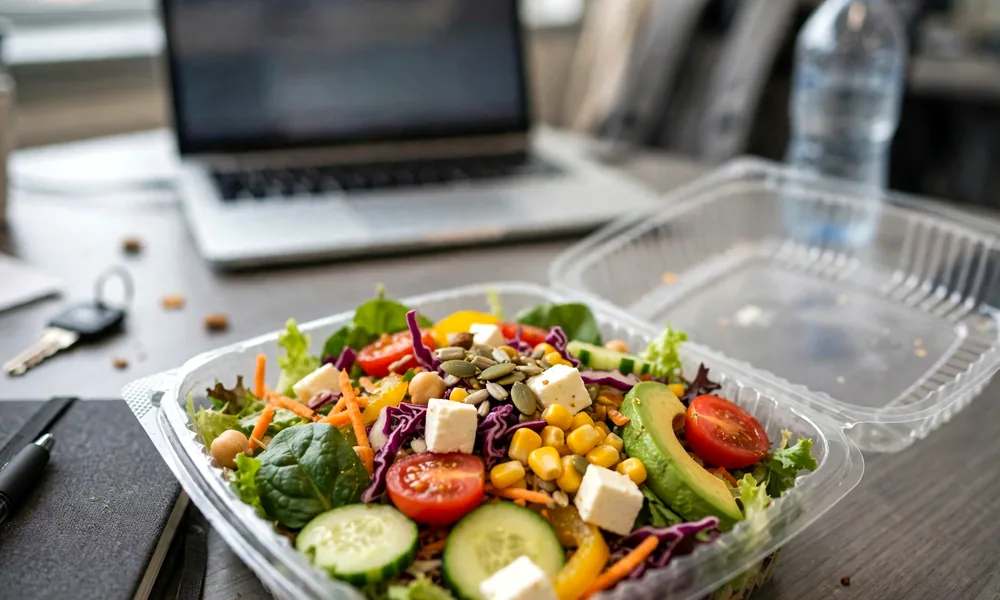
Check the practical details before you buy. The lid should clip shut firmly and open with one hand, because a lid needing two hands is one you will curse at your desk. The box should fit your lunch bag and your fridge shelf, and the base should sit flat so it does not topple. Dishwasher safety matters too: a box with many parts that goes in the machine gets used far more than one you hand-wash nightly.
Salad Container Checklist: Before You Buy
- Water-test the dressing pot and the main seal before the first use.
- Match the size to the meal: 900 millilitres to 1.2 litres for a main course, 500 to 700 for a side salad.
- Choose real compartments with dividers that reach the lid.
- Check the dressing pot: screw-top, silicone ring, 60 to 90 millilitres, locked inside.
- Confirm the fork situation: a clipped-in fork beats a separate one you will forget.
- Check the practical details: lunch-bag fit, dishwasher safety, one-hand lid.
Frequently Asked Questions
How do I keep a packed salad crisp until lunch?
Keep dressing in a separate sealed pot and wet ingredients in their own compartment, and pack leaves loosely on top so they are not crushed. A compartment box with a screw-top dressing pot keeps leaves crisp for four to six hours; a plain tub turns them soggy in one.
What size salad container do I need?
For a main course, 900 millilitres to 1.2 litres covers most adults. A side salad suits 500 to 700 millilitres, while a hearty grain bowl needs 1.4 litres or more.
Can I put a salad container in the dishwasher?
Most plastic and glass boxes are dishwasher safe, but dressing pots and silicone rings often need hand washing. Wash the ring separately every week so food does not build up under it.
How do I stop dressing leaking in my bag?
Use a screw-top dressing pot with a silicone ring, and test it with water before the first use. Fill the pot to about 90 percent and carry the box flat when you can.
Are salad containers microwave safe?
Glass boxes can go in the microwave with the lid off, suiting warm grain bowls, but never microwave a box with a steel frame or a dressing pot inside. Check for a microwave-safe mark before heating anything.
How is a salad container different from a food container?
A salad container is built for separation: compartments, a dressing pot, and a fork keep leaves crisp and dry until serving. A general food container, as our guide to the best food containers explains, covers the whole family of boxes for leftovers and meal prep, and only some of them separate wet from dry. A salad bowl is for serving a crowd: our guide to the best salad bowls covers wide bowls for tossing and passing, not boxes that carry one lunch to work.
Bottom Line
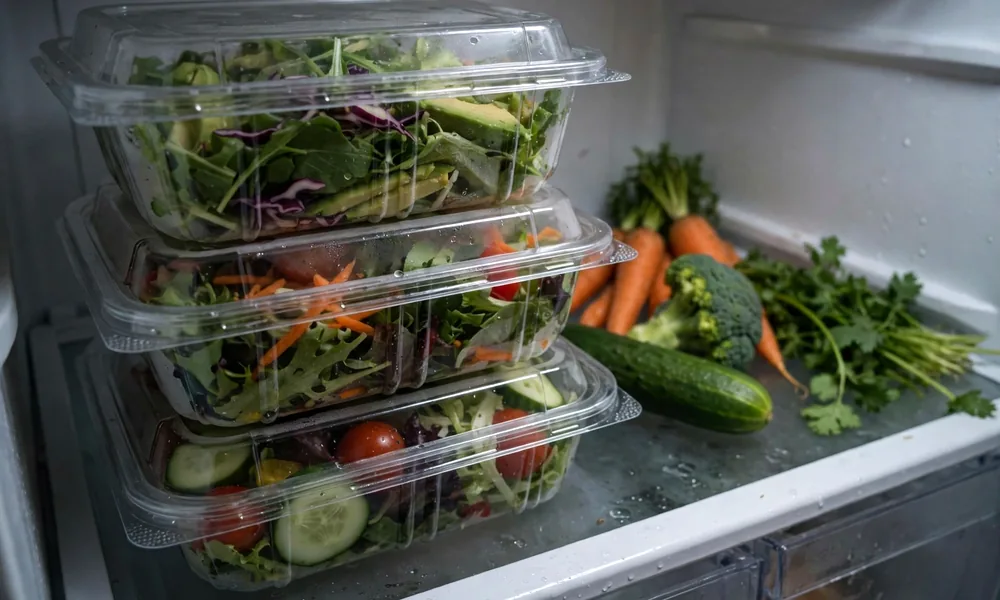
Buy a compartment bento box with a screw-top dressing pot and a fork clipped into the lid for work or school, and keep a glass box with a divided insert in the fridge. Test every seal with water, keep dressing separate, and match the size to the meal.