Top Outdoor Chairs 2026
The top outdoor chairs of 2026 are the ones that stay out all season and still feel good to sit in: a chair that survives rain, sun and frost without rotting, rusting or fading, and that you actually want to sit on for a whole evening. An outdoor chair is fixed patio and deck seating, built to live outside. It is not a chair you fold up and carry, and it is not a bench you share. It is your own seat, in your own corner of the garden, and the right one earns its place for years.
Outdoor chairs come in more shapes than most buyers expect, from slatted teak loungers to powder-coated metal dining chairs, and the differences between them are not cosmetic. The material decides how long the chair lasts, the shape decides how comfortable it is, and the size decides whether it fits the patio at all.
Key Takeaways
- An outdoor chair is fixed patio or deck seating that lives outside all season; a camping chair folds up and travels, and the two are judged on different things.
- Teak and powder-coated metal last longest outdoors; untreated softwood and bare steel fail fastest, usually within a few seasons.
- Seat height of 43 to 46 centimetres and a seat depth of 45 to 50 centimetres suit most adults for sitting down and standing up without effort.
- Match the chair to the spot: dining chairs for the table, deep loungers for reading, and upright chairs with armrests for long evenings.
- Budget for cushions and a cover at the same time as the chair, not afterwards.
What an Outdoor Chair Actually Is
An outdoor chair is a single seat made to live outside, on a patio, a deck or a balcony, through sun, rain and frost. Unlike an indoor chair, it is judged first on weather resistance and second on comfort: a beautiful chair that rots in two winters is not a bargain, however cheap it was. The best outdoor chairs are built from materials that age gracefully, with joints that do not loosen in the damp and finishes that do not peel in the sun.
The chair earns its place by being sat in, not by being stored. A good outdoor chair is heavy enough not to blow over, light enough to move when you chase the sun, and comfortable enough for a whole evening with a book. That is why the choice is worth more thought than a last-minute grab.
Outdoor Chairs vs Camping Chairs: The Distinction That Matters
Shops often shelve outdoor chairs and camping chairs together, and the two do share a shape: four legs, a seat and a back. But they are built for opposite jobs, and mixing them up is the most common buying mistake in the garden. An outdoor chair stays put. It is judged on weather resistance, weight and comfort over years of use, and it never needs to fold. A camping chair travels. It is judged on packed size, weight and how fast it folds into a carry bag, and it only needs to survive a weekend at a time.
That split changes everything about what makes one good. A camping chair that folds to under 60 centimetres and weighs two kilos is a triumph, even if its fabric fades after a season in the sun. An outdoor chair with the same fabric is a failure, because it will sit in that sun every day for years. Our guide to the best camping chairs covers the portable half of the story in full, from ultralight backpacking seats to padded loungers for long evenings by the fire. This guide covers the half that stays home: the fixed chairs that turn a patio into a room.
The Outdoor Chair Types Compared
Most outdoor chairs fall into five types, and each suits a different way of sitting. The table gives the quick comparison.
| Chair type | Best for | Comfort | Watch out for |
|---|---|---|---|
| Adirondack chair | Lounging, reading, garden corners | Deep recline, wide arms | Low seat, hard to get out of |
| Dining chair | Eating outside, long lunches | Upright, easy to sit and stand | Too upright for lounging |
| Deep lounge chair | Long evenings, napping | Deepest seat, needs cushions | Bulky, needs storage for cushions |
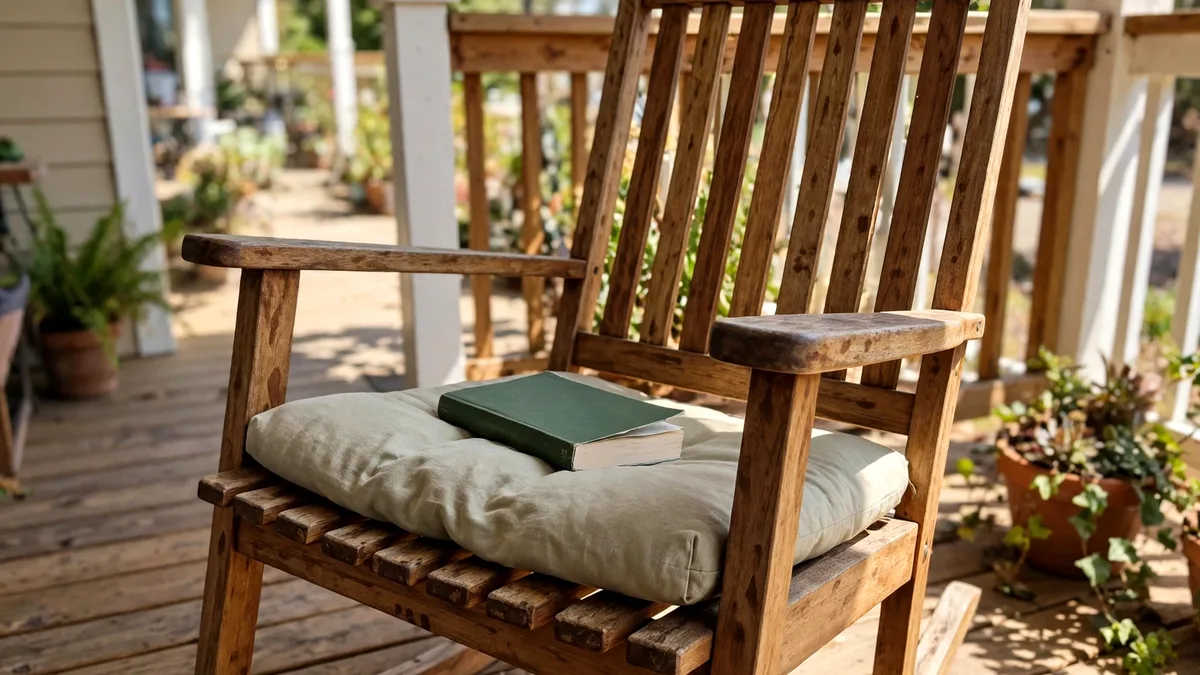
| Rocking chair | Porches, gentle motion | Relaxing rock, good back support | Needs flat ground to rock well |
| Folding patio chair | Small patios, extra guests | Firm, upright, stackable | Thinner frames wear faster |
Adirondack Chair: The Garden Classic
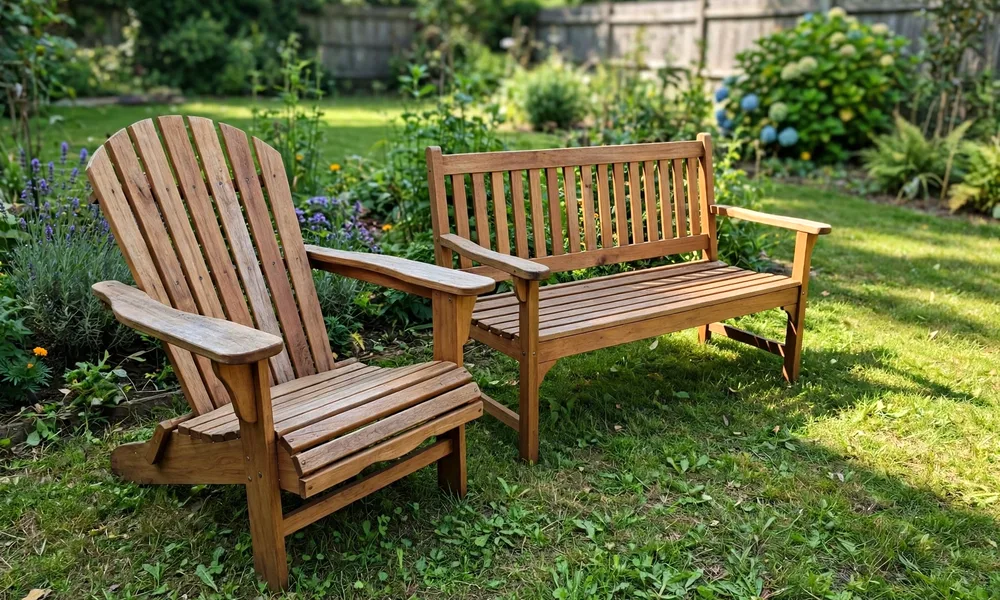
An Adirondack chair is the slatted wooden lounger with wide flat arms and a deep reclined seat, and it is the chair most people picture when they think of a garden. The wide arms hold a book and a cup without a side table, and the recline suits long, lazy afternoons. The trade-off is the low seat: it is hard to get out of for anyone with stiff knees, so it suits a reading corner better than a dining table.
Dining Chair: The Everyday Workhorse
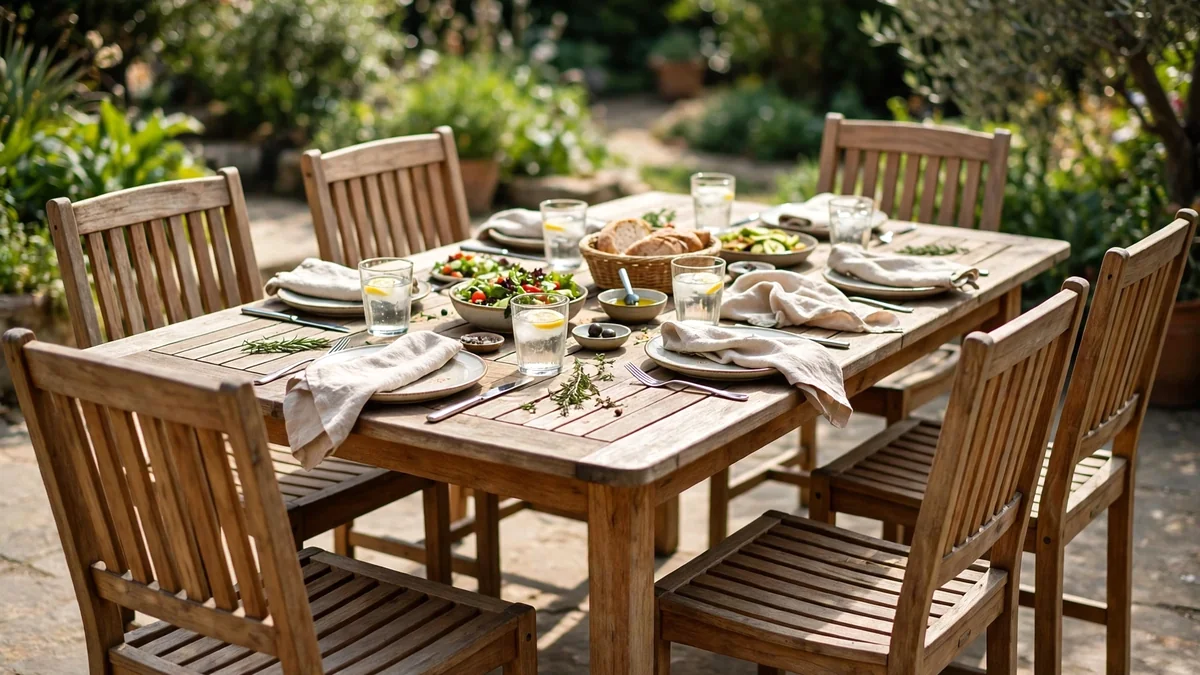
An outdoor dining chair is upright, with a seat height of 43 to 46 centimetres and a back that supports a straight sit. It is the chair you will use most, because eating outside is the main reason most patios exist. Buy it in a set with the table, or at least check the seat height against the table before you order, because a chair that is two centimetres too low makes every meal a perch.
Deep Lounge Chair: The Evening Seat
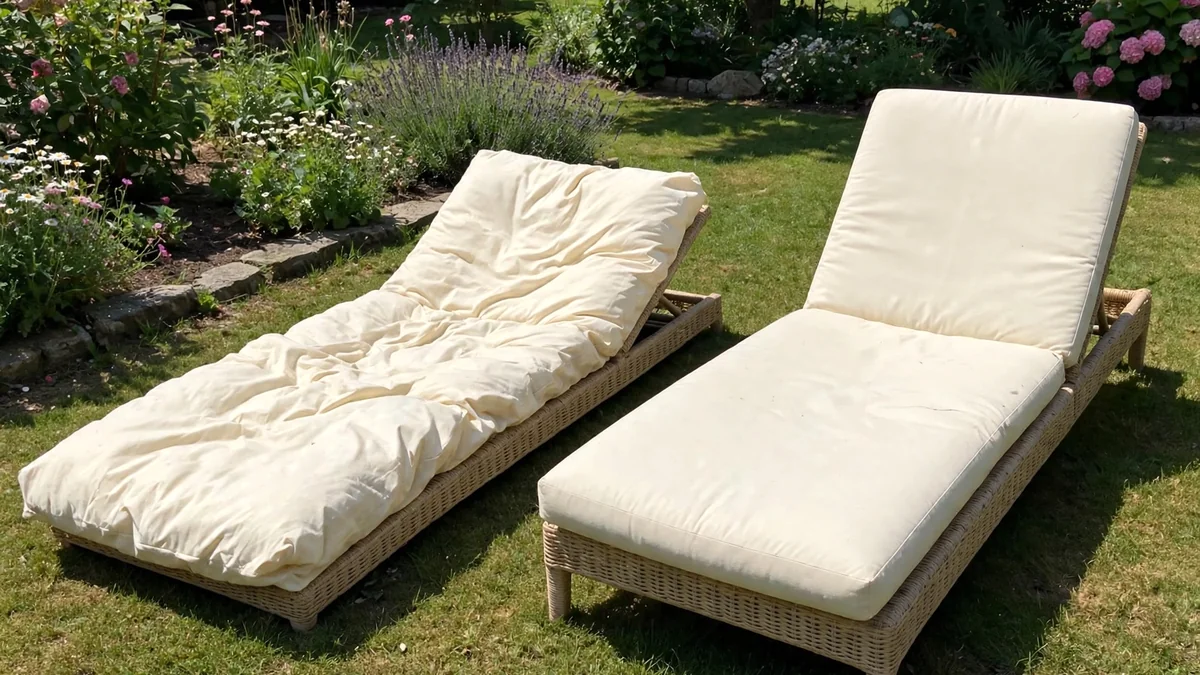
A deep lounge chair is the outdoor equivalent of an armchair: a wide, deep seat with low arms, made to be used with thick cushions. It is the most comfortable outdoor chair there is, and the least practical without a plan for the cushions, which need a dry store for wet nights. Buy the cushions with the chair, in a quick-drying foam with a solution-dyed cover, and budget for a deck box to keep them in.
Choosing the Right Material
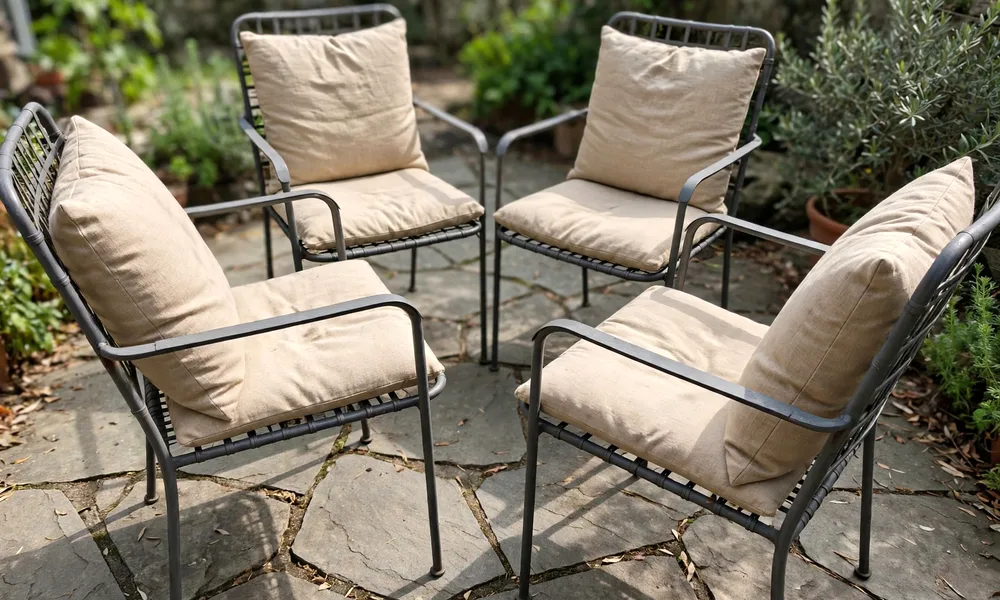
Teak is the classic outdoor chair wood. Its natural oils repel water and insects, and a well-made teak chair can last twenty years with almost no care beyond an occasional wash. Eucalyptus and acacia look similar at first but need regular oiling to avoid cracking, and they rarely match teak for longevity. If the budget does not stretch to teak, powder-coated metal is the low-maintenance champion: it never rots, it is light enough to move around the patio, and modern finishes hold their colour for years.
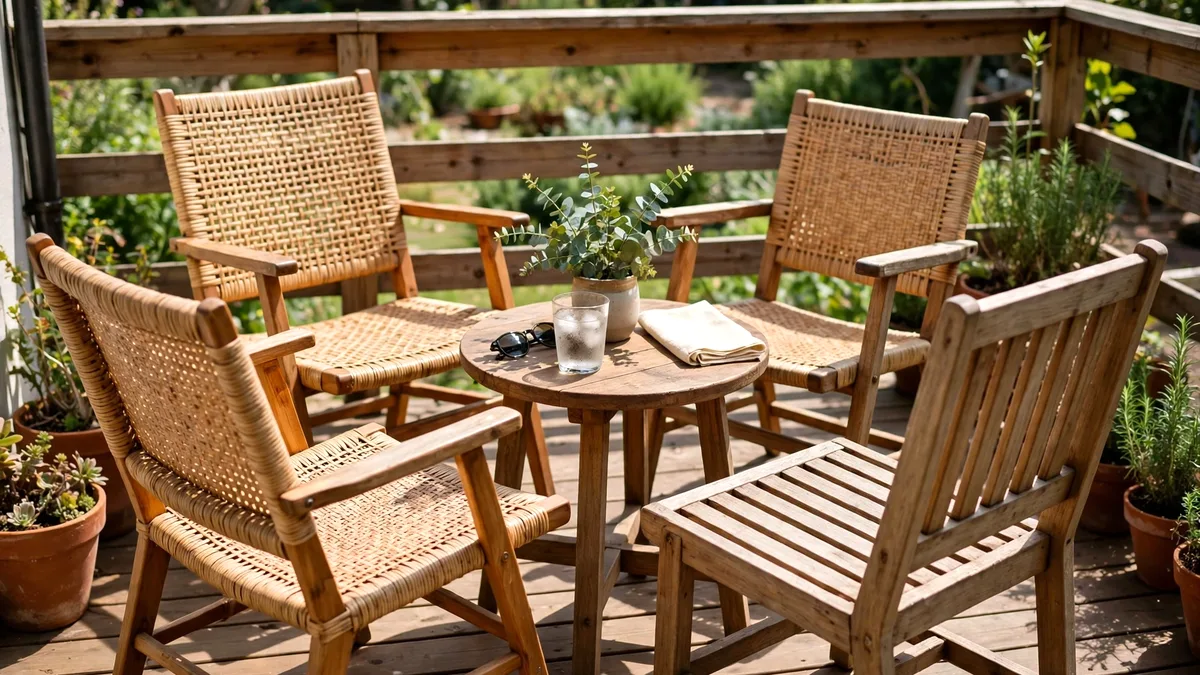
Rattan and resin wicker suit sheltered patios and balconies, where they look softer than metal and warmer than wood. The best ones are woven over an aluminium frame, which will not rust, and the weave should feel tight and even, with no loose ends. Avoid untreated softwood and bare steel entirely: softwood rots within a few seasons, and bare steel rusts from the inside and stains the patio. Whatever material you choose, check the weight limit per seat and the warranty before you buy, and ask whether replacement slats or cushions are sold separately.
Size, Comfort and Placement
Measure the spot before you look at a single chair. A dining chair needs about 60 centimetres of width at the table, and at least 60 centimetres of clear space behind it so you can pull it out and stand up. A lounge chair needs more: about 80 centimetres wide and a metre deep with its cushion. Leave a metre of walking space on the path people use to cross the patio, or the chairs will turn a seating area into an obstacle course. Seat height matters just as much: 43 to 46 centimetres suits most adults, low enough to sit on comfortably and high enough to stand up from without effort.
Placement decides whether a chair gets used every day or sits empty. Put dining chairs where the table already is, and lounge chairs where you already pause: the sunny corner, the end of the path, the place with the best view. A chair that belongs to a wider set works best: a rug under the seating area makes the patio feel like a room, and our guide to the best outdoor rugs covers which ones survive the weather. And if you want seating for two that shares the space, a bench is a different decision: our guide to the best garden benches covers the two-seater, while this guide covers the chair you sit in alone.
Mistakes That Spoil a Good Chair
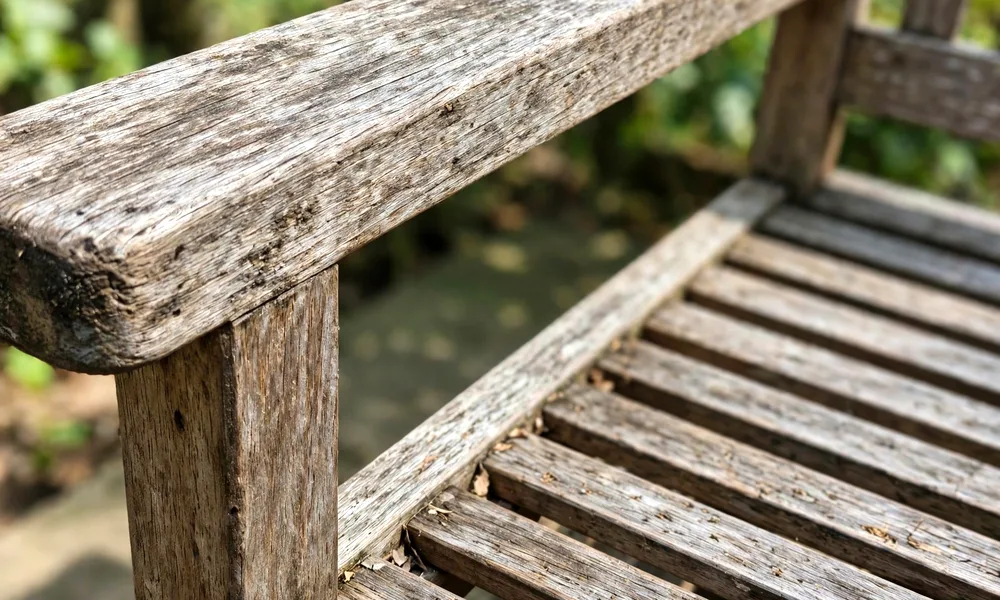
The most common mistake is buying on looks alone, a beautiful chair in the wrong material for an exposed patio, when a plainer chair in teak or powder-coated metal would have lasted a decade. The second is buying a chair that is too big for the patio, so it dominates the space and never gets sat in. The third is forgetting the cushions: a hard slatted seat without a cushion is a chair for ten minutes, not an evening, and cushions bought later rarely fit as well as the ones made for the chair. The fourth is leaving chairs out uncovered all winter, when even the toughest chair lasts years longer under a cover or in shelter for the coldest months.
Outdoor Chair Checklist
- Measure the spot first, and allow 60 centimetres of width per dining chair and a metre of walking space on the path.
- Choose teak or powder-coated metal for exposed patios, and rattan or resin wicker only for sheltered spots.
- Check the seat height, 43 to 46 centimetres for most adults, and sit in the chair before you buy if you can.
- Match the chair to the job: dining chairs for the table, deep loungers for reading, Adirondacks for the garden corner.
- Budget for cushions and a cover at the same time as the chair, not afterwards, and check the cushion dries quickly.
- Check the weight limit, the warranty, and whether replacement slats or cushions are sold separately.
Outdoor Chair FAQs
What is the best material for outdoor chairs?
Teak lasts longest and needs the least care, while powder-coated metal is the best low-maintenance alternative. Acacia and eucalyptus look similar to teak but need regular oiling. Avoid untreated softwood and bare steel.
Can outdoor chairs stay out all winter?
They can, but they will last much longer if you cover them or move them under shelter in the coldest months. Even teak and powder-coated metal benefit from a cover, and cushions should always come indoors for winter.
How do I stop outdoor chairs blowing over?
Choose heavier chairs, teak or cast metal, and avoid light hollow plastic on exposed patios. A chair with a wide base resists wind better than a narrow one.
Are Adirondack chairs comfortable?
Yes, for lounging and reading, because the deep recline and wide arms support a long sit. They are less comfortable for eating, and the low seat makes them hard to get out of for anyone with stiff knees.
Do outdoor chairs need cushions?
Slatted wood and metal chairs do, for any sit longer than ten minutes. Choose quick-drying foam with a solution-dyed fabric cover, and store the cushions dry when rain is coming.
What size outdoor chair do I need?
A dining chair needs about 60 centimetres of width, with a seat height of 43 to 46 centimetres. A lounge chair needs about 80 centimetres wide and a metre deep with its cushion, and 60 centimetres of clear space behind it.
The Bottom Line
The top outdoor chairs of 2026 are the ones that make the patio a room you live in: a teak or powder-coated metal dining chair for the table, a deep lounge chair with quick-drying cushions for long evenings, and an Adirondack for the garden corner. Measure the spot first, pick a material you will honestly maintain, and budget for cushions and a cover at the same time. Do that, and the chair you buy this year will still be the chair you reach for in five years.