The Best Outdoor Rugs for Patios, Decks and Balconies in 2026
The best outdoor rugs of 2026 do something no indoor rug can: they make a patio, a deck or a balcony feel like a room while surviving sun, rain and muddy shoes season after season. A good outdoor rug stays flat under the chairs, keeps its colour through a whole summer, dries within hours of a shower, and shakes clean with a hose. A bad one is an indoor rug with an outdoor label: it fades to a washed-out ghost of its colour, curls at the edges until it trips everyone who walks across it, and holds water underneath until it smells of damp.
An outdoor rug is not an indoor rug moved outside, and that distinction decides everything about what to buy. An indoor rug is built for comfort under bare feet in a dry room: wool, cotton and jute feel wonderful indoors, but outdoors they soak up rain, hold damp, grow mould and fade fast. Our guide to the best rugs covers the indoor room-by-room choice, where wool wins on comfort and a pad underneath stops slipping. Outdoors, the winners are different materials entirely: solution-dyed polypropylene and recycled PET, woven flat so water passes through, with colours dyed through the fibre rather than printed on the surface.
Key Takeaways
- Buy solution-dyed polypropylene or recycled PET: the colour runs through the fibre, so it holds for years, while printed rugs fade in a single summer.
- An outdoor rug must drain and dry: a flat weave with a perforated or mesh backing dries within hours, while a solid backing traps water and grows mould underneath.
- Match the rug to the surface: heavy flat-weave rugs grip stone patios, lighter rugs with a grip pad suit smooth decking, and small rugs suit balconies.
- Weight and grip matter more than pattern: a rug that slides when a chair moves or curls at the corners is a trip hazard, however good it looks.
- Clean it with a hose and store it dry in winter: a rug that is hosed, dried and rolled up properly lasts years longer than one left out through the cold months.
Outdoor vs Indoor Rugs: The Distinction That Decides Everything
The difference between an outdoor rug and an indoor rug is not where you put it but what it is made of and how it handles water. An indoor rug is designed for a dry room: its fibres are chosen for softness, its backing for grip on a wooden floor, and its colours for how they look in lamplight. Put that rug outside and every one of those choices turns against it. Wool absorbs water and stays damp for days, cotton goes limp and mouldy, jute rots, and printed colours wash out in the sun. An outdoor rug is designed for a wet, sunny, dirty life: its fibres are plastic-based so they do not absorb water, its weave is open so rain passes through, its backing grips without sealing water underneath, and its colours are dyed through the fibre so the sun cannot strip them off the surface.
An outdoor rug also does a different job from the two products buyers most often confuse it with. A welcome mat is a small dirt-scraper at the door: it traps mud off shoes in a step or two and then its job is done. An outdoor rug is a floor covering for a whole seating area, big enough to sit under a table and chairs, and it is judged on comfort and looks as much as on toughness. The other neighbour is the furniture itself: our guide to the best patio furniture covers the chairs, tables and loungers, while the rug is the layer beneath them that ties the set together and softens hard stone under bare feet. And while an outdoor rug needs no thick indoor pad, a thin outdoor grip layer helps on smooth decking: our guide to the best rug pads covers the indoor kind in full, but outdoors a flat grip layer is all you need, and on rough stone the rug’s own backing is often enough.
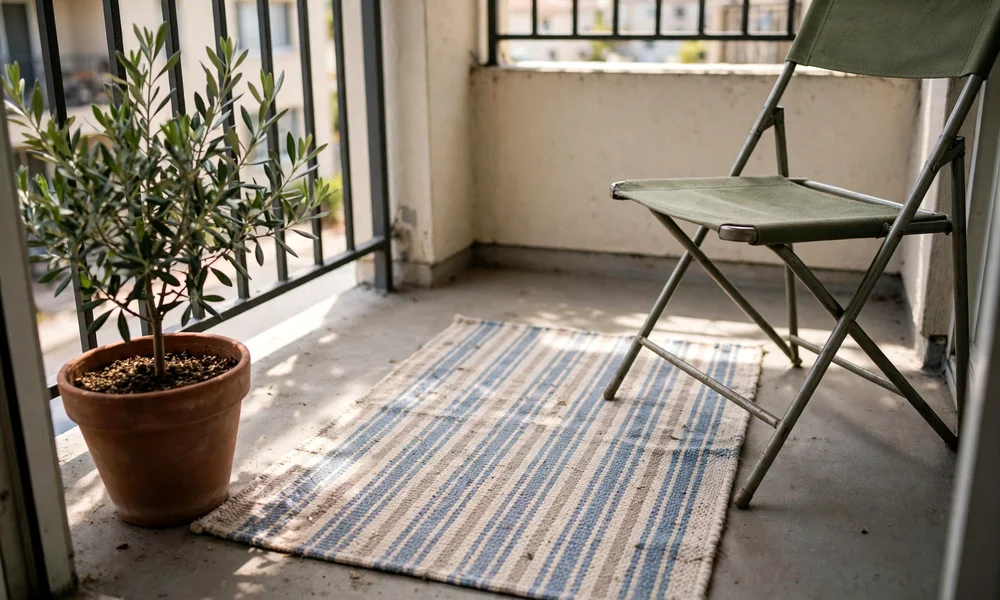
Balconies need the smallest rugs and the most careful thinking, because a balcony rug faces wind as well as rain. A rug that is too big catches the wind, lifts at the corners, and can end up over the edge, so choose one that sits well inside the balcony with a clear margin on every side, and pick a heavier weave that will not lift. Balcony rugs also need to dry fast, because water has nowhere to run on a small balcony, so an open-weave PET or polypropylene rug is the right call. Poolside rugs need chlorine resistance above all, which is why PET leads here, and they need a flat weave with no pile, because a high-pile rug beside a pool stays wet, goes slippery, and grows mildew within weeks.
The Materials Compared
Four materials dominate the outdoor rug market, and each suits a different patio. The table gives the quick comparison, and the sections that follow explain where each one shines and where it falls short.
| Material | Drying | Colour hold | Best for |
|---|---|---|---|
| Polypropylene | Fast, sheds water | Excellent when solution-dyed | Most patios, best all-rounder |
| Recycled PET | Fast, open weave | Very good | Eco-minded buyers, poolside |
| Natural jute or sisal | Slow, holds damp | Fair, fades in strong sun | Covered porches only |
| Outdoor cotton blend | Slow, soaks up rain | Poor, prints wash out | Sheltered balconies, short seasons |
Polypropylene: The Best All-Rounder
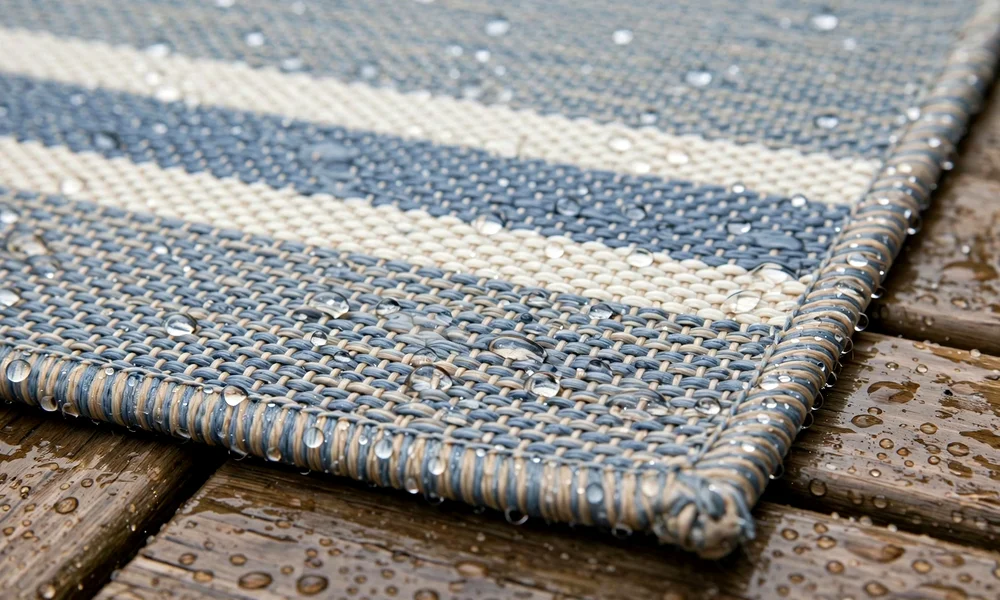
Solution-dyed polypropylene is the best outdoor rug material for most patios, and it wins on the two tests that matter most: it dries fast and it keeps its colour. Because the colour is dyed through the fibre rather than printed on the surface, sunlight has almost nothing to strip away, and a good polypropylene rug looks nearly the same in September as it did in May. The fibres do not absorb water, so rain runs off or passes through the weave, and the rug dries within hours.
Recycled PET: Best for Poolside and Eco-Minded Homes
Recycled PET, made from plastic bottles spun into yarn, is the best outdoor rug for poolside use and for buyers who want the most sustainable option. PET fibres are naturally resistant to water, chlorine and mildew, which is why poolside rugs are so often made from them, and the open weaves used for PET rugs drain faster than almost any other type.
Natural Fibres and Cotton Blends: Covered Spaces Only
Jute and sisal are tough and beautiful, but they absorb water, dry slowly, and rot when left wet, so they only work on a covered porch or under a roof where rain never reaches them directly. Even there, they need to be brought inside during wet spells, and they will fade in strong sun. Outdoor cotton blends are softer underfoot and often cheaper, but they soak up rain like a towel, hold damp for days, and their printed patterns wash out within a season.
Matching the Rug to the Surface
Stone patios are the easiest surface for an outdoor rug, because stone is rough enough to grip a heavy flat-weave rug without help. Wooden decking is trickier, because smooth boards are slippery when wet and a rug can slide.
Keeping an Outdoor Rug Alive
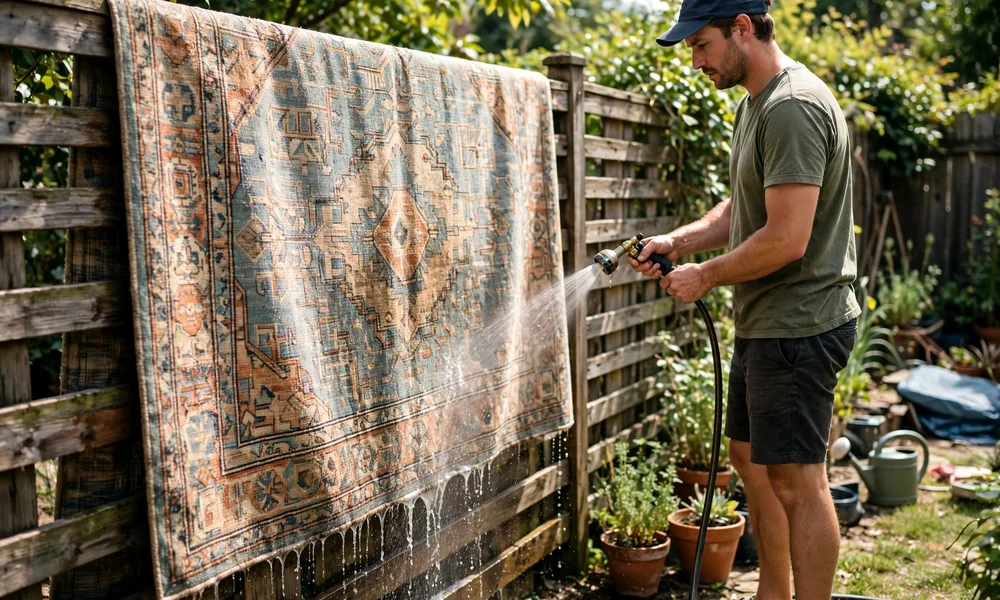
Daily care for an outdoor rug is simple: shake it out once a week, sweep leaves and dirt off before they work into the weave, and hose it down when it looks dusty.
Mistakes That Ruin a Good Outdoor Rug
The most common mistake is buying an indoor rug for outdoor use, because it looks right in the shop and fails in the first month. The third mistake is skipping the grip: a rug with no weight and no grip slides across smooth stone every time a chair moves, and a rug that arrives rolled tight keeps its curl for months, so unroll it fully before you buy if you can, walk across it, and drag a chair over it.
Outdoor Rug Checklist
- Material: solution-dyed polypropylene or recycled PET, never printed cotton or indoor wool outdoors.
- Drainage: a flat weave with a perforated or mesh backing that dries within hours of rain.
- Colour: dyed through the fibre, tested by rubbing a damp white cloth across it before you buy.
- Grip: heavy enough to stay flat, with a grip pad underneath on smooth decking.
- Size: measured to the seating area, clear of door swings and walkways, with a gap to the house wall.
- Care: hose it weekly, dry it fully before winter, and roll it loosely for storage.
Outdoor Rug FAQs
Can I use an indoor rug outside?
No, not for long. Indoor rugs are made from wool, cotton or jute, which absorb water, hold damp, grow mould and fade fast outdoors. An outdoor rug uses solution-dyed polypropylene or PET, with a flat weave that drains and dries within hours.
How do I stop an outdoor rug sliding on decking?
Choose a heavier flat-weave rug and put a thin outdoor grip pad underneath it. The pad also lets air circulate, which stops the boards underneath going green. On rough stone, a heavy rug usually grips without any pad at all.
Will an outdoor rug fade in the sun?
A solution-dyed rug holds its colour for years, because the dye runs through the fibre. A printed rug fades in a single summer, because the colour sits on the surface. Rub a damp white cloth across the rug before you buy: if colour comes off, it will fade fast.
How do I clean an outdoor rug?
Hose it down weekly, sweep leaves off before they work into the weave, and wash spills with mild soap and water. Avoid bleach, which strips colour, and avoid pressure washers, which drive dirt deeper and fray the edges.
Should I leave my outdoor rug out all winter?
It is better to store it: hose it clean, dry it fully in the sun, roll it loosely and keep it somewhere dry and ventilated. A rug left out all winter ages faster, and dirt left underneath it all winter stains the patio in the shape of the rug.
What size outdoor rug do I need for a dining set?
Measure the table and chairs with the chairs pulled out, then add at least 60 centimetres on every side so chairs stay on the rug when people sit down and stand up. When in doubt between two sizes, choose the larger one.
The Bottom Line
The best outdoor rugs of 2026 are the ones built for the weather, not just for the photograph: solution-dyed polypropylene for most patios, recycled PET for poolside and balconies, a flat weave that drains and dries within hours, and a weight and grip that keeps the rug flat under the chairs all summer. Match the rug to the surface, test the colour before you buy, hose it weekly, and store it dry in winter. Do those things and the rug still looks good in September, the patio feels like a room, and you are not buying a replacement next spring. If you are furnishing the whole space, our guide to the best patio furniture covers the chairs and tables the rug has to live with, and our guide to the best rugs covers the indoor side of the same choice, where wool and a good pad win instead.