
Rugs vs Carpets in 2026: Which Floor Covering Fits Each Room Best
The best rugs in 2026 are the ones that warm a room without taking it over. A good rug softens a hard floor, quiets a noisy room, anchors the furniture and adds colour where you want it, and it stays movable: you can roll it up, move it to another room, or take it with you when you move house. This guide covers them room by room.
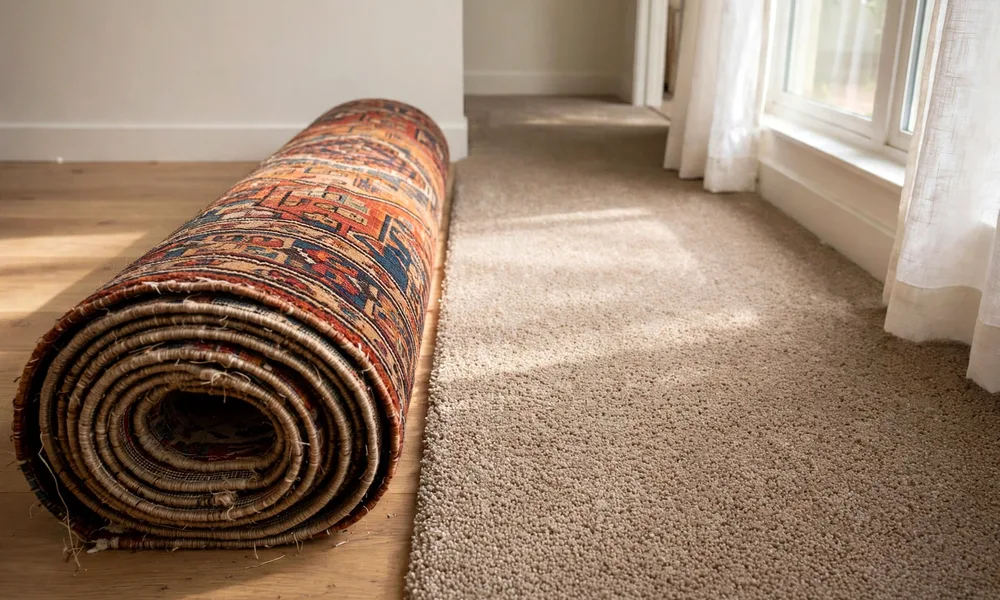
The first distinction to draw is rugs versus carpets, because the two words are used as if they meant the same thing and they do not. A rug is a movable floor covering that sits on top of a floor and covers part of it. A carpet is fitted wall to wall, fixed in place, and covers the whole floor. Rugs warm one room at a time and can be changed with the seasons; carpets warm a whole house and stay put for years.
5 Key Takeaways
- A rug is movable and covers part of a floor; a carpet is fitted wall to wall and covers all of it: buy a rug when you want flexibility, carpet when you want permanence.
- Wool is the best all-round rug material: soft, durable and naturally stain-resistant, though it costs more than cotton or synthetic fibres.
- Size matters more than pattern: a rug that is too small makes a room look scattered, while a rug that is too big rarely looks wrong.
- Always use a rug pad underneath: it stops slipping, adds comfort, protects the floor and makes the rug last longer.
- Match the rug to the room: low pile for dining and hallways, soft pile for bedrooms, washable fibres for kitchens and bathrooms.
Rugs vs Carpets: The Difference That Decides Everything
Rugs and carpets solve the same problem in opposite ways. A carpet is installed once and covers every inch of floor, edge to edge, usually with underlay beneath it. It warms a whole room evenly and never moves. It is also a commitment: fitting it costs money, replacing it means clearing the room, and a stain in the middle of a fitted carpet cannot be carried outside and cleaned.
A rug does the same jobs in a smaller area and stays under your control. It covers the seating area and leaves a border of bare floor around it, which is why rooms with rugs look more finished than rooms with bare floors and less heavy than rooms with fitted carpet. You can try a rug in the living room, move it to the bedroom when you redecorate, and roll it up and store it in summer.
There are rooms where carpet wins: bedrooms with cold floors, and stairs, where warmth matters more than flexibility. There are rooms where rugs win clearly: dining rooms, where a rug defines the eating area, and living rooms, where a rug anchors the seating group. Most homes end up with both: carpet in the bedrooms, rugs everywhere else.
Materials: What Rugs Are Made Of
Wool is the classic rug material and still the best all-round choice. It is soft under bare feet, naturally stain-resistant because of the lanolin in the fibre, and it keeps its shape for years. A good wool rug can last a decade or more. The price is higher than cotton or synthetic, but the cost per year of use is often lower.
Cotton rugs are lighter, cheaper and usually washable, which makes them the practical choice for kitchens, children’s rooms and anywhere spills are likely. They are thinner and less insulating than wool, and they show wear sooner in high-traffic spots, but they are easy to clean and easy to move.
Jute and sisal are the natural-fibre choices for a relaxed, textured look. They are tough and good-looking in a hallway or a living room, but they are rough under bare feet, hard to clean when stained, and unhappy in damp rooms. Keep them out of bathrooms and kitchens.
Synthetic rugs, usually polypropylene or polyester, are the budget workhorses. They resist stains, shrug off damp, and come in any colour or pattern you can imagine. They feel less luxurious than wool, but for a family room, a playroom or a first home they are hard to beat on value.
Room by Room: Where Each Rug Belongs
The Living Room
The living room is where a rug does its most visible work, anchoring the sofa, chairs and coffee table into one clear group. Our guide to the best area rug size for your living room covers the measuring in full: for most rooms, an 8 by 10 foot rug is the starting point, with the front legs of the sofa and chairs sitting on it and 18 to 24 inches of bare floor showing around the edges. Choose wool or a wool blend here, and use a pad underneath for grip and comfort.
The Bedroom
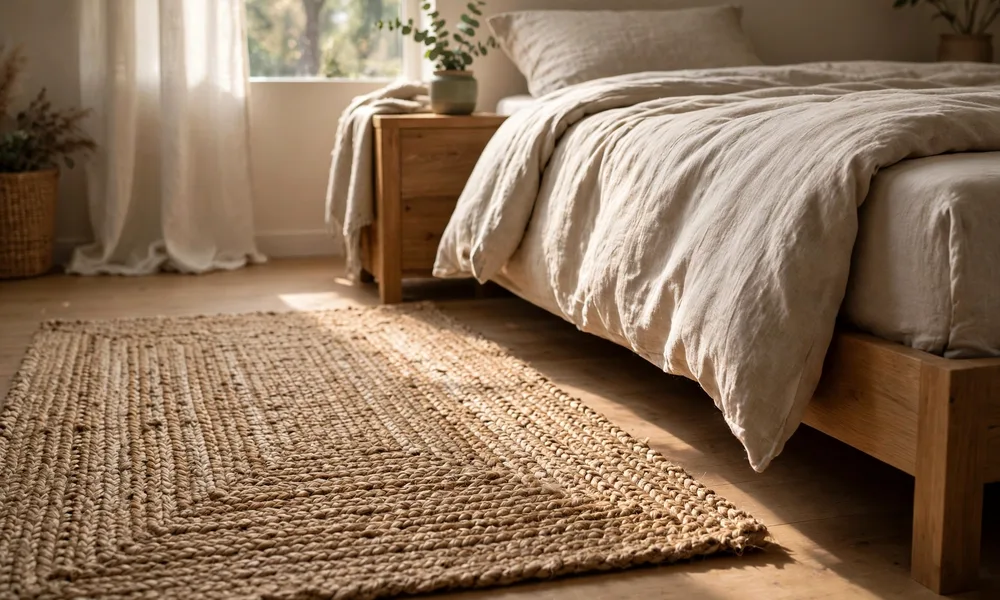
A bedroom rug is about the first step of the morning: soft, warm and kind to bare feet. A large rug under the bed that extends on both sides works best, or two runners, one on each side, for a smaller room. Choose a soft, high-pile wool or a plush synthetic, in a calm colour that suits the bedding.
The Dining Room
A dining rug defines the eating area and protects the floor from dropped food and scraped chairs. It must be large enough that chairs stay on it even when pulled out, which means adding at least 24 inches on every side of the table. Choose a low, flat pile that chairs slide over easily: a flatweave cotton or a low-pile synthetic is the sensible pick, and a dark pattern hides the marks a pale rug would show.
Hallways and Entrances
Hallway rugs take more foot traffic than any other rug in the house, so they need to be tough, thin and easy to clean. A runner, long and narrow, is the right shape, and a low pile stops doors catching and feet tripping. Our guide to hallway runners that survive foot traffic covers the runner choice in detail.
Bathrooms and Kitchens
Bathrooms and kitchens need rugs that can get wet and be washed. A small, washable cotton rug beside the bath or the sink is the right choice, and a dedicated bathroom rug with a non-slip backing stays put on a wet floor. Keep large, valuable rugs out of both rooms.

Rugs Compared
| Rug | Material | Feel | Cleaning | Best For |
|---|---|---|---|---|
| Wool rug | Wool | Soft, warm | Vacuum, spot clean | Living rooms, bedrooms |
| Cotton rug | Cotton | Light, flat | Machine washable | Kitchens, children’s rooms |
| Jute rug | Jute | Textured, firm | Dry clean only | Hallways, relaxed living rooms |
| Synthetic rug | Polypropylene | Smooth, light | Hose or spot clean | Family rooms, playrooms |
| Shag rug | Wool or synthetic | Deep, plush | Vacuum, professional clean | Bedrooms, low-traffic corners |
There is no single best rug, only the best rug for the room and the life lived in it. Wool wins on comfort and longevity, cotton wins on washability, jute wins on texture, and synthetic wins on price and stain resistance.
Size, Pile and Pads: The Three Practical Choices
Size comes first, because a rug in the wrong size cannot be rescued by a beautiful pattern. Measure the furniture layout before you shop: arrange the seating the way you want it, then measure the group as a whole, including the chairs and the space people need to walk around them. When in doubt between two sizes, choose the larger one: an oversized rug rarely looks wrong, while an undersized one almost always does.
Pile is the height of the rug’s fibres, and it decides how a rug feels and how it wears. Low pile suits dining rooms and hallways, where chairs slide and feet pass quickly. Medium pile suits living rooms, balancing comfort with easy cleaning. High pile, or shag, suits bedrooms and quiet corners, where softness matters more than practicality. High pile shows footprints and traps crumbs, so keep it out of the busiest rooms.
The rug pad is the part most buyers skip and most regret skipping. A pad stops the rug slipping on a hard floor, adds comfort underfoot, protects the floor, and makes the rug last longer. Our guide to rug pads that stop rugs slipping covers the pad choice in full. Buy the pad with the rug and cut it slightly smaller than the rug itself.
Keeping a Rug Clean
Daily care is simple: vacuum once or twice a week, more often in hallways and under dining tables. Use the suction head without the beater bar on delicate fibres such as jute, and raise the beater bar on high pile so it does not chew the fibres.
Spills need speed, not panic. Blot, never rub: press a clean cloth onto the spill, lift, and repeat until the cloth comes away clean. Work from the outside of the stain toward the centre so it does not spread. Cold water suits most spills; hot water can set a protein stain such as milk or egg.
Deep cleaning is a job for once or twice a year, and for wool and handmade rugs it is a job for a professional. A home carpet cleaner works well on synthetic rugs, but it can shrink wool if used too hot or too wet. Rotate the rug every few months so it wears evenly, and keep it out of strong direct sunlight, which fades even the best dyes.
Your Rugs Checklist
- Measure the furniture layout first, then choose the rug size, never the other way around.
- Match the material to the room: wool for living rooms and bedrooms, cotton for kitchens, synthetic for family rooms.
- Choose low pile for dining rooms and hallways, soft pile for bedrooms.
- Buy a rug pad with every rug, cut slightly smaller than the rug itself.
- Check the backing and the edges before you buy: a rug that curls at the corners will never lie flat.
- Vacuum weekly, blot spills at once, and deep clean once or twice a year.
Rugs FAQs
What is the difference between a rug and a carpet?
A rug is a movable floor covering that sits on top of a floor and covers part of it. A carpet is fitted wall to wall, fixed in place, and covers the whole floor.
What size rug should I buy for my living room?
For most living rooms, an 8 by 10 foot rug is the best starting point, with the front legs of the sofa and chairs sitting on it. Larger rooms suit a 9 by 12 foot rug.
Do I really need a rug pad?
Yes. A pad stops the rug slipping, adds comfort, protects the floor and makes the rug last longer. Every rug should have one.
Which rug material is best for a home with pets?
A low-pile synthetic rug is the easiest choice: it resists stains, cleans up after accidents, and does not hold pet hair the way high pile does.
Can I put a rug on top of carpet?
Yes, and it works well in bedrooms and living rooms, adding colour over plain fitted carpet. Use a pad between the rug and the carpet to stop it creeping.
How do I stop a rug curling at the corners?
Weight the corners down for a few days with books, roll the rug in the opposite direction overnight, or use rug grippers underneath.
Bottom Line
The best rugs in 2026 are the ones chosen room by room: wool for the living room and bedroom, low pile for the dining room and hallway, washable cotton for the kitchen and bathroom, and a pad underneath every single one. Measure first, match the material to the room, and buy the larger size when you are torn. Verdict: a wool rug with a pad is the pick for most rooms, a synthetic rug is the pick for pets and heavy traffic, and either beats fitted carpet for flexibility every time.


