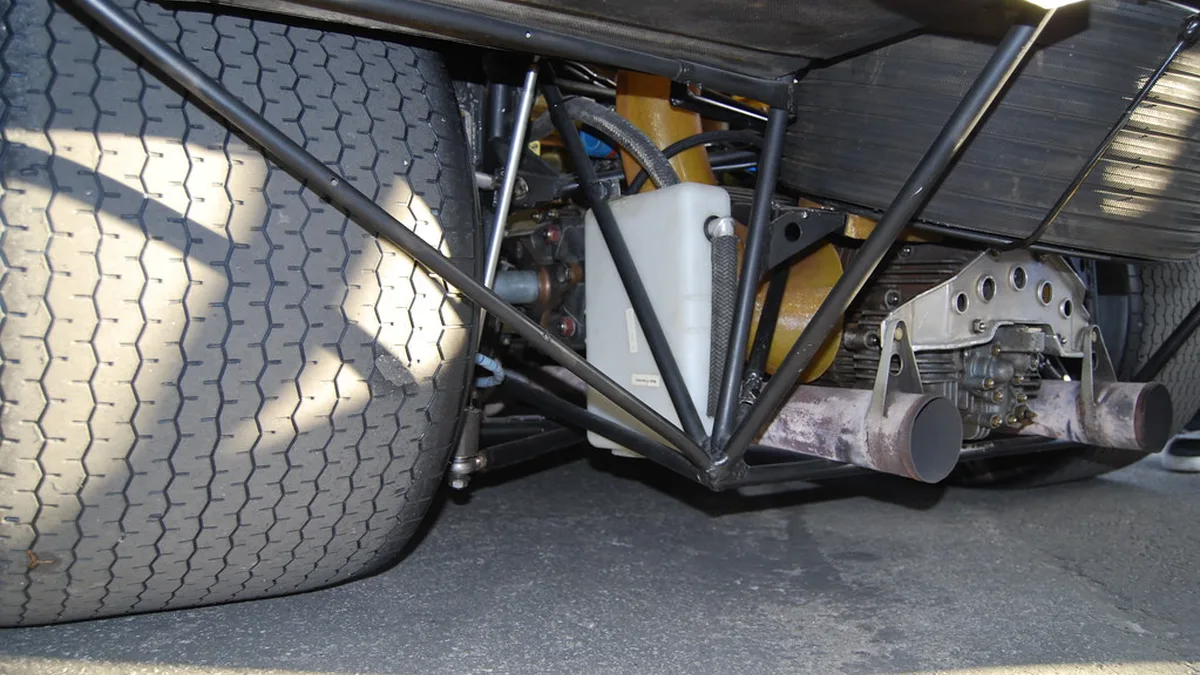
Steer Around the Worst Race Suspension of 2026: Seven Suspension Types That Ruin the Ride
The worst race suspension of 2026 is not the softest setup on the grid. A soft car can still be honest and fun to watch. The worst race suspension fails in a much more basic way: it takes a good circuit and a driver doing their best, and wastes it with parts that crash over every kerb, fade after ten laps or fight the driver in every corner. This guide ranks the worst types of race suspension, by component, so you can spot a bad setup first.
Key takeaways
- A race car is judged by how its tyres stay on the ground, not by how low it sits.
- Travel is grip: a suspension with no travel skips over bumps.
- A damper that fades with heat is worse than a soft one, because it changes mid-race.
- Every part must match: a stiff spring with a weak damper is worse than either alone.
- Check the travel, the damping and the bushes before you trust any race suspension.
How the worst race suspension was ranked
Every type below was scored on five measures. Bump control comes first: can it absorb kerbs without throwing the tyre off the ground? Body control is second: does the car stay level under braking and turning, or roll, dive and pitch? Durability is third: a setup quick for ten laps and broken after is no setup at all. Honest adjustability is fourth: does a click on the adjuster do what it promises? Tyre contact is fifth: a tyre in the air cannot brake, turn or accelerate. Two notes before the list. First, no real car, maker or brand is named: this guide ranks types and patterns, not individual products. Second, a bad suspension is not the same as a bad car: our guide to the worst race cars shows how a whole machine can fail even when its parts look fine, while the worst race brakes show what happens when the stopping parts give up too.
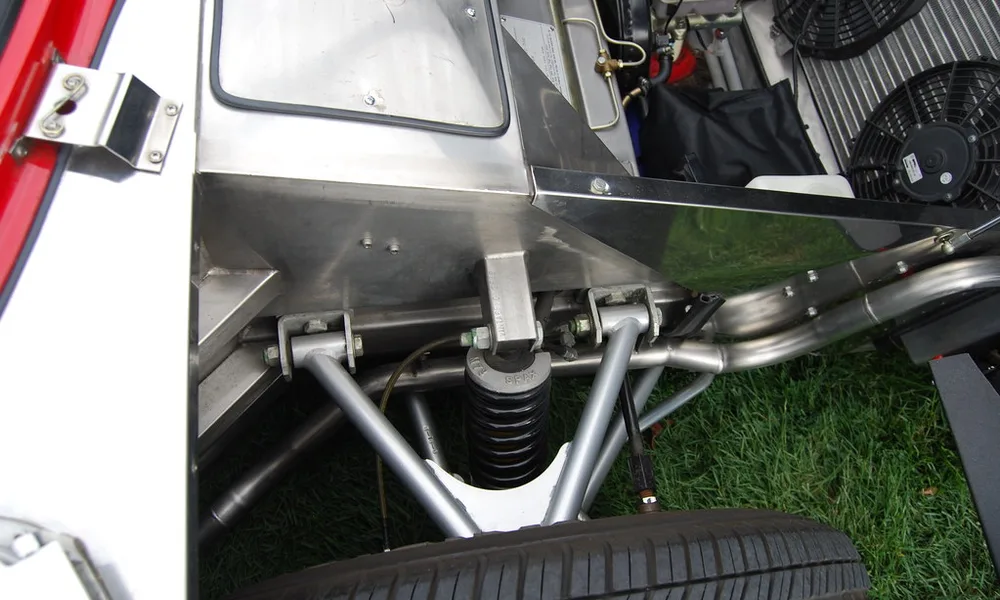
Comparison table: the worst race suspension 2026
| Rank | Suspension type | Main failure | Worst moment |
|---|---|---|---|
| 1 | The rock-hard coilover | No travel, skips over bumps | Tyres airborne over kerbs |
| 2 | The fading damper | Damping gone by mid-race | A car that changes mid-race |
| 3 | The mismatched spring and damper | Parts that fight each other | Bouncing down straights |
| 4 | The over-stiff anti-roll bar | Lifts the inside wheel | Spinning out of corners |
| 5 | The worn-out bushing set | Geometry that wanders | A car that never points the same way |
| 6 | The sagging spring | Ride height that keeps dropping | Bottoming out on fast corners |
| 7 | The over-complicated setup | Too many clicks, never dialled in | A different car each session |
The worst race suspension of 2026
1. The rock-hard coilover: no travel, no grip, no mercy
The rock-hard coilover is the worst type of race suspension, because it fails at the one job that matters: keeping the tyres on the ground. It looks the part in the paddock and feels fast on a smooth test lap. Then the race starts, the kerbs arrive, and the truth comes out. With almost no travel left, the wheel cannot follow the surface. A tyre in the air cannot brake, turn or put power down.
The damage is not just lap time. A car with no travel shakes the wheel in the driver’s hands and hides the limit, because the limit keeps moving with the surface. It also overheats its tyres, which slide across bumps instead of rolling over them. A good coilover uses its travel. The rock-hard one threw the travel away to look fast standing still.
2. The fading damper: quick for ten laps, hopeless after that
The fading damper is the cruellest kind of race suspension, because it shows you a good car before it takes it away. For the first ten laps the car feels planted and sharp, settling quickly after every bump. Then the oil gets hot, the damping fades, and the car starts to float and wallow. By mid-race the driver is fighting a machine nothing like the one they started with.
What makes this failure so frustrating is that the speed is real, which keeps everyone hoping. It never is, because hope is not a fix for a damper that cannot shed its own heat. A good damper holds its performance for a full race. The fading damper is built for a qualifying lap, and the driver learns about it at the fastest corner on the track.
3. The mismatched spring and damper: two good parts making a bad car
The mismatched spring and damper is easy to miss in the paddock and impossible to ignore on track. The spring is too stiff for the damper, so the damper cannot control it, and the wheel bounces down every straight. Or the spring is too soft and the damper too firm, so the car crashes over bumps it should have soaked up. Together they are a disaster.
Racing rewards balance, and a suspension that fights itself breaks the rhythm of the whole car. The driver spends the race guessing which version will arrive at the next corner: the one that grips, or the one that bounces. A good setup matches spring to damper so they work as one part. The mismatched pair proves that good components do not make a good suspension.
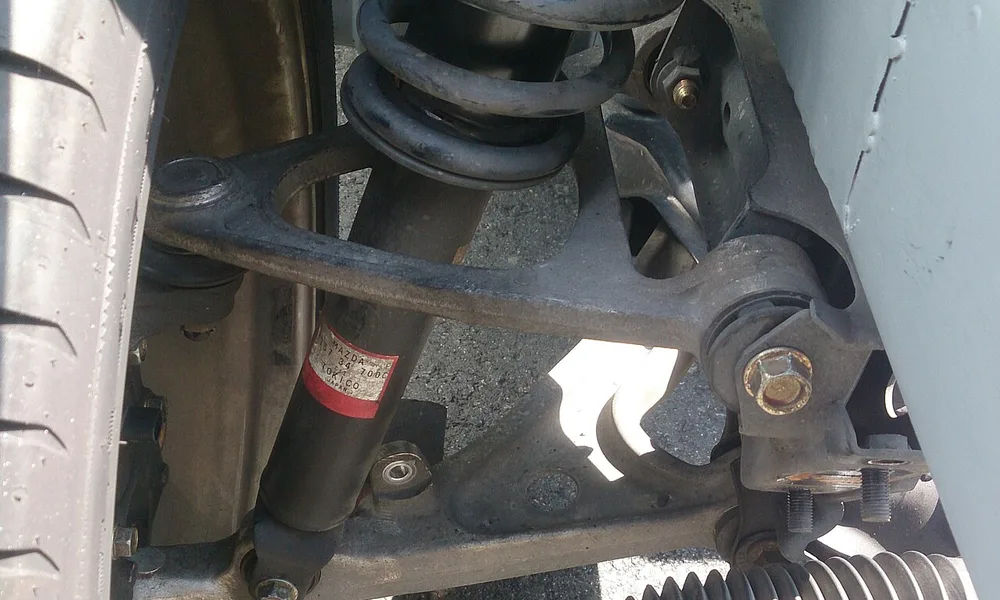
4. The over-stiff anti-roll bar: flat in the fast corners, lost in the slow ones
The over-stiff anti-roll bar is a strange disappointment, because it looks like a fix, right up until the car has to turn slowly. On fast corners it keeps the car flat and tidy. The moment the car reaches a tight hairpin, everything falls apart: the bar is so stiff that it lifts the inside wheel off the ground, and the car spins its power away through one tyre.
The same failure appears in the wet, where the over-stiff bar stops the suspension from working at all, and the car slides where a softer setup would have found grip. Good anti-roll bars are a compromise. The over-stiff bar was tuned to a photograph of a flat car, and the answer is a slow car in the corners that matter most.
5. The worn-out bushing set: vague, clunky and never the same twice
The worn-out bushing set is the quietest failure on this list, because it never makes a sound until it is far too late. The rubber bushes that hold the suspension arms go soft, crack and split, and the geometry starts to wander. The car brakes straight on one lap and pulls to one side on the next. It turns in crisply in the morning and feels vague by the afternoon.
What makes worn bushes so costly is that they hide, while every other part gets checked, measured and replaced. That is enough to change the camber, the toe and the feel of the car. A good setup starts with fresh bushes, because everything else hangs off them. The worn-out set proves that the cheapest parts can cause the most expensive problems.
6. The sagging spring: lower every lap until the floor hits the ground
The sagging spring is the saddest failure on this list, because it starts as a good setup and slowly gives up. The spring loses strength over a season, the ride height drops, and the car starts to bottom out on bumps it used to clear. Then the floor hits the ground every lap, the sparks fly, and the driver has to lift where they used to stay flat.
The real cost is not the sparks. A car that sits too low loses its suspension travel, so it starts to behave like the rock-hard coilover at the top of this list, skipping over bumps instead of absorbing them. It also loses its aero balance, because the floor and wings were designed for a set height. A good spring holds its height for a season. The sagging spring is a slow leak of performance, and by the time anyone notices, the season is half gone.
7. The over-complicated adjustable setup: a different car at every session
The over-complicated adjustable setup is the most modern failure on this list, because it promises everything and delivers confusion. It has clicks for compression and rebound, separate adjusters for fast and slow movements, and a manual thick enough to stop a door. In practice nobody on the team agrees on what perfect means, so the car is different at every session and nobody knows which change did what.
The damage is not just lap time. A setup with too many options eats the practice session, while a simpler car is already out learning the circuit. And when something goes wrong in the race, there is no baseline to return to, because it was lost three adjustments ago. A good setup has a few clear changes that do what they promise. The over-complicated one is a maze, and the driver has to find the way out at racing speed.

Checklist: spotting the worst race suspension before race day
- Push down on each corner: the car should settle smoothly, not bounce.
- Measure the ride height over a session: a car that keeps dropping has a sagging spring.
- Feel the dampers after a run: if one is far hotter than the rest, it is fading.
- Check the bushes for cracks and play before you blame the springs or the dampers.
- Count the clicks: if nobody can say what the settings are, the setup is too complicated to race.
- Watch the tyres: uneven wear means the suspension is not keeping the tyre flat on the ground.
Frequently asked questions
What is the worst type of race suspension in 2026?
The rock-hard coilover tops this list, because a suspension with no travel cannot keep the tyres on the ground, and a tyre in the air cannot brake, turn or accelerate.
Can a soft suspension be worse than a stiff one?
Yes, when it is uncontrolled. A soft spring with a weak damper lets the car roll, dive and pitch until the tyres lose their shape in the corners. The answer is matched parts, not simply stiffer ones.
How do I know if my dampers are fading?
Watch for a car that feels sharp at the start of a stint and vague by the middle. One damper far hotter than the rest, or a car that floats over bumps it used to absorb, points to fade.
Do anti-roll bars really lift a wheel off the ground?
Yes, when they are too stiff. A very stiff bar ties the two wheels together so tightly that the inside wheel lifts in slow corners, spinning away power at every hairpin.
Are worn bushes really that important?
They are, because every arm hangs off them. Worn bushes let the geometry move a few millimetres under load, which changes the camber and toe from lap to lap.
Is an adjustable suspension always better than a fixed one?
No. Adjustability only helps when the team knows what each change does. A simple setup that is understood beats a complicated one nobody can repeat.
Bottom line
Steer around the worst race suspension by remembering one rule: keep the tyres on the ground. A setup with travel, matched parts, fresh bushes and settings the team understands will beat a stiffer, flashier or more complicated one every time. The worst suspension here all fail the same test in different ways, so check the travel, the damping and the bushes before race day, and leave the rock-hard coilovers, the fading dampers and the maze of adjusters in the paddock. If the car still feels wrong after that, our guide to the worst race seats is a good next check, because a driver who cannot sit still cannot feel the suspension.