Pet Treat Jars That Keep Training Treats Fresh and Within Reach in 2026
The best pet treat jars of 2026 do a small job brilliantly: they keep the biscuits crisp, the training bites within reach, and the countertop looking tidy instead of cluttered with half-open packets. A pet treat jar sounds like the simplest purchase in a pet-owning home, until the treats go soft in a bag that never quite closes, the dog learns to nose the lid off a flimsy tub, or the jar you bought for the kitchen ends up hidden in a cupboard because it looks wrong on the worktop. The best pet treat jars get the practical details right first: a lid that opens with one hand while the other holds a lead, a seal that keeps treats crunchy for weeks, and a size that matches the treats you actually buy, and then they look good doing it. We judged them on the seal, one-handed opening, size, durability and looks.
A treat jar is not a food bin. A bulk food container holds a whole bag of kibble and guards it against air, moisture and pests for a month, while a treat jar holds a few days or weeks of biscuits and small bites and gets opened ten times a day. That difference changes everything about what makes one good: the lid matters more than the capacity, the jar has to survive being grabbed in a hurry, and it has to look like it belongs in the room, because it sits out in the open.
Key Takeaways
- The lid matters more than the jar: a one-handed lid you can open while holding a lead beats a pretty jar with a fiddly screw top every single time.
- Ceramic is the best all-round pet treat jar: heavy enough that a dog cannot nose it off the counter, easy to clean, and kind to crunchy treats.
- Match the jar to the treat, not the pet: small training bites need a small jar with a wide mouth, while big biscuits need height and a lid that clears them.
- A real seal keeps treats crunchy for weeks, while a loose lid lets biscuits go soft in days, so check for a silicone ring or a snug-fitting lid before you buy.
- Keep the jar where the rewarding happens: by the back door for toilet training, on the kitchen counter for mealtimes, and never in a cupboard where it gets forgotten.
A Treat Jar Is Not a Food Bin
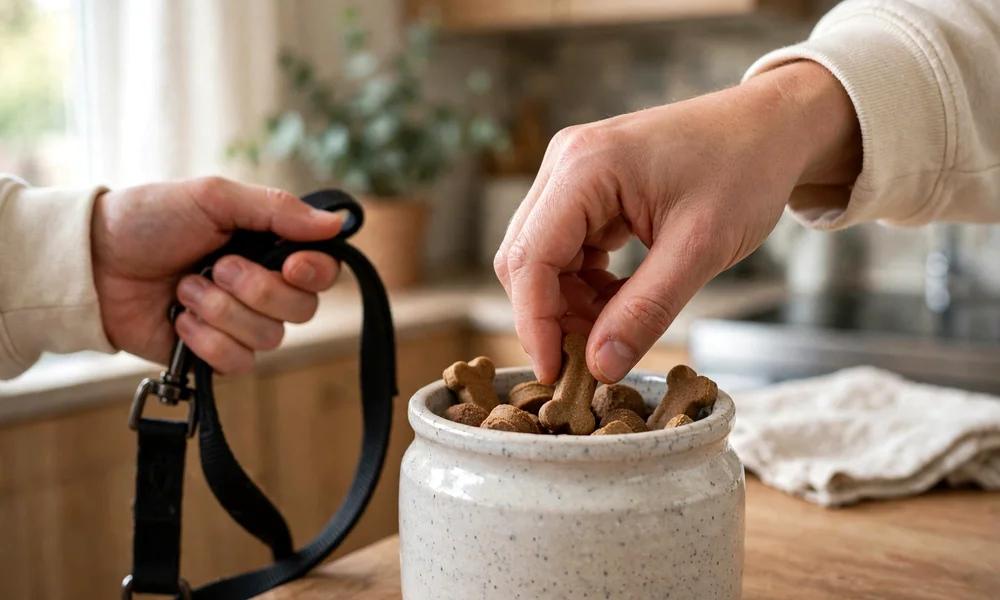
The first mistake people make is buying a treat jar the way they buy a food bin, and the two jobs could hardly be more different. A food bin is judged on how much it holds and how long it keeps a whole bag fresh, so size and seal dominate and the bin can live out of sight in a utility room. A treat jar is judged on how it behaves in the ten seconds between your pet doing the right thing and the treat arriving, so the lid, the weight, the mouth and the position on the counter dominate, and the jar lives in plain sight.
The second difference is who the jar has to defeat. A treat jar has to defeat a clever dog that has watched you open it a hundred times, a cat that can knock a light jar off a shelf with one paw, and a toddler who can reach the counter. The best jars solve both problems at once: heavy enough to stay put, with a lid that is easy for a human hand and awkward for a wet nose.
The Jar Types Compared
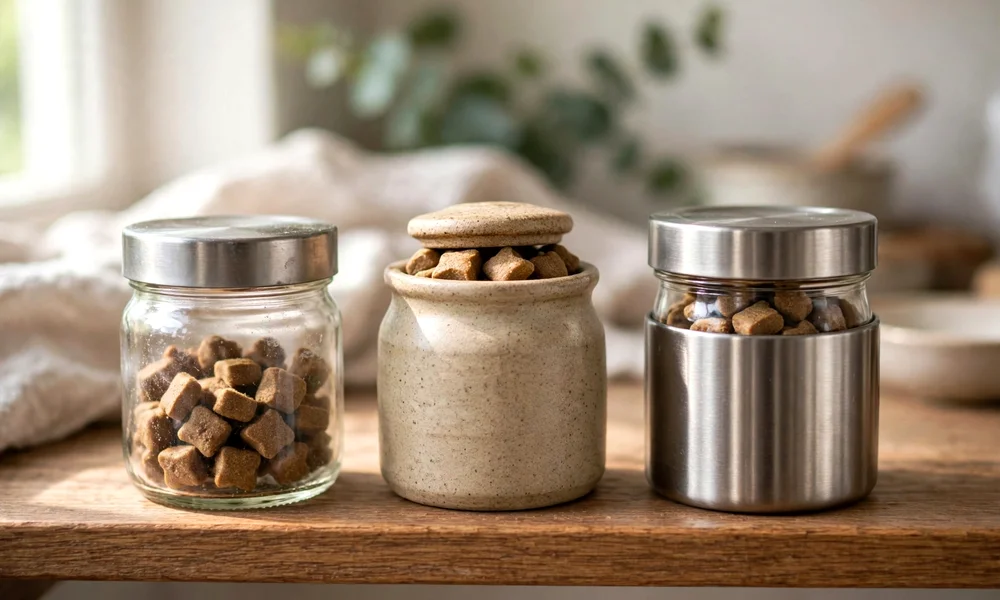
Most pet treat jars fall into five types, and each suits a different home. The table gives the quick comparison, and the sections that follow explain where each one shines and where it falls short.
| Jar type | Seal | Best for | Watch out for |
|---|---|---|---|
| Ceramic | Good with a silicone ring | Most homes, dogs that nose lids | Breaks if dropped on tile |
| Glass | Good with a clamp lid | Seeing how many treats are left | Light, slides, lets light in |
| Stainless steel | Very good | Chewy or smelly treats, busy homes | Cannot see inside, costs more |
| Plastic | Fair to good | Children, caravans, tight budgets | Holds smells, scratches, too light |
| Bamboo-lid glass | Fair | Matching a natural kitchen look | Lid swells if washed, seal weakens |
Ceramic: The Best All-Rounder
A ceramic treat jar is still the best pet treat jar for most homes, and the reason is weight. A good ceramic jar is heavy enough that a dog cannot slide it across the counter or nose it off the edge, and that weight also makes it feel solid and pleasant to use. Look for a jar with a silicone ring in the lid, because a bare ceramic lid sits loosely and lets air in, while a ringed lid seals properly and stays put. Check the mouth is wide enough for your hand. The weakness is breakability: a dropped ceramic jar chips or shatters, so keep it on a stable spot, not a shelf a cat walks along.
Glass: Best for Seeing What Is Left
A glass treat jar has one advantage no other type can match: you can see how many treats are left without opening it. That matters more than it sounds, because running out of training treats halfway through a walk is a small disaster, and a glance at a glass jar tells you whether to refill before you leave. The downsides are weight and light. Most glass jars are lighter than ceramic, so a determined dog can slide one, and clear glass lets in light, which slowly degrades treats and fades their colour.
Stainless Steel: Best for Smelly Treats
Stainless steel is the best pet treat jar for chewy, smelly or oily treats, because steel blocks light and air completely, never holds a smell, and wipes clean in seconds. The trade-off is that you cannot see inside, so you have to open it to check the level, and steel jars cost more than glass or plastic for the same size. Choose a wide mouth, a silicone-sealed lid and a non-slip base ring.
What Makes a Good Treat Jar
The lid is the whole test. Stand in the shop, or imagine your own kitchen, and run through the motion you will repeat a hundred times a week: one hand holds a lead, a poo bag, or a puppy that is about to jump up, and the other hand has to open the jar, take one treat, and close it again. The best lids for one-handed use are a heavy lift-off lid that comes away with a fingertip, a flip-top lid that opens with a thumb, and a wide wooden lid with a knob that you can hook with one finger.
Size is the second test, and most people buy too big. A jar that holds a month of treats sounds generous, but a big jar means treats sit at the bottom going stale while you fish for them, and a big jar takes up counter space that a small one would not.
Durability is the third test, and it is mostly about the base and the lid. A jar that lives on the counter will be knocked, nudged and occasionally dropped, so check the base sits flat without rocking, the lid fits snugly without rattling, and there are no thin handles that snap off. A rubber ring on the base stops the jar sliding when a dog noses it. Wash the jar between refills, because crumbs and oils at the bottom go rancid and spoil fresh treats, exactly as they do in a food bin: our guide to the best pet food containers explains the same rule for bulk kibble, and it applies to treat jars too.
Where to Keep the Jar
A treat jar earns its keep by being where the rewarding happens, and that is rarely in one place. The main jar belongs on the kitchen counter, at the height you reach without thinking, because most rewarding happens around the kitchen and the back door.
Mistakes That Spoil Good Treats
The most common mistake is leaving treats in the open bag inside the jar, or never decanting them at all. An open bag in a cupboard goes soft in days, and a jar with a loose lid is barely better, so the fix is simple: decant the treats into a jar with a real seal and close the lid every time.
Pet Treat Jar Checklist
- Lid: opens with one hand, even with wet hands, and a dog cannot nose it off.
- Seal: a silicone ring or snug-fitting lid that keeps treats crunchy for weeks.
- Size: holds a week or two of treats, about one litre for a small pet and two for a large dog.
- Mouth: wide enough for your hand to reach the bottom without tipping the jar.
- Weight: heavy enough to stay put on the counter when a dog noses it.
- Cleaning: comes apart easily, washes clean, and dries fully between refills.

Pet Treat Jar FAQs
Do pet treat jars really keep treats fresh?
Yes, if the lid seals properly. A jar with a silicone ring or a snug-fitting lid keeps biscuits crunchy for weeks, while treats left in a folded packet go soft in days.
What size treat jar should I buy?
Buy for a week or two of treats: about one litre for a small dog or a cat, one to two litres for a medium dog, and two litres for a large dog or a multi-pet home.
Are ceramic treat jars better than glass ones?
Ceramic is better for most homes, because it is heavy enough that a dog cannot nose it off the counter and it blocks light. Glass is better if you want to see how many treats are left at a glance, but it is lighter, lets light in, and shows every fingerprint.
Can I store dog and cat treats in the same jar?
No. Dog and cat treats have different recipes and sizes, and mixing them means you grab the wrong one in a hurry. Keep soft and crunchy treats apart too. Use one jar per treat type.
How often should I wash a treat jar?
Wash it every time you finish the treats inside, before you refill it. Warm soapy water, a good rinse and a full air-dry is enough.
Where is the best place to keep a treat jar?
On the kitchen counter, where the rewarding happens, with a smaller jar by the back door for toilet training and greetings. Keep it out of direct sun, away from radiators and the stove, and out of your pet’s reach when you are not there.
The Bottom Line
The best pet treat jars of 2026 are the ones that make rewarding your pet quicker and easier: a heavy ceramic jar with a one-handed lid and a silicone seal for most homes, a clamp-lid glass jar if you want to see the level at a glance, and a stainless steel jar for smelly or chewy treats. Match the size to a week or two of treats, keep the jar on the counter where the rewarding happens, and wash it between refills. If you need bigger storage for the bulk bag itself, our guide to the best pet food containers covers that end of the job, and if you want a jar that doubles as kitchen storage, the best cookie jars and the best storage jars use the same seal and lid rules, just for human food.