
The best pet food containers of 2026 do a job most owners only notice when it goes wrong: they keep kibble fresh, crunchy and safe from the moment the bag is opened until the last scoop. A bag of dog or cat food left open in a cupboard goes stale within days, picks up kitchen smells, and invites pantry moths and ants. A good container stops all of that with a seal that actually seals, a body that does not crack, and a size that fits the way you feed.
Choosing the right pet food container is about matching it to your pet and your home: a single cat eats a fraction of what a large dog does, and a flat with no storage needs a very different answer from a house with a utility room. This guide compares the strongest pet food containers of 2026 side by side and helps you pick one that keeps every meal as fresh as the first.
Key Takeaways
- The seal matters more than the bin: an airtight lid with a silicone gasket or locking clips keeps kibble fresh for weeks, while a loose lid lets it go stale in days.
- Match the size to the bag you buy: a container should hold one full bag with a little room to spare.
- Hard plastic and stainless steel beat soft fabric for kibble storage: they block moisture, smells and pests.
- A built-in scoop, a wide opening and wheels on large bins turn a daily chore into a ten-second job.
- Wash the container between bags: old crumbs and oils at the bottom go rancid and spoil fresh food.
The Seal Is Everything
If you remember one thing from this guide, make it this: buy for the seal, not for the shape. A pet food container is only as good as its lid, and the difference between a good seal and a bad one shows up in the bowl. Kibble exposed to air loses its crunch and its smell within a week, and dogs and cats notice. A container with a silicone gasket that presses evenly all the way round, or with four locking clips that pull the lid down tight, keeps air out and keeps food fresh for the whole bag.
Test a candidate before you buy. Close the lid, press down on the centre, and listen for air escaping. Pick it up by the lid: if the lid lifts or the seal gaps, it is not airtight. A good seal should also survive being knocked by a curious pet, so it needs to hold under a little pressure, not just sit neatly on a shelf.

Pet Food Containers at a Glance
| Container type | Verdict | Best for | Typical size |
|---|---|---|---|
| Airtight vault bin | Best overall | Most homes | 15 to 25 litres |
| Stackable locking tub | Best for small spaces | Flats and cupboards | 5 to 12 litres |
| Wheeled storage bin | Best for large dogs | Big bags, garages | 30 to 50 litres |
| Stainless steel canister | Best for freshness | Cats and small dogs | 4 to 10 litres |
| Clear flip-top container | Best budget pick | Trying airtight storage | 5 to 15 litres |
The Best Pet Food Containers of 2026
The Airtight Vault Bin: Best Overall
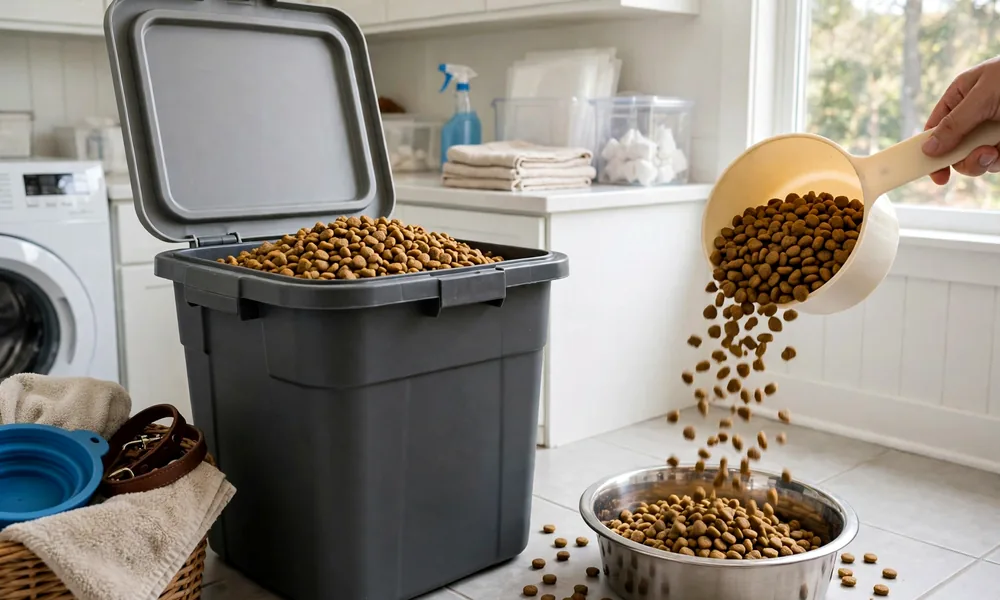
The best pet food container of 2026 is the familiar airtight vault bin: a sturdy, wide-mouthed tub with a screw or locking lid and a silicone gasket that seals all the way round. It holds a full bag of kibble, keeps it crunchy for weeks, and stands up to being knocked about by pets and children. The wide mouth lets you scoop without tipping the bin and wipe it clean between bags.
Look for thick, food-safe plastic that does not flex when you lift a full bin, and a lid that closes with a clear click or a firm twist. The best vaults come with a measuring scoop that clips inside the lid, so it never goes missing. If you feed a large dog, choose at least fifteen litres, and check it fits where you plan to keep it before you buy.
The Stackable Locking Tub: Best for Small Spaces
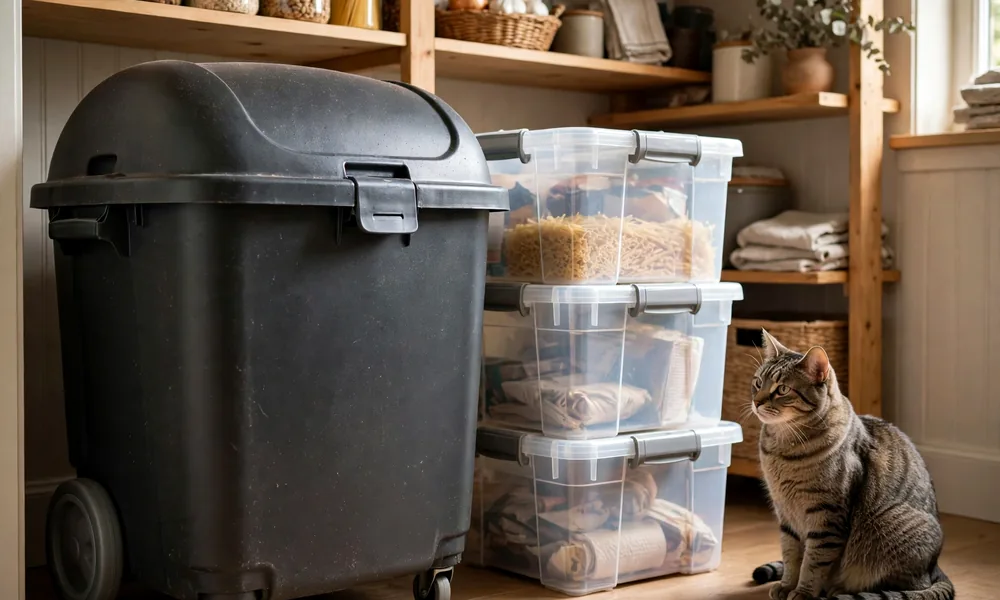
If your kitchen is small, your cupboard is crowded, or you feed a cat who eats a few handfuls a day, the stackable locking tub is the sensible choice: a rectangular box with four locking clips and a gasket seal, sized to slide onto a shelf or stack two high. Rectangular tubs use shelf space far better than round ones, and a clear body shows how much food is left.
Buy one footprint in two sizes if you feed two pets, so the lids are interchangeable and the stack stays tidy. Check the clips: they should snap shut with one hand and stay shut if the tub is dropped. Avoid thin walls that bow when full, because a bowed wall breaks the seal at the corners.
The Wheeled Storage Bin: Best for Large Dogs
Owners of large dogs buy kibble in big bags, and a big bag needs a big bin. The wheeled storage bin holds thirty litres or more, rolls out on castors, and takes the weight off your back. The best ones have a flip-top lid that opens with one hand, a gasket seal, and a scoop stored in the lid.
Two things decide whether a wheeled bin is a pleasure or a chore. First, the wheels must lock, or the bin will roll away every time a dog leans on it. Second, the bin must be easy to clean, because a large bin holds food for a month or more. A smooth interior with no awkward corners is worth more than a fancy lid.
The Stainless Steel Canister: Best for Freshness
For cats and small dogs, where a bag lasts a month and freshness matters most, the stainless steel canister is hard to beat. Steel blocks light and air, never holds smells, and does not stain the way plastic can. A good canister has an airtight lid with a silicone ring and a wide mouth that fits a scoop.
Steel costs more than plastic and weighs more, so it suits smaller quantities. Choose a canister that holds two to three weeks of food, and keep the main bag sealed in a larger bin if you buy in bulk. Wash it with warm soapy water between refills and dry it fully, because trapped moisture will soften kibble.
The Clear Flip-Top Container: Best Budget Pick
If you want to try airtight storage without spending much, the clear flip-top container is the cheapest way in: a simple box with a hinged lid that flips open with a thumb press, a silicone seal, and a clear body so you can see the level. It will not outlast a vault bin, but for a small pet or a first try it does the job well.
Check that the flip top closes firmly and the seal is a real gasket, not just a ridge of plastic. A container that only looks sealed will let kibble go soft in a week. Keep it out of direct sunlight, because light speeds up the oils in kibble going stale.
What Size Should You Buy?
Size is the question most buyers get wrong, and the rule is simple: buy for the bag, not for the pet. A container should hold one full bag of your usual food, with a little room at the top. If it is too small, half the bag stays open and goes stale anyway. If it is far too large, the food sits in a half-empty bin with a lot of air above it.
As a rough guide, ten litres holds about four kilograms of kibble, fifteen litres about six, and thirty litres about twelve. Weigh your bag rather than guessing, because kibble density varies. The food inside matters as much as the bin: if you are still choosing what to feed, our guide to the best dog food for your dog’s age and size and our best cat food roundup will help you pick a food worth keeping fresh.
Mistakes That Spoil Good Kibble
The most common mistake is pouring fresh kibble on top of the old crumbs at the bottom of the bin. Those crumbs are the oldest food in the container, and their oils have already started to turn. Finish the old food first, then wipe the bin clean before you open a new bag. It takes two minutes and it is the single best thing you can do for freshness.
The second mistake is storing the bin somewhere warm or damp: next to a radiator, in a humid garage, or in direct sun. Heat and moisture make kibble go stale and let mould grow, so a cool, dry cupboard is the right home. The third mistake is decanting wet food into a kibble bin: wet food belongs in the fridge, never in a dry-food bin. Keep it simple: dry food in the bin, wet food in the fridge, and a clean dog bowl at every meal.
Pet Food Container Checklist
- Seal: silicone gasket or locking clips that hold tight when you lift the bin by the lid.
- Size: holds one full bag of your usual food with a little room to spare.
- Material: thick food-safe plastic or stainless steel, with no smell when new.
- Opening: wide enough to scoop easily and to wipe clean between bags.
- Scoop: a measuring scoop included or clipped inside the lid.
- Stability: a flat base that does not tip, and locking wheels if the bin is on castors.
Frequently Asked Questions
Is it safe to store pet food in a plastic container?
Yes, if the plastic is food-safe and BPA-free: it does not leach into dry kibble. Wash a new container with warm soapy water before first use, and replace it if the plastic ever cracks, warps or holds a smell after washing.
How long does kibble stay fresh in an airtight container?
About four to six weeks after opening, if the seal is good and the bin is kept cool and dry. An airtight bin slows staleness, it does not stop it, so also check the date on the bag. If the kibble smells flat or your pet turns away, it has gone stale.
Should I keep the kibble in its original bag inside the container?
Keeping the bag inside the bin is a good habit: the bag is an extra barrier, it keeps the bin clean, and it keeps the batch details and expiry date with the food. Roll the top down and close the lid over it. The only downside is that it holds a little less food.
Do pet food containers keep ants and pantry moths out?
A genuinely airtight container with a gasket seal keeps both out; loose lids do not. If you have had moths before, choose locking clips, check the seal every time you close it, and store the bin away from the pantry.
Can I store cat and dog food in the same container?
No. Cat and dog foods have different recipes, and mixing them means neither pet gets the right food. Use a separate labelled container for each pet, and keep the scoops separate too.
How often should I wash a pet food container?
Wash it every time you finish a bag, before you open the next one. Warm soapy water, a good rinse and a full air-dry is enough. Never refill a damp container, because trapped moisture softens kibble and invites mould.
The Bottom Line
The best pet food containers of 2026 are the ones with a seal you can trust: the airtight vault bin for most homes, the stackable locking tub for small spaces, the wheeled bin for large dogs, the stainless steel canister for maximum freshness, and the clear flip-top container on a budget. Match the size to the bag, wash the bin between bags, and keep it cool and dry. Do those things and every scoop will be as fresh and crunchy as the first.


