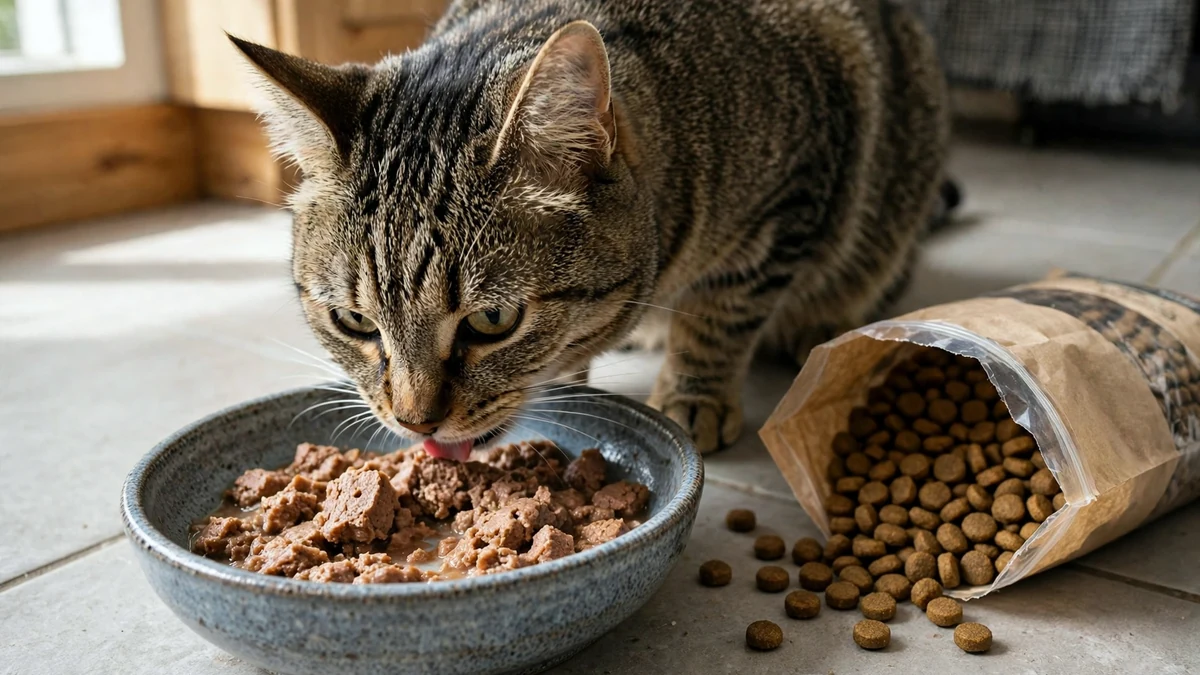
Every cat owner knows the sound: the rustle of a bag, the click of a tin lid, and suddenly a cat appears from nowhere, winding around your ankles with great expectations. What goes into the bowl matters more than most of us admit, because food is the one thing a cat interacts with every single day of its life. The best cat food of 2026 is not one magic tin or one fashionable kibble. It is the food that fits your cat’s age, appetite and habits, that your cat actually eats with enthusiasm, and that you can afford to keep buying week after week without dreading the shop.
What Makes a Good Cat Food
Start with the first thing on the label. A good cat food names a real animal protein first, such as chicken, salmon, turkey or lamb, rather than hiding behind vague words like meat meal, animal derivatives or by-products. Cats are obligate carnivores, which is a technical way of saying their bodies are built to run on animal protein. That does not mean every ingredient must be meat, but it does mean protein should be the foundation of the recipe, not an afterthought sprinkled in after grains and fillers.
Completeness matters more than any single ingredient. In most countries, a food labelled complete and balanced has been formulated to meet recognised nutritional standards for a stated life stage, and that statement is usually printed on the pack. A complementary food, by contrast, is designed to be fed alongside something else and is not a full diet on its own. That is the single most common labelling trap for new cat owners, and it is worth the thirty seconds it takes to check the small print before the food goes in the basket.
Wet Food vs Dry Food
Wet food is the closest thing to a natural fit for most cats. It is high in moisture, usually around seventy to eighty per cent water, which helps with hydration in animals that are famously reluctant drinkers. It tends to be rich in aroma, which matters to a species that judges food largely by smell, and the soft texture suits kittens, older cats and any cat with a sensitive mouth. The downsides are practical: once opened, a tin or pouch needs refrigerating and using within a day or two, and wet food generally costs more per day than dry.
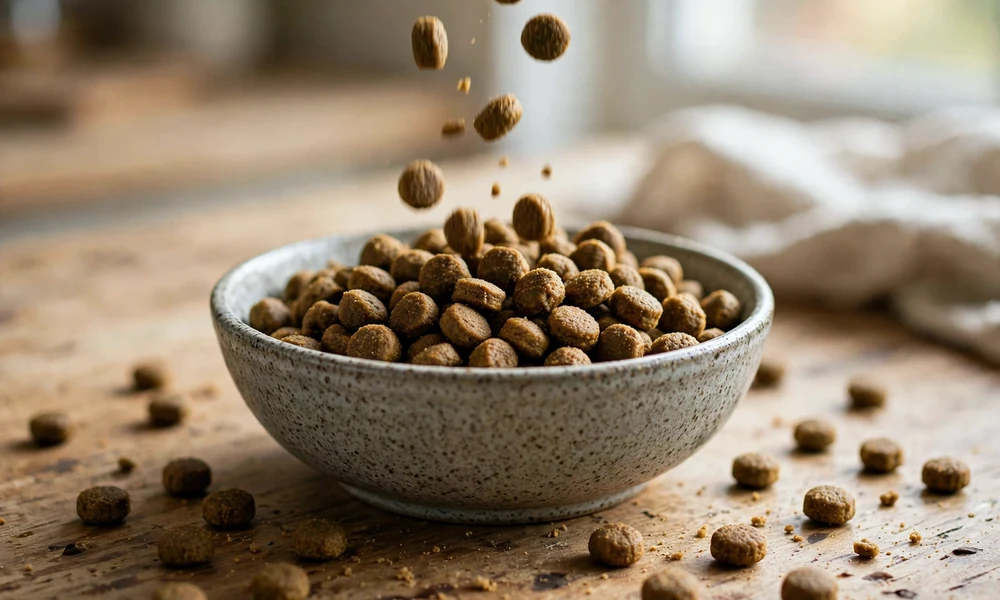
Dry food, or kibble, wins on convenience and cost. It keeps for weeks once opened, it is easy to measure, it travels well, and it suits grazing cats that like to eat a little and often. A good kibble is crunchy, evenly sized and not coated in grease, and the bag should seal properly and carry a clear best-before date. The main weakness is moisture: a cat eating only dry food drinks less water with its meals, so a fresh water bowl nearby is not optional, it is part of the diet. If your home has both cats and dogs, keep their bowls and their food separate, because the two species need different recipes, and our guide to the best dog food of 2026 explains what to look for on the dog side of the kitchen.
How to Read a Cat Food Label
Labels are written to sell, so read them in the right order. The ingredients list is ordered by weight before cooking, which means the first few items tell you most of what you need to know. A named meat or fish at the top is a good sign. A long list of cereals before any animal protein is not. Terms like fresh chicken, chicken meal and chicken by-product mean different things, and fresh sounds better than it is, because much of that weight is water that cooks away, while a meal is a concentrated protein source.
Finally, check the life-stage statement. Food made for kittens is richer in protein and energy to support growth. Adult food is balanced for maintenance. Senior food is usually easier to digest and moderate in calories for a slower lifestyle. Feeding the wrong life stage is not a disaster for a week, but over months it is a mismatch your cat will notice. A kitten fed adult food may not get the density it needs to grow, and a senior cat fed kitten food may quietly put on weight it does not need.
The Best Cat Food for Kittens
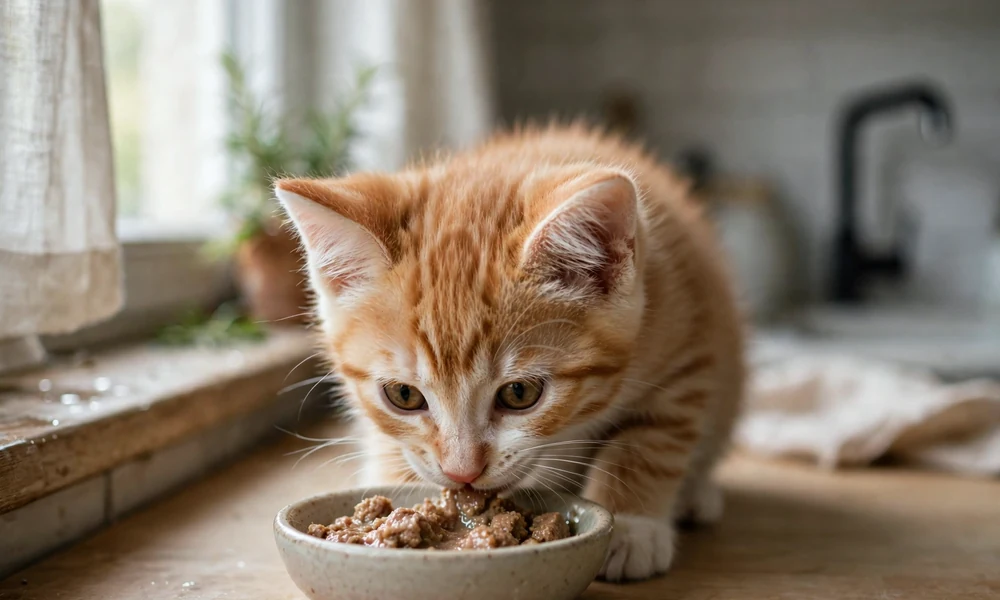
Kittens grow astonishingly fast, and their food has to keep up. In the first year, a kitten can multiply its birth weight many times over, building bone, muscle and brain tissue at a pace no adult cat matches. Kitten food is formulated for that job: higher in protein and energy, with the right balance of minerals for growing bones, and usually in smaller kibble pieces or softer wet textures that a tiny mouth can manage.
Feed little and often. A young kitten does best on three or four small meals a day rather than one large bowl, because its stomach is small and its energy needs are high. Wet food works particularly well at this stage, since the smell and soft texture tempt even cautious eaters, and the moisture supports a small body that is still learning to drink properly. If you offer dry food as well, choose a kitten kibble with small pieces, and soak it briefly in warm water for very young kittens that are still getting used to solid food.
The Best Cat Food for Adult Cats
Adult cats, roughly from one year to seven, are the straightforward group. Their growth is done, their energy needs are steady, and the goal is maintenance: a complete food, fed in the right amount, that keeps them lean, active and interested in the bowl. This is the stage where quality matters most, because an adult cat may eat the same food for years, and small differences in recipe quality add up over that time.
For most adults, a mix of wet and dry food is the sweet spot. Wet food covers hydration and palatability, dry food covers convenience and cost, and the combination keeps mealtimes interesting. If your cat is an enthusiastic eater that clears the bowl in seconds and asks for more, measure the dry food with a cup rather than pouring from the bag, and split the wet food into two meals. Free-feeding, where the bowl is always full, suits only the rare self-regulating cat, and most cats will quietly eat more than they need if the food is always there.
The Best Cat Food for Senior Cats
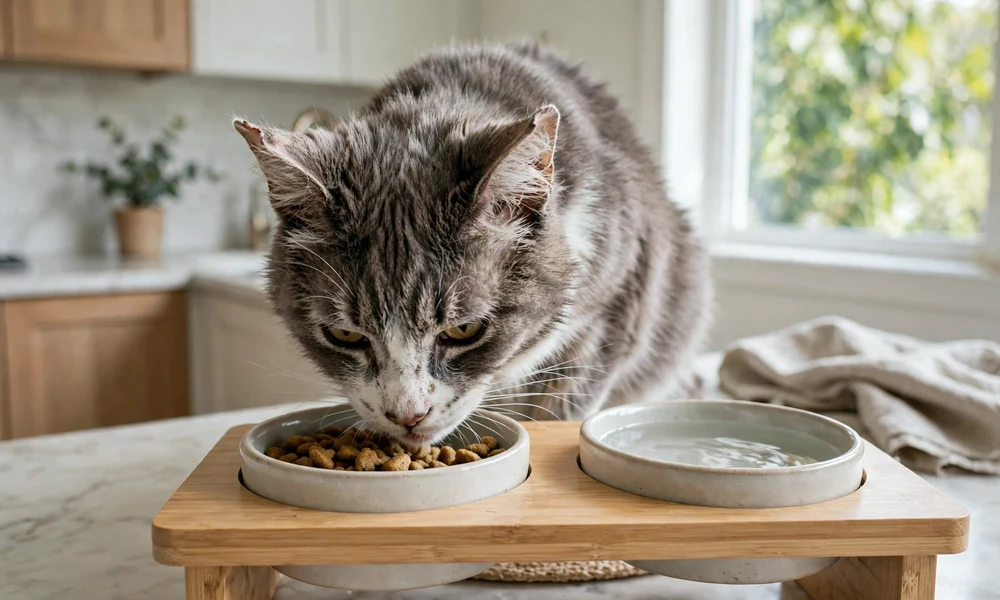
Senior cats, usually from around seven or eight years onward, change in quiet ways. They move a little less, they sleep a little more, and their digestion can become more delicate. Senior food is made with that in mind: highly digestible ingredients, a moderate calorie level so weight does not creep up as activity falls, and textures that are easy on older teeth and gums. Many senior recipes are softer, with smaller kibble or a smoother wet texture, which helps cats that have become slower or more careful eaters.
Appetite can become fickle at this stage. A cat that has eaten the same food for years may suddenly turn away from it, not from fussiness but because its sense of smell has dulled and the food no longer smells like dinner. Warming wet food for a few seconds, just to room temperature, releases more aroma and often brings an older cat back to the bowl. Serve in a shallow, wide dish rather than a deep bowl, so whiskers do not brush the sides, and keep the feeding spot calm and easy to reach, without a jump or a staircase in the way.
How Much to Feed and When
Two meals a day suits most adult cats, with a small dry portion left out for grazing if that fits your routine. Kittens need three or four meals, and seniors often do better on two smaller meals than one large one. Treats count as part of the daily total, not as a bonus on top of it, and that is where many well-meaning owners accidentally overfeed. A few treats a day are fine, but they should be a small share of what the cat eats overall, and our guide to the best cat treats of 2026 covers which ones are worth the calories and which are mostly filler.
Water deserves the same attention as food. Cats prefer fresh water, and many will drink more from a wide bowl placed away from the food bowl than from one sitting next to it. Change the water daily, wash the bowl properly, and if your cat seems to drink very little, a water fountain can help, since moving water attracts cats that ignore a still bowl. A cat eating wet food will drink less from the bowl and that is expected, because much of its water arrives in the food itself.
Switching Foods Without the Drama
Cats hate change, and food is the change they hate most. A sudden switch is the fastest route to an untouched bowl, a grumbling stomach and a cat that regards you with deep suspicion. The fix is a slow transition over seven to ten days. Start with roughly three quarters of the old food and one quarter of the new, then shift the balance a little each day until the new food takes over completely. Most cats accept the change without a fuss when it happens gradually.
Storage, Freshness and the Feeding Station
Good food goes stale, and stale food gets ignored. Dry food should be kept in its original bag, sealed tightly, inside an airtight container, and used within four to six weeks of opening. Keep it cool and dry, away from heat and sunlight, and do not decant it into a container that you never wash, because old crumbs and oils go rancid and taint the fresh kibble on top. Wet food, once opened, belongs in the fridge with a lid or cover, and should be used within one to two days.
The feeding station itself matters more than people think. Cats like to eat in a quiet spot where they can see the room and are not surprised from behind, and they strongly prefer their food bowl to be away from their litter tray. That separation is not a preference, it is a hard rule for most cats, and a cat that has to eat next to its toilet will often eat less or start eating elsewhere. If the layout of your home needs rethinking, our guide to the best cat litter of 2026 covers the other half of the setup, so the feeding corner and the litter corner can each be done properly.
The Verdict
The best cat food of 2026 is not a single product, it is a good match. A complete, named-protein food in a format your cat enjoys, fed in the right amount for its age and lifestyle, will beat a fashionable premium brand that your cat refuses to eat. Start with a quality wet food for moisture and aroma, add a measured amount of good dry food for convenience, feed for the life stage your cat is actually in, and switch slowly when change is needed. Do that, keep the bowls clean and the water fresh, and the sound of a cat appearing at the rustle of a bag will be the sound of a feeding routine that works.


