Yerba mate is the South American brew that wakes you up differently from coffee or tea. It is made from the dried leaves of the yerba mate plant, drunk hot through a metal straw called a bombilla from a hollow gourd, and shared from hand to hand in a ritual that is as much a part of the drink as the caffeine. The lift is real but steadier than coffee: alert and focused, without the jittery spike and the crash.
That combination is what makes yerba mate worth learning properly. It is easy to brew badly, with water that is too hot or a gourd packed the wrong way, and the first cup can taste bitter enough to put you off for good. This guide explains what yerba mate is, how the gourd and bombilla work, how to brew it, how the sharing ritual works, and what to buy first.
Key Takeaways
- Yerba mate is a caffeinated infusion of Ilex paraguariensis leaves, with roughly the caffeine of a cup of tea or a weak coffee, and a steadier lift than coffee.
- It is traditionally drunk from a gourd through a bombilla, a filtered metal straw, and the gourd is refilled many times.
- Use water at 70 to 80 degrees, never boiling, or the mate turns bitter.
- Sharing is the heart of the drink: one person serves, the gourd passes from hand to hand, and everyone drinks from the same straw.
- Start with a mild, unsmoked yerba with stems, known as con palo, and learn the basic brew first.
What Yerba Mate Actually Is
Yerba mate comes from Ilex paraguariensis, a species of holly native to Paraguay, southern Brazil, northern Argentina and Uruguay. The leaves are harvested, dried and crushed into a coarse green mixture called yerba, which is then steeped in hot water. It is not tea, because it does not come from the tea plant, but it is a true caffeinated brew, drunk in South America for centuries.
The drink predates European arrival: the Guaraní people drank mate long before the Spanish, and Jesuit missionaries later spread its use across the continent. Today it is the national drink of Argentina, Paraguay and Uruguay.
The active ingredients are caffeine, theobromine and theophylline, the same family of stimulants found in coffee, tea and chocolate. Drinkers usually describe the effect as clear-headed and sustained, and many people who find coffee jittery prefer it. Our guide to the best herbal teas of 2026 explains where mate fits among the caffeine-free tisanes.
The Gourd and the Bombilla
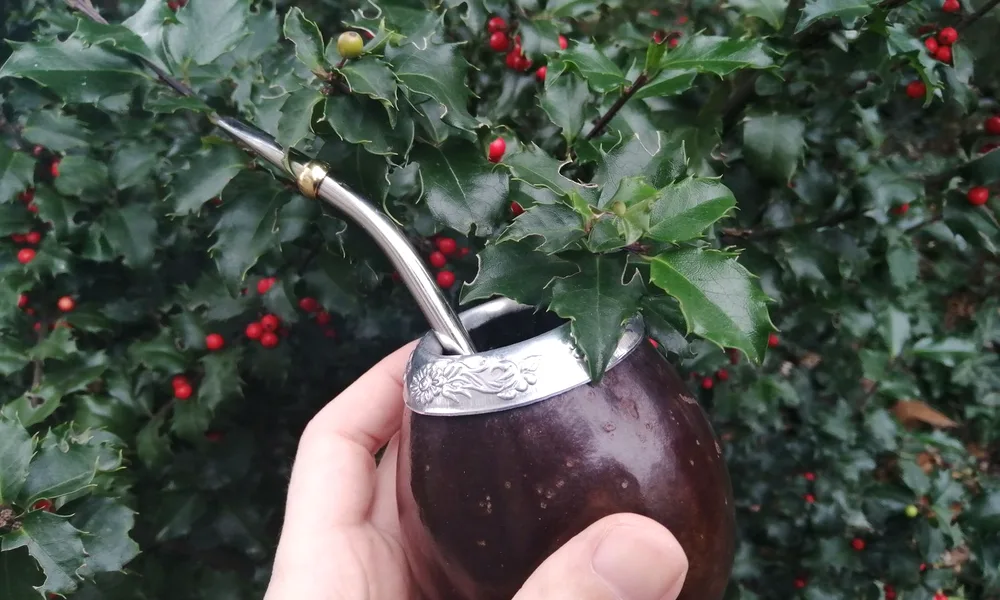
The traditional vessel is the mate, also called a cuia in Brazil: a hollowed-out calabash gourd, often with a metal rim. The gourd is small, holding roughly 150 to 250 millilitres, and filled about two-thirds full of yerba. Hot water is poured in, the bombilla is pushed into the leaves, and the drinker sips through the straw. The gourd is then refilled and passed on, sometimes ten or twenty times in a session.
The bombilla is the key piece of equipment: a metal straw, usually stainless steel, with a filtered bulb at the bottom end that strains out the leaf. A good bombilla makes the difference between a smooth drink and a mouthful of leaf, so the filter holes must be small enough to hold back the fine powder.
A new calabash gourd needs curing before its first use, a process called curado: fill it with hot water and a spoonful of yerba, leave it overnight, then scrape out the softened inner membrane and rinse. After each session, empty the gourd, rinse it with hot water and leave it upside down to dry; a gourd left damp will grow mould, and a mouldy gourd is finished.
If the gourd sounds like too much commitment, a ceramic or glass mate cup works the same way and needs no curing, and a French press makes a perfectly good cup of mate with no special equipment at all.
How Mate Feels Different From Coffee and Tea
The first thing most people notice is the flavour. Yerba mate tastes grassy, earthy and slightly bitter, with a smoky note in the traditional dried styles and a cleaner green taste in the unsmoked ones. It is closer to a strong green tea than to coffee, but with a deeper body. Many newcomers sweeten their first cups, though regular drinkers usually come to like it plain.
The second thing is the energy. A cup of mate contains roughly 70 to 85 milligrams of caffeine, between a cup of green tea and a cup of coffee, but the effect is usually described as smoother and longer-lasting, partly because a gourd is sipped over an hour or more, so the caffeine arrives gradually.
The third difference is the ritual itself. Coffee is usually drunk quickly and alone; mate is drunk slowly and together, and the shared gourd forces a pause in the day that has no equivalent in coffee culture.
| Drink | Caffeine per cup | Flavour | Energy feel | How it is drunk |
|---|---|---|---|---|
| Yerba mate | 70–85 mg | Grassy, earthy, bitter | Steady, clear-headed | Sipped slowly, refilled many times |
| Coffee | 95–200 mg | Roasted, bold, acidic | Fast lift, then a crash | One mug, drunk quickly |
| Green tea | 30–50 mg | Light, grassy, delicate | Gentle, short-lived | One or two cups |
| Chai | 40–70 mg | Spiced, sweet, milky | Warm and steady | One mug, with milk |
How to Brew Yerba Mate Well
The single most important rule is the water temperature: use water at 70 to 80 degrees, never boiling. Boiling water scorches the leaves, makes the mate harsh and bitter, and washes out the flavour in the first few pours. If you have no thermometer, boil the kettle and leave it for five minutes.
To prepare a gourd, fill it two-thirds full with yerba, cover the opening with your palm, and shake it upside down for a few seconds: this brings the fine powder to the top and keeps it from clogging the bombilla. Then tilt the leaves to one side to form a small hollow, pour in a little warm water, let it sit for a minute, push the bombilla into the hollow, and pour in hot water.
Each gourd lasts for many refills: add hot water whenever the cup runs low, and keep going until the flavour fades, usually after a litre or so. The first pour is the strongest and most bitter; the flavour settles after two or three refills. Do not stir the bombilla once it is in place, or you will clog the filter.
Cold mate, called tereré, is the summer version and the national drink of Paraguay: the same brew made with ice-cold water, often with mint or lime, and drunk from a glass rather than a gourd. A French press is the easiest method of all: a heaped tablespoon per cup, water at 75 degrees, steeped for four to five minutes.
The Sharing Ritual
Mate is a shared drink, and the sharing has rules. One person, the cebador, prepares the mate and serves it. The cebador drinks the first gourd, the strongest and most bitter, then refills it and passes it to the next person, who drinks it all and hands it back, and so on around the circle.
The etiquette is simple but firm. Drink the whole gourd when it is handed to you, and hand it back promptly. Do not say thank you until you are finished for good, because gracias means you are done. Do not stir the bombilla, and never refuse a mate that is offered unless you have a good reason.
How to Buy Yerba Mate in 2026
Yerba is sold con palo, with stems, and sin palo, without stems. Con palo is milder and more forgiving, and it is the best place to start; sin palo is stronger and suits experienced drinkers. The other big choice is smoked versus unsmoked: traditional yerba is dried over wood smoke, while unsmoked yerba is air-dried and tastes cleaner.
For a first bag, choose a mild, unsmoked con palo from a well-known producer in Argentina or Brazil: it will be the easiest to brew well. Once you know you like it, try a traditional smoked yerba for comparison. Flavoured mates are pleasant, but learn the plain flavour first.
On equipment, you need very little to begin: a ceramic mate cup and a stainless steel bombilla cost less than a bag of good yerba and need no curing. A calabash gourd is worth buying once you are committed, but buy a decent one, since a cheap thin-walled gourd will crack or go mouldy. A thermos flask is the most useful accessory.
Expect to pay a little more than for ordinary tea, but a bag of yerba goes a long way: a kilo makes dozens of gourds, and each gourd is refilled many times. Store it airtight, away from light and strong smells, and use it within a year. If you are choosing between mate and green tea as a daily drink, the difference is the ritual and the strength: green tea is lighter and quicker, mate is stronger and slower. Our guide to the best green tea of 2026 covers the other side of that choice.
Mate and chai are both social drinks, but they differ in character: chai is sweet, milky and warming, while mate is bitter, grassy and bracing. Our guide to chai in 2026 covers the spiced side of the tea world.

Yerba Mate Buying and Brewing Checklist
- Start with a mild, unsmoked yerba con palo for the smoothest first cups.
- Use water at 70 to 80 degrees, never boiling, or the mate turns bitter.
- Shake the gourd to bring the powder to the top, form a hollow, and let the leaves swell before inserting the bombilla.
- Do not stir or move the bombilla once it is in place.
- Refill the gourd many times, and drink each round promptly when sharing.
- Cure a new calabash gourd, rinse it after use, and dry it upside down to prevent mould.
Frequently Asked Questions
Does yerba mate contain caffeine?
Yes. A cup of yerba mate contains roughly 70 to 85 milligrams of caffeine, between green tea and coffee. The effect is usually described as steadier than coffee, because mate is sipped slowly.
Is yerba mate the same as tea?
No. Yerba mate comes from the leaves of Ilex paraguariensis, a South American holly, while true tea comes from Camellia sinensis. Mate is a caffeinated infusion, but it is not tea.
Why does my yerba mate taste so bitter?
Usually the water is too hot. Boiling water scorches the leaves and makes the mate harsh. Use water at 70 to 80 degrees, and try a milder con palo yerba. The flavour settles after a few refills.
Can you drink yerba mate every day?
Yes, millions of people drink it daily in South America. It does contain caffeine, so treat it like coffee: avoid it late in the evening if it affects your sleep, and check with a doctor if you are pregnant or taking medication.
Do you need a gourd to drink yerba mate?
No. A ceramic cup, a glass or a French press all work well, and none need curing. The gourd is traditional, but it is not required to enjoy mate.
What is tereré?
Tereré is cold yerba mate, made with ice-cold water instead of hot, often with mint or citrus. It is the national drink of Paraguay and less bitter than hot mate.
The Bottom Line
Yerba mate is worth the small effort it takes to learn, because it gives you something coffee and tea do not: a steady, clear-headed lift wrapped in a ritual that slows the day down. Start with a mild con palo yerba, brew it with water at 70 to 80 degrees, and drink it from a simple cup with a good bombilla. Once the basic brew tastes good, try a gourd and share it.