
The best herbal teas in 2026 are a small daily ritual for millions of people who want to slow down, sleep better, settle their stomach after a heavy meal, or simply enjoy something flavourful without caffeine.
The best herbal teas share a few qualities that are easy to spot once you know what to look for. They are made from real dried flowers, leaves, roots or fruit, not from artificial flavouring and coloured dust. They smell like the plant they came from the moment you open the packet, and they brew into a clear, bright cup with a flavour that is interesting on its own. This guide compares the strongest herbal teas of 2026, explains what each one is genuinely good for, and shows you how to brew them properly.
Key Takeaways
- Chamomile is the best all-round herbal tea for evenings and sleep, while peppermint is the best choice after meals.
- Rooibos is the closest thing to an everyday black-tea replacement: naturally caffeine-free, smooth and rich.
- Loose-leaf herbal tea usually tastes fresher and stronger than the same tea in a bag, and it often works out cheaper per cup.
- Water temperature and steeping time matter more than the brand: most herbal teas need near-boiling water and five to seven minutes.
- Buy single-ingredient teas first, then try blends once you know which flavours you actually like.
What Is Herbal Tea, Really?
Strictly speaking, herbal tea is not tea at all. True tea comes from the leaves of the Camellia sinensis plant, which gives us black, green, white and oolong tea, and all of those contain caffeine. Herbal teas, also called tisanes, are infusions made from other plants: the flowers of chamomile, the leaves of peppermint, the root of ginger, or the leaves of the rooibos bush. Because they contain no true tea leaves, almost all herbal teas are naturally caffeine-free, which is exactly why so many people drink them in the evening.
Loose Leaf or Tea Bags?
Tea bags win on convenience, and there is nothing wrong with a good bag: the best ones use whole dried flowers and leaves and brew a pleasant cup in minutes. Loose-leaf tea usually tastes noticeably better, though. The leaves and flowers are larger, they have more room to unfurl in the water, and the flavour comes through more fully. Loose leaf also lets you control the strength, adding a little more for a bolder cup or a little less for something lighter. If you want to compare kettles, our guide to the best tea kettles for offices in 2026 covers models that make brewing at work just as easy as brewing at home.
The Best Herbal Teas of 2026
Below are the herbal teas that earn their place in a cupboard, judged on flavour, versatility, quality of the dried ingredients and value for money. Each one suits a different moment of the day, so the best collection is usually a small shelf of three or four, not a single box.
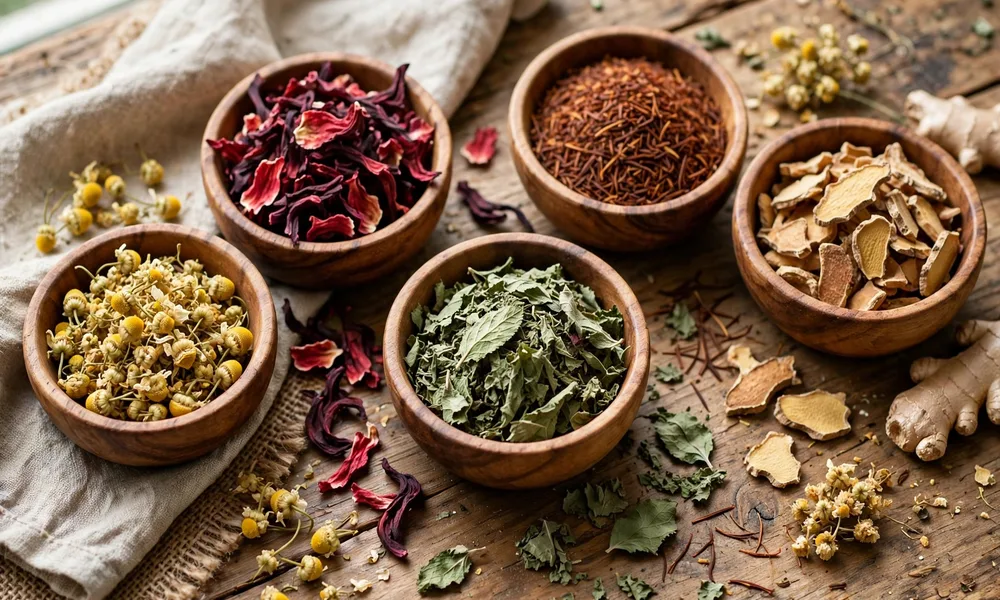
Chamomile: Best for Sleep and Evenings
Chamomile is the classic bedtime tea, and it earns that reputation. Made from the small daisy-like flowers of the chamomile plant, it brews into a soft golden cup with a gentle apple-like sweetness and a faintly floral aroma. Good chamomile should look like tiny whole flower heads, not yellow dust, and it should smell of fresh apples and hay. Brew it with freshly boiled water for five to seven minutes, covered if you can, so the delicate aromatic oils do not escape with the steam.
Peppermint: Best After Meals
Peppermint tea is bright, cool and refreshing, and it is the herbal tea most people reach for after eating. The menthol in the leaves gives it a clean, tingling freshness that feels cleansing after a rich or heavy meal, and it is one of the few herbal teas that tastes just as good iced as it does hot. Look for peppermint made from whole or large-cut leaves, which give a much cleaner flavour than finely ground powder. It brews quickly, three to five minutes is enough, and it can take boiling water without turning bitter. Peppermint is also a useful mixer: it lifts a plain rooibos and sharpens a fruit blend.
Rooibos: Best Everyday Caffeine-Free Tea
Rooibos, sometimes called red bush tea, comes from a shrub that grows in South Africa, and it is the herbal tea that feels most like a proper cup of tea. It brews a deep reddish-brown cup with a naturally sweet, slightly woody and honeyed flavour, and it takes milk well, which makes it a genuine replacement for black tea for people who have given up caffeine. It is also remarkably forgiving: it is very hard to over-brew rooibos, so a forgotten cup still tastes good. Brew it for five to seven minutes with boiling water, and use a generous spoonful per cup for the full, rounded flavour.
Hibiscus: Best for a Bold, Tart Cup
Hibiscus tea is the show-off of the herbal tea world. Made from the dried petals of the hibiscus flower, it brews an intense ruby-red cup with a sharp, cranberry-like tartness that wakes up your taste buds. It is the main ingredient in many fruit tea blends, and on its own it makes a striking iced tea that looks wonderful in a glass with ice and a slice of orange. Hibiscus is strong, so a little goes a long way: brew it for three to five minutes, and taste it before adding sweetener, because a teaspoon of honey balances the tartness beautifully.
Ginger: Best for Warmth and Spice
Ginger tea is warm, spicy and invigorating, made from fresh or dried ginger root. A cup of ginger tea feels like it warms you from the inside, which makes it a favourite in cold weather and a popular choice when you feel a cold coming on. Fresh ginger gives the brightest flavour: slice a thumb of root, simmer it for ten minutes, and add lemon and honey. Dried ginger tea bags are more convenient and still give a good, fiery cup.
How to Brew Herbal Tea Properly
Most disappointing cups of herbal tea are not the fault of the tea, but of the brewing. Herbal teas need hotter water and longer steeping than green tea, and they need room for the leaves and flowers to move around in the water. Start with fresh, cold water and bring it to a full boil. Pour it over the tea, cover the cup or pot, and let it steep for five to seven minutes for most herbal teas, or three to five for peppermint, hibiscus and lavender. Covering the cup matters: it traps the aromatic oils that carry much of the flavour. Use about one heaped teaspoon of loose tea per cup, and taste before adding anything.
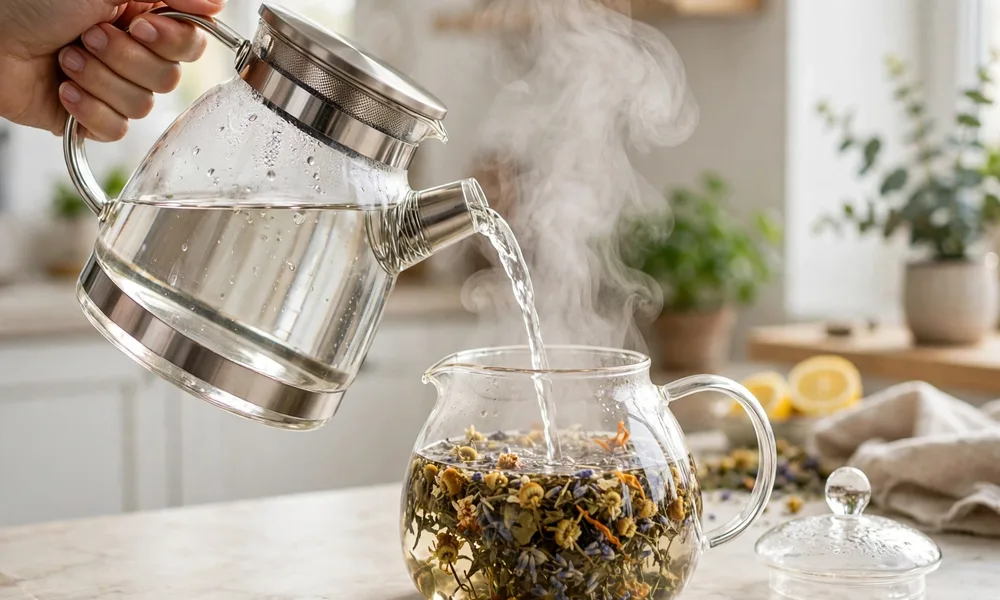
Equipment matters less than technique, but a good kettle makes the whole ritual easier, especially if you drink tea through the working day. Our guide to the best electric kettles for home in 2026 covers fast, precise kettles that take the guesswork out of water temperature, and a simple glass teapot lets you watch the leaves unfurl, which is half the pleasure.
Best Herbal Teas Compared
| Herbal Tea | Best For | Flavour | Caffeine | Steep Time |
|---|---|---|---|---|
| Chamomile | Sleep, evenings, calming down | Soft, apple-like, floral | None | 5–7 minutes |
| Peppermint | After meals, refreshment, iced tea | Bright, cool, minty | None | 3–5 minutes |
| Rooibos | Everyday drinking, with milk | Sweet, woody, honeyed | None | 5–7 minutes |
| Hibiscus | Bold flavour, iced tea | Tart, cranberry-like | None | 3–5 minutes |
| Ginger | Warmth, spice, colds | Hot, spicy, sharp | None | 5–10 minutes |
| Lavender | Relaxation, quiet evenings | Floral, sweet, fragrant | None | 3–4 minutes |
| Lemon balm | Calm, gentle daytime tea | Soft, lemony, mild | None | 4–6 minutes |
Choosing Herbal Tea for Your Goal
The best herbal tea for you depends on when and why you are drinking it, and the smartest way to build a collection is to match teas to moments in your day rather than buying a random assortment of boxes.
For Better Sleep
Chamomile is the obvious first choice, and it works well on its own or blended with lemon balm, lavender or passionflower. Drink it about an hour before bed, keep the evening cup caffeine-free, and make it part of a wind-down routine rather than a one-off experiment.

For Energy Without Caffeine
No herbal tea will give you the jolt of a coffee, and any product that claims otherwise is overselling itself. What herbal teas can do is give you a refreshing, flavourful drink that keeps you hydrated and alert without caffeine. Peppermint is the most stimulating of the common herbal teas, thanks to its bright menthol lift, and ginger gives a warming, waking feeling. If you do want caffeine in the morning, our guide to the best coffee makers of 2026 covers machines that make the morning cup properly, and herbal tea can take over from mid-afternoon onwards.
What to Avoid When Buying Herbal Tea
Not every box on the shelf is worth your money. First, check the ingredients list: a tea that calls itself chamomile should list chamomile flowers first, not flavouring. Second, be wary of teas that promise dramatic health results. Herbal teas can be soothing, refreshing and enjoyable, but no cup of tea will detox your liver, melt fat or cure insomnia on its own. Third, watch the freshness: dried herbs lose their aroma over time, so buy smaller packets more often, store tea sealed in a cool, dark cupboard, and throw out anything that smells of nothing when you open it.
Herbal Tea Buying Checklist
- Choose one tea for evenings, one for after meals, and one everyday tea, before buying anything else.
- Check the ingredients list: the named herb should come first, not flavouring.
- Start with tea bags to find your flavours, then switch to loose leaf for your favourites.
- Buy smaller packets and store them sealed, cool and dark so the aroma stays fresh.
- Use freshly boiled water, cover the cup, and steep for five to seven minutes.
- Try each new tea plain first, then add honey or lemon only if the flavour needs it.
Frequently Asked Questions
Is herbal tea safe to drink every day?
For most people, yes. Chamomile, peppermint and rooibos are drunk daily by millions of people. Rotate between a few teas, and check with a doctor if you are pregnant, breastfeeding, taking medication, or have a health condition.
Does herbal tea contain caffeine?
Almost all herbal teas are naturally caffeine-free because they contain no true tea leaves. The exceptions are blends with green or black tea, yerba mate or guarana, so check the ingredients if you need a tea that is completely caffeine-free.
What is the best herbal tea for sleep?
Chamomile is the best-tested choice for sleep, especially blended with lemon balm or lavender. Drink it about an hour before bed as part of a regular wind-down routine.
Can I drink herbal tea iced?
Yes, and some are even better iced. Peppermint and hibiscus make excellent iced teas: brew double-strength, cool, and pour over ice with lemon or orange.
How long should I steep herbal tea?
Most need five to seven minutes in freshly boiled water, covered. Peppermint, hibiscus and lavender need three to five. If your cup tastes weak, steep it longer or use more leaves rather than reaching for sugar.
Is loose-leaf herbal tea better than tea bags?
Usually, yes, because larger pieces of flower and leaf give a fuller flavour. Good tea bags still make a pleasant cup and are far more convenient at work or when travelling.
The Bottom Line
The best herbal teas of 2026 are the ones that fit your day: chamomile for the evening, peppermint after meals, rooibos for an everyday caffeine-free cup, hibiscus when you want something bold, and ginger when you want warmth. Start with a small collection of single-ingredient teas, brew them with boiling water and a proper steep, and let your own taste decide which ones earn a permanent place on the shelf.


