
Top Wheatgrass Juices for Everyday Drinking in 2026
The best wheatgrass juice for everyday drinking in 2026 is the one you will actually finish: bright green, cold, fresh-tasting, and gentle enough to drink daily without dreading the glass. Wheatgrass juice has a reputation for tasting like a freshly mown lawn, and the honest truth is that the bad ones do. The good ones taste grassy in a clean, lemony way and leave a fresh aftertaste rather than a bitter one. This guide ranks the best wheatgrass juices you can buy ready-made, by format, so you can pick a daily drink that fits your fridge and your budget.
Key takeaways
- Fresh and frozen wheatgrass juice tastes far better than shelf-stable juice, which is often heat-treated and dull.
- A daily serving is small: one to two ounces is enough, and a bigger glass is not better.
- Check the label for 100% wheatgrass juice with no added sugar, no concentrates, and no mystery blends.
- Cold-pressed juice keeps its bright colour and fresh flavour; juice that has gone brown or yellow has lost its best days.
- Start with half a serving for the first week, drink it cold, and chase it with water or a slice of lemon.
What wheatgrass juice actually is
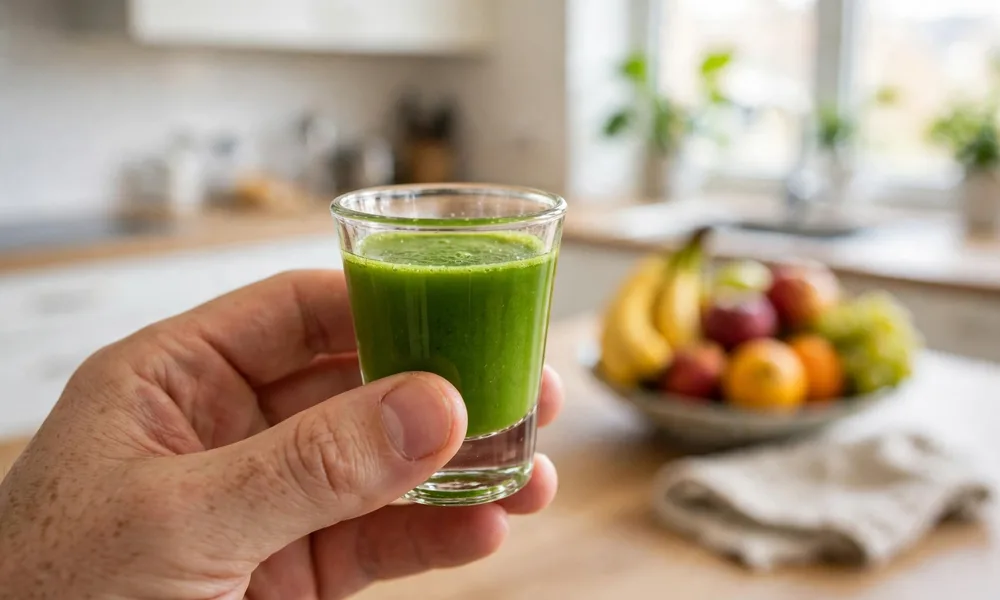
Wheatgrass juice is the liquid pressed from the young shoots of the wheat plant, cut when the grass is about seven to ten days old. The shoots are pressed, not blended: a slow press squeezes the liquid out and leaves the tough fibre behind, so the drink is smooth rather than pulpy. A single shot is usually thirty to sixty millilitres, small enough to drink in one go, and it is normally taken on its own or mixed into a larger glass of apple, lemon, or cucumber juice.
It is not the same thing as a green powder. Our guide to the best green powders that don’t taste like grass covers dried blends you stir into water; those are convenient and shelf-stable, but they are a powder, and the taste and texture are different. Wheatgrass juice is a fresh liquid, closer to a cold-pressed vegetable juice than to a supplement. It is also not a meal and not a medicine, and it does not replace vegetables.
How the best wheatgrass juices were chosen
Every juice below was judged on five measures. Taste comes first, because a wheatgrass juice you cannot finish is a waste of money, however good its label looks. Freshness is second: the best juices are cold-pressed and kept cold, and the colour tells you the truth before the first sip. Purity is third: the label should say 100% wheatgrass juice, with no added sugar or filler ingredients. Convenience is fourth, because a juice that needs a freezer, a thaw, and a special trip to a juice bar is harder to keep up daily than one that sits in the fridge. Value is fifth: the real cost per daily shot, not the price of the bottle.
First, no single brand is named as the best, because the same good patterns appear across many makers. Second, the format matters as much as the brand, and the ranking below is organised by format first. If you want to press your own, our guide to the best juicers of 2026 explains which machines handle wheatgrass properly, and the best vs worst juicers comparison shows why cheap centrifugal machines mostly fail on grassy greens.
Comparison table: the best wheatgrass juices for everyday drinking 2026
| Rank | Juice type | Best for | Watch out for |
|---|---|---|---|
| 1 | Fresh cold-pressed shots | Best taste, daily habit | Short shelf life, needs a fridge |
| 2 | Frozen wheatgrass cubes | Stocking the freezer | Needs thawing, texture can vary |
| 3 | Chilled bottled juice | Grab-and-go drinking | Check the date, drink it fast |
| 4 | Wheatgrass and apple blends | Beginners, milder taste | Apple can hide weak wheatgrass |
| 5 | Wheatgrass and lemon blends | Sharp, refreshing sipping | Lemon can overpower the grass |
| 6 | Wheatgrass and ginger blends | A warming morning shot | Ginger heat is not for everyone |
| 7 | Shelf-stable wheatgrass juice | Cupboard storage, travel | Duller flavour, heat-treated |
The best wheatgrass juices for everyday drinking
1. Fresh cold-pressed shots: the best everyday drink
Fresh cold-pressed wheatgrass shots are the benchmark, because nothing else tastes as bright. The grass is cut, pressed slowly, and bottled the same day, so the juice stays vivid green and tastes clean, grassy, and slightly sweet, with none of the flat, hay-like note that older juice develops. The trade-off is the shelf life: fresh juice keeps for about three to five days in the fridge, so it suits people who buy little and often, or who have a juice bar nearby.
2. Frozen wheatgrass cubes: the best for stocking the freezer
Frozen wheatgrass cubes solve the freshness problem by freezing the juice within hours of pressing. A cube is usually one shot, so there is no measuring and no waste: drop one into a glass, let it thaw for a few minutes, and drink it cold. The trade-off is planning: you need to remember to take a cube out before you want it. For people who live far from a juice bar, frozen cubes are the most practical format.
3. Chilled bottled juice: the best grab-and-go option
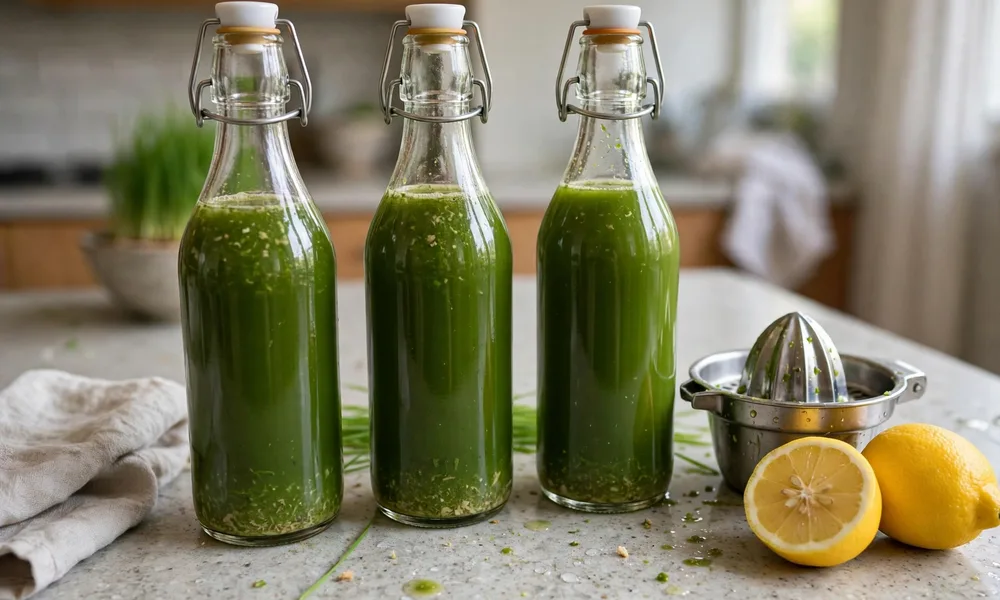
Chilled bottled wheatgrass juice is the format most people meet first, in a health-food shop fridge or a supermarket chiller. The bottles are usually 250 to 500 millilitres, which lasts three or four days once opened, and the juice is ready to pour with no thawing and no pressing. Check the colour through the bottle before you buy: bright green means fresh, while brown or yellow means the juice has been sitting too long.
4. Wheatgrass and apple blends: the best for beginners
Wheatgrass and apple is the classic beginner blend, and it works because apple does two jobs at once: it sweetens the grass and it adds volume, so a small amount of wheatgrass stretches into a full glass. The best blends use real apple juice, not apple concentrate with added sugar, and keep the wheatgrass at a level you can still taste, usually around a third of the bottle. If the drink tastes only of apple, the wheatgrass is a garnish rather than an ingredient. Look for a label that states the wheatgrass percentage.
5. Wheatgrass and lemon blends: the best sharp, refreshing sip
Lemon is the other classic partner for wheatgrass, and it suits people who find apple blends too sweet. A squeeze of lemon lifts the grassy flavour, cuts the earthy aftertaste, and makes the drink feel cleaner and more refreshing, especially served over ice. The risk is balance: too much lemon turns the drink into lemonade with a green tint, and too little leaves the grass flat. Taste a small bottle first.
6. Wheatgrass and ginger blends: the best warming morning shot
Ginger gives wheatgrass juice a warmth that the other blends do not have, and for a morning shot that warmth is the whole point. A small amount of fresh ginger adds a peppery heat that cuts through the grass and leaves a clean, tingling finish. The best ginger blends use fresh ginger juice rather than ginger flavouring, and they keep the heat gentle enough for daily drinking. Too much ginger overwhelms the wheatgrass, so start with the mildest version you can find.

7. Shelf-stable wheatgrass juice: the best for the cupboard
Shelf-stable wheatgrass juice is the only format that lives in a cupboard rather than a fridge, which makes it the right choice for travel, for a desk drawer, or for a house without much fridge space. The trade-off is flavour: heat treatment dulls the bright, fresh taste, and the juice is often darker and earthier than the cold-pressed versions. Treat it as a backup rather than a first choice, and finish it within two days of opening.
What to avoid when buying wheatgrass juice
The most common mistake is buying on the label rather than the juice. A bottle that says wheatgrass on the front can contain mostly apple or grape juice, with wheatgrass as a small fraction, and the only way to know is to read the ingredient list and look for a wheatgrass percentage. The second mistake is buying more than you can drink before it goes off. The third mistake is drinking it warm: wheatgrass juice tastes twice as grassy at room temperature, so always chill it, or pour it over ice with lemon. Finally, avoid any juice with added sugar, sweeteners, or a long list of flavourings.
Checklist: buying wheatgrass juice for everyday drinking
- Buy 100% wheatgrass juice, or a blend that states the wheatgrass percentage on the label.
- Check the colour before you buy: bright green means fresh, brown or yellow means it has sat too long.
- Choose a bottle size you can finish within three days of opening, not the biggest bottle on the shelf.
- Keep fresh and chilled juice at the back of the fridge, and never leave it out on the counter.
- Start with half a shot for the first week, then move to a full shot once the taste is familiar.
- Drink it cold, straight or with lemon, and chase it with a glass of water.
Frequently asked questions
How much wheatgrass juice should I drink each day?
One to two ounces, or thirty to sixty millilitres, is the usual daily serving. A bigger glass is not better: wheatgrass juice is concentrated, and a large serving is more likely to upset your stomach than to do you extra good. Start with half a serving for the first week.
When is the best time to drink wheatgrass juice?
Most people drink it in the morning, on an empty stomach or before breakfast, because it is a small, quick habit that fits before the day starts. There is no rule about timing, though, and the best time is the one you will stick to.
Does wheatgrass juice taste bad?
Fresh wheatgrass juice tastes strongly grassy, but the good ones are clean and bright rather than bitter. If you find the taste hard, drink it ice cold, mix it with apple or lemon juice, or take it as a quick shot followed by water.
How long does fresh wheatgrass juice keep?
Fresh cold-pressed juice keeps for about three to five days in the fridge, and frozen cubes keep for several months in the freezer. Once a bottle is opened, finish it within two to three days. Juice that has turned brown or yellow, or that smells sour, should be thrown away.
Is wheatgrass juice the same as a green powder?
No. Wheatgrass juice is fresh liquid pressed from young wheat shoots, while a green powder is a dried blend of grasses, leaves, and algae that you stir into water. The powder is more convenient and keeps longer, but the juice tastes fresher.
Can I make wheatgrass juice at home?
Yes, if you have the right machine. Wheatgrass needs a slow masticating juicer or a dedicated wheatgrass press, because ordinary centrifugal juicers cannot press the fine blades properly. Growing your own grass in a tray is the cheapest way to get a daily supply.
Bottom line
The best wheatgrass juice for everyday drinking in 2026 is fresh, cold-pressed, 100% wheatgrass juice in a small bottle you can finish within a few days, with frozen cubes as the best backup for the freezer. Start small, drink it cold, and choose a blend with apple or lemon if the straight shot is too much at first. The habit that lasts is the one that fits your fridge and your mornings, not the one with the loudest label.


