
A Guide to Buying Spinach Juice in 2026
Spinach juice in 2026 is no longer a niche health-shop curiosity. It sits on supermarket shelves next to orange juice, appears on cafe menus as a morning shot, and turns up in home juicers every January. The appeal is simple: a small glass of spinach juice delivers a concentrated taste of green vegetables without a salad bowl, a pan, or much preparation. The problem is just as simple. Many bottles labelled spinach juice are mostly apple juice, cucumber water, or sweetened blends, with spinach somewhere near the end of the ingredients list. This guide explains how to buy spinach juice that is genuinely spinach-led, tastes fresh rather than grassy, and is worth the price you pay for it.
Key takeaways
- Buy spinach juice that lists spinach first, with a short ingredient list and no added sugar.
- Cold-pressed spinach juice tastes fresher and keeps more of its bright flavour, but it costs more and must be drunk quickly.
- A genuinely spinach-led juice has under 8 grams of sugar per serving; sweet blends can carry three times that.
- Juice removes most of the fibre, so spinach juice supplements eating vegetables rather than replacing them.
- Drink it cold, in a small glass, and in the morning, when you are most likely to keep the habit.
What spinach juice actually is
Spinach juice is the liquid pressed from raw spinach leaves, usually with a little lemon, ginger, cucumber, or apple to lift the flavour. A good bottle tastes green and fresh, with a mild earthiness and a clean finish. A poor one tastes like sweetened grass, or like apple juice with a green tint. The difference is almost always the recipe. In a proper spinach juice, spinach makes up at least half the ingredients by weight. Lemon adds brightness, ginger adds warmth, and a small amount of apple rounds off the earthy edge. When apple or pineapple leads the list, the drink is a fruit juice with spinach in it, whatever the front of the bottle says.
It does not detox your body, and it does not replace a balanced diet. What it reliably does is deliver folate, vitamin K, and magnesium in a form your body absorbs quickly, helping people who eat too few vegetables close that gap. Spinach is milder than kale, which is why spinach juice suits first-time green juice drinkers. If you want the fibre as well, eat the spinach; if you want a fast green drink, juice it.
How the best spinach juices were chosen
Every spinach juice below was judged on five measures: taste, ingredients, sugar, price per serving, and availability. Taste comes first: does it taste fresh and green, or sweet, flat, or bitter? Ingredients are second, judged on whether spinach leads the list. Sugar is third, because a spinach juice with as much sugar as a soft drink misses the point. No single bottle wins on all five, so the list below matches each type to the drinker it suits best.
Comparison table: the best spinach juices 2026
| Rank | Spinach juice type | Best for | Watch out for |
|---|---|---|---|
| 1 | Cold-pressed spinach-led bottle | Freshest taste, daily drinkers | Short shelf life, highest price |
| 2 | Supermarket spinach juice | Everyday buying, fair price | More apple, less spinach |
| 3 | Spinach and lemon shot | A quick morning green hit | Strong flavour, small serving |
| 4 | Spinach, cucumber and ginger | Light, refreshing drinking | Can taste thin and watery |
| 5 | Spinach and apple blend | First-time green juice drinkers | Sugar climbs fast |
| 6 | Homemade spinach juice | Full control, lowest cost | Cleaning the juicer daily |
| 7 | Spinach powder drink | Travel, no fridge needed | Never tastes like fresh juice |
The best spinach juices in 2026
1. Cold-pressed spinach-led bottle: the freshest taste
A cold-pressed bottle is the best spinach juice for anyone who drinks it daily and cares most about flavour. The juice is pressed slowly, without heat, so it keeps the bright, grassy freshness that pasteurised bottles lose. Spinach leads the recipe, lemon sharpens it, and the colour is a deep, honest green rather than a pale yellow-green. The trade-offs are real: a cold-pressed bottle costs roughly twice as much as a supermarket bottle, it must stay refrigerated, and it should be drunk within two or three days of opening.
2. Supermarket spinach juice: the everyday buy
The supermarket bottle is the best spinach juice for most people, because it is there when you need it, at a price you can repeat. The best of these list spinach first, keep sugar under 8 grams per serving, and use lemon or ginger rather than a long list of sweeteners. Read the label before you buy, because the shelf holds two very different drinks under similar names. One is a genuine spinach juice with a little apple for balance; the other is apple juice with a handful of spinach for colour. The difference is visible in the ingredients order and in the sugar line.
3. Spinach and lemon shot: the quick morning hit
A spinach and lemon shot is a small, strong drink, usually 60 to 100 millilitres, taken in one or two sips before breakfast. It suits people who want the green habit without sitting down to a full glass. The lemon does real work here: it cuts the earthy edge of the spinach, keeps the colour bright, and makes a concentrated drink taste clean rather than heavy. The drawback is intensity. A shot is not a gentle drink, and anyone who dislikes the taste of raw greens will not be converted by a stronger version of it.
4. Spinach, cucumber and ginger: the light refresher
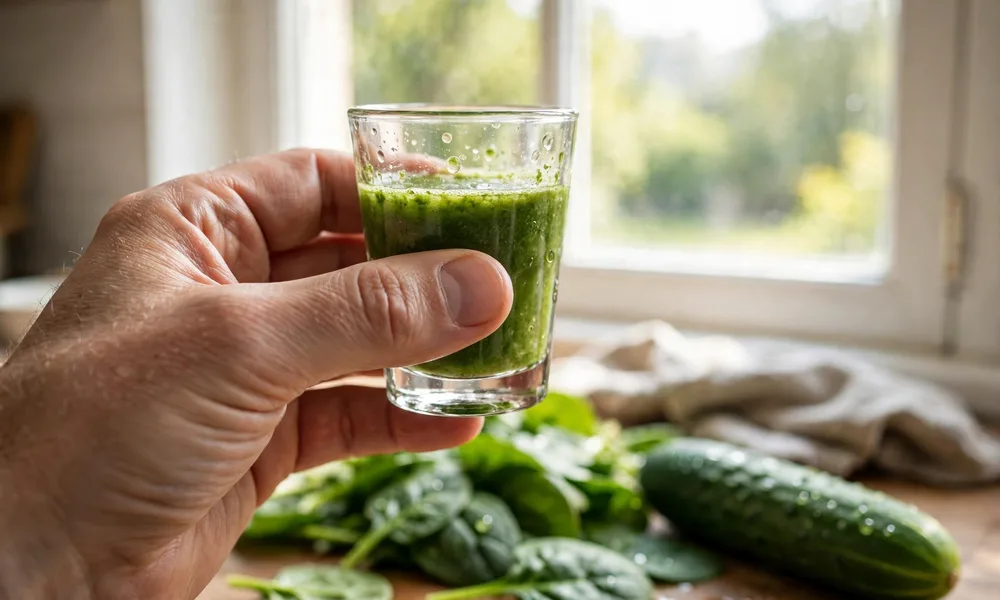
Spinach with cucumber and ginger is the lightest spinach juice on this list, and the best choice on a hot day or after exercise. Cucumber adds coolness and volume without sweetness, ginger adds a warm bite, and the spinach stays in the background rather than dominating. The result is a drink that feels refreshing rather than filling, and one that even reluctant green juice drinkers usually finish. The risk is thinness. Some bottles in this style are mostly cucumber water, with spinach as a garnish, and they taste pleasant but deliver very little of what you bought the juice for.
5. Spinach and apple blend: the beginner’s bottle
A spinach and apple blend is the easiest way into spinach juice, because the apple softens the green flavour and makes the first glass pleasant rather than challenging. For someone who has never liked green drinks, this is the bottle to start with. The danger is sugar. Apple juice is sweet, and a blend that leans on it can carry 20 grams of sugar or more per serving, which turns a green drink into a sweet one. The best blends use a tart apple, keep the apple share modest, and add lemon to balance the sweetness.
6. Homemade spinach juice: full control, lowest cost
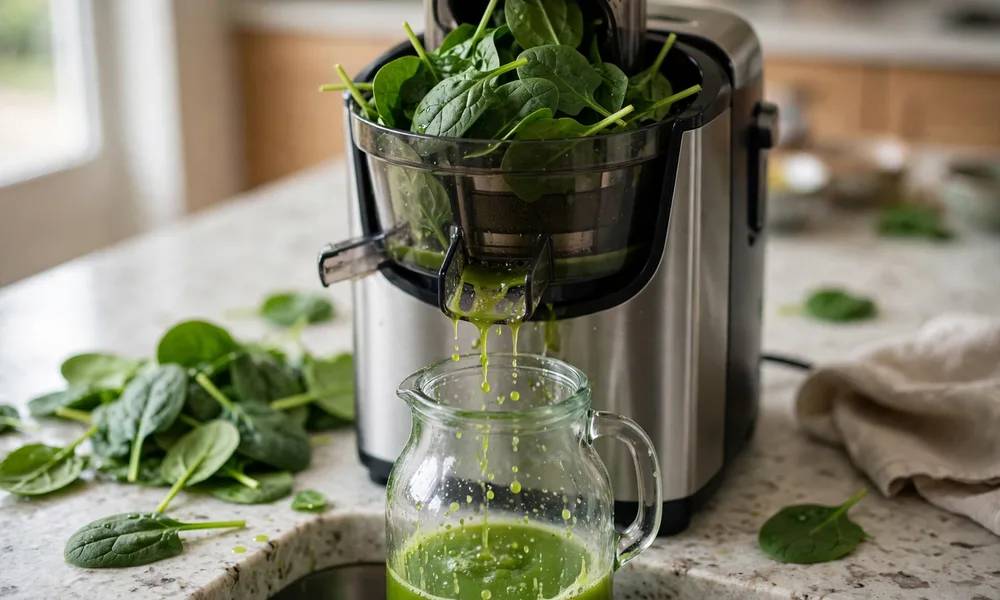
Making spinach juice at home gives you complete control over the recipe and the lowest cost per glass, once you own a juicer. A large handful of spinach, half a cucumber, half a lemon, and a small piece of ginger makes a fresh, bright juice in about five minutes. The catch is the cleaning. Choose a juicer that comes apart in a few pieces and rinses clean under a tap, and juice in the morning when you will actually drink it.

7. Spinach powder drink: the travel option
A spinach powder stirred into water is not fresh juice, and no honest guide should pretend otherwise. It is, however, the only spinach drink that travels well, needs no fridge, and keeps for months in a cupboard. The best powders list spinach as the first ingredient, dissolve without grit, and taste mildly green rather than sweet or chalky. They suit travel, camping, and office drawers, where a fresh bottle is impractical.
Spinach juice or green juice: what is the difference?
Spinach juice and green juice overlap, but they are not the same drink. Green juice is a blend: kale, spinach, cucumber, and celery pressed together, often with green apple or lemon. Our guide to the best green juice covers those blends in full. Spinach juice is narrower: spinach leads, and everything else supports it. That single-flavour focus makes it easier to judge, easier to repeat at home, and gentler than kale-heavy blends. If you want a mixed green blend, buy green juice; if you want a straightforward daily spinach drink, buy spinach juice.
What to avoid when buying spinach juice
The most common mistake is buying on colour alone. A vivid green bottle can be mostly apple juice with a little spinach for colour, while a paler bottle can be a genuine spinach juice diluted with cucumber. Read the ingredients, not the picture. The second mistake is ignoring sugar: a spinach juice with 20 grams of sugar per serving is a sweet drink, whatever the leaf on the label promises. The third is letting a large bottle sit open in the fridge for a week; fresh juice fades fast. Buy small, drink it cold, and finish it within two or three days. The same label-reading habit helps on the wider vegetable juice shelf, as our guide to the best vegetable juice explains, where tomato, carrot, and beet blends carry their own sugar and salt traps.
Checklist: choosing a spinach juice
- Check that spinach is the first ingredient, not apple, grape, or pineapple.
- Keep sugar under 8 grams per serving for a genuinely spinach-led bottle.
- Choose cold-pressed for the freshest taste, and drink it within two or three days.
- Buy the smallest bottle you will finish quickly, rather than a large one that goes stale.
- Look for lemon or ginger as the flavouring, not added sweeteners or flavourings.
- Keep the bottle refrigerated, shake before pouring, and drink it cold.
Frequently asked questions
Is spinach juice healthy?
Yes, when it is genuinely spinach-led and low in sugar. It delivers folate, vitamin K, and magnesium in a quickly absorbed form, but it removes most of the fibre, so it supplements eating vegetables rather than replacing them.
How much spinach juice should I drink a day?
A small glass of about 150 millilitres is the sensible serving. A pint glass is too much, even when the juice is pure, and a daily small glass is easier to keep up than an occasional large one.
Does spinach juice taste bitter?
Good spinach juice tastes mild and green, not bitter. Kale is the bitter green; spinach is much gentler. Lemon and ginger help, and a little apple softens the flavour without turning the drink sweet.
Can I make spinach juice without a juicer?
Yes. Blend spinach with a little water, lemon, and cucumber, then strain it through a fine sieve or a clean cloth. It takes longer than a juicer and leaves more pulp, but the juice tastes fresh and the cost is low.
How long does spinach juice last once opened?
Cold-pressed spinach juice lasts two to three days in the fridge once opened. Pasteurised bottles last longer, but the flavour fades. Drink it cold, keep it sealed, and do not leave it out on the counter.
Is spinach juice better than eating spinach?
Neither is better in every way. Juice is faster and easier to drink, and it absorbs quickly. Eating spinach keeps the fibre, which juice removes. The best habit is both: eat spinach in meals and drink a small glass of juice as well.
Bottom line
The best spinach juice in 2026 is the one that lists spinach first, keeps sugar low, and tastes fresh rather than sweet. A cold-pressed bottle is the freshest buy, a supermarket bottle is the most practical, and a homemade glass is the cheapest once you own a juicer. A juicer is the tool that makes the homemade option practical, and our guide to the best vs worst juicers explains which machines handle leafy greens well and which ones waste most of the spinach.


