
Why Vegetable Juice Deserves a Second Look in 2026
Vegetable juice deserves a second look in 2026 because it is not the punishment drink it used to be. A small glass is a genuinely useful habit: a savoury drink with breakfast, a bottle kept cold for the afternoon, a way to get more vegetables into a day. The difference between a vegetable juice worth drinking and one worth leaving on the shelf comes down to a few details on the label: which vegetables lead, how much salt and sugar are hiding in it, and whether it is juice or a sweetened drink.
Key takeaways
- Buy vegetable juice that lists vegetables first, with a short ingredient list and no added sugar.
- A small glass of about 150 millilitres is the sensible serving: a pint glass is too much, even when the juice is pure.
- Tomato-led blends are the safest everyday buy; beet and carrot blends are sweeter.
- Low-sodium blends taste flat at first, so season them yourself with a pinch of salt or a squeeze of lemon.
- Shake before pouring, and keep opened juice in the fridge for no more than three to five days.
How the best vegetable juices were chosen
Every blend below was judged on five measures. Taste comes first: ripe vegetables, sweetness and acidity in balance, no metallic or tinny edge. Vegetable content is second: a good vegetable juice is mostly vegetables, not water, apple juice or sweetener dressed up as vegetables. Salt and sugar are third, since the right amount of salt lifts the flavour while too much buries it, and added sugar has no place in a vegetable juice at all. The label is fourth: vegetables first, and a short list beats a long one. Value is fifth: a dearer juice that tastes like real vegetables beats a cheap one tasting of flavoured water.
One note before the list. This guide is about multi-vegetable blends, the juices that mix several vegetables in one bottle, and that is what sets it apart from the guides around it. Our guide to fresh juice is a general primer, mostly about fruit juice and labels. Our guide to tomato juice covers one vegetable on its own, and our guide to carrot juice does the same for carrot. This guide is about the blends: tomato-led garden mixes, carrot and beet combinations, and green vegetable blends.
Comparison table: the best vegetable juices 2026
| Rank | Juice blend | Best for | Watch out for |
|---|---|---|---|
| 1 | Tomato-vegetable blend | Everyday drinking | Salt varies a lot between brands |
| 2 | Carrot-led blend | Gentle sweetness, mornings | Fruit juice often added |
| 3 | Beet-led blend | Bold flavour, variety | Earthy taste, stains everything |
| 4 | Green vegetable blend | Light, fresh drinking | Thin and grassy if cheap |
| 5 | Low-sodium blend | Daily drinking, salt watchers | Tastes flat until seasoned |
| 6 | Cold-pressed vegetable juice | The freshest flavour | Short shelf life, high price |
| 7 | Single-serve cartons | Lunchboxes and travel | More packaging, higher cost per litre |
The best vegetable juices in 2026
1. Tomato-vegetable blend: the best all-round juice
The tomato-vegetable blend is the one to buy first, because it is the standard the rest are judged against. It starts with tomato juice and adds carrot, celery, beetroot and spinach, and it tastes like a garden in a glass: savoury, a little sweet, and substantial enough to feel like a drink rather than flavoured water. The tomato gives it body and brightness, the carrot rounds it off, and the celery and greens add a fresh edge. It works every day, with breakfast or on its own in the afternoon, and it is the hardest blend to get badly wrong. Check the salt before you commit to a brand, because the difference between the saltiest and the lightest is large: a good blend lists vegetables first and keeps the salt moderate, while a cheap one leans on salt to cover thin vegetables. Served cold, in a small glass, this is the right default for the fridge.
2. Carrot-led blend: the best for gentle sweetness
A carrot-led blend is the sweetest vegetable juice you can buy without adding sugar. The carrot gives it a bright orange colour, a gentle earthy sweetness and a slightly thicker texture, and makers usually add celery, ginger or beetroot to keep it from tasting one-note. It is the easiest blend to like on a first try. The warning is fruit: many carrot blends quietly add apple or orange juice to sweeten them further, and at that point the drink is closer to a fruit juice with vegetables in it than a vegetable juice. Read the label: if apple or orange appears before the vegetables, or if sugar is listed at all, put the bottle back. A good carrot-led blend lists carrot first and needs no fruit to taste sweet.
3. Beet-led blend: the best for bold flavour
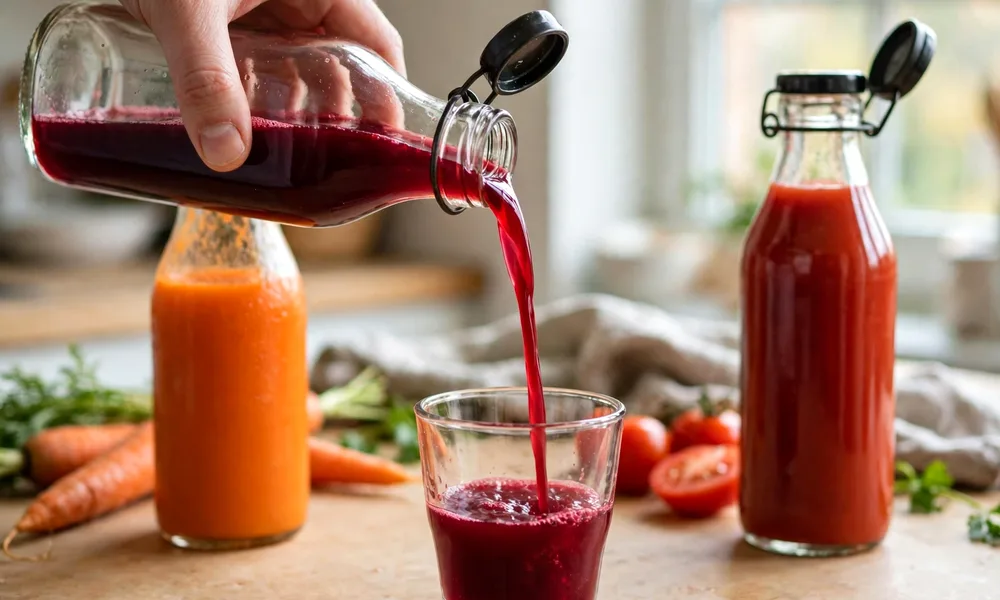
Beet-led blends are the boldest vegetable juices on the shelf. Beetroot gives the juice a deep ruby colour, an earthy sweetness and a flavour impossible to mistake for anything else, and makers usually balance it with carrot, apple or ginger so it does not taste like soil. The best beet blends are rich and satisfying in a small glass, and the most interesting choice when tomato and carrot blends start to feel routine. Two practical warnings come with them: beet juice stains everything it touches, so pour it over the sink and rinse the glass straight away, and the earthy taste is real, so if you do not like beetroot, no amount of carrot will hide it. Buy a small bottle first and taste it cold before committing to a litre.
4. Green vegetable blend: the best for light, fresh drinking
Green vegetable blends are built on celery, cucumber and spinach, and they are the lightest vegetable juices you can buy. They taste fresh and grassy rather than sweet, and they suit a hot afternoon or a light lunch better than any tomato or beet blend. The trap is thinness: a cheap green blend is mostly water and cucumber with a green tint, and it tastes like cold salad water rather than juice. A good one is thick enough to coat the glass, lists celery or spinach first, and tastes of actual vegetables. Judge the juice on taste and on the label, not on the health claims. Served very cold, a good green blend is a genuinely pleasant drink.
5. Low-sodium blend: the best for everyday drinking
Low-sodium vegetable juice is the same drink with the salt taken out, and it suits anyone who drinks it every day. It tastes flatter at first, because salt is doing more work in vegetable juice than most people realise, but that is easy to fix: add a pinch of salt yourself, or a squeeze of lemon, and the flavour comes back, under your control. A good low-sodium blend still lists vegetables first; a bad one adds sugar or flavourings to make up for the missing salt, which defeats the point. For a daily glass, this is the sensible buy. Compare the sodium per 100 millilitres between brands before you buy, because low-sodium on one label can still mean more salt than another brand’s standard blend.
6. Cold-pressed vegetable juice: the best flavour, for a price
Cold-pressed vegetable juice is made by crushing vegetables and pressing them slowly without heat, and it tastes noticeably closer to freshly juiced vegetables than any pasteurised carton does. The carrot tastes brighter, the beet tastes earthier, and the greens taste greener, because nothing has been heated. The downside is price and shelf life: it costs two to three times as much as ordinary vegetable juice, it must be kept refrigerated, and it goes off within a few days of opening. For most households it is a treat rather than a daily buy: a bottle for a weekend brunch, or a glass when vegetables are in season and you want the best version. For daily drinking, a good pasteurised blend is the practical choice.
7. Single-serve cartons: the best for lunchboxes and travel
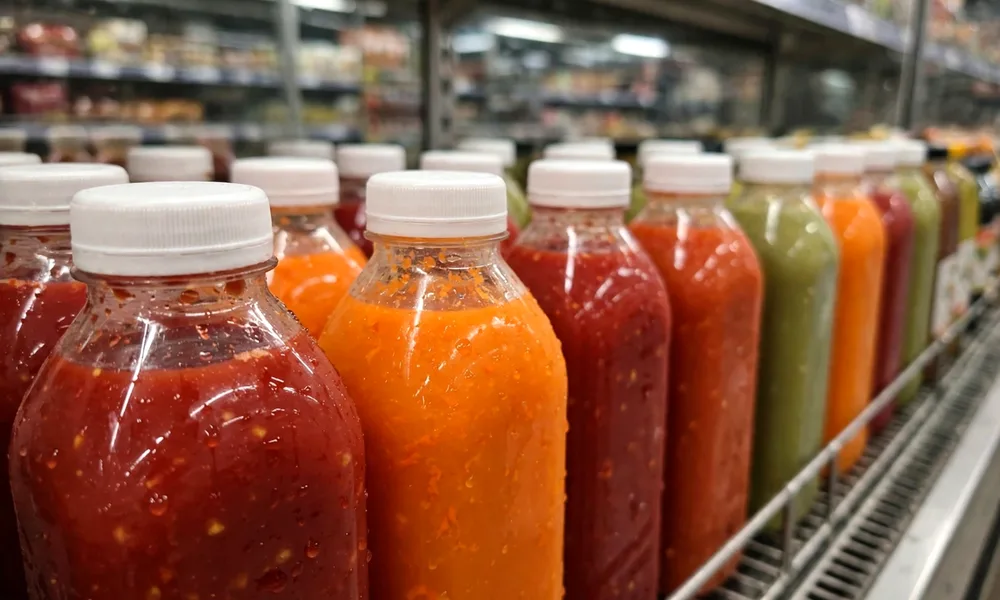
Single-serve cartons are vegetable juice in its most practical form: a small carton, usually 200 millilitres, that fits in a lunchbox or a bag and needs no glass and no fridge until it is opened. They suit school lunches, work desks and travel days, and they are the easiest way to keep the habit going when you are away from home. The compromise is cost and choice: you pay more per litre than for a large bottle, and the range is narrower, usually a tomato blend and a carrot blend, with beet and green blends harder to find. Check the label just as carefully as for a large bottle, because small cartons are where sweetened drinks hide most often: if sugar or apple juice concentrate appears high on the list, it is not the vegetable juice you wanted. For home, buy the large bottle; for the road, the carton earns its price.
What to avoid when buying vegetable juice
The most common vegetable juice regret is a wrong match: a beet blend bought by someone who hates beetroot, a green blend that turns out to be mostly water, or a sweetened carrot blend that is really a fruit drink. Avoid the trap by checking three things before you buy: the first ingredient on the label, which should be a vegetable; the sugar, which should be only the vegetables’ own, with none added; and the salt per 100 millilitres, because the difference between brands is large. A second mistake is drinking too much of it. Vegetable juice is concentrated vegetables without the fibre, so a small glass of about 150 millilitres is the sensible serving, and a pint glass is too much even when the juice is pure.
Checklist: choosing a vegetable juice
- Buy juice that lists vegetables first, with a short ingredient list and no added sugar.
- Start with a tomato-vegetable blend for everyday drinking, and try beet or green blends for variety.
- Pour a small glass of about 150 millilitres, not a pint, and drink it with food.
- Check the salt per 100 millilitres and compare brands before you settle on one.
- Shake the bottle before pouring, and keep opened juice in the fridge for three to five days.
- Buy single-serve cartons for lunchboxes and travel, and large bottles for home.
Frequently asked questions
Is vegetable juice healthy?
Vegetable juice is a useful way to get more vegetables into a day, but it is not a meal and not a replacement for eating whole vegetables, because juicing removes most of the fibre.
What is the best vegetable juice to drink every day?
A tomato-vegetable blend, or a low-sodium version of it. It is savoury, balanced and easy to drink daily. Rotate in a carrot or green blend once or twice a week for variety.
Does vegetable juice have a lot of sugar?
Pure vegetable juice contains only the vegetables’ own sugars, far less than fruit juice. The problem is blends with added apple juice or sugar, so read the label: if sugar or fruit juice concentrate is listed, the sugar will be higher than it needs to be.
How much vegetable juice should I drink a day?
A small glass of about 150 millilitres is the sensible daily serving. More than that adds salt and sugar without adding fibre.
Can I make vegetable juice at home?
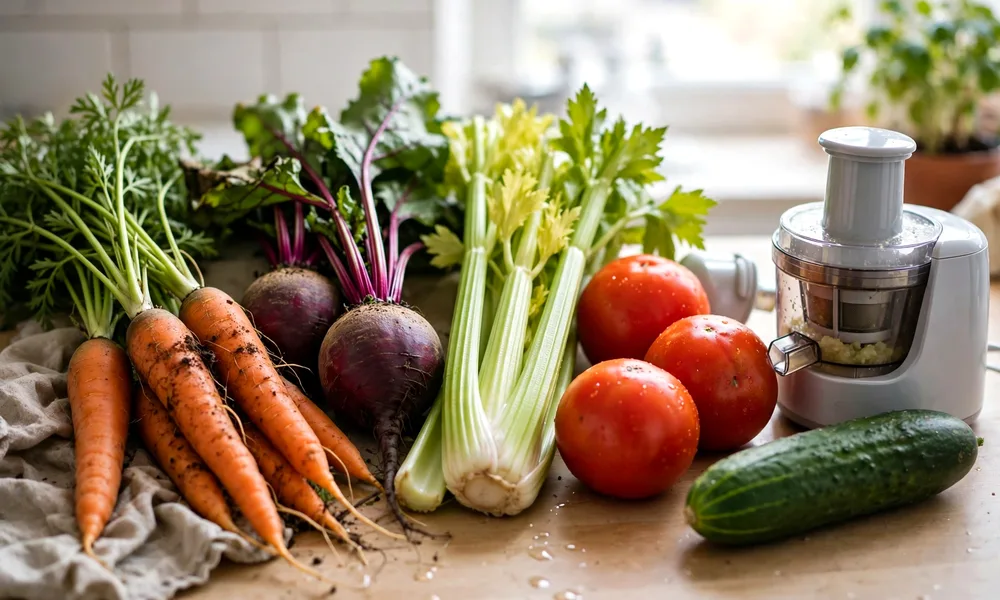
Yes, with a juicer or a blender and a strainer. Home-made juice tastes fresher than any bottle, but it keeps for only a day or two in the fridge.
How long does vegetable juice last once opened?
Three to five days in the fridge, shaken before pouring. Cold-pressed juice goes off faster, often within two to three days.
Bottom line
Vegetable juice deserves a second look in 2026 because the blends have got better and the labels have got easier to read. Start with a tomato-vegetable blend, check that vegetables come first and no sugar is added, and pour a small glass.


