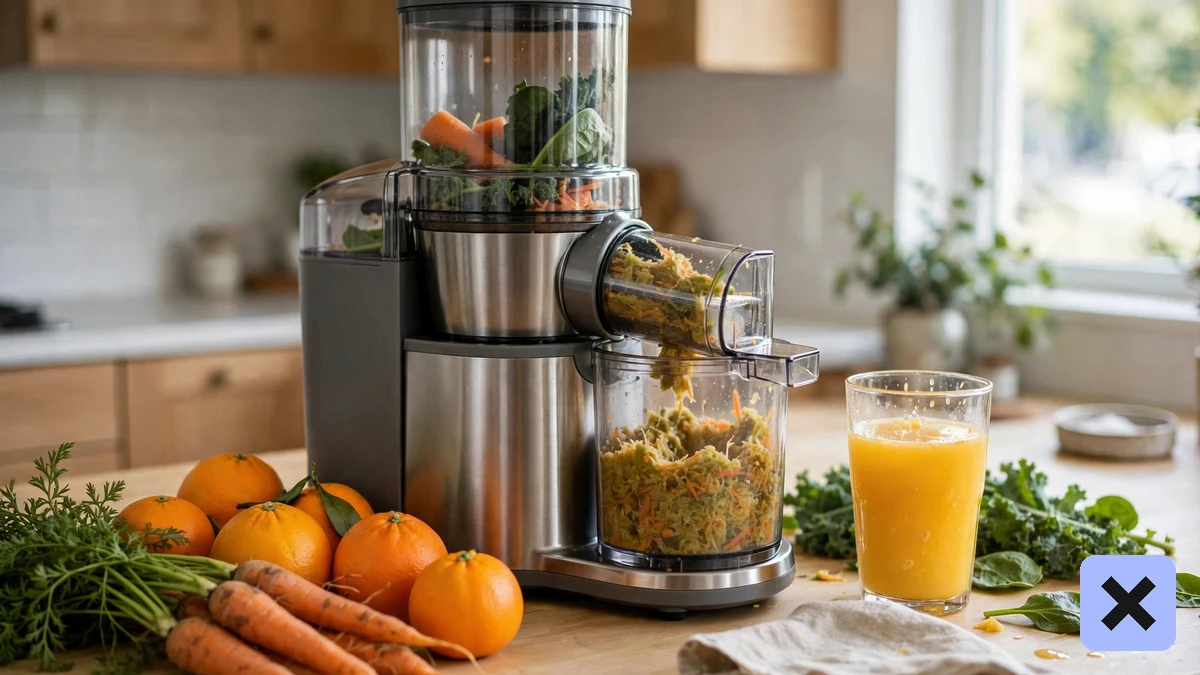
A juicer is one of those kitchen machines that either earns its place on the counter or ends up buried in a cupboard by February. The difference between the two outcomes is rarely luck. The best juicers of 2026 squeeze more juice from the same bag of fruit, handle leafy greens without clogging, and wash up in a few minutes. The worst juicers waste expensive produce, spray pulp across the worktop, and take so long to clean that nobody in the house uses them twice. This guide puts the two sides head to head, so you can see exactly what separates a juicer worth buying from one worth avoiding, and choose the right machine for the way you actually juice.
Juicing looks simple from the outside: fruit goes in, juice comes out. In practice, four things decide whether a juicer is a pleasure or a regret. Juice yield matters first, because produce is the real running cost of juicing, and a machine that leaves wet pulp is throwing money in the bin. The range of produce matters second, because a juicer that only handles apples and oranges is useless the moment you want a green juice. Noise and cleanup matter third and fourth, because a loud machine that takes fifteen minutes to wash will be used twice and then abandoned.
Key Takeaways
- The best juicers extract up to a third more juice from the same produce than the worst ones, which shows up in the pulp: dry pulp means a good machine, wet pulp means money in the bin.
- Masticating juicers handle leafy greens, celery and wheatgrass; cheap centrifugal juicers mostly cannot, and that is the single biggest divide between the two sides.
- Cleanup decides whether you keep juicing. Dishwasher-safe parts and a cleaning brush matter more than wattage or speed settings.
- Budget for produce as well as the machine: a daily juicing habit costs more in fruit and vegetables over a year than the juicer itself.
How the Best and Worst Juicers Differ
Before comparing individual machines, it helps to understand the two designs that dominate the market, because almost every difference between the best and the worst juicers comes back to this split. A centrifugal juicer spins a flat blade at very high speed, shredding produce and flinging the juice out through a fine mesh. It works in seconds, takes whole fruit through a wide chute, and usually costs between eighty and two hundred dollars. A masticating juicer crushes and presses produce slowly with an auger, squeezing out more juice with less foam. It costs between two hundred and five hundred dollars, works more slowly, and handles almost everything you feed it.
Centrifugal Juicers: Fast, Cheap, and Often Wasteful
The best centrifugal juicers are genuinely good machines for a specific job: a quick morning glass of apple, orange or carrot juice. They are fast, simple, and easy to find at a fair price. A good one has a wide feed chute, a powerful motor that does not bog down on carrots, and a pulp container large enough for a family breakfast. The worst centrifugal juicers look almost identical in a product photo, but the differences show up within a week. The motor is weak, so hard vegetables stall it. The mesh filter is coarse, so the juice is pulpy and foamy. The plastic feels thin, the lid rattles, and the machine vibrates across the counter. Worst of all, the pulp comes out soaking wet, which means a third of your fruit is going straight into the bin.
Masticating Juicers: Slow, Thorough, and Built to Last
The best masticating juicers are the machines that turn casual juicers into daily juicers. They are quieter than centrifugal models, they extract noticeably more juice, and they handle the produce that centrifugal machines cannot: kale, spinach, celery, wheatgrass, herbs, and even soaked nuts for plant milks. The juice comes out with less foam and keeps longer. A good masticating juicer feels solid, with a heavy base. The worst copy the shape but not the engineering. The auger is weak plastic that flexes under load, the machine jams on fibrous celery, and the narrow feed chute means you spend five minutes chopping before you start juicing.
The Best Juicers of 2026
The best juicers share a short list of qualities, and you can check most of them before you buy. Dry pulp is the first test. If a demonstration or a review shows pulp that crumbles rather than drips, the machine is extracting properly. A wide feed chute is the second test, because it tells you the maker thought about your morning rather than just the motor. Quiet running is the third: the best masticating juicers hum rather than scream, which matters more than people expect at seven in the morning. Finally, the best juicers clean up quickly, with dishwasher-safe parts, a strainer brush, and no hidden corners where pulp dries into cement.
What the best juicers do particularly well is make juicing a habit rather than a project. They take whole apples, so breakfast starts with a wash rather than a chopping board. They handle a bunch of kale without clogging, which is the moment most people decide whether juicing is worth it. And they last: spread over five years of daily use, even a four-hundred-dollar machine costs less per glass than a cheap one that dies in a year and wastes a third of your produce along the way.
The Worst Juicers of 2026
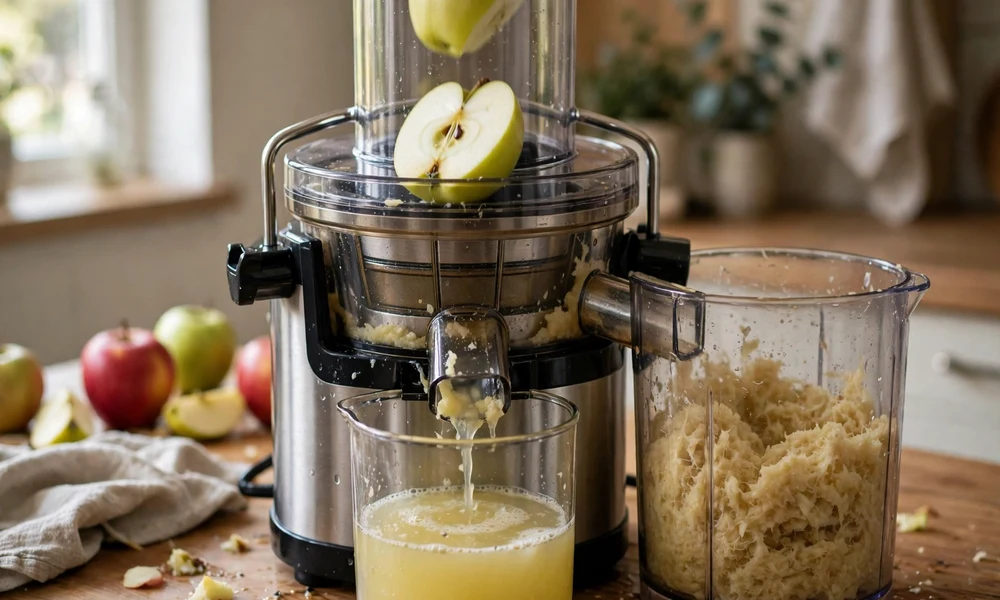
The worst juicers fail in predictable ways, and the warning signs are usually visible before you buy. The first is wet pulp. If the pulp coming out of a machine is dripping, the machine is not extracting juice properly, and no amount of speed or wattage will fix that. The second is a tiny feed chute. A chute that only takes a quarter of an apple means you will spend more time chopping than juicing, and that alone kills the habit for most people.
Weak Motors and Flimsy Plastic
The cheapest juicers are built to a price, and the motor is where the money is saved. A weak motor stalls on carrots, strains on beetroot, and overheats after two glasses, which means it cannot cope with a family breakfast, let alone a daily habit. The plastic is the second giveaway. Thin, glossy housings crack around the screws, lids warp after a few hot washes, and the locking arms loosen until the machine rattles. A juicer that feels light and hollow in the shop will feel worse after six months of use. The worst machines also skimp on the warranty, offering a year when the best offer five or ten, which tells you exactly how long the maker expects it to last.
The Cleaning Nightmare
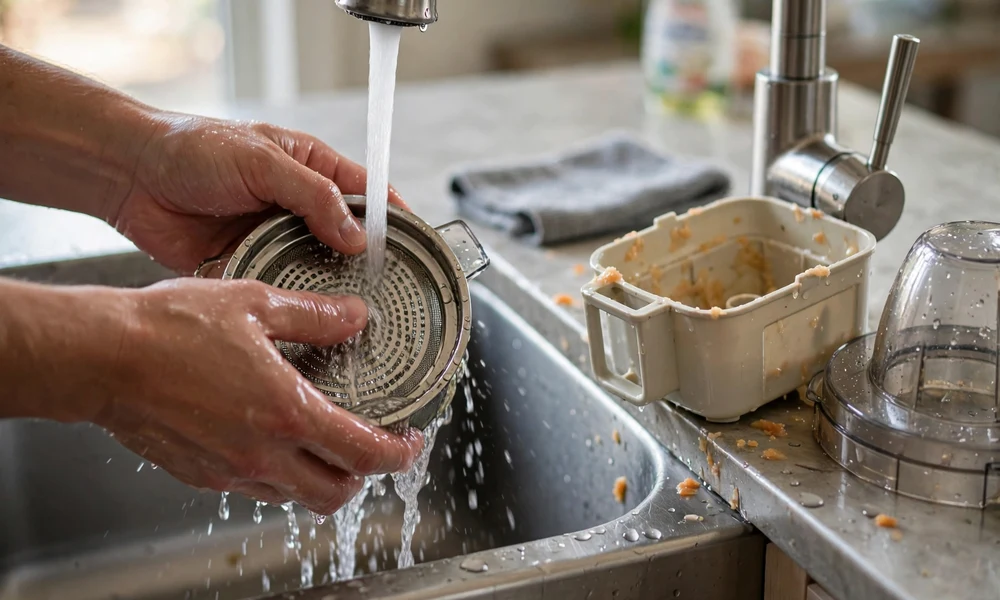
Cleaning is where bad juicers truly earn their reputation. A machine that takes fifteen minutes to wash will be used twice and then abandoned, and the worst juicers seem designed to make cleaning as painful as possible. The strainer is a fine mesh cylinder that traps pulp in hundreds of tiny holes, with no brush included. The pulp container is an awkward shape that does not fit under the tap. Before you buy any juicer, count the parts, check whether they are dishwasher-safe, and ask yourself honestly whether you would wash them every morning. If the answer is no, the machine is not a bargain at any price.
Head to Head: Best vs Worst Juicers
Put the two sides side by side and the pattern is clear. On juice yield, the best masticating juicers extract up to a third more juice from the same produce than the worst centrifugal machines, and the difference is visible in the pulp. On greens, the best handle kale and wheatgrass without a second thought, while the worst clog, jam, or simply leave the leaves mostly intact. On noise, the best hum at conversation level, while the worst scream loud enough to wake the house. On cleaning, the best take three to five minutes, while the worst take fifteen and leave you scrubbing a mesh strainer with a toothbrush.
Price is the one area where the worst juicers appear to win, and it is a trap. A sixty-dollar juicer that wastes a third of your produce, needs replacing in a year, and gets used ten times costs more per glass than a three-hundred-dollar machine used five hundred times. By that measure, the best juicers are the cheap option, paid for once, while the worst are the expensive option, paid for again and again in wasted produce and replacement machines.
The Verdict
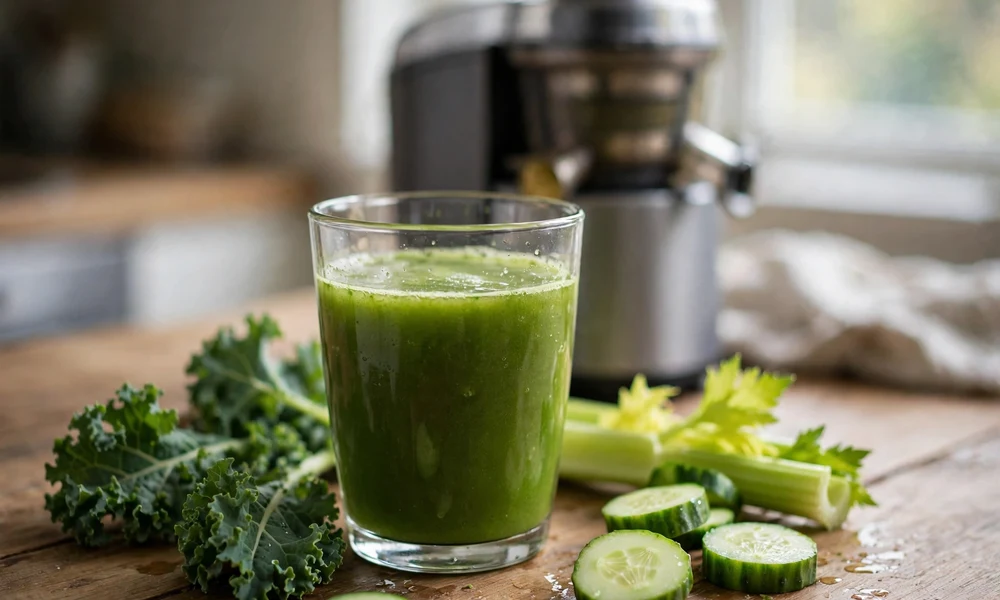
The verdict is simple: buy the best juicer you can afford, and buy it for the produce you actually juice. If you mostly juice apples, oranges and carrots for a quick morning glass, a good centrifugal juicer with a wide chute, a strong motor and dishwasher-safe parts is the best choice, and it will serve you well for years. If you juice leafy greens, celery or wheatgrass, or you want the highest yield from expensive produce, a masticating juicer is the best choice, and the extra money pays for itself in juice you would otherwise throw away. The worst juicers are not bargains. They are the reason so many kitchens have a juicer gathering dust in a cupboard, and the reason so many people conclude, wrongly, that juicing is not for them.
For a closer look at the strongest options, our guide to the best juicers of 2026 covers the top performers in detail, while the worst juicers of 2026 names the designs to avoid. And if green juice is your goal, the best green juice guide explains what to put through the machine once you have chosen it.
Who Each Juicer Is For
A good centrifugal juicer is for the busy household that wants a fast glass of fruit juice before work or school, juicing three or four times a week, mostly hard fruit and root vegetables. A good masticating juicer is for the daily juicer and the green-juice drinker, and anyone who buys expensive organic produce and wants every drop of it. It is slower, but quieter, more thorough, and more versatile. The worst juicers, meanwhile, are for nobody. They suit the bargain hunter in the shop and disappoint everyone at home. If your budget only stretches to a cheap machine, you are better off buying a good hand-press citrus juicer for a fraction of the price and saving for a proper machine.
How to Choose Before You Buy
Before you spend anything, run through a short checklist. First, decide what you will juice most: fruit only, or greens as well. That one answer chooses the type. Second, check the pulp in a review or a demonstration. Dry, crumbly pulp is the sign of a good machine. Third, count the parts and check the cleaning instructions. If the strainer is not dishwasher-safe and no brush is included, walk away. Fourth, check the warranty: five years or more means the maker trusts the motor. Finally, read reviews from people who have owned the machine for six months, not six days. The faults of a bad juicer, the cracked plastic, the clogging, the smell of an overheating motor, all show up after the honeymoon period, and long-term reviews are where they surface.
Final Thoughts
Juicers divide opinions because the gap between the best and the worst is so wide. A good juicer makes fresh juice a small daily pleasure: quick, quiet, easy to clean, and generous with the produce you feed it. A bad juicer makes it a chore: loud, messy, wasteful, and quickly abandoned. Get the four things that matter right, yield, range, noise, and cleanup, and you will juice for years. Get two of them wrong and the machine will be in the cupboard by spring. Choose the best juicer that fits what you juice and how you live, skip the cheapest machine on the shelf, and your mornings will be better for it.


