
Walk Away From the Worst Race Brakes of 2026: Seven Brake Types That Fail When It Matters
The worst race brakes of 2026 are not the oldest brakes on the grid or the cheapest set in the parts catalogue. An old brake can still be honest, and a cheap brake can still stop a car in a straight line. The worst race brakes fail in a much more basic way: they fade when the lap gets hot, grab when the driver needs a gentle touch, or go soft at the exact moment the corner arrives. A driver only thinks about brakes when they fail, and by then the braking zone is already running out.
Key takeaways
- A race brake is judged by feel first: a brake that fades, grabs or goes soft cannot tell the driver how much grip is left.
- Heat is the real enemy: a brake that works for one lap and quits on the third is a danger, not a bargain.
- Balance matters more than power: a brake that locks one end of the car will spin it, however strong it feels.
- Matching parts matters: pads, discs, fluid and cooling must work as one set, or the weakest part decides the result.
- Test the brakes hard before you trust them, and walk away from any set that fades, grabs or changes its feel lap by lap.
How the worst race brakes were ranked
Every type below was scored on five measures. Feel comes first: does the pedal stay firm and honest, or does it go long, soft or wooden when the work gets hard? Heat handling is second: does the brake survive a full stint at racing temperature, or does it fade after a few hard stops? Balance is third, because a brake that locks one end first is a spin waiting to happen. Consistency is fourth, and durability fifth: does the brake behave the same on lap one and lap twenty, and does it last the distance?
First, no real maker, model or brand is named as the worst: this guide ranks types and patterns, not individual products. Second, a bad brake is not the same as a bad car: our guide to the worst race cars shows how good brakes can still be wasted by a machine that is too heavy or too fragile, and our guide to the worst race tires shows the same logic in the rubber, where grip disappears just when it is needed most.
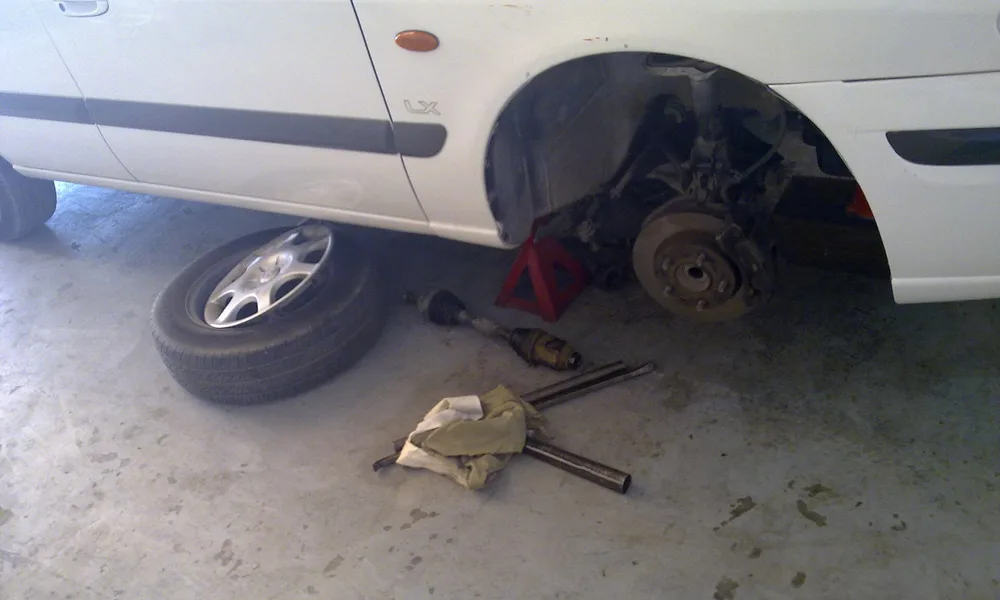
Comparison table: the worst race brakes 2026
| Rank | Brake type | Main failure | Worst moment |
|---|---|---|---|
| 1 | The fading steel disc | Loses power as it heats up | Pedal going long on the third stop |
| 2 | The glazed pad | Smooth, shiny surface, no bite | Pressing hard, feeling almost nothing |
| 3 | The grabbing drum brake | Locks without warning | A wheel locking on a damp entry |
| 4 | The soft-pedal brake | Pedal sinks towards the floor | Pumping the pedal as the corner arrives |
| 5 | The cracked drilled disc | Cracks spread from drill holes | A disc splitting under hard braking |
| 6 | The mismatched pad and disc | Wrong pairing eats one part fast | New pads ruined in one session |
| 7 | The cold carbon-ceramic | No bite until it is hot | The first corner of a cold morning |
The worst race brakes of 2026
1. The fading steel disc: strong for one lap, gone by the third
The fading steel disc is the most common way a race brake lets a driver down, because it feels perfect right up until it does not. On the first lap the pedal is firm, the bite is strong and the car stops exactly where the driver expects. By the third hard stop the pedal has gone long, the bite has gone soft and the braking point that worked a minute ago is suddenly twenty metres too late. The disc has soaked up more heat than it can shed, and the pads are sliding over a surface too hot to grip.
Fade is dangerous because it arrives gradually and then all at once. The fix is a disc with the mass and cooling to shed heat lap after lap, and a pad compound that holds its friction when the temperature climbs.
2. The glazed pad: smooth, shiny and useless
A glazed pad looks fine from the outside, which is exactly the problem. The friction surface has gone smooth and shiny, like glass, after overheating or after too many gentle stops that never cleaned it. The pedal feels normal, the disc looks normal, and then the driver presses and almost nothing happens. The pad is sliding across the disc instead of gripping it, and no amount of extra pedal pressure brings the bite back.
Glazing often follows light use, where pads never got hot enough to bed in, or a single overheat that cooked the surface. A pad that glazes once will usually glaze again.
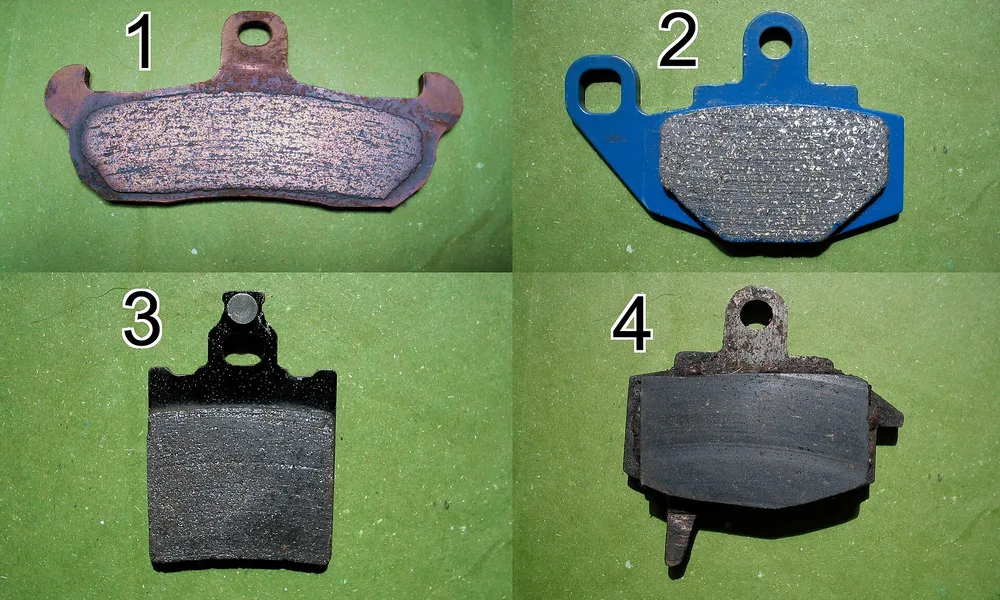
3. The grabbing drum brake: all or nothing, at the worst time
Drum brakes belong to an older kind of racing, and the worst of them show why the disc took over. A grabbing drum gives the driver no middle ground: a light touch does almost nothing, and a little more pressure locks the wheel solid. On a dry straight that is merely annoying. On a damp corner entry it is a spin, because the locked wheel stops steering at the exact moment the driver needs it most.
Heat makes the drum expand away from the shoes, so the pedal travels further; then the shoes catch suddenly and bite far harder than asked. A drum that guesses for itself is the opposite of trust.
4. The soft-pedal brake: the pedal that keeps sinking
Nothing shakes a driver’s confidence like a pedal that sinks towards the floor. The soft-pedal brake usually starts the day feeling fine, then the pedal travel grows a little each session. The driver compensates without thinking, pressing further and further, until one stop needs a pump of the pedal before the brakes bite at all. By then the problem is a distance the car cannot give back.
Air in the lines, tired fluid that has absorbed water, or a weeping seal can all cause it, and all get worse with heat and time. In a race, a pedal that moves is a pedal that lies.
5. The cracked drilled disc: holes that become fractures
Drilled discs look fast, and that is most of what they offer in the worst cases. The holes are meant to clear gas and dust from the pad surface, but every hole is also a place for a crack to start. On a cheap or poorly made disc, fine cracks spread from hole to hole after a few hot sessions, and the disc that looked like racing hardware becomes a part the driver cannot trust at full pressure.
The danger is that a cracked disc often still works, right up until it does not. A disc is a safety part before it is a performance part, and any disc that cracks from its own holes has failed at its first job.

6. The mismatched pad and disc: a pair that eats itself
Brakes are a system, and the mismatched pad and disc is what happens when that is forgotten. A hard, aggressive pad on a soft disc will chew through the disc in a single meeting, leaving grooves deep enough to feel with a fingertip. A soft pad on a hard, high-temperature disc will never bed in, smearing material across the surface until the pedal feels wooden and stopping distances grow.
The mismatch is often born of good intentions: fitting the hardest pads available, or reusing old discs with new pads of a different compound. A race set must be chosen together, pad and disc and fluid.
7. The cold carbon-ceramic: brilliant when hot, absent when cold
Carbon-ceramic brakes are the most expensive way to learn that heat is not optional. At full racing temperature they are superb: light, strong and almost immune to fade. Cold, they are a different part entirely. The first corner of a cold morning, or the first stop after a long straight in the rain, can arrive with almost no bite at all, and the driver discovers the difference at the worst possible speed.
It needs a warm-up routine and a car that can keep heat in the discs between stops. A race brake must stop the car on the first corner as well as the last.
What to avoid when choosing race brakes
The most common brake regret is not a bad part but a wrong match: a fade-prone disc fitted to a heavy car, a glazed pad never bedded in, or a cold carbon-ceramic set bought for short sprints. Check the temperatures the set is built for, whether the pad compound matches the disc, and whether the cooling can shed the heat. Our guide to the worst motorsport makes the same point about formats that fall apart on the day.
Checklist: choosing race brakes that will not let you down
- Bed new pads in with firm, controlled stops, and never trust a set that has not been bedded.
- Check the disc for cracks, grooves and heat spots before every meeting, especially around drilled holes.
- Match the pad compound to the disc material, and buy the pair as a set rather than mixing compounds.
- Bleed the fluid and check pedal travel before the first session, and walk away from a pedal that keeps sinking.
- Make sure the cooling ducts are clear and aimed at the disc, because a hot brake with no air is a fading brake.
- Warm the brakes on the first lap with firm stops, and never trust full braking from a cold set on a damp morning.
Frequently asked questions
What is the most common way a race brake fails?
Fade is the most common failure: disc and pads get hotter than they can handle, friction drops, and the pedal goes long. It arrives after a few hard laps.
Why do my brake pads glaze over?
Glazing happens when pads overheat once, or are used too gently for too long and never bed in. The surface goes smooth and shiny and stops gripping.
Are drilled discs better than plain discs for racing?
Not always. Drilled discs can clear gas and dust, but every hole is a place for a crack to start, especially on cheap discs. A well-made plain or slotted disc is often the safer choice for hard, repeated use.
How do I know if my brake fluid needs changing?
A pedal that sinks further than it used to, or needs a pump before it bites, is the usual sign. Old fluid absorbs water and boils at lower temperatures, so change it regularly.
Do carbon-ceramic brakes work on a cold track?
Poorly. They need heat to bite, so the first corners of a cold morning can arrive with almost no braking. They suit long, hot sessions far better than short sprints or damp days.
Can I mix pad brands on the same car?
You can, but do not mix compounds between front and rear, or fit new pads to worn discs of a different material. Mismatched pairs wear unevenly, change the brake balance and can ruin a good disc in one session.
Bottom line
The worst race brakes of 2026 are the ones that change their mind mid-race: the disc that fades, the pad that glazes, the drum that grabs, the pedal that sinks, the drilled disc that cracks, the mismatched pair that eats itself, and the carbon-ceramic that only works when it is hot. Choose a set that stays honest from the first corner to the last.


