What is a garden journal, and why do so many experienced gardeners swear by one? The best garden journals are simply a record of what you planted, when you planted it, what worked, and what did not. They turn a season of guesswork into a season of evidence, so next year you plant the right variety at the right time in the right spot instead of repeating the same hopeful mistakes. A journal does not need to be fancy or time-consuming. Five minutes a week is enough to build a record that pays you back every spring.
Most gardens fail in small, forgettable ways: the tomato variety you loved but cannot name, the beans sown a fortnight too late again, the courgettes that drowned in the shadiest corner. Memory is a poor gardener, and a written record is not. This guide explains what a garden journal is, what to put in one, how to choose between paper and digital, and which style suits different gardeners in 2026.
Key Takeaways
- A garden journal is a dated record of planting, weather, harvests and problems, kept so next season starts from evidence rather than memory.
- Record sowing dates, varieties, positions and results for every crop.
- Paper journals suit hands-in-the-soil gardeners, while apps suit people who want photos, reminders and searchable notes.
- The best journal is the one you will actually open weekly, so pick a format that fits your routine rather than the prettiest one.
- Review last year’s notes before you buy seeds or sow anything.
What a Garden Journal Actually Is
A garden journal is a notebook, binder, app or spreadsheet where you record what happens in your garden, dated and in enough detail to be useful later. It is not a diary of feelings about gardening, although it can include those. Its job is practical: to capture the facts you will need in three months or twelve months, when the moment has passed and your memory has quietly rewritten it.
Think of it as the garden’s memory. When you write down that the first early potatoes went in on 14 March and were ready on 28 June, you have a real planting window for your soil and your climate, not a date copied from a seed packet written for a different part of the country.
One year of notes is helpful. Three years is a goldmine, because you can see which varieties cope with a wet spring, which beds dry out first, and how your soil improves as you feed it.
Paper, App or Spreadsheet: Which Format Wins?
There is no single best format, only the format that matches how you garden. A paper journal lives by the back door and survives muddy hands. An app lives in your pocket and holds photos. A spreadsheet lives on your computer and sorts and filters beautifully.
The table below compares the main options honestly, including where each one falls short.
| Format | Best for | Strengths | Weaknesses |
|---|---|---|---|
| Bound notebook | Everyday note-taking | Cheap, durable, no battery, easy to sketch beds | Hard to search or reorder pages |
| Loose-leaf binder | Organised record keepers | Pages can be moved, added and grouped by bed or crop | Bulky, and loose pages get lost outdoors |
| Phone app | Photo-heavy gardeners | Photos, reminders, search and backups built in | Subscriptions, small screen, awkward with muddy hands |
| Spreadsheet | Data-minded growers | Sortable, filterable, easy to compare years | No good in the garden, poor for sketches and photos |
| Printable planner | Structured beginners | Prompts remind you what to record each week | Rigid layout may not fit your beds or crops |
If you are torn, start with a plain bound notebook. It costs little, works in the rain with a pencil, and teaches you what you actually want to record before you spend money on a system.
What to Write Down
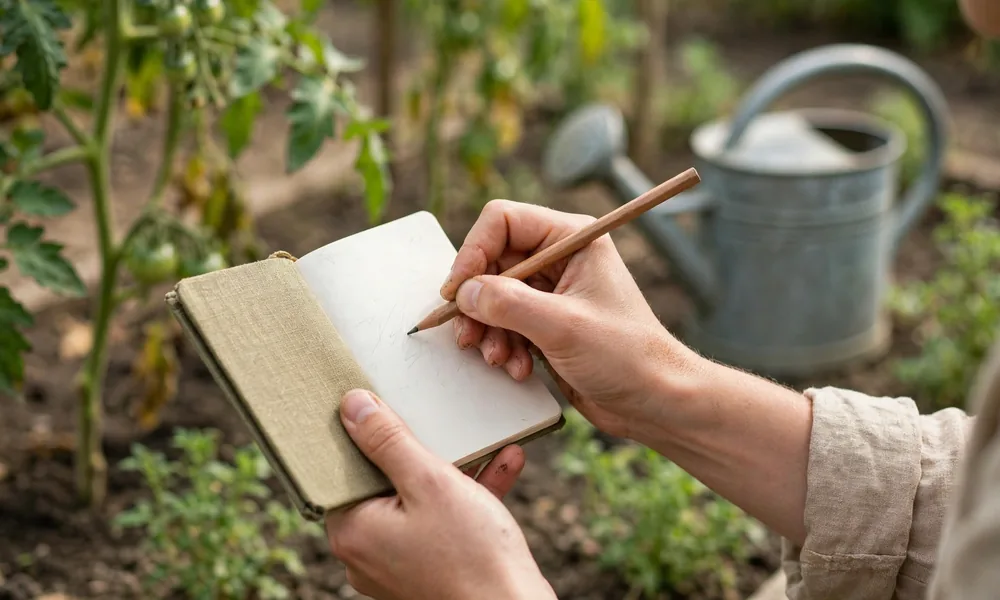
A journal only helps if it records the right facts. You do not need to write an essay every visit. A few lines per crop per week, done consistently, beat pages of detail written once and then abandoned.
Planting dates and varieties
Record the variety name exactly as printed on the packet, the date you sowed, the date seedlings appeared, and the date you transplanted or harvested. Without the variety name, your notes are nearly useless next year, because you will not know which one earned its place.
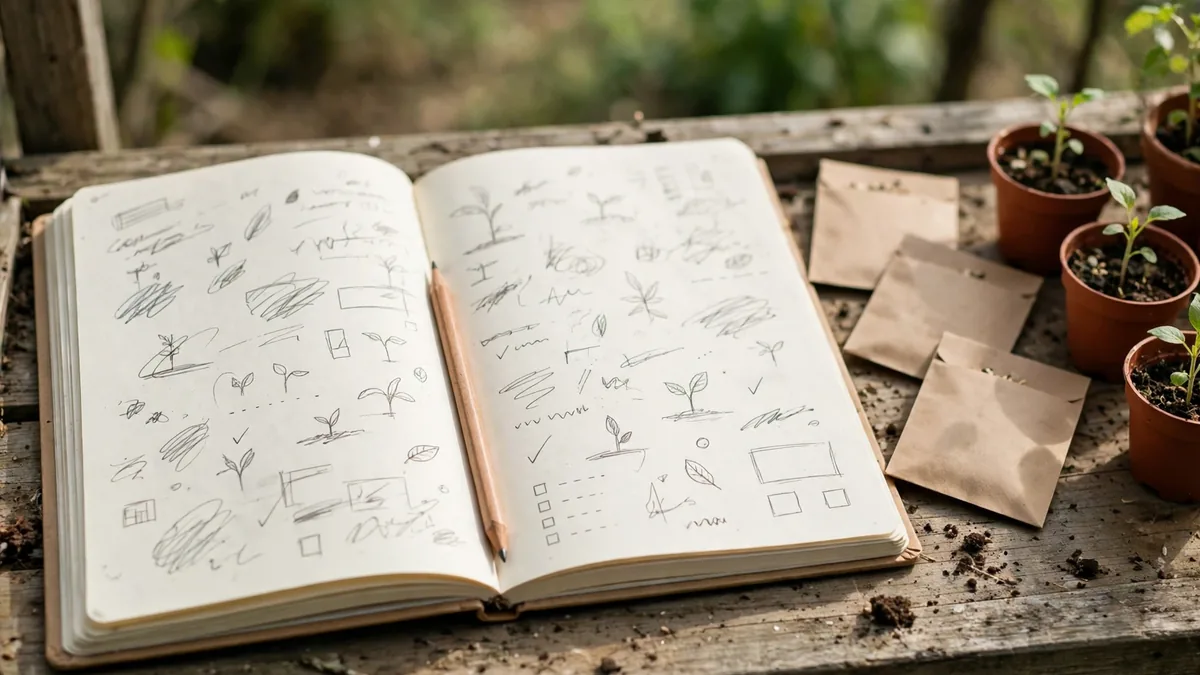
Where things grew
Sketch each bed once a season and note what went where. Pair it with plant labels that survive the season so the bed in the ground matches the bed in the book.
Weather that mattered
You do not need daily rainfall figures. Note the weather that changed something: the late frost that nipped the beans, the two-week dry spell in July, the storm that flattened the sweetcorn. A line a week is plenty.
Pests, diseases and what you did
Note the first sighting of a problem, what you tried, and whether it worked. “Slugs on lettuce, 12 May, beer traps, helped a little” is worth more than a perfect photograph of the damage.
Harvests and taste
Weigh or count the harvest when you can, and write one honest line about flavour. “Courgette Defender, 23 fruits, good flavour, too many plants” tells next year’s you to grow two plants instead of four.
How to Choose the Best Garden Journal for You
Choosing comes down to five practical questions. Answer them honestly and the right format usually picks itself.
First, where do you actually garden? If your plot is an allotment with no phone signal, paper wins. If you garden on a balcony and your phone is always in your pocket, an app is painless. Second, do you like photos? If you take pictures of every seedling, an app or a binder with photo sleeves will serve you better than a plain notebook. Third, how much time will you give it? Be honest about that before you choose.
Fourth, how long do you want the record to last? A good bound notebook on a shelf is readable in twenty years with no software at all. An app depends on the company behind it staying in business and your data staying exportable. Fifth, what is your budget? A plain notebook costs almost nothing and is genuinely one of the best garden journals for a beginner. Spend more only when you know which features you will use.
Also think about your garden tools and your routine together. A journal that lives in the same crate as your trowel and gloves gets used; a beautiful journal kept in a drawer does not. Put the journal where the gardening happens, and keep a pencil tied to it if you can. Small friction is the enemy of a good habit.
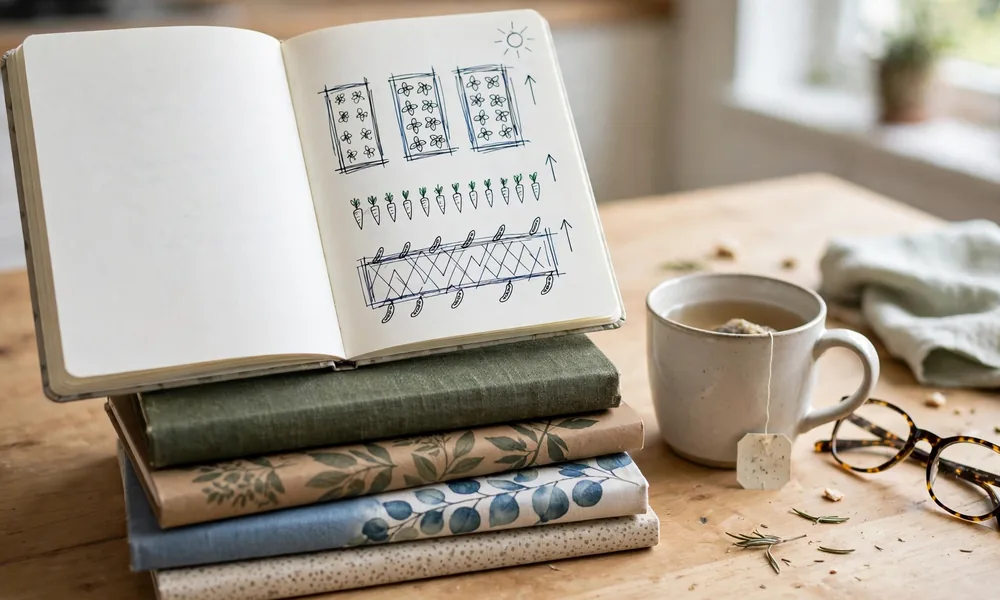
The Best Garden Journals of 2026 by Gardener Type
Rather than naming one winner for everyone, here is what works best for each kind of gardener in 2026. Pick the type that sounds like you.
Best for beginners: a prompted printable planner
Beginners benefit most from prompts, because they do not yet know what to record. A planner with weekly boxes for sowing, watering, feeding and observations removes the blank-page problem. Print a fresh set each season and file the old ones in a binder.
Best for allotment holders: a tough bound notebook
Allotment gardening is muddy, wet and rough on paper. A hardcover notebook with thick pages and a pencil survives conditions that would kill a phone or a flimsy diary. Choose one with a ribbon marker and a pocket for seed packets.
Best for photo lovers: a garden app
If you already photograph your garden constantly, an app turns those photos into a dated record with almost no extra effort. Look for one that lets you export your data, works offline, and lets you tag photos by bed or crop.
Best for serious vegetable growers: a binder plus spreadsheet
Growers who track yields, rotations and succession sowing across many beds need structure. A binder holds the season’s sketches and notes, while a simple spreadsheet holds the numbers: sowing dates, harvest weights and variety comparisons.
Best for small-space gardeners: a slim pocket notebook
Balcony and container gardeners do not need a system built for an acre. A pocket notebook that lives by the door is enough to record watering, feeding and the one line that matters most: which varieties earned their pot next year. Pair it with seed trays that start seedlings strong indoors, and note the sowing dates.
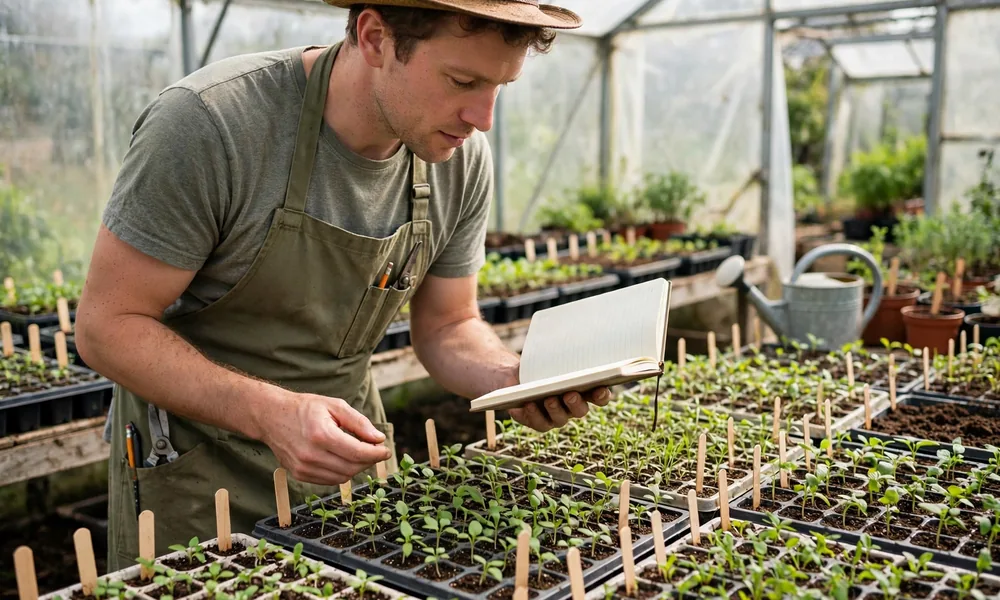
Mistakes That Make Journals Useless
Most journals fail for the same few reasons, and all of them are avoidable. The first is writing too much at the start and then stopping. A journal that demands an hour a week will be abandoned by March. Keep entries short and forgive the missed weeks; a gap is not a failure, it is just a gap.
The second mistake is recording opinions instead of facts. “Tomatoes did badly” tells you nothing. “Tomatoes sown 2 April, planted out 20 May, blight from 18 July, half the crop lost” tells you to plant earlier, choose a resistant variety, or improve airflow. Facts age well; vague impressions do not.
The third is never reading it back. A journal you never review is a diary, not a tool. Read last year’s notes before you order seeds, before you sow, and once more at the end of the season when you plan next year. The fourth is losing variety names. The fifth is keeping the journal somewhere inconvenient: if it is not within arm’s reach in the garden, it will stay blank.
Your First-Month Checklist
- Choose your format and put the journal where you garden, with a pencil attached.
- Sketch every bed and label what is already growing in it.
- Write down every variety name exactly as printed on the packet or label.
- Record sowing and planting dates for everything you put in the ground.
- Take one photo of each bed per week, dated, even if you use a paper journal.
- Set a weekly five-minute reminder to update the journal, and keep it even in busy weeks.
Frequently Asked Questions
Do I really need a garden journal?
No gardener needs one, but almost every gardener who keeps one wishes they had started sooner. It costs little, takes minutes a week, and turns repeated mistakes into one-off lessons.
Is a paper journal or an app better?
Paper is better in the garden itself: no battery, no signal needed, and it survives mud. Apps are better for photos, reminders and searching old notes. The best choice is the one you will actually use weekly.
What should I write in a garden journal?
Start with variety names, sowing and planting dates, bed positions, weather that mattered, pest and disease sightings, and harvests with a note on flavour. Those six things explain most of what happens in a garden. Add anything else you enjoy recording, but never let the extras crowd out the essentials.
How much time does a garden journal take?
About five minutes a week once the habit is set, plus a longer look back at the start and end of the season. If it takes more than that, you are probably writing too much. Short, dated facts are more useful than long essays.
Can I start a garden journal mid-season?
Yes. Start today with what is growing now, sketch the beds, and record what you remember of sowing dates, even approximately. A journal started in July still makes next spring better.
What is the best garden journal for a beginner?
A plain bound notebook or a prompted printable planner. Both are cheap, simple and impossible to get wrong.
Bottom Line
The best garden journals are not the prettiest or the most expensive; they are the ones that get opened every week and read back every spring. Pick a simple format that fits where and how you garden, record dates, varieties, positions and results in short factual lines, and review the notes before you sow.