A guide to potting soil starts with a simple fact: the best potting soil is not soil at all. It is a soilless mix, usually built from peat or coir, bark, perlite and a little fertiliser, designed to hold water and air in the exact balance that roots need inside a pot. Garden soil, by contrast, is far too dense for containers. Put it in a pot and it compacts, drowns the roots, and turns a healthy plant into a struggling one within weeks. Choosing the right bag matters more than most gardeners realise, because everything a potted plant eats and drinks comes from that mix.
This guide explains what is actually inside the bag, how the main types differ, which mix suits which plant, and the mistakes that ruin even good potting soil.
Key Takeaways
- Potting soil is a soilless mix, not garden soil, and using garden soil in pots is the most common container mistake.
- Good potting soil holds moisture without staying soggy, because roots need air as much as they need water.
- Match the mix to the plant: seedlings need fine, gentle mixes, while cacti and succulents need sharp, fast-draining ones.
- Cheap bags often hide dust, sticks and weed seeds, so squeeze the bag and read the ingredients before you buy.
- Old potting soil can be revived with fresh compost and feed, but never reuse mix from a diseased plant.
What Is Potting Soil Made Of?
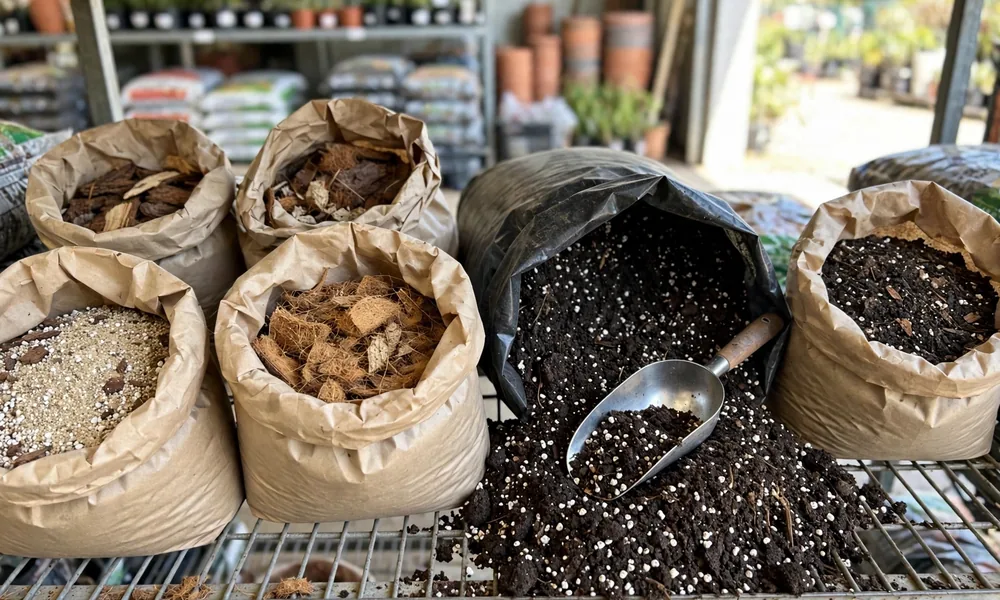
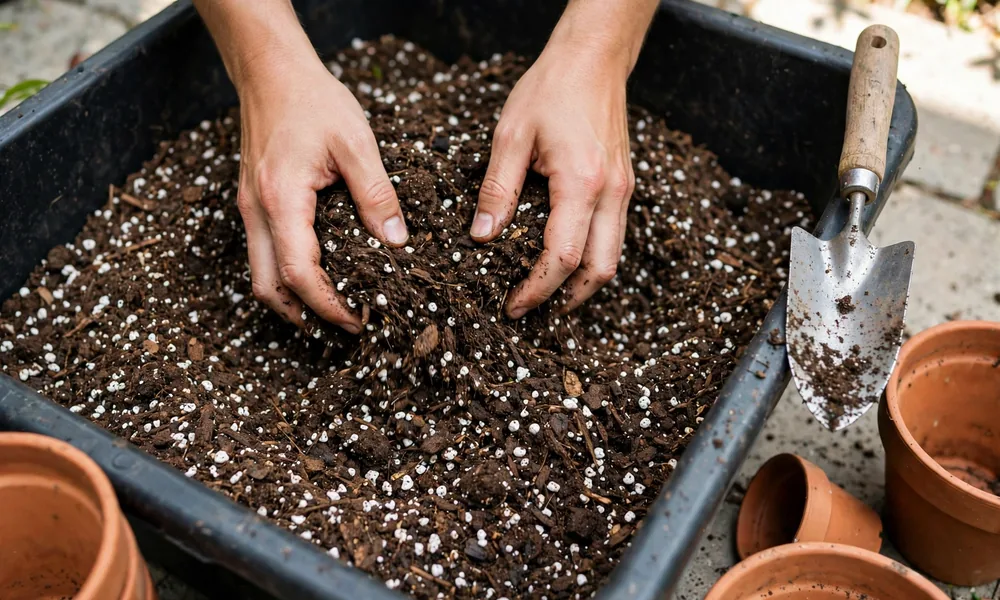
Most bagged potting soil is built from four or five ingredients, each doing a different job. Peat moss or coir holds water and gives the mix its body. Bark or wood fibre adds structure and keeps the mix open as it ages. Perlite, those little white granules, holds air spaces open so roots can breathe. Vermiculite holds extra moisture and nutrients for plants that like steady dampness. A starter fertiliser, usually enough for four to six weeks, feeds the plant while it settles in.
The exact recipe varies by brand and by purpose, which is why two bags can look similar and behave very differently. A general-purpose mix sits in the middle, a seed mix is much finer, and a cactus mix is far grittier. Read the ingredients list, not just the picture on the front, because the list tells you what you are really buying.
Peat-free mixes deserve a mention. They usually replace peat with coir, bark and composted wood fibre. Good peat-free mixes work just as well as peat-based ones, but they can dry out faster on the surface while staying wet underneath, so check moisture with a finger rather than by looking. Whatever you choose, the test is the same: squeeze a damp handful. It should hold together loosely, then crumble when you poke it.
Potting Soil Types Compared
The table below compares the mixes you are most likely to meet, so you can match the bag to the job instead of buying one bag for everything.
| Mix type | Best for | Drainage | Watch out for |
|---|---|---|---|
| General purpose | Most pots and containers | Medium | Too wet for succulents, too coarse for seeds |
| Seed starting | Sowing seeds indoors | Medium, fine texture | Almost no feed, so pot seedlings on promptly |
| Cactus and succulent | Cacti, succulents, arid plants | Very fast | Dries too fast for thirsty plants |
| Houseplant | Indoor plants | Medium to fast | Some are mostly bark, so check the label |
| Ericaceous | Blueberries, azaleas, camellias | Medium | Only for acid-loving plants, not general use |
| Container and basket | Hanging baskets, summer pots | Slow to medium | Can stay soggy in a wet summer |
If you only buy one bag, make it a good general-purpose mix and add perlite for plants that need sharper drainage.
How to Choose the Best Potting Soil
Choosing well is mostly about checking three things before the bag goes in the trolley: the ingredients, the texture, and the state of the bag itself.
Read the ingredients first
A good label lists its ingredients in order. Look for peat or coir, bark, perlite and a named fertiliser. Be cautious of bags that say only “compost” with no detail, or that list “forest products” without saying what they are. Vague labels often hide the cheapest filler. Also check whether the mix is peat-free if that matters to you, and whether it contains added feed and for how long it lasts.
Feel the texture
Squeeze the bag gently. It should feel springy and slightly damp, not rock hard or soaking wet. A bag that feels like a brick has probably dried out and shrunk, and dried peat and coir can be hard to rewet. A bag that sloshes has been stored in the rain and may already be sour. If the shop will let you, open the bag and look: you want dark, crumbly material with visible perlite, not grey dust, long sticks or lumps of uncomposted wood.
Match the mix to the plant
Seedlings need a fine, gentle mix that holds moisture without drowning them. Most houseplants are happy in a general-purpose or houseplant mix with extra perlite. Cacti and succulents need a gritty mix that dries within a day or two. Acid-loving plants such as blueberries need an ericaceous mix, and ordinary potting soil will slowly starve them of iron. When in doubt, ask what the plant hates most: wet feet or dry roots. That answer points straight to the right bag.
Check the bag’s condition
Do not buy a torn bag, a bag with white mould on the outside, or one that smells sour or like ammonia when opened. A healthy mix smells earthy, like a forest floor. A sour smell means it has gone anaerobic in storage, and it can damage young roots. Buy from a shop that stores bags under cover and turns its stock over quickly, and avoid the dusty bag that has sat at the back of the shelf since last year.
How to Use Potting Soil Properly
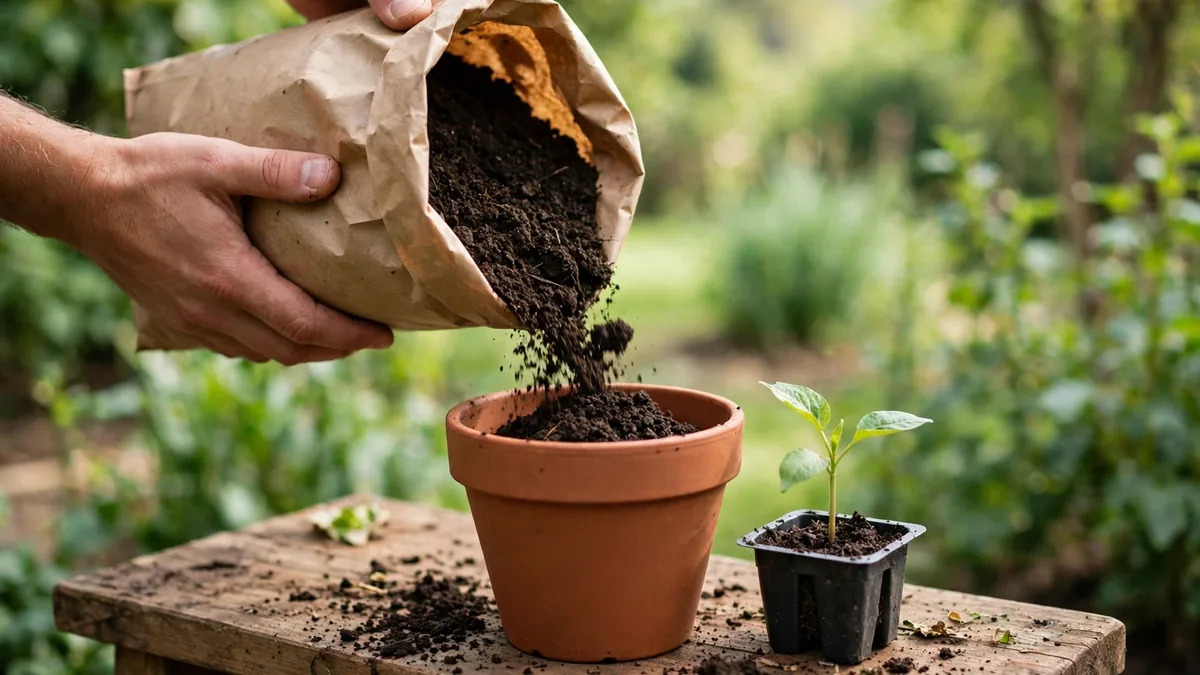
Even the best potting soil fails if it is used badly. Start by wetting the mix before you fill the pot. Dry mix shrinks away from the pot sides and water runs down the gap instead of soaking in. Tip the mix into a tub or wheelbarrow, add water, and mix until it is evenly damp like a wrung-out sponge. Then fill the pot loosely, never press it down hard: roots need the air spaces that firming destroys.
Leave a gap of two or three centimetres below the rim so water stays in the pot instead of running off. Set the plant at the same depth as before and water until it runs from the drainage holes. A pot without drainage holes is a slow disaster: use it as a cover pot with a plain pot inside instead.
Remember that the starter feed in the bag runs out after about a month. After that, feed regularly during the growing season with a liquid feed suited to the plant. Compost bins are a good partner here: a handful of mature home compost mixed into old potting soil adds life and nutrients that bagged mix slowly loses.
Mistakes That Ruin Good Potting Soil
The first mistake is using garden soil in pots. It compacts, drains badly, and often brings weed seeds and soil pests with it. The second is reusing old mix without refreshing it. Used mix has lost its structure and its feed, and it can carry disease. Never reuse mix from a plant that died of root rot or blight.
The third mistake is overwatering, which is not really a soil problem but looks like one. Even a well-drained mix stays wet if you water every day. Check with a finger pushed two centimetres into the mix before watering, and water only when it feels dry at that depth. A soil tester can help while you learn. The fourth mistake is letting the mix dry out completely. Very dry peat and coir repel water, so a dried-out pot needs to sit in a bucket of water for twenty minutes rather than being watered from above.
The fifth mistake is buying the cheapest bag without checking it. A bag full of dust and sticks costs less for a reason, and you pay the difference in dead seedlings and stunted plants. Spend a little more on the mix itself, because it is the cheapest part of growing a plant well, and the part that matters most.
Storing and Reviving Potting Soil
Store unopened bags in a dry, covered place out of direct sun. Heat and sun degrade the fertiliser and dry the mix out, while rain soaks it and starts it rotting. Once opened, fold the top down and clip it, or tip the mix into a lidded tub.
To revive last year’s mix, tip it out, pick out old roots, and mix it half and half with fresh potting soil or mature compost. Add a slow-release fertiliser and it is good for another season of undemanding plants such as annual flowers or herbs. Use fresh mix for seeds, seedlings and anything precious. Clean plant pots with fresh mix give every plant the best start.
Your Potting Soil Checklist
- Check the ingredients list and buy a mix matched to your plant, not just the cheapest bag.
- Squeeze the bag: it should feel springy and slightly damp, never brick-hard or sloshing wet.
- Wet the mix before potting, and fill pots loosely without pressing the mix down hard.
- Leave a watering gap below the rim and make sure every pot has drainage holes.
- Start feeding after four to six weeks, when the starter fertiliser in the bag runs out.
- Never reuse mix from a diseased plant, and refresh old mix with fresh compost before reusing it.
Frequently Asked Questions
Can I use garden soil in pots?
No. Garden soil compacts in a container, drains badly, and often brings weed seeds and pests. Potted plants need the light, airy structure of a potting mix. Garden soil belongs in beds and borders, where worms and weather keep it open.
What is the difference between potting soil and compost?
Compost is decomposed organic matter, while potting soil is a complete mix built for containers, usually containing compost or peat, bark, perlite and fertiliser.
How often should I replace potting soil?
Replace it yearly for fast-growing annuals and vegetables, and every one to two years for houseplants when you repot. Perennial containers can be top-dressed with fresh mix each spring instead of a full change. If the mix has shrunk, smells sour, or drains very slowly, replace it regardless of the calendar.
Is expensive potting soil worth it?
Usually, yes, up to a point. The cheapest bags often contain dust, sticks and poorly composted material, while mid-priced bags from known brands are consistent and clean.
Can I make my own potting soil?
Yes. A simple all-purpose recipe is one part mature compost, one part coir or peat, and one part perlite, with a slow-release fertiliser mixed in. Sieve the compost first for seed sowing.
Why does my potting soil smell bad?
A sour or rotten smell usually means the mix has stayed too wet and gone anaerobic, or it was stored badly before you bought it. Tip it out, let it dry, and mix in fresh material. If the smell comes from a planted pot, check the drainage holes and water less often.
Bottom Line
The best potting soil is the one that matches your plant, holds air as well as water, and comes from a bag you checked before buying. Skip garden soil in pots, wet the mix before you fill the pot, and start feeding after a month. Get the mix right and everything else in container gardening gets easier.