The Worst Tattoo Parlours of 2026 — What to Avoid
The worst tattoo parlours of 2026 do not look dangerous from the street. They look like every other parlour: a window full of flash designs, a price list by the door, a chair that looks clean enough at a glance. The trouble starts once you sit down, when the consultation lasts thirty seconds, the artist reaches for a needle without washing their hands, and the design you asked for comes back smaller, simpler and wrong. A tattoo is permanent, which is why a bad parlour costs far more than a bad haircut. This guide ranks the worst types of tattoo parlour by what they do wrong, so you can spot the warning signs before the needle touches your skin.
Key takeaways
- A real consultation takes time: a parlour that skips it is telling you how the rest of the session will go.
- Fresh gloves, sealed needles and a clean station are non-negotiable, and any parlour that treats them as optional is unsafe.
- Ask to see healed work, not just fresh photos, because fresh tattoos always look good on the day.
- Get the full price in writing before the needle starts, including touch-ups, or expect the bill to grow.
- Walk away from any parlour that rushes you, dismisses your questions or will not show you its sterilisation routine.
How the worst tattoo parlours were chosen
Every type below was scored on five measures. Hygiene comes first: fresh gloves, single-use needles opened in front of you, sealed ink caps, and a wiped-down station. Craft is second, judged on line quality, steady shading, honest advice about size and placement, and work that still looks good once it has healed. Honesty is third, because a parlour that shows real healed photos and a real price is a different business from one that shows borrowed pictures and a vague quote. Aftercare is fourth: clear written instructions, a free touch-up policy for lines that drop out, and someone who answers the phone if the tattoo worries you a week later. Value is fifth, the real total cost once deposits, touch-ups and corrections are counted, not the headline price.
Two notes before the list. First, no single parlour is named as the worst, because the same bad patterns appear in many places, and what matters is learning to recognise them wherever you go. The same checks work in other salons too, and our guide to the worst hair salons makes the same point about rushed consultations and hidden charges, because the traps are the same everywhere.
Comparison table: the worst tattoo parlours of 2026
| Rank | Parlour type | Main failure | Who it hurts most |
|---|---|---|---|
| 1 | The rush-job parlour | No consultation, lines done in minutes | First-timers, walk-ins |
| 2 | The dirty station | Reused supplies, no sterilisation shown | Everyone, especially infection-prone skin |
| 3 | The flash-only trap | Same tired designs, no custom work | Anyone wanting something personal |
| 4 | The price-switch parlour | Quote grows mid-session, deposit kept | Budget-conscious clients |
| 5 | The fading-ink parlour | Cheap ink, shallow lines, fast fading | Fine-line and colour work |
| 6 | The no-aftercare parlour | No instructions, no follow-up, blame the client | First-timers, slow healers |
| 7 | The portfolio-liar | Borrowed photos, no healed work shown | Anyone booking on photos alone |
The worst tattoo parlours of 2026
1. The rush-job parlour: in and out before you can think
The rush-job parlour runs on volume. Walk-ins are waved to a chair, the design is picked from a wall in two minutes, and the needle is buzzing before you have finished explaining what you wanted. There is no real consultation, no discussion of size or placement, and no honest warning when a design is too small or too detailed for your skin. The artist works fast because the next client is already waiting, and fast work shows in wobbly lines, patchy shading and lettering that drifts off the stencil. A good artist slows down at the start so the tattoo lasts, while a rush parlour speeds up so the chair turns over.
2. The dirty station: the one that can genuinely hurt you
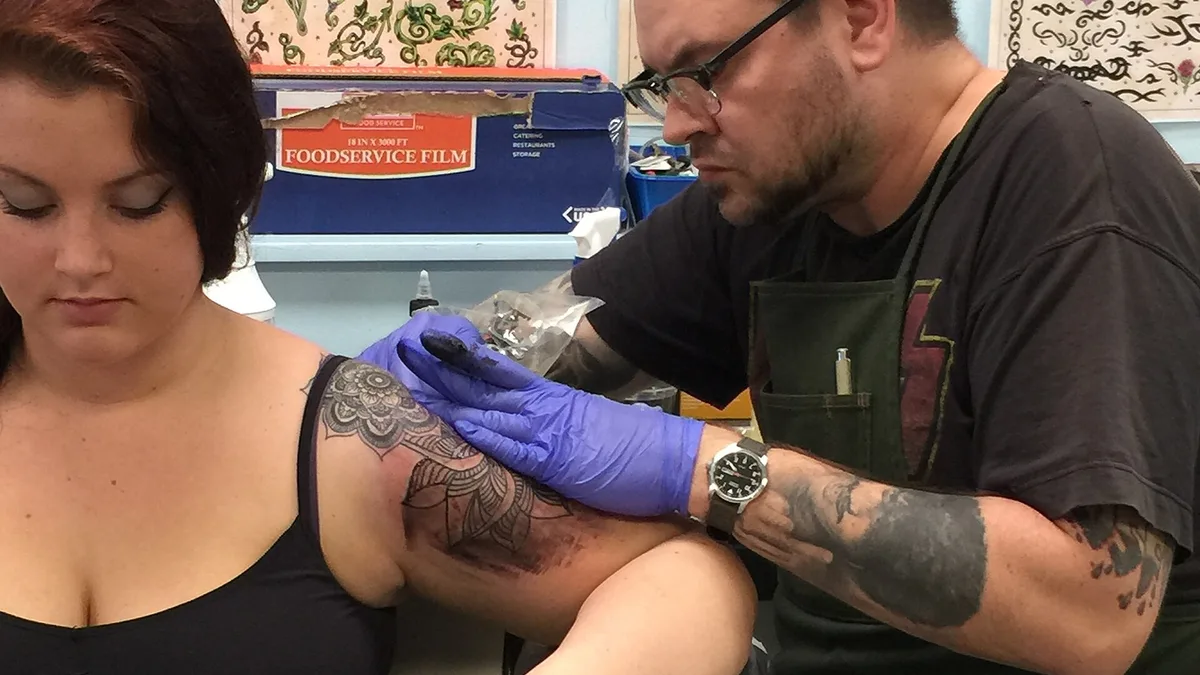
The dirty station is the worst type on this list for one reason: it is the only one that can send you to a doctor. The signs are easy to spot once you know them. Gloves that stay on between clients, needles and ink caps that are not opened fresh in front of you, a work surface that is not wiped down, and a bin full of loose sharps. Single-use equipment is the standard now, and there is no excuse for reusing anything that touches broken skin. Tattooing breaks the skin, so the room has to be cleaner than an ordinary shop, not dirtier. If the station looks wrong, do not sit down, no matter how good the flash on the wall looks.
3. The flash-only trap: the same design on everyone
The flash-only trap is the parlour where every customer leaves with a version of the same ten designs. There is nothing wrong with flash itself: a well-done classic design can be a great tattoo. The problem is a parlour that cannot or will not draw anything new, because that tells you the artist is tracing, not designing. Your tattoo ends up looking like everyone else’s, sized to suit the schedule rather than your body. A good parlour treats flash as a starting point and redraws it to fit you; a flash-only trap fits you to the flash.

4. The price-switch parlour: the quote that keeps growing
The price-switch parlour quotes one number at the door and a different number in the chair. The design is suddenly bigger than quoted, the shading is suddenly extra, the session runs long and an hourly rate appears, and the deposit is non-refundable if you walk away. A fair parlour gives the full price in writing before the needle starts: the design, the session length, the touch-up policy and what happens if the session runs over. The pattern is familiar from other salons, and our guide to the worst nail salons warns about the same trick with add-ons at the till. Ask for the total in writing, and if the parlour will not write it down, assume the real price is higher than the one you were told.
5. The fading-ink parlour: bright on the day, gone in a year
The fading-ink parlour does work that looks fine in the mirror on the day and disappointing a year later. Lines blur, colour drops out, fine detail merges into a grey smudge, and the tattoo you paid for becomes one you have to explain. The causes are usually cheap ink, lines laid too shallow or too deep, and designs drawn too small for the detail they carry. A good artist warns you when a design is too small or too detailed to hold, and suggests a bigger size or a simpler version. A fading-ink parlour says yes to everything, takes the money, and blames your skin when the ink drops out. Ask to see healed photos taken a year after the session: fresh tattoos always look sharp, healed ones tell you whether the ink was laid properly.
6. The no-aftercare parlour: on your own the moment you pay
The no-aftercare parlour finishes the tattoo, takes your money, and treats you like a stranger from that moment on. You leave with no written instructions, or a mumbled sentence about keeping it clean, and when the tattoo scabs, itches or worries you, nobody answers the phone. Good aftercare is simple and every decent parlour provides it in writing: how to wash it, what to put on it, what to avoid for two weeks, and when to come back for a free touch-up if a line drops out. A parlour that will not stand behind its work for the two weeks it takes to heal is telling you the sale matters more than the tattoo.

7. The portfolio-liar: great photos, someone else’s work
The portfolio-liar looks brilliant online and ordinary in the chair. The photos on the wall and the feed are borrowed, heavily filtered, or taken from artists who do not work there, and the parlour has no healed photos of its own work to show you. The trick is easy to spot: every photo is a fresh tattoo under perfect light, none is healed, none is shown from more than one angle, and the styles jump around so much that no single artist could have done them all. The same rule applies across beauty services, and our guide to the worst barbershops makes the same point about photos that promise more than the chair delivers. Book the artist whose healed work you have actually seen, not the feed that impressed you.
What to avoid when choosing a tattoo parlour
The most common regret is not a bad tattoo but a rushed decision: a parlour picked because it was open, cheap or nearby, booked without a consultation and without seeing healed work. Check four things before you sit down: the station is clean and needles are opened fresh in front of you, the artist has healed photos of their own work, the full price including touch-ups is written down, and the aftercare instructions come in writing with a contact you can reach. A tattoo lasts for decades, so a week spent choosing the right parlour is the cheapest part of the whole thing.
Checklist: choosing a tattoo parlour
- Book a consultation first and walk away if it lasts less than ten minutes or the artist will not discuss size and placement.
- Watch the needles and ink caps being opened fresh, and check that gloves are changed and the station is wiped down.
- Ask to see healed photos taken at least six months after the session, done by the artist who will tattoo you.
- Get the full price in writing before the needle starts, including the deposit, the session rate and free touch-ups.
- Take the written aftercare sheet home and save the parlour’s contact, so you can ask about healing instead of guessing.
- Check recent reviews that mention healing and touch-ups, not just how friendly the staff were on the day.
Frequently asked questions
How do I know if a tattoo parlour is clean?
Look for fresh gloves, single-use needles opened in front of you, sealed ink caps, a wiped-down station and a sterilisation routine the staff will explain. If any are missing, leave.
Should a tattoo parlour offer free touch-ups?
Most good parlours include one free touch-up for lines that drop out during healing, usually within a few months. Get it in writing first.
Why do some tattoos fade so fast?
Cheap ink, lines laid too shallow, designs drawn too small for their detail, and heavy sun exposure all speed up fading. A good artist warns you when a design is too small to hold.
Is a cheap tattoo always a bad tattoo?
No, price alone proves nothing. A cheap tattoo from a careful artist can heal beautifully, and an expensive one from a rush parlour can be a mess.
Can I walk out of a tattoo parlour mid-consultation?
Yes, and you should if anything feels wrong. A consultation is not a commitment. Walking away costs nothing.
What should aftercare instructions include?
How to wash the tattoo, what to apply and how often, what to avoid for about two weeks, what normal healing looks like, and who to contact if it worries you.
Bottom line
The worst tattoo parlours of 2026 fail in the same few ways: they rush the consultation, cut corners on hygiene, hide the real price, use ink that does not last, and disappear the moment you pay. Check the station, the healed photos, the written price and the aftercare before you sit down.