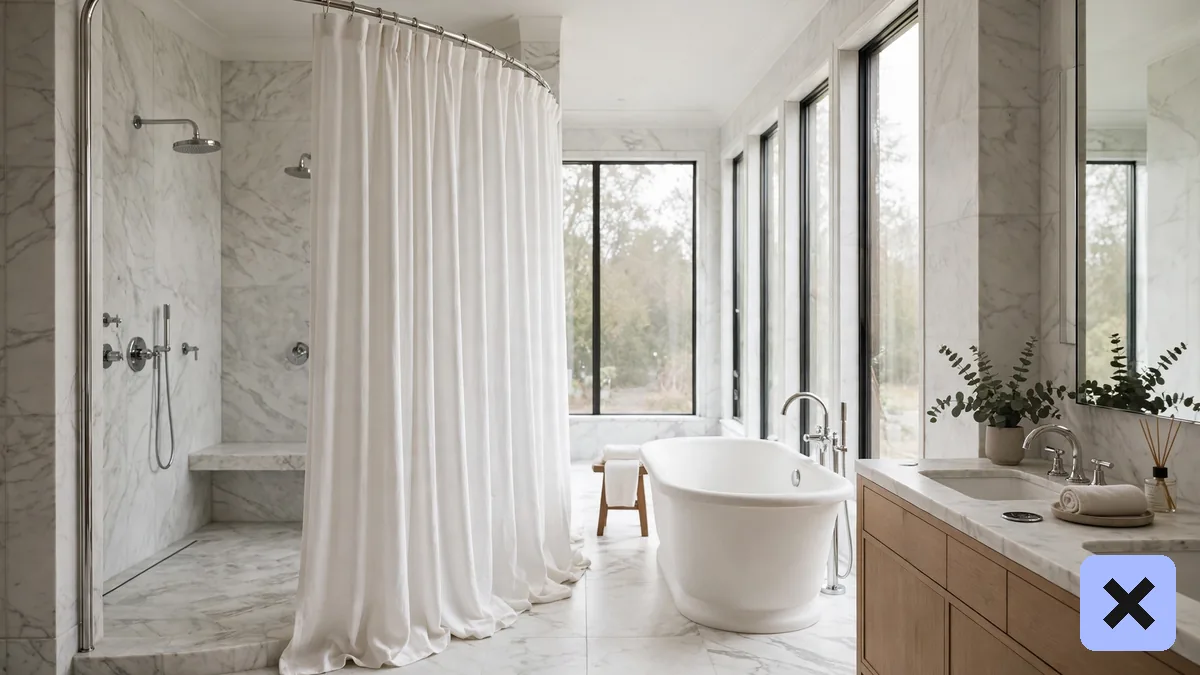
The best shower curtains for small bathrooms do far more than keep water off the floor. In a room where every centimetre counts, the right curtain can make a cramped shower feel open, add colour without clutter, and stop the space from feeling damp and closed in. Choose badly, and the same room feels darker, smaller, and harder to keep clean.
Small bathrooms punish the wrong choices quickly. A heavy, dark curtain swallows light and shrinks the room, while a flimsy liner billows inward and looks tired within weeks. The best options for compact spaces are light in colour, quick to dry, and sized so they hang straight without pooling on the floor.
This guide rounds up nine curtains that genuinely work in small bathrooms in 2026, from crisp white waffle weaves to soft linen-look fabrics and smart space-saving designs. Every pick is judged on light, airflow, drying time, mould resistance, and how the curtain behaves in a room barely bigger than the shower itself.
Key takeaways
- Light colours and sheer or semi-sheer fabrics make a small bathroom feel bigger by letting light through the shower zone.
- Waffle-weave and linen-look fabrics dry faster and resist mould better than heavy vinyl in a small, steamy room.
- A curved or tension rod buys several centimetres of elbow room without any building work.
- Measure your rod and drop before ordering, because standard curtains are often too long for compact baths.
- Machine-washable curtains last far longer in small bathrooms, where steam and splashes hit them every single day.

What Makes a Shower Curtain Work in a Small Bathroom
A great small-bathroom curtain has to solve three problems at once: contain water, avoid making the room feel smaller, and dry out between showers in a space that often has no window and only a modest extractor fan. Curtains that succeed share a few traits: pale or translucent fabric, a weave that breathes, and a weight that hangs straight without billowing.
Weight matters more than most people expect. A curtain that is too light floats inward and clings to your legs, while one that is too heavy pulls on the rod. The sweet spot is a medium-weight fabric with a weighted hem or magnets at the base. Size is the other hidden trap: standard curtains are usually 180 by 180 centimetres, but many small bathrooms have shorter drops, and a curtain that pools on the floor collects grime and stays damp, which is exactly how mould starts.
The 9 Best Shower Curtains for Small Bathrooms 2026
1. The Classic White Waffle Weave
The white waffle weave is the safest choice for small bathrooms. Its textured surface looks smart without shouting, lets a soft glow of light through, and dries quickly between showers. It suits almost any tile colour and never dates.
2. The Sheer Frosted Panel
A sheer frosted curtain is the closest thing to a glass screen for a small bathroom on a budget. It keeps water in while letting almost all the light through, so the shower zone never becomes a dark box. Choose frosted rather than fully clear for privacy.
3. The Linen-Look Curtain in Pale Sage
Pale sage linen-look fabric brings warmth to a small bathroom without the visual weight of a bold colour. The soft texture reads as calm and natural, and the gentle green works beautifully with white tiles and black hardware.
4. The Lightweight Quick-Dry Polyester
For bathrooms with no window, a lightweight quick-dry polyester curtain is hard to beat. It sheds water, dries far faster than cotton, and resists mildew with very little effort. The best ones are machine washable, which matters when the curtain works hard every day.
5. The Striped Cotton Blend
Thin vertical stripes are a clever visual trick in a small bathroom: they draw the eye upward and make the ceiling feel higher. A narrow stripe in white and pale grey adds pattern without noise, and a cotton blend keeps the fabric breathable.
6. The Weighted-Hem Hotel Curtain
Hotel-style curtains with weighted hems and magnetic bottoms solve the most annoying small-bathroom problem: the curtain billowing inward during a shower. The weights hold the fabric straight and still, which makes the shower feel roomier.
7. The Short-Drop Curtain for Compact Tubs
Many small bathrooms have baths that sit lower than standard, which makes a standard curtain far too long. A short-drop curtain, usually around 165 centimetres, hangs cleanly without pooling and looks deliberately fitted rather than improvised.
8. The Textured Slub Cotton
Slub cotton has a soft, slightly irregular texture that adds interest without pattern, making it ideal for small rooms where a bold print would overwhelm the space. It drapes beautifully and pairs well with wood and stone.
9. The Clear Liner Plus Decorative Outer
The two-layer setup is the practical winner for many small bathrooms: a clear waterproof liner keeps water in, while a lighter decorative outer curtain provides the colour and texture. The outer layer stays dry, the liner is cheap to replace, and you can change the look by swapping one layer.
| Curtain | Best for | Fabric | Drying speed |
|---|---|---|---|
| White waffle weave | Everyday all-rounder | Cotton blend | Fast |
| Sheer frosted panel | Maximum light | PEVA / polyester | Very fast |
| Linen-look in pale sage | Warm, styled look | Polyester linen-look | Fast |
| Quick-dry polyester | Windowless bathrooms | Polyester | Very fast |
| Striped cotton blend | Making ceilings feel higher | Cotton blend | Moderate |
| Weighted-hem hotel | Stopping billowing | Polyester / cotton | Fast |
| Short-drop curtain | Compact tubs | Polyester | Fast |
| Textured slub cotton | Soft, natural texture | Cotton | Moderate |
| Clear liner plus outer | Flexibility and value | PEVA plus fabric | Very fast |
Fabric Choices: What Actually Lasts in a Small Bathroom
Fabric decides how long your curtain stays looking good. Cotton and cotton blends feel the nicest and drape the best, but they need regular washing and good airflow to stay fresh. Polyester dries faster and resists mildew better, making it the practical choice for windowless rooms. PEVA and vinyl liners are the most waterproof, but they work best hidden behind a fabric outer.
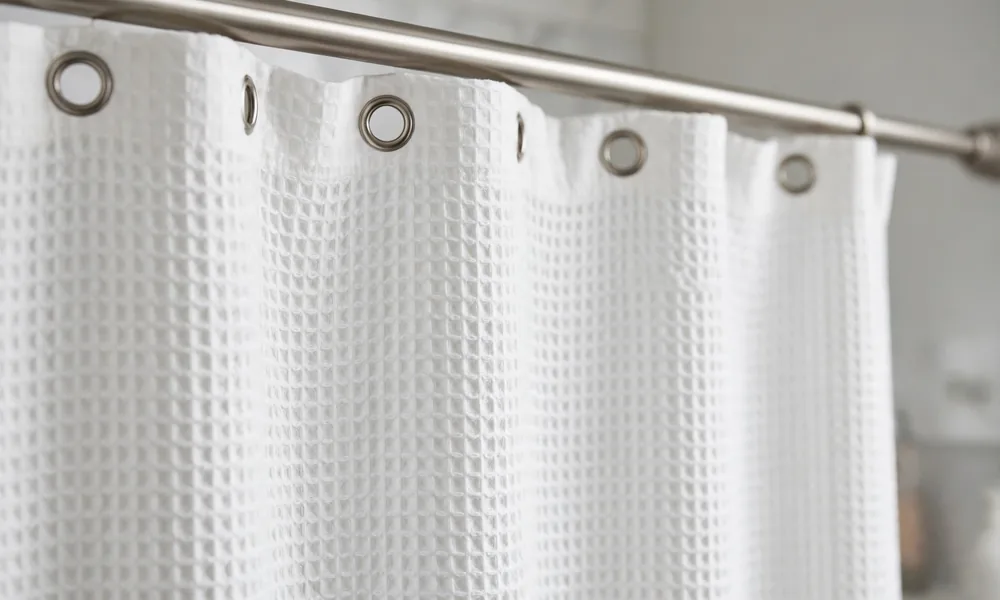
The honest answer for most small bathrooms is a fabric outer with a separate liner: the liner takes the water, the fabric takes the compliments, and both are easy to wash or replace on their own. Whichever fabric you choose, check that it is machine washable before you buy. If you have battled mould before, read about the worst shower curtains for mould so you know which materials to avoid this time.
Colour and Pattern: Making the Room Feel Bigger
Colour does real work in a small bathroom. White, cream, pale grey, and soft pastels bounce light around the room and make the walls feel further apart, while dark colours and heavy patterns do the opposite. A pale sage, a soft sky blue, or a gentle blush can still add personality without closing the room in.

Pattern needs the same restraint. Small, low-contrast patterns like fine stripes add interest without visual clutter, while large bold prints can dominate a small room. If you love a strong pattern, keep it to the curtain and let everything else in the room stay plain.
Rods, Hooks and Hanging: The Space-Saving Details
The rod and hooks matter just as much as the curtain itself in a small bathroom. A curved shower rod bows outward by a few centimetres and gives you noticeably more elbow room inside the shower. Tension rods are the easiest option for renters, since they need no drilling.
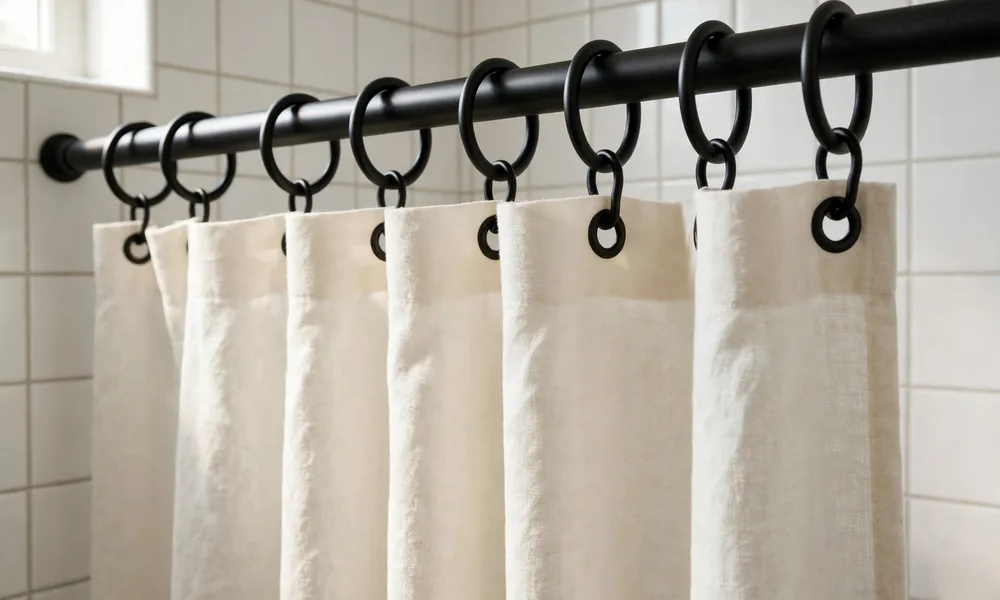
Hooks and rings deserve a moment of thought too. Smooth-gliding rings make the curtain easy to open and close with one hand, and double hooks let you hang a liner and an outer curtain from the same rod. Match the finish to your taps and towel rail, and the whole room looks considered rather than cobbled together.
How to Measure for a Small Bathroom Curtain
Measuring takes two minutes and saves the most common buying mistake. Measure the width of the opening, then multiply by 1.15 so the curtain gathers rather than stretching flat. Next, measure the drop from the rod to the top of the tub or the floor, and subtract three to five centimetres so the hem hangs just clear. When in doubt, go slightly wider: a curtain with generous gathers looks far better than one pulled taut.
Keeping Your Curtain Clean and Mould-Free
A small bathroom curtain works in the hardest conditions in the house: daily steam, constant splashes, and often poor ventilation. The single best habit is to leave the curtain fully extended after every shower so air can circulate and the fabric dries evenly. Bunching it to one side traps moisture in the folds, where mould starts.
Wash the curtain every two to four weeks. Most fabric curtains are machine washable on a gentle cycle — add a cup of white vinegar to the wash to dissolve soap scum and mildew, and hang the curtain back up to dry. Run the extractor fan during and for at least twenty minutes after every shower. Pairing your new curtain with the best bath mats for small bathrooms keeps the floor dry, while fresh, dry best bath towels hung where air can reach them keep the room fresh between cleans.
Small Bathroom Shower Curtain Checklist
- Measure the width and drop before ordering, and allow fifteen percent extra width for gathers.
- Choose a light colour or sheer fabric so the shower zone does not darken the room.
- Pick a quick-drying, machine-washable fabric, and add a separate liner if you want maximum waterproofing.
- Check for a weighted hem or magnets if your curtain billows inward during showers.
- Consider a curved rod for extra elbow room, and match hooks to your existing hardware.
- Leave the curtain fully extended after every shower so it dries and stays mould-free.
Frequently Asked Questions
What is the best shower curtain colour for a small bathroom?
White, cream, pale grey, and soft pastels work best because they reflect light and make the room feel larger. Pale sage and soft blue add colour without closing the space in, while dark colours shrink a small bathroom visually.
Should I use a liner with a fabric shower curtain?
Yes, in most small bathrooms a liner is worth it. The liner keeps water off the fabric outer, so the decorative curtain stays dry, lasts longer, and needs washing far less often.
How long should a shower curtain be in a small bathroom?
Measure from the rod to the top of the tub or the floor and subtract three to five centimetres, so the hem hangs just clear without pooling. Standard curtains are 180 centimetres, but compact baths often need a short-drop curtain of around 165 centimetres.
How do I stop my shower curtain from billowing inward?
Choose a curtain with a weighted hem or magnetic bottom, make sure it is wide enough to gather rather than stretch flat, and consider a curved rod. Running the bathroom fan also reduces the draught that causes billowing.
How often should I wash a shower curtain?
Every two to four weeks is a good routine for a small bathroom, where steam and splashes hit the curtain daily. Most fabric curtains are machine washable on a gentle cycle, and adding white vinegar to the wash helps remove soap scum and mildew.
Are sheer shower curtains private enough?
Frosted or textured sheer curtains give privacy while letting light through, which is ideal for small bathrooms. Fully clear curtains are best used as a liner behind a fabric outer rather than on their own.
The Bottom Line
The best shower curtain for a small bathroom is light, quick-drying, and properly sized — and the white waffle weave remains the pick that does all three with the least fuss. If your bathroom is dark or windowless, go sheer or quick-dry polyester; if you want warmth and style, pale sage linen-look is the one to beat. Measure first, wash often, and leave the curtain open to dry, and even the smallest bathroom will feel brighter and bigger than it is.