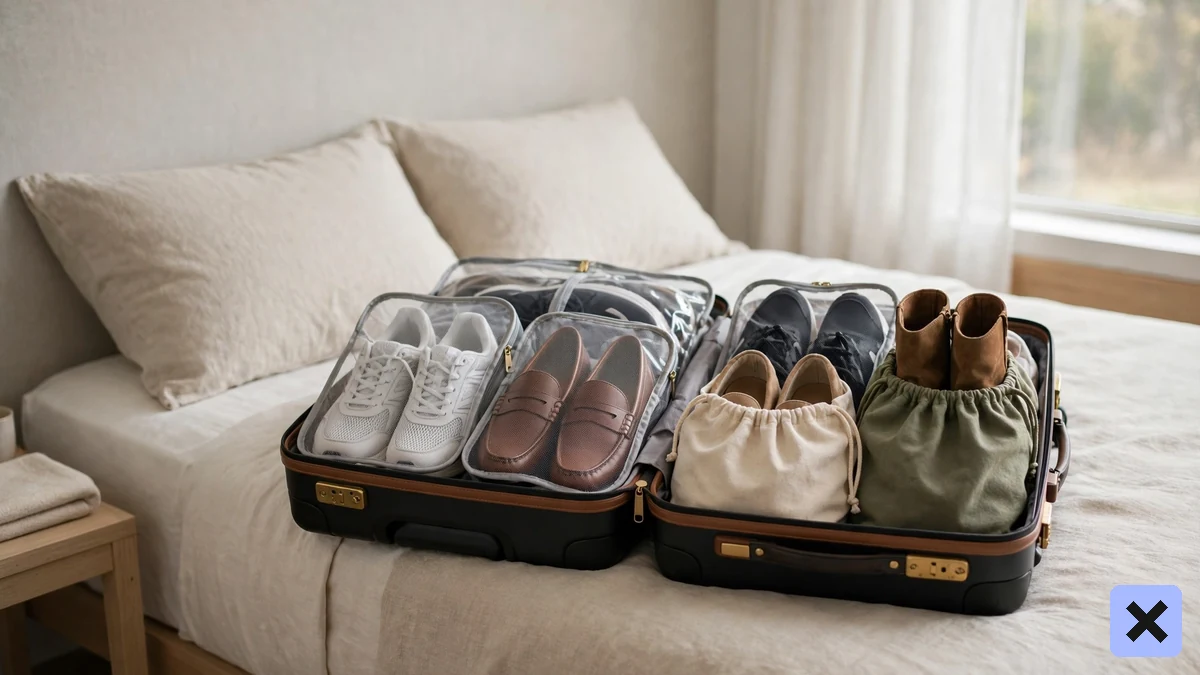
The best travel organizers for shoes in 2026 solve one of the most annoying packing problems there is: shoes are bulky, oddly shaped, and dirty, yet they always end up loose in a suitcase, pressing against clean clothes and wasting space. A good shoe organizer keeps every pair contained and protected, so your bag stays clean and your shoes arrive in the shape you packed them in.
Travel shoe organizers come in more shapes than most people expect: slim mesh bags that breathe, structured cubes that hold their shape, waterproof pouches that contain mud, and soft drawstring sacks that squeeze into gaps. The right choice depends on the shoes you travel with, the size of your bag, and how much protection your footwear needs.
This guide compares the best travel organizers for shoes in 2026 across every major style, looking at materials, ventilation, capacity, durability, and value, so you can pick the one that fits your trips.
Key takeaways
- Mesh zipper bags are the best all-round organizers: they breathe, they are light, and you can see the shoes inside.
- Structured shoe cubes protect stiff leather shoes and boots far better than soft pouches, which let shoes get crushed.
- Waterproof pouches are the right pick for wet, muddy, or beach shoes, and they stop moisture from reaching your clothes.
- Measure your largest pair of shoes before you buy, because a bag that fits sneakers may not fit boots or wide hiking shoes.
- One organizer per pair keeps shoes separated and makes unpacking faster on multi-stop trips.
Why Shoe Organizers Change the Way You Pack
Shoes are the hardest item to pack well. They do not fold or stack neatly, and their soles carry dirt from every street you have walked on. Tossed loose into a suitcase, they shift during transit and press creases into clothes. A shoe organizer fixes all three problems by giving each pair its own contained space.
The second benefit is space. Shoes packed inside organizers can be placed with intent rather than wedged wherever they fit. Slim pouches slide into the gaps along the sides of a suitcase, while structured cubes stack in neat rows.
There is also a hygiene benefit. A breathable mesh bag lets shoes air out between wears instead of sitting sealed against your clothes, which reduces odor. A waterproof pouch does the opposite job, sealing damp shoes away so the rest of your luggage stays dry. Organization systems work best when every category has its own container, and just as travel organizers for toiletries keep liquids and small essentials tidy, a dedicated shoe organizer gives footwear the same treatment.
The Best Travel Organizers for Shoes in 2026
The best shoe organizers share a few qualities: strong zippers or drawstrings that will not burst open, materials that survive being stuffed and squashed, and a shape that matches the shoes they are meant to hold. The five styles below cover nearly every kind of trip.
Mesh Zipper Bags
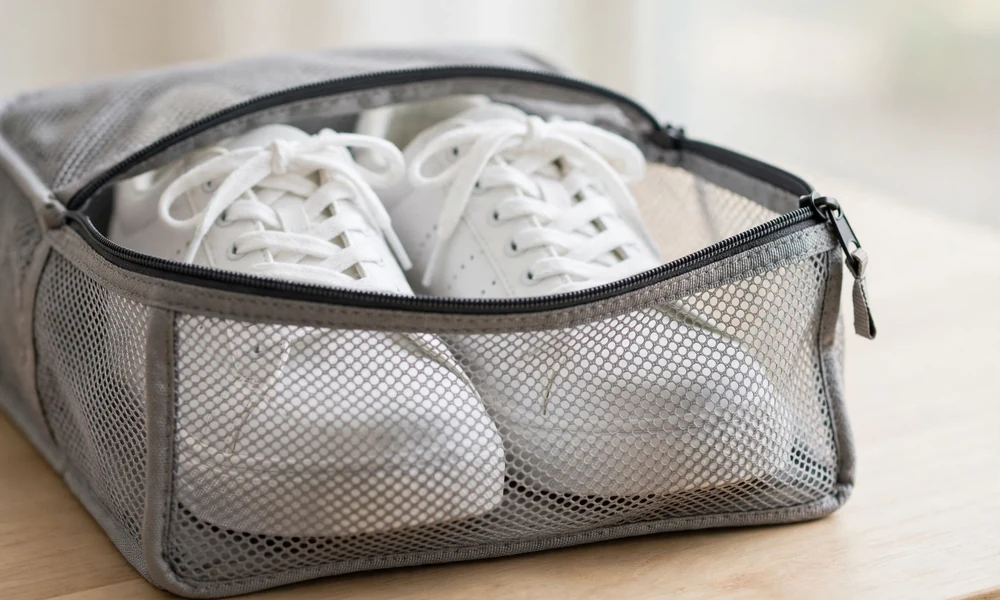
Mesh zipper bags are the most popular shoe organizers for good reason. The fine mesh lets air circulate, which keeps shoes fresher, and the see-through panels mean you never have to open three bags to find the pair you want. Most are made from lightweight nylon mesh, so they add almost no weight.
The best mesh bags use a full-length zipper that opens wide enough to slide shoes in without a struggle, and a reinforced base that resists wear from heels and soles. Look for a bag a few centimeters longer than your longest shoe, and check that the zipper pull is sturdy, since cheap mesh bags usually fail at the zipper first. Mesh bags suit sneakers, loafers, and sandals, but heavy boots can poke through thin mesh.
Structured Shoe Cubes
Structured shoe cubes are rigid or semi-rigid boxes, usually durable fabric stretched over a light frame, that hold their shape even when the suitcase around them is compressed. They are the best option for shoes that need protection: leather dress shoes, structured heels, and anything with a shape you do not want crushed.
The trade-off is bulk. A structured cube takes up the same amount of space whether it is full or empty, so it suits travelers who value protection over squeezing in one more item. Many cubes fit exactly one pair of adult shoes, and some include a divider so the two shoes do not rub against each other.
Soft Drawstring Pouches
Soft drawstring pouches are the simplest shoe organizers of all: a fabric sack, usually cotton or polyester, with a cord that cinches the top closed. They weigh almost nothing, fold flat when empty, and slip into corners that rigid organizers cannot reach.
Their flexibility is also their weakness. A soft pouch offers no crush protection, so it suits flexible shoes such as sneakers, sandals, and canvas shoes far better than stiff leather. The drawstring closure is less secure than a zipper, so a pouch can work loose in an overstuffed bag. Drawstring pouches shine as a second layer of organization, for a last-minute extra pair.
Waterproof Shoe Pouches
Waterproof shoe pouches are made from sealed or coated materials such as TPU or heavy-duty vinyl, and they are designed to contain moisture rather than let it breathe. They are the right choice for wet shoes after rain, muddy trail shoes, sandy beach footwear, and any pair that needs isolating from the rest of your luggage.
A good waterproof pouch has a genuinely sealed closure, not just a zipper, because a standard zipper lets water seep through. Look for roll-top closures or waterproof zippers, and check that the seams are welded or taped rather than stitched. The main downside is trapped odor, so air the shoes out as soon as you reach your destination.
Compression Shoe Bags
Compression shoe bags combine a shoe organizer with a compression panel or strap system that squeezes the contents down to a smaller volume. They suit travelers who pack light and want to fit an extra pair into a carry-on, and they work best with soft, flexible shoes.
Compression works by removing air and pressing the shoes together, so the bag needs to be strong enough to hold the pressure without splitting a seam. The best compression bags use thick fabric, double stitching, and a wide compression zipper. They suit carry-on-only travelers, but stiff shoes should never be forced into compression, since the pressure can crease leather.
Comparison Table: The Best Shoe Organizers at a Glance
| Organizer type | Best for | Protection | Ventilation | Weight |
|---|---|---|---|---|
| Mesh zipper bag | Sneakers, everyday shoes | Good | Excellent | Very light |
| Structured shoe cube | Leather shoes, heels | Excellent | Fair | Medium |
| Soft drawstring pouch | Flexible shoes, spare pairs | Basic | Good | Featherlight |
| Waterproof pouch | Wet or beach shoes | Excellent | None | Light |
| Compression shoe bag | Carry-on packing | Good | Fair | Light |
No single organizer wins on every measure, which is why many frequent travelers carry two types: a mesh bag for the shoes they wear most, and a waterproof pouch or structured cube for the pair that needs special treatment.
How to Choose the Right Shoe Organizer
Choosing well starts with the shoes, not the organizer. List the pairs you actually take on trips, note the largest and the stiffest, and match the organizer to those shoes. A bag bought for sneakers will disappoint you the first time you try to fit boots into it.
Match the Organizer to the Shoe
Flexible shoes such as sneakers and sandals are happy in almost any organizer, so weight and packability can drive your choice. Stiff shoes such as leather boots and dress shoes need a structured cube or a rigid-sided bag. If you travel with serious trail shoes, our guide to the best hiking boots for women is a useful companion when you are deciding which pairs are worth the luggage space.
Size and Capacity
Shoe organizer sizes are usually given in centimeters or in shoe sizes, and both can mislead. A bag listed for shoes up to size 10 may still be too short for a long, narrow boot. Measure your longest shoe from heel to toe, add two or three centimeters for easy entry, and compare that number to the bag’s internal length.
Material and Ventilation
Material decides how long an organizer lasts. Nylon mesh is light and breathable but can snag. Polyester fabric is tougher and resists stains. Cotton canvas looks good and breathes well, but it absorbs moisture and stains more easily. Ventilation is the feature most buyers overlook: shoes that are packed damp or worn all day need airflow, and a fully sealed bag will trap odor within hours.

How to Pack Shoes Like a Pro
Good packing technique matters as much as the organizer itself. Start by cleaning your shoes: a quick wipe of the soles removes most of the dirt that would otherwise end up inside the organizer. Stuff the toes with socks to help the shoes hold their shape, which also saves space by using the hollow inside of the shoe.
Place the heaviest pair at the bottom of the suitcase, near the wheels, where its weight sits lowest and the bag stays balanced. Lighter pairs go on top or along the sides. If you use packing cubes for clothes, keep the shoe organizers in a separate zone so dirty soles never press against folded shirts. Travel packing cubes pair well with shoe organizers because the two systems divide the suitcase into clean, predictable zones.
Shoe Organizer Packing Checklist
- Clean the soles of every pair before packing, so dirt stays out of the organizer.
- Stuff shoe toes with socks to hold their shape and use the empty space inside each shoe.
- Put one pair per organizer, and use mesh bags so you can identify each pair without opening it.
- Place the heaviest pair at the bottom of the suitcase near the wheels.
- Carry one waterproof pouch for wet or muddy shoes, even if you do not expect rain.
- Air shoes out at each destination instead of leaving them sealed in a bag.

Frequently Asked Questions
Do I really need a shoe organizer, or can I use a plastic bag?
A plastic bag contains dirt, but it does nothing else. It offers no protection against crushing, no ventilation, and it tears easily. A proper shoe organizer protects the shape of your shoes.
How many shoe organizers should I pack?
One organizer per pair is the ideal system. For a typical trip with two or three pairs, that means two or three organizers. Add one spare drawstring pouch for shoes you buy or wear during the trip.
Are mesh shoe bags good for boots?
Mesh bags work for light boots such as Chelsea boots or short ankle boots, but heavy hiking boots can poke through thin mesh and are better in a structured cube.
Can shoe organizers go in the washing machine?
Most fabric and mesh organizers can be machine washed on a gentle cycle. Structured cubes with a rigid frame should be hand washed, and waterproof pouches should be wiped clean, since heat can damage their sealed seams.
Will a shoe organizer fit in a carry-on?
Yes, in most cases. A single mesh bag or drawstring pouch holding one pair of sneakers fits easily in a standard carry-on alongside packing cubes. Structured cubes take more room, so measure your bag first.
What is the best shoe organizer for a beach holiday?
A waterproof pouch is the best choice for beach trips, because it contains sand and moisture and keeps wet sandals away from dry clothes. Pair it with a mesh bag for the shoes you wear around town.
The Bottom Line
The best travel organizers for shoes in 2026 are the ones that match your shoes and your trips. Mesh zipper bags are the best all-round choice, structured cubes are the right pick for shoes worth protecting, and waterproof pouches are essential for wet or muddy footwear.
Whatever style you choose, the principle is the same: give every pair its own contained space and keep soles away from clothes. Do that, and your shoes will arrive clean, in shape, and easy to find.