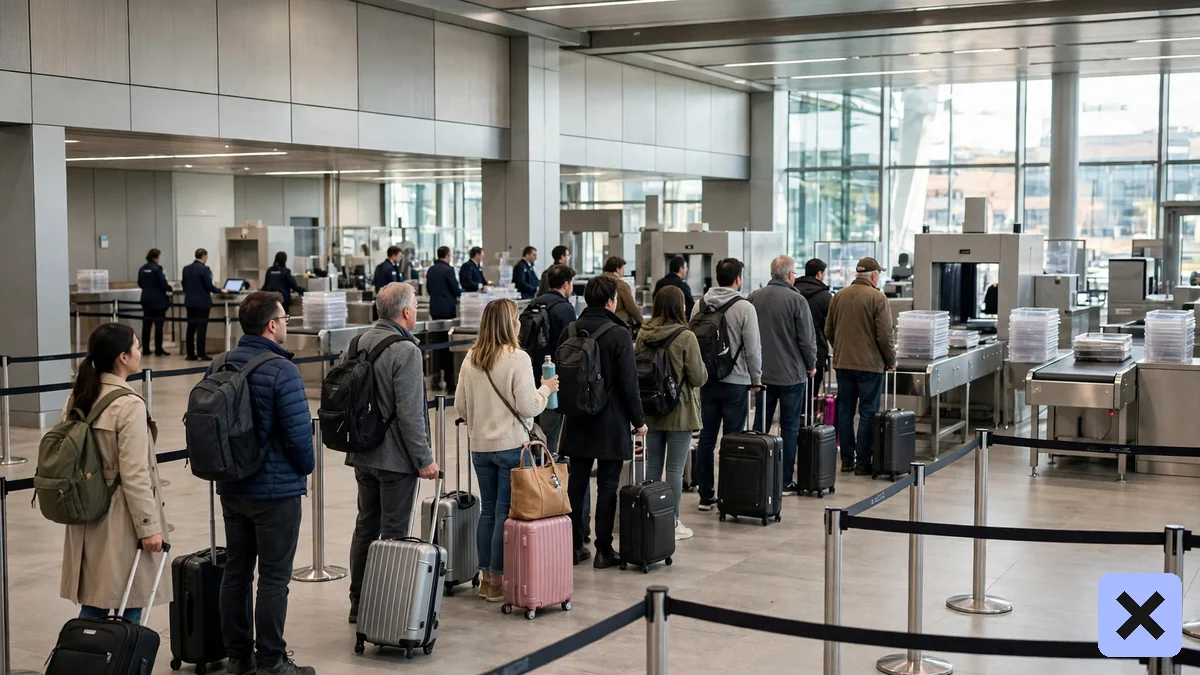
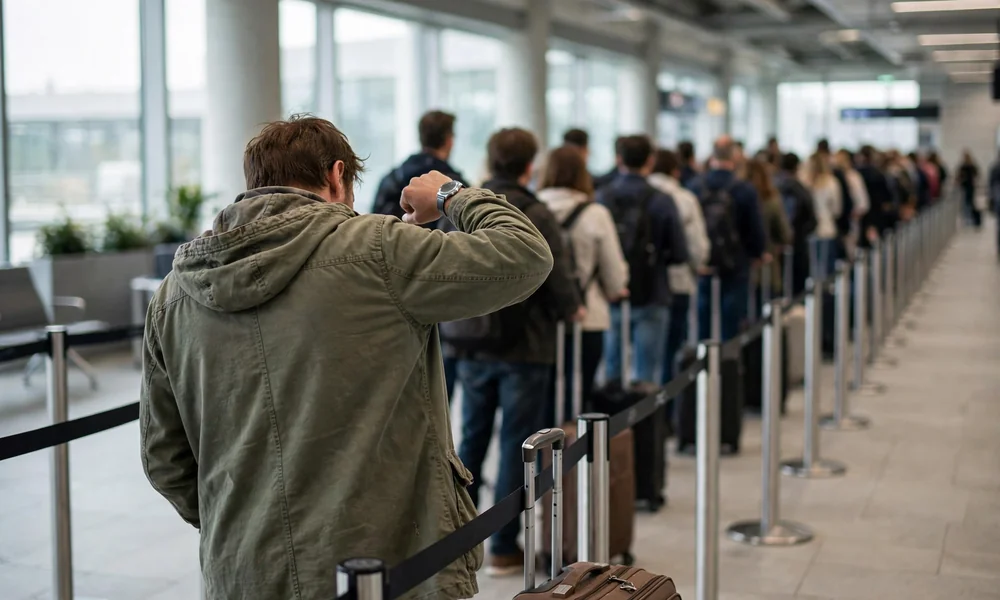
The worst airport security lines in 2026 have turned a routine part of flying into the most stressful hour of many trips. At the busiest hubs, travellers now report waits of 60 to 90 minutes at peak times, with queues snaking through the terminal long before the first tray is in sight.
It is not one single thing going wrong. Passenger numbers have climbed past pre-pandemic levels while many checkpoints still run with the same number of lanes and the same staffing gaps. Add new rules about liquids, a wave of first-time flyers, and holiday mornings packed with departures, and the result is a line that barely moves.
This guide looks at where the worst airport security lines in 2026 form, what makes them so slow, and what actually works to get through them faster. No single trick will empty a queue, but the right mix of timing, packing and preparation can easily save you half an hour, and on the worst mornings, the difference between making your flight and watching it leave without you.
Key takeaways
- Peak-hour waits at the busiest airports in 2026 regularly reach 60 to 90 minutes, and holiday mornings are the worst of all.
- Understaffed lanes and unfamiliar travellers, not the scanners themselves, cause most of the delay.
- Arriving two hours early for domestic flights and three for international ones is still the safest rule.
- Packing liquids, laptops and belts for instant removal can save 10 to 15 minutes at the belt.
- Early morning and late evening flights usually face far shorter lines than the mid-morning rush.
Why Security Lines Got Worse in 2026
The queues of 2026 are not an accident, and they are not the fault of any single airport. Several pressures have arrived at once, and the checkpoint is where they all collide. Understanding why the line is slow is the first step to beating it.
More Travellers, the Same Checkpoints
Air travel has fully recovered, and then some. Leisure travel is booming, business travel is back, and budget airlines have added routes that funnel thousands of extra passengers through terminals designed for smaller crowds. Many airports have expanded their shops and restaurants, but the security hall, the one bottleneck every passenger must pass through, has grown far more slowly.
New Scanners, New Rules, New Confusion
Many airports have installed new CT scanners that, in theory, let passengers leave liquids and laptops in their bags. In practice, the rollout has been uneven. Some lanes have the new machines and some do not, and the rules change from one lane to the next. Liquids remain the biggest source of hold-ups. Oversized bottles, forgotten water and half-empty sunscreen all have to be pulled out and thrown away, and each one stops the belt, backing up every tray behind it.
The Worst Airport Security Lines in 2026
Some lines are bad every day. Others are fine on a quiet Tuesday and catastrophic on a holiday morning. The worst airport security lines in 2026 share the same ingredients: a huge hub, a morning bank of departures, a leisure-heavy crowd and too few open lanes.
1. The Mega-Hub Morning Rush
The biggest airports run enormous departure banks between 6 and 9 in the morning. Atlanta, Chicago O’Hare, London Heathrow and Los Angeles all see waits of 60 to 75 minutes on weekday mornings, and holiday Fridays are worse. The walk from security to the gate can add another 15 minutes.
2. The Holiday Weekend Crush
Thanksgiving, Christmas, Easter and the summer school holidays produce the longest lines of the year at almost every airport. Families travel together, bags multiply, and infrequent flyers are everywhere. The worst mornings of 2026 have all fallen on holiday weekends, with waits passing 90 minutes. Yet travellers keep arriving 90 minutes before departure and expecting a 20-minute queue.
3. The Budget Terminal Bottleneck
Low-cost terminals run lean, with fewer lanes and fewer staff, and their passengers carry more hand luggage, because checked bags cost extra. Every traveller arrives with a wheelie case, a backpack and a duty-free bag, and every one of those items has to go through the scanner. The queue may look short, but it is dense with bags, and each one takes longer to screen.
4. The Single-Lane Regional Airport
Small airports can produce surprisingly bad lines. A regional airport with one or two lanes is fine when one flight is departing, but when two or three flights leave within the same hour, the entire terminal queues at once. There is no spare lane to open. Waits rarely reach hub levels, but 45 minutes at a small airport feels worse. Small does not mean fast.
5. The Evening International Bank
Long-haul departures cluster in the late afternoon and evening, and the security halls that serve them fill up fast. International travellers carry more luggage, liquids and electronics, and many are connecting from earlier flights. The evening bank is also when staffing is thinnest, as the morning shift goes home. This is the line that ruins holidays.
Security Line Waits Compared
The table below summarises the worst lines of 2026. These are typical peak waits, not guarantees. The pattern is clear: mornings and holidays are bad everywhere, and the busiest hubs are bad almost every day.
| Line type | Typical peak wait | What slows it down | Best time to travel |
|---|---|---|---|
| Mega-hub morning rush | 60 to 75 minutes | Thousands of departures at once, long gate walks | Midday or late evening flights |
| Holiday weekend crush | 75 to 90 minutes | Families, first-time flyers, extra bags | Avoid peak holiday mornings entirely |
| Budget terminal bottleneck | 45 to 60 minutes | Heavy hand luggage, few lanes | First flight of the day |
| Single-lane regional airport | 30 to 45 minutes | Two flights departing at once, no spare lane | Arrive two hours early anyway |
| Evening international bank | 60 to 80 minutes | More luggage, more liquids, thin staffing | Morning long-haul departures |
The numbers explain why so many travellers miss flights in 2026. A 70-minute queue, a 15-minute walk to the gate and a boarding cutoff 20 minutes before departure add up to a trip that needed two and a half hours and only got two.
What Actually Makes a Line Move Slowly
Most of the delay comes from a handful of repeat problems, and almost all of them are created by passengers, not by the airport.
The Tray Problem
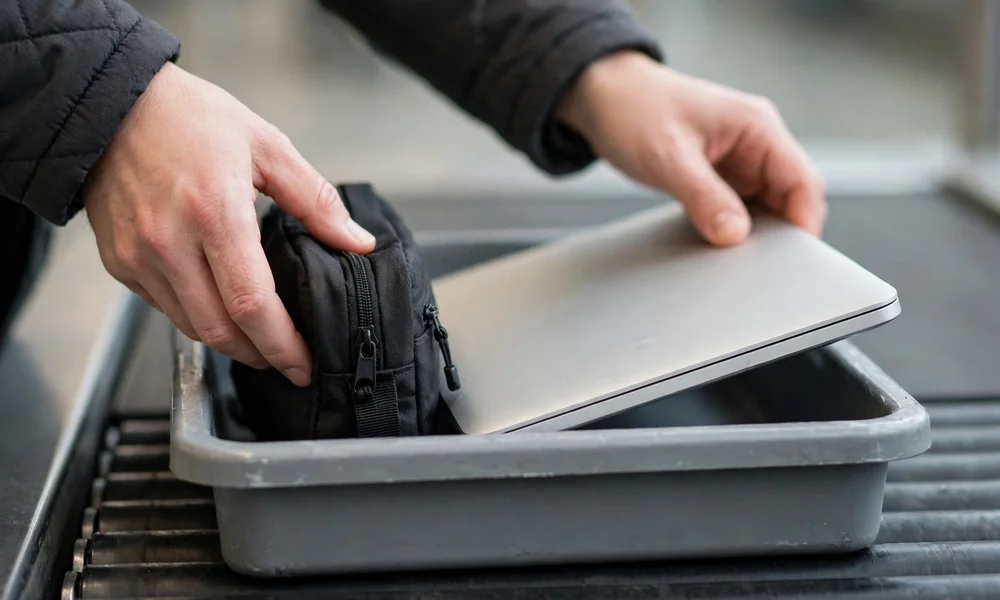
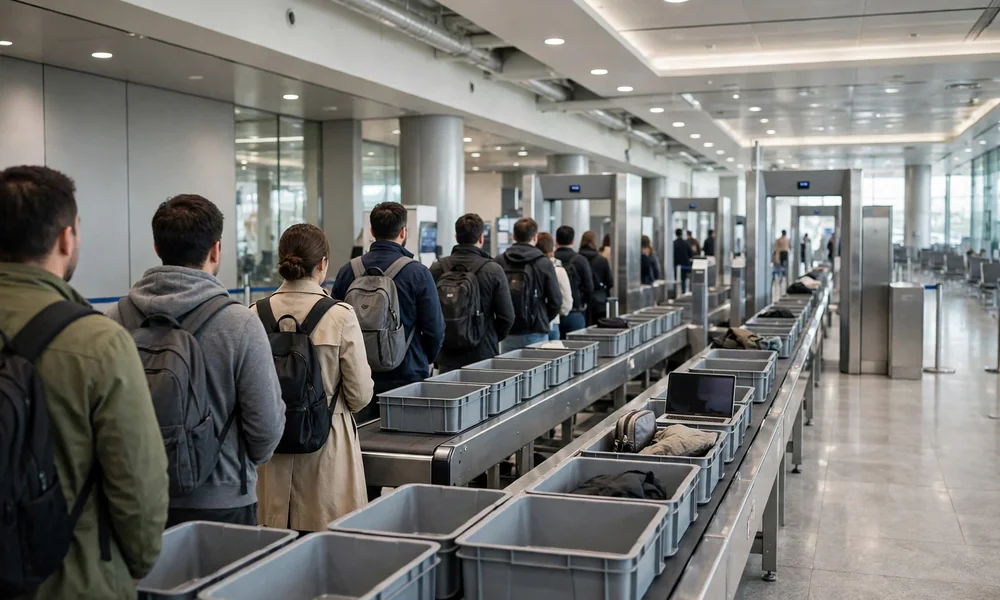
Every passenger needs at least one tray, and most need two or three, and the belt can only move as fast as the slowest person loading theirs. Travellers who wait until they reach the belt to start emptying their pockets cost the line minutes. The fastest travellers prepare in the queue: pockets emptied, belt off, laptop out, liquids bag in hand.
The Bag Search Spiral
When a bag is flagged for a manual search, it leaves the belt and waits for an officer. One flagged bag is a minor delay. Five in a row is a standstill. Buried electronics, dense food, tangled cables and forgotten liquids are the usual triggers. Packing neatly, with electronics on top and cables in a pouch, reduces the chance of a search.
The Lane Lottery
Not all lanes move at the same speed, and choosing the wrong one can cost you 15 minutes. The lane nearest the entrance looks shortest, but it is the one everyone picks. Experienced travellers look past the length of the line and read the people in it. A lane of business travellers with one bag each will move fast. A lane with strollers and four wheelie cases will not.
How to Beat the Line
There is no secret shortcut through airport security. But a reliable set of habits can cut your time in the queue by a third or more, and all of them require doing the work before you arrive.
Start with timing. Midday and late-evening flights face far shorter queues than the 6 to 9 morning bank, and the difference can be 30 minutes or more. If you cannot change the flight, change your arrival time: two hours early for domestic, three for international.
Then pack for the checkpoint, not for the holiday. Liquids in one clear bag at the top of your case, laptop in a sleeve you can pull out in seconds, belt and jacket ready to come off, pockets empty before you join the queue. The same lack of preparation behind the worst airport check-in experiences also creates the worst security queues, because the delay starts long before the belt.
Consider whether a trusted traveller programme is worth it. Fast-track lanes and pre-check schemes genuinely cut the wait, often to under 15 minutes, but they cost money, need an application and a background check, and are not available everywhere. For someone who flies twice a year, they are rarely worth it. For someone who flies twice a month, they pay for themselves quickly.
Your Pre-Security Checklist
- Check in online and save your boarding pass to your phone before leaving home.
- Put liquids in a clear bag at the very top of your hand luggage.
- Keep your laptop in a sleeve you can remove in seconds.
- Empty your pockets and remove your belt and jacket while still in the queue.
- Wear slip-on shoes and leave metal jewellery and watches in your bag.
- Arrive two hours early for domestic flights and three for international ones.
Mistakes That Add 30 Minutes
Most long waits are self-inflicted. The most common mistake is arriving late and joining the slowest lane, because the fast lane looks longer. The second is packing liquids at the bottom of the bag, which guarantees a repack at the belt. The third is forgetting the water bottle, which guarantees a bag search.
Another costly mistake is assuming the queue you can see is the whole queue. At large airports, the roped lanes snake back and forth, and the line you join at the entrance may have three more turns hidden behind a wall. Finally, do not underestimate the walk to the gate: travellers who clear security with 25 minutes to spare and then discover a 20-minute walk to a distant gate are the ones who miss flights. A long security line can also turn a tight connection into one of the worst airport layovers of your year, so leave a generous gap between flights whenever you book.
Frequently Asked Questions
How long are airport security lines in 2026?
At the busiest airports, peak waits of 60 to 90 minutes are now common on weekday mornings and holiday weekends. Quiet midday periods can be as short as 10 to 15 minutes, so the time of day matters more than the airport itself.
What time is worst for airport security lines?
The worst time is usually 6 to 9 in the morning, followed by holiday weekend mornings and the late-afternoon international bank. Midday and late evening are generally the quietest.
Do I really need to arrive two hours early?
Two hours is a sensible minimum for domestic flights at busy airports in 2026, and three hours is wise for international flights. On holiday weekends, add another 30 minutes.
Can I skip the security line?
There is no way to skip security entirely, but fast-track lanes and trusted traveller programmes can cut the wait significantly where they are offered. They cost money and need advance application, so they suit frequent flyers best.
Why is my bag always searched?
Dense items, tangled cables, buried electronics and forgotten liquids are the most common triggers. Packing electronics on top and cables in a pouch will reduce the number of searches.
What should I do if the line is not moving?
Stay in your lane, keep your documents and boarding pass ready, and speak to a member of staff if your flight is boarding. Staff can sometimes fast-track passengers whose flights are about to close, but only if you ask early enough.
The Bottom Line
The worst airport security lines in 2026 are long, slow and stressful, but they are also predictable. They peak in the morning, on holiday weekends and at the biggest hubs. Arrive early, pack for the checkpoint, choose your lane with care and treat the boarding cutoff as your real deadline, and the worst line of the year becomes an inconvenience instead of a missed flight. Like so many of the worst airport security experiences travellers report, the line is only as bad as the preparation that went into it.