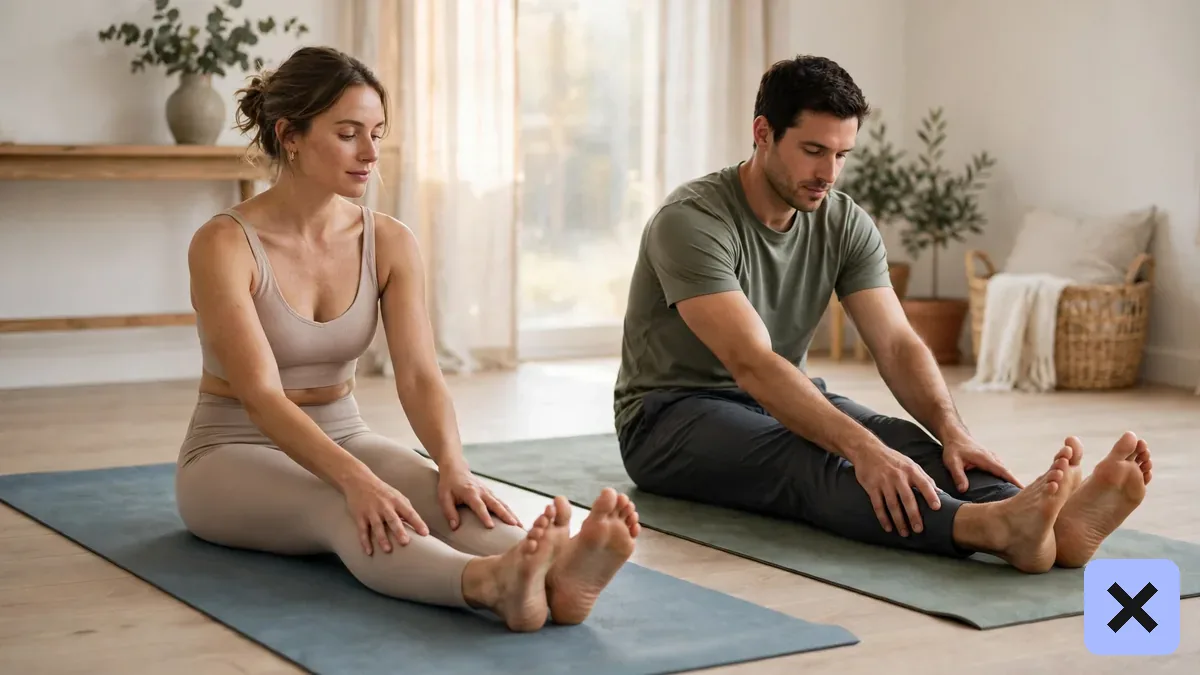
Finding the best yoga mats for couples is less about buying two of the same mat and more about finding a setup that lets two people move side by side without elbowing each other off the edge. A standard mat is about 24 inches wide, which is fine for one person, but when two people share a living-room floor, that narrow strip quickly becomes a negotiation. The right setup gives each person room to extend fully and stays put during partner poses.
Couples yoga is a popular way for partners to spend time together at home. It is low impact, needs almost no equipment, and suits beginners and experienced practitioners alike. A shared practice builds flexibility and balance, and gives a couple a screen-free ritual. The mat is the foundation of all of that, and a poor one distracts from every pose with slipping and sore knees.
This guide compares the mat formats that work best for two people: extra-wide single mats, matched pairs, and oversized double mats. We cover thickness, grip, material, cleaning, storage, and floor space. By the end, you will know whether to buy one giant mat or two.
Key takeaways
- Two people need at least 48 inches of combined width: extra-wide mats of 30 inches or more, matched pairs, or one double mat.
- A thickness of 6 to 8 millimetres best balances knee comfort and stability on hard floors.
- Natural rubber and TPE grip best when warm, while PVC is the easiest to clean and most durable.
- Textured, closed-cell surfaces resist sweat and odour better than open-cell foam.
- Measure first: a double mat needs roughly 6 by 4 feet of clear floor, plus a little extra.
Why Couples Need a Different Mat
A mat designed for one person assumes one body and one centre of gravity. Add a second person and everything changes. Partner poses put sideways pressure on a mat that solo practice never does. A mat that slides during a solo session is annoying; the same slide during a partner balance pose can end the session.
Width is the first problem most couples notice. On a standard 24-inch mat, two people side by side have about a foot each, which is not enough for a wide-legged forward fold or a side plank. Couples usually solve this three ways: each person buys an extra-wide mat, the couple buys a matching pair, or they buy a single oversized mat.
Thickness matters more for couples too, because partner yoga often involves kneeling while supporting another person’s weight. A thin 3-millimetre mat might suit a solo flow on carpet, but on a hard floor it leaves knees aching after ten minutes. A 6 to 8 millimetre mat cushions kneeling poses without feeling wobbly.
What Makes a Great Couples Yoga Mat
The best couples mats are wide enough, grippy when warm, easy to clean, and durable enough for twice-daily use.
Size and Width
For a matched pair, look for mats at least 26 inches wide each, with 30 inches the sweet spot for taller people. A single shared mat should be at least 48 inches wide and 72 to 84 inches long. Anything shorter leaves taller partners hanging off the end during savasana.
Thickness and Cushioning
Thickness is a trade-off between comfort and stability. Mats of 4 to 6 millimetres suit experienced practitioners who value a firm connection to the floor. Mats of 6 to 8 millimetres suit most couples, especially beginners and sensitive knees. Much thicker than 8 millimetres, the mat starts to feel unstable when you lean on your partner.
Grip When Warm
Two people generate more warmth and moisture than one, so a mat that turns slippery when damp will let you down. Natural rubber has the best wet grip, followed closely by polyurethane-topped mats. TPE offers a good balance of grip, weight, and price. PVC grips well when dry but can get slick when wet unless textured.
Material and Durability
Natural rubber mats are heavy, grippy, and long-lasting, but they smell strongly when new and do not suit people with latex allergies. TPE mats are lighter, easier to carry, and often recyclable, which suits couples who also take mats to a studio. PVC mats are the most affordable and hardest wearing, though heavier than TPE.
Cleaning and Hygiene
Two people sharing one mat means twice the sweat and skin contact, so cleaning matters more than for a solo mat. Closed-cell surfaces resist moisture and wipe down easily after each session. Wipe the mat down after every session and let it air dry fully before rolling it up.
The Best Yoga Mats for Couples in 2026
We compared the leading couples mat formats across width, thickness, grip, and price.
| Mat format | Width | Thickness | Best for | Typical price |
|---|---|---|---|---|
| Extra-wide single mats, matched pair | 30 in each | 6 mm | Flexibility and solo use | $60–$90 each |
| Oversized double mat | 48–55 in | 6–8 mm | Shared partner practice | $90–$160 |
| Natural rubber pair | 26 in each | 5 mm | Maximum grip | $80–$120 each |
| TPE lightweight pair | 26 in each | 6 mm | Travel and studios | $40–$70 each |
| Thick cushioned double mat | 48 in | 8–10 mm | Beginners and sore knees | $70–$110 |
Best Overall: A Matched Pair of Extra-Wide Mats
For most couples, a matched pair of extra-wide mats is the most practical choice. Each person gets a full 30 inches, enough for wide stances and side stretches without crowding. Practise alone on a generous mat, or push the pair together.
Best for Partner Yoga: One Oversized Double Mat
If partner yoga is your main practice, a single oversized mat is hard to beat. With no gap between two mats, there is nothing to trip over and no seam to catch a hand on. The trade-off is size and weight: a double mat is bulky and needs a large patch of clear floor. For practice on the road, the best yoga mats for travel fold or roll far smaller.
Best Grip: Natural Rubber Mats
Natural rubber is the grip champion. Its textured surface stays steady even when hands and feet get warm, making it the safest choice for energetic flows and partner balances. The downsides are weight and a strong rubber smell for the first few weeks. If either partner has a latex allergy, choose a polyurethane-topped mat instead for similar wet grip without latex.
Best Value: TPE Lightweight Pair
TPE mats offer the best value for couples just starting out. A pair of 6-millimetre TPE mats costs less than a single premium rubber mat, they are light enough to carry to a class, and they come in many colours. Grip is good when dry and acceptable when damp, though below natural rubber levels.
Best for Sore Knees: Thick Cushioned Double Mat
For gentle, restorative, or yin yoga, a thick cushioned double mat of 8 to 10 millimetres is the most comfortable option. The extra padding protects knees during long kneeling holds and makes seated meditation more pleasant. Standing balances feel less grounded on a thick mat, so it suits slow practices best. If one partner has knee or hip sensitivity, this format can turn a painful practice into a comfortable one.
Two Mats or One Giant Mat?
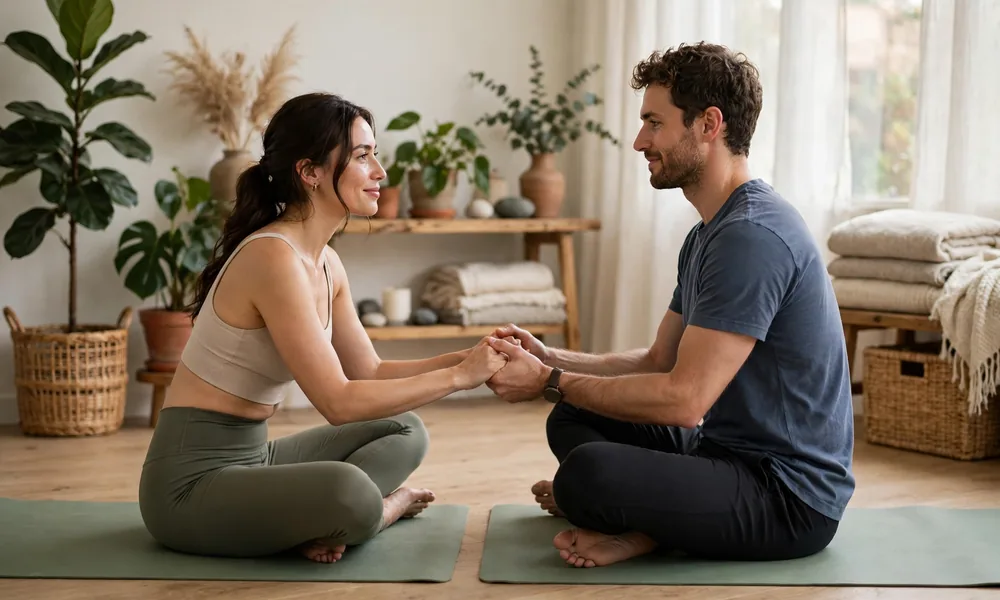
Two mats or one giant mat comes down to how you practise. Two mats give each person independence: space them apart, angle them differently, or take one to a class. One giant mat gives a single uninterrupted surface, better for partner poses where you move across the middle.
Floor space decides it for many people. A giant mat needs about 6 feet by 4 feet of clear floor, plus a foot of clearance on each side. If your living room cannot spare that much space, two extra-wide mats are the better choice. A double mat rolls into a large, heavy cylinder, while two standard mats fit in a basket.
How to Choose the Right Size
Start by measuring the people, not just the room. Anyone over 6 feet tall should look for a mat at least 74 inches long, and a double mat of 84 inches is better. For width, stand in a wide-legged forward fold, measure the distance between your outer feet, and add six inches. If you practise mostly at home, the best yoga mats for home practice share the same priorities as couples mats: grip, cushioning, and enough space to move.
Next, measure the room: clear the space, then mark the mat footprint with masking tape on the floor. Practise a few poses inside the taped area with your partner: a wide stance, a side plank, and a seated twist. If elbows or feet keep crossing the tape, you need more room or a different layout.
Caring for Your Mats
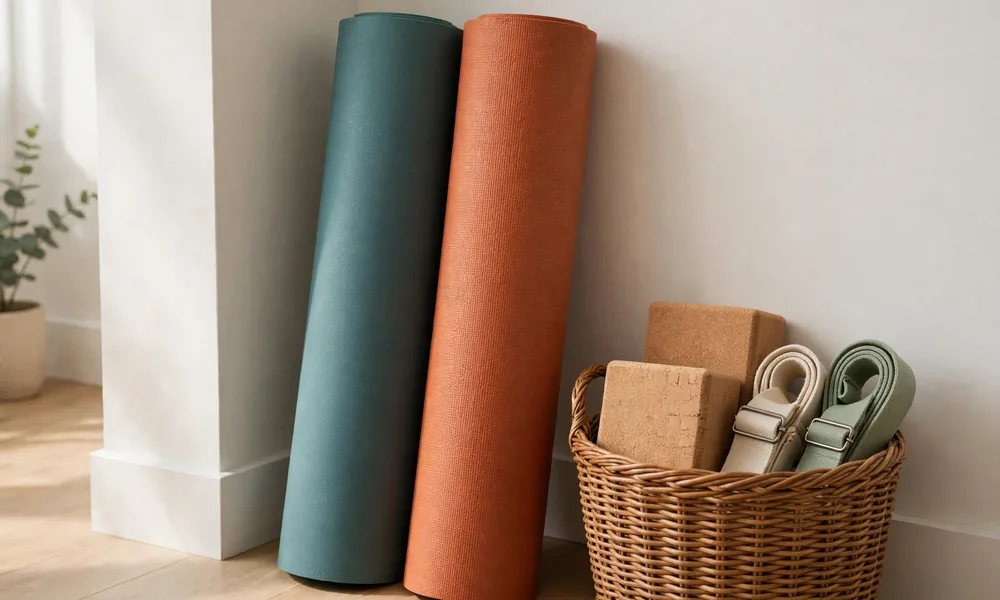
Good mats last for years when looked after. Wipe both mats down after every shared session with a damp cloth and mild soap or mat cleaner, and avoid harsh chemicals, which break down the surface and reduce grip. Let the mats dry completely before rolling them up, and store them out of sunlight. Roll mats loosely rather than folding them, as sharp folds can crease the surface. Blocks help with support in deeper poses; the best yoga blocks for beginners cover which sizes work best.
Couples Yoga Checklist
Before your first shared session, run through this checklist together.
- Measure your clear floor space and mark the mat footprint with tape before ordering.
- Choose 6 to 8 millimetres of thickness for comfort and stability.
- Check that both mats, or the double mat, fit your combined width.
- Test grip with damp hands, because a mat that slips when warm will frustrate you both.
- Wipe mats down after every session and let them air dry fully before rolling.
- Keep a strap and two blocks nearby for partner poses.
Frequently Asked Questions
Can two people share one standard yoga mat?
Two people can share a standard mat for a short seated meditation, but it is too narrow for a full practice. A standard mat is about 24 inches wide, leaving each person roughly a foot of space. For a full practice together, use a double mat at least 48 inches wide or two separate mats.
What size yoga mat is best for couples?
A matched pair at least 26 inches wide each, ideally 30 inches, works well for most couples. A single double mat should be at least 48 inches wide and 72 inches long, or 84 inches for taller partners.
How thick should a couples yoga mat be?
Most couples do best with 6 to 8 millimetres, which cushions knees during partner poses without feeling wobbly during standing balances. Beginners can go up to 10 millimetres for gentle practice.
Which material is best for a shared yoga mat?
Natural rubber grips best when warm, TPE is the lightest and best value, and PVC is the most durable and easiest to clean. For a shared mat wiped down daily, a closed-cell surface resists moisture and odour better than open-cell foam.
How do you clean a yoga mat shared by two people?
Wipe the mat down after every session with a damp cloth and mild soap, then let it air dry completely before rolling it up. Deep-clean monthly, and never fold it sharply or machine wash it.
Is a double yoga mat worth it for couples?
A double mat is worth it if you practise partner yoga at home several times a week and have at least 6 by 4 feet of clear floor. If you practise alone as often as together, or take mats to classes, a matched pair of extra-wide mats is more flexible.
The Bottom Line
The best yoga mats for couples give two people enough room, grip, and cushioning to practise together comfortably, week after week. For most couples, that means a matched pair of extra-wide 6-millimetre mats, or a single oversized double mat for partner yoga. Measure your space, choose a closed-cell surface, and pick a thickness that protects your knees without wobbling your balance.