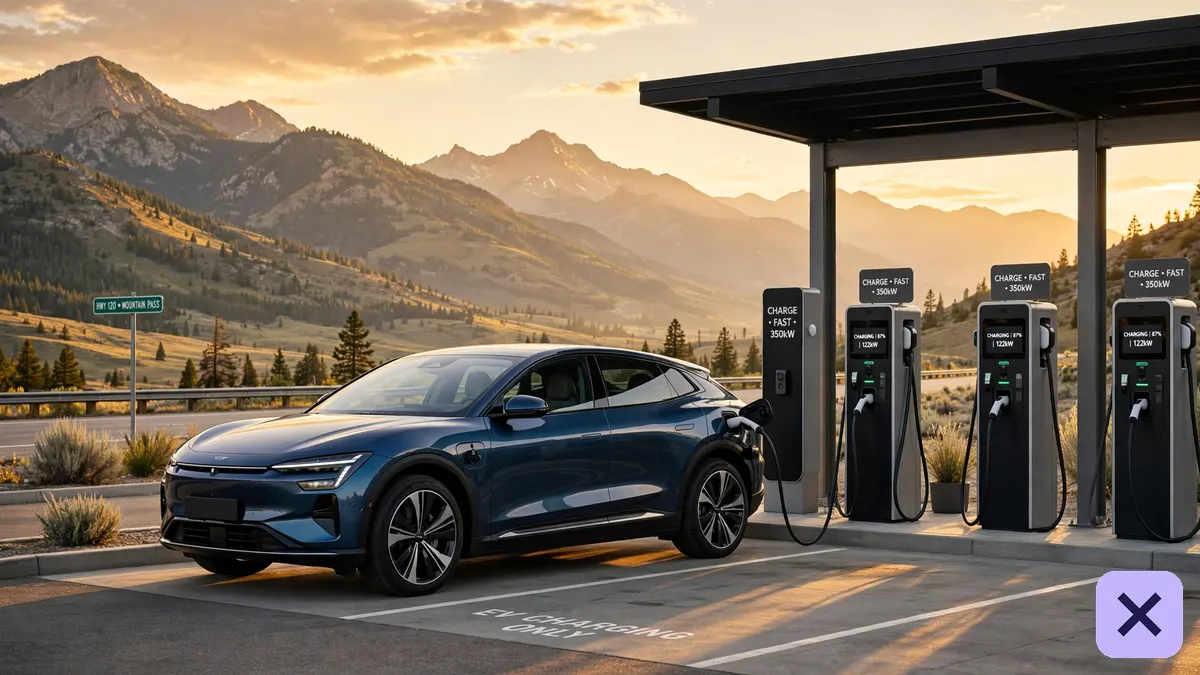
The best electric cars for road trips in 2026 are the ones that make long distances feel easy. They combine real-world range of 300 miles or more, fast charging that adds 100 miles in about 15 minutes, a comfortable cabin for eight hours at a stretch, and enough boot space for everything a family can pack. A good road trip car is about confidence: that you will reach the next charger, that the seats will still feel good at mile 400, and that the car will be ready to go again after a short coffee stop. This guide compares the strongest electric road trip cars for 2026, judged on real range, charging speed, comfort, space and running costs.
Key Takeaways
- Real-world range matters more than the official figure: look for cars that deliver 300 miles or more in mixed driving, not just in laboratory tests.
- Fast charging speed decides how long your stops are, and 800-volt cars can add around 100 miles of range in about 15 minutes.
- Plan your route around rapid chargers before you leave, and always have a backup charger in mind for every stop.
- Comfort beats performance on a road trip: quiet cabins, supportive seats and good suspension matter more than a 0 to 60 time.
- Charging at your destination overnight, at a hotel or a home, is often cheaper and easier than relying on rapid chargers alone.
What Makes an Electric Car Great for Road Trips
A road trip tests a car in ways that a daily commute never does. You drive for hours, carry far more luggage than usual, and pass through places where the nearest charger might be miles away. The best electric road trip cars share four qualities: usable range, fast charging, comfort and space.
First is usable range. The official figure is measured in ideal conditions, so a car rated at 350 miles might deliver 280 miles on a cold motorway day with the heating on. For road trips, look for an official range of at least 330 miles, which usually means around 280 miles of real motorway range. If you are buying your first electric car, our guide to the best electric cars for first-time buyers explains range, charging and running costs in plain terms.
Third is comfort. Eight hours in a car is a long time, and the details matter: seats that support your lower back, a quiet cabin at motorway speed, and suspension that smooths out rough roads. Good driver assistance, with adaptive cruise control and lane keeping, takes the strain out of long motorway stretches.
Fourth is space. A family of four needs at least 500 litres of boot space for a week away, and electric cars have an advantage here, because the flat battery floor leaves more cabin room than a similar-sized petrol car. Our guide to the best compact SUVs for families is a useful companion read if space for children and luggage is your top priority.
Best Electric Cars for Road Trips 2026: Compared
| Car | Official range | Real motorway range | Peak charging | 10–80% charge | Boot space |
|---|---|---|---|---|---|
| Hyundai Ioniq 6 | 338 miles | 290 miles | 233 kW | 18 min | 401 litres |
| Tesla Model 3 Long Range | 390 miles | 320 miles | 250 kW | 25 min | 594 litres |
| Kia EV6 | 328 miles | 280 miles | 258 kW | 18 min | 490 litres |
| BMW i4 eDrive40 | 365 miles | 300 miles | 200 kW | 31 min | 470 litres |
| Volkswagen ID.7 | 383 miles | 310 miles | 200 kW | 26 min | 532 litres |
| Skoda Enyaq 85 | 348 miles | 290 miles | 175 kW | 28 min | 585 litres |
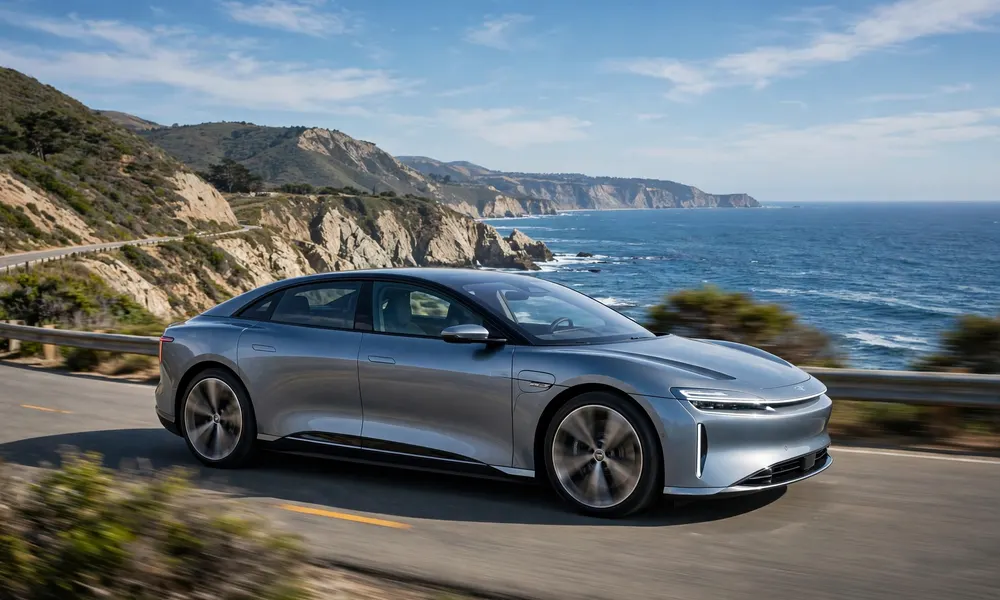
Tesla Model 3 Long Range: The Charging Network King
The Model 3 Long Range remains the benchmark for electric road trips, and the reason is simple: the Supercharger network. With more than 60,000 Superchargers worldwide, Tesla drivers rarely have to think hard about where to charge. The car’s navigation plans the route, preconditions the battery, and tells you exactly how long each stop will take.
The car itself is strong too. Official range is 390 miles, with around 320 miles achievable on a real motorway run, and 250 kW charging adds roughly 175 miles in 15 minutes. The boot holds 594 litres including the front boot, the cabin is quiet, and the seats are comfortable for long stints.
Hyundai Ioniq 6: The Efficiency Champion
The Ioniq 6 is the most efficient car in this guide, and efficiency is what makes a road trip cheap and relaxing. Its slippery shape, with a drag coefficient of just 0.21, helps it travel further on every kilowatt-hour than almost any rival. Official range is 338 miles, and real motorway range is around 290 miles.
Charging is equally impressive. The 800-volt system peaks at 233 kW and takes the battery from 10 to 80 percent in about 18 minutes, barely longer than a coffee and a stretch. The cabin is spacious and quiet, with supportive seats and plenty of rear legroom. The boot is the weak point at 401 litres, so pack light or add a roof box.
Kia EV6: The All-Rounder
The Kia EV6 is the car that does everything well. It shares its 800-volt platform with the Ioniq 6, so it charges from 10 to 80 percent in about 18 minutes at up to 258 kW, and its official range of 328 miles translates to around 280 miles on a real motorway run. The cabin is roomier than the Ioniq 6, with 490 litres of boot space and generous rear legroom.
Inside, the EV6 feels more conventional than a Tesla, with physical controls for heating and volume, a clear head-up display and a relaxed, well-built cabin. The ride is comfortable, noise levels are low, and the driver assistance system works well on long motorway stretches.
Volkswagen ID.7: The Long-Distance Comfort Car
The ID.7 is Volkswagen’s most comfortable electric car, and it shows. It is a large, quiet saloon with an official range of 383 miles and a real motorway range of around 310 miles. The seats are superb, with optional massage and ventilation, and the suspension smooths out rough roads in a way smaller cars cannot match.
Charging peaks at 200 kW, with a 10 to 80 percent charge in about 26 minutes, which is slower than the Hyundai and Kia but still quick enough that a meal stop covers it. The boot holds 532 litres, and the rear seats fold flat for bikes or camping gear.
BMW i4 eDrive40: The Driver’s Choice
The BMW i4 is the car for people who love driving and refuse to give that up for an electric car. It looks and feels like a proper BMW: sharp steering, a balanced chassis and a low seating position. Yet it is also a serious road trip car, with an official range of 365 miles and around 300 miles of real motorway range.
The cabin is the best finished in this guide, with excellent materials, comfortable sport seats and the intuitive iDrive system. The boot holds 470 litres, and the hatchback tailgate makes loading easy. The i4 is quieter than most petrol BMWs, and the instant torque makes overtaking effortless.
Skoda Enyaq 85: The Family Workhorse
The Skoda Enyaq is the most practical car in this guide, and practicality is what family road trips are built on. The boot holds 585 litres, the largest here alongside the Tesla, and the cabin is roomy enough for three adults in the back. There are clever touches everywhere, from an umbrella in the door to a tow bar option rated for 1,400 kg.
Range is strong too. The Enyaq 85 has an official range of 348 miles and a real motorway range of around 290 miles, with 175 kW charging that takes the battery from 10 to 80 percent in about 28 minutes. The ride is comfortable, the cabin is quiet, and the driver assistance systems are calm and capable.

How to Plan an Electric Road Trip
Planning is the difference between a relaxed electric road trip and a stressful one. Use a route planner such as A Better Routeplanner or your car’s built-in navigation, and check where the rapid chargers are along the way. Aim to stop every two to three hours, and always have a backup charger in mind for each stop.
Charge to 80 percent, not 100 percent, at rapid chargers. The last 20 percent charges much more slowly than the first 80, so stopping at 80 and driving on usually saves time overall. The exception is overnight charging at your destination, where you should charge to 100 percent because you have all night. If you would rather refuel in minutes anywhere, our guide to the best hybrid cars for road trips covers the petrol-electric alternatives.
Checklist: Before You Set Off
- Plan your route with a charging app and note a backup rapid charger for every planned stop.
- Charge to 100 percent at home the night before, and check that your charging apps and payment cards are set up and working.
- Pack light, because a roof box can cut your range by 10 to 15 percent.
- Check tyre pressures and set the car to its eco or range driving mode for motorway stretches.
- Book accommodation with destination charging where possible, and confirm the charger is working before you arrive.
- Carry a charging cable and a tyre repair kit, and keep snacks and water in the car for longer stops.
Frequently Asked Questions
How far can an electric car go on a road trip?
The best electric road trip cars in 2026 deliver 280 to 320 miles of real motorway range, which means two to three hours of driving between stops. With fast charging adding around 100 miles in 15 minutes, a 500-mile day is comfortable with two short stops.
How long does it take to charge on a road trip?
A rapid charge from 10 to 80 percent takes 18 to 31 minutes depending on the car, with 800-volt models the fastest. Plan stops of 20 to 30 minutes every two to three hours.
Is it cheaper to take an electric car on a road trip than a petrol car?
Yes, usually. Rapid charging costs roughly $115 to $170 for 1,000 miles, against around $150 to $200 of petrol for a similar car. Charging at your destination overnight is cheaper still, and home charging before you leave is the cheapest of all.
What happens if a charger is broken or busy?
Always have a backup charger in mind for every stop, and use a live charging app to check availability before you arrive. Most motorway routes now have several rapid chargers within a few miles of each other, so a broken charger is an inconvenience rather than a crisis.
Do electric cars lose range in cold weather?
Yes, by about 10 to 20 percent in winter, because the battery is less efficient when cold and the heating uses energy. Precondition the battery while plugged in, use the heated seats, and plan shorter legs in winter.
Can I tow a caravan or trailer with an electric car?
Some electric cars can tow, including the Skoda Enyaq at up to 1,400 kg and the Tesla Model 3 at up to 1,000 kg, but towing cuts range by 30 to 50 percent. Plan much shorter legs between charges and check your car’s towing limit before you book anything.
Bottom Line
The best electric cars for road trips in 2026 are the Tesla Model 3 Long Range for its charging network, the Hyundai Ioniq 6 for efficiency and speed, the Kia EV6 as the best all-rounder, the Volkswagen ID.7 for comfort, the BMW i4 for drivers who love driving, and the Skoda Enyaq for families who need space. Pick the one that fits your family, your luggage and your budget, plan your charging stops before you leave, and charge to 80 percent at rapid chargers. Do that, and an electric road trip will feel less like a compromise and more like the way travelling should be.