
A good duffel bag is the most forgiving piece of luggage you will ever own. It swallows an awkward load, squeezes into spaces a rigid case never could, and still looks respectable when you carry it into a hotel lobby or a gym. The best duffel bags of 2026 do all of that while surviving the scrapes, rain and rough handling that kill cheaper bags within a season. This guide explains what separates a duffel that lasts for years from one that falls apart after a handful of trips, and how to pick the right size, material and layout for the way you actually travel.
The duffel’s strength is its simplicity. A soft, cylindrical body with one long opening gives you a single big space that fits clothes, shoes and toiletries without the fiddly compartments of a backpack or the rigid shell of a suitcase.
Key Takeaways
- For most weekend trips, a 35 to 45 litre duffel is the sweet spot: big enough for two or three days, small enough to carry comfortably and fit in an overhead bin.
- Waxed canvas and full-grain leather age the best and survive the most abuse, while recycled nylon is the lightest choice and the easiest to clean.
- Check the stitching where the handles meet the body, because that is where cheap duffels fail first, often within the first few trips.
- A wide, U-shaped opening matters more than extra pockets: it lets you see and reach everything without unpacking the whole bag.
- Buy for the trip you take most often, not the longest one you might take someday, and test the bag fully loaded before you travel.
What Makes a Duffel Bag Survive a Weekend Trip
A duffel that survives is built around three things: fabric, seams and hardware. The fabric has to resist abrasion from concrete floors, car boots and airport belts, and it has to shrug off light rain without soaking through. The seams have to hold when the bag is stuffed full and lifted by one handle. And the zips, buckles and clips have to keep working after hundreds of openings and closings. When any one of those three fails, the bag is finished, however good the rest of it looks.
Weight matters too, because a duffel is carried, not rolled. A heavy empty bag eats into the weight you can comfortably carry and the allowance on a flight.
The Shape That Works
The classic duffel shape is a long cylinder with rounded ends, and it works because it spreads the load evenly and has no corners to catch on things. What matters more is the opening: a zip that runs the full length of the top and curves down the ends lets the bag open flat like a suitcase, so you can pack in layers and find things without digging. A short top zip, by contrast, turns the bag into a dark tube where everything ends up in a heap.
Duffel Bag Materials Compared
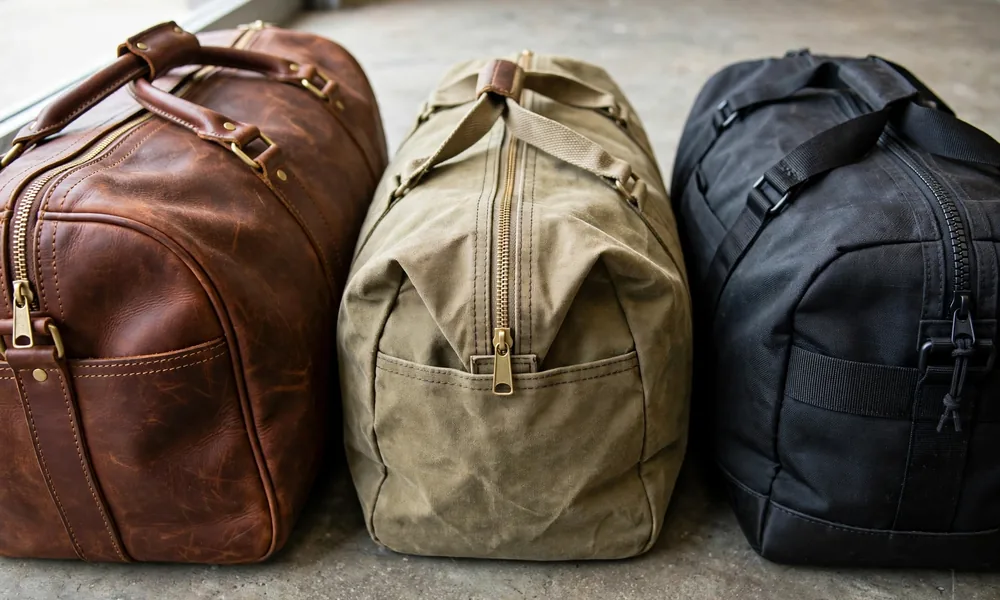
Material is the biggest single choice, and it decides how the bag ages, how much it weighs, and how much care it needs. Leather looks better every year but needs conditioning and hates being left damp. Waxed canvas is the rugged middle ground, naturally water resistant and happy to pick up scuffs that become character. Ballistic and recycled nylons are the lightest and the easiest to wipe clean, but they can look tired after a few years of hard use.
| Material | Weight | Water Resistance | Durability | Typical Price |
|---|---|---|---|---|
| Full-grain leather | Heavy | Fair, needs care | Excellent, improves with age | $180–$450 |
| Waxed canvas | Medium | Good, re-wax yearly | Excellent, scuffs add character | $90–$250 |
| Ballistic nylon | Medium-light | Good | Very good, resists tears | $80–$220 |
| Recycled nylon | Light | Good | Good, easy to clean | $60–$160 |
| Polyester | Light | Fair | Fair, wears faster | $40–$100 |
| Tarpaulin-style PVC | Medium | Excellent | Very good, wipes clean | $70–$180 |
Price is a rough guide, not a rule. Some excellent waxed canvas duffels cost under a hundred dollars, while some expensive leather bags are style pieces with thin linings and weak zips. best weekender bags of 2026 is a useful companion if you want to compare duffels against other short-trip bag shapes before you decide.
What Size Duffel Do You Need
Size is where most people go wrong, and the mistake is almost always buying too big. A 60 litre duffel sounds generous until you try to carry it, fully loaded, across a car park in the rain. A 30 litre duffel, on the other hand, holds about two days of summer clothes and not much else, and it forces you to leave the second pair of shoes at home.
For a two-night trip, 35 to 45 litres covers most people: two or three changes of clothes, a wash bag, a pair of shoes and a book. For three to four nights, or for winter when clothes are bulkier, 50 to 55 litres is the realistic range. Anything above 60 litres is really a sports or expedition bag, and it belongs in a car boot rather than on your shoulder.
How to Choose the Best Duffel Bag in 2026
Start with the handles. Pick the bag up by one handle and give it a firm tug: the stitching should feel solid, with a reinforcing patch or bar tack where the handle meets the body, and the handle itself should be wide enough not to cut into your hand. Then check the shoulder strap. It should be wide, padded where it sits on your collarbone, and adjustable with a buckle that does not slip.
Next, look at the zip. A good duffel zip is chunky, runs smoothly without snagging on the lining, and has a large pull you can grip with cold hands. Open and close the bag several times in the shop. If the zip catches once, it will catch every time you pack in a hurry. Finally, check the base: a reinforced, slightly stiffened base protects the bag from wet ground and helps it sit upright instead of flopping over.
Packing a Duffel So It Survives the Trip
A duffel packs best in layers, not in a jumble. Put heavy items, like shoes and the wash bag, at the bottom, where they sit closest to the base and keep the bag stable. Fill the gaps with socks and underwear, which act as padding, and keep the things you need first, like a jacket or a book, on top.

Do not overfill. A duffel that is stuffed so full the zip strains is a duffel whose seams are being pulled apart with every step. Leave about a finger’s width of slack at the top, and if you cannot close the zip with one hand, take something out. If your duffel also does gym duty, our guide to the best gym bags of 2026 explains which features, like a ventilated shoe pocket and a wet kit compartment, are worth paying for when one bag serves two jobs.
Carrying a Duffel Without Wrecking Your Shoulder
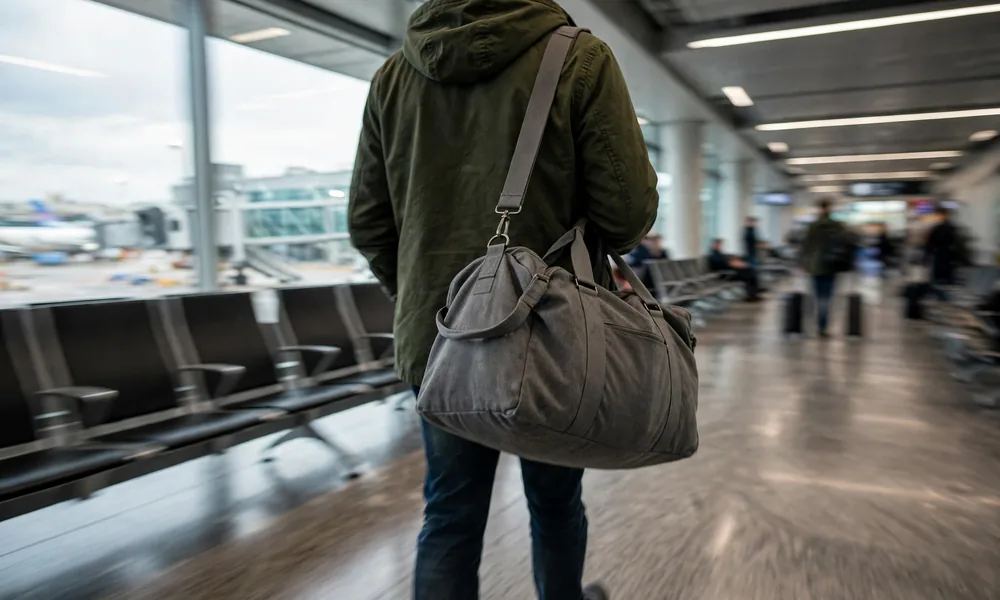
How you carry a duffel matters as much as how it is built. The shoulder strap should sit on the opposite shoulder to your dominant hand, with the bag resting against your hip, not swinging at your knee. Shorten the strap so the bag rides high: a bag that hangs low pulls your posture sideways and bangs against your leg with every step.
If your bag has a trolley sleeve, use it. Sliding the duffel over the handle of a rolling case takes the weight off your shoulder entirely on airport days, and it is the single most useful feature for anyone who flies regularly. Our guide to the best travel backpacks of 2026 covers the bags that are designed to be carried on your back for hours, if that is how most of your trips work.
Looking After Your Duffel
A duffel that is looked after lasts years longer than one that is stuffed into a cupboard damp. Empty the bag after every trip, turn the pockets inside out, and shake out the crumbs and grit. Wipe the fabric with a damp cloth and let the bag dry fully open, away from direct heat, before you store it. Leather needs a conditioner every few months, and waxed canvas needs a fresh coat of wax about once a year, warmed in with a hair dryer so it soaks into the fibres.
Common Mistakes When Buying a Duffel Bag
The first mistake is buying the biggest bag in the shop. The second is choosing by looks alone, without testing the zip, the strap and the handles. The third is ignoring the lining: a thin, pale lining tears easily and shows every mark, while a darker, heavier lining hides scuffs and survives being snagged by a zip. Measure the bag, check your airline’s limits, and remember that a soft bag can be squeezed a little, but not by ten centimetres.
Duffel Bag Buying Checklist
- Pick 35 to 45 litres for two or three nights, and measure your real packing before you buy bigger.
- Choose waxed canvas or leather for longevity, or recycled nylon if you want the lightest bag that is easy to clean.
- Tug the handles hard and check for reinforced stitching where they meet the body.
- Test the zip several times: it should run smoothly without catching the lining.
- Check the shoulder strap is wide, padded and adjustable, and that it does not slip.
- Confirm the bag fits your airline’s cabin size, and that it has a trolley sleeve if you fly often.
Frequently Asked Questions
What size duffel bag is best for a weekend trip?
A 35 to 45 litre duffel suits most people for two or three nights, holding two or three changes of clothes, a wash bag and a pair of shoes.
Are duffel bags allowed as cabin luggage?
Usually yes, if the bag fits your airline’s size limits, which are commonly around 55 by 40 by 20 centimetres.
Is leather or canvas better for a duffel bag?
Leather lasts the longest and looks better with age, but it is heavy and needs regular conditioning. Waxed canvas is lighter, naturally water resistant and needs only a yearly re-wax. For most travellers, waxed canvas is the better balance of durability, weight and care.
How do I stop my duffel bag smelling?
Empty it after every trip, wipe the lining, and let it dry fully open before storing it. A ventilated shoe pocket or a separate shoe bag keeps the worst smells away from clean clothes, and a fabric pouch of baking soda left inside overnight absorbs lingering odours.
Can a duffel bag replace a suitcase?
For trips of up to four nights, yes, and many travellers prefer it: a duffel is lighter, fits into more spaces and is easier to carry up stairs. For longer trips, or when you need to keep clothes pressed, a suitcase with a hard shell and packing structure is the better tool.
How long should a good duffel bag last?
A well-made duffel in waxed canvas, leather or ballistic nylon should last five to ten years of regular weekend use, and often longer with basic care.
The Bottom Line
The best duffel bags of 2026 are the ones built to be carried, stuffed and dragged through stations without complaint: strong fabric, reinforced handles, a smooth full-length zip and a size that matches the trips you actually take. Choose waxed canvas or leather for longevity, or light recycled nylon for easy carrying, A good duffel is a buy-once bag, and it will be waiting by the door for every weekend that comes.


