Air Circulators vs Fans: Which One Actually Cools a Room in 2026
Air circulators and fans look like the same machine, and shops often sell them side by side, but they do different jobs in a room. A fan blows air at you, so you feel cooler while you sit in front of it. An air circulator moves air around the whole room, pushing it to the walls and pulling it back again, so the entire space feels more even. If you buy the wrong one, you end up with a machine that hums away without fixing the problem you bought it for, whether that is a stuffy bedroom or a living room that is hot on one side and cool on the other.
Key Takeaways
- Air circulators move air around a whole room; fans blow air at one person or one spot.
- A circulator is the better choice for a stuffy room, for spreading cool air from an air conditioner, and for pushing warm air down in winter.
- A fan is the better choice when you want a breeze on your skin right now, at a desk, beside a bed, or outdoors.
- Look for a circulator with a tilting head, at least three speeds, and a noise level under 45 decibels on medium.
- Buy the size for your room: a small circulator suits a bedroom, a large one suits an open-plan living room.
What an Air Circulator Actually Is
An air circulator is a fan with a different job. Instead of spreading air in a wide cone, it uses a shaped grille and a steep-pitched blade to push a narrow, high-velocity stream of air in one direction. That stream travels across the room, hits a wall, and spreads out, which sets the whole volume of air in the room moving in a slow loop. The effect is not a breeze on your face but a room that stops feeling stuffy, because the warm air trapped near the ceiling and the cool air sitting near the floor finally mix.
None of this makes a circulator a cooler. Like a fan, it does not lower the temperature of the air; it only moves it. A fan cools you by evaporating sweat from your skin, which only works while the air is hitting you. A circulator cools a room by breaking up the layers of hot and cold air that build up when the air sits still, which works even when you are on the other side of the room.
Air Circulators vs Fans: The Key Differences
The first difference is direction. A fan is built to point at a person, so its head usually sits at face height and its airflow spreads wide and soft. A circulator is built to point at a wall or across a room, so its head tilts steeply and its airflow stays tight and strong over a long distance.
The second difference is distance. A typical desk or pedestal fan feels effective for about one to two metres, and beyond that the breeze fades to almost nothing. A good circulator can throw air six metres or more, which is why it works in open-plan rooms and long bedrooms where a fan cannot reach.
The fourth difference is what they pair with. A circulator is at its best alongside an air conditioner, a heater, or an open window, because it spreads whatever air is already there. A fan is at its best on its own, because its job is to make one person feel cooler right now. Our guide to the best portable fans covers the fan side of that partnership in detail, including the desk, handheld, and clip-on types that circulators do not replace.
The Main Types of Air Circulators
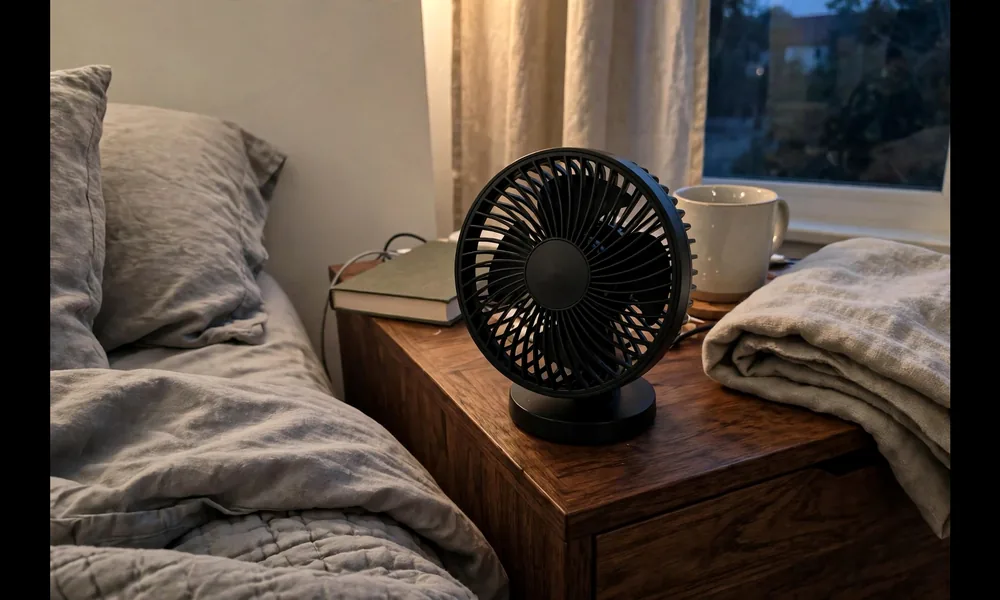
Tabletop circulators are the most common size, standing about 25 to 35 centimetres tall and sitting on a desk, a shelf, or a bedside table. They suit bedrooms and small offices, where the job is to keep the air moving overnight without taking up floor space.
Floor and Pedestal Circulators
Floor circulators are larger, usually 40 to 60 centimetres tall, and they stand on the floor in a corner of the room. They move far more air than a tabletop model, and they are the right choice for living rooms and home offices with high ceilings. If your room is larger than about 25 square metres, a floor model is the minimum that will make a difference.
Whole-Room and Tower Circulators
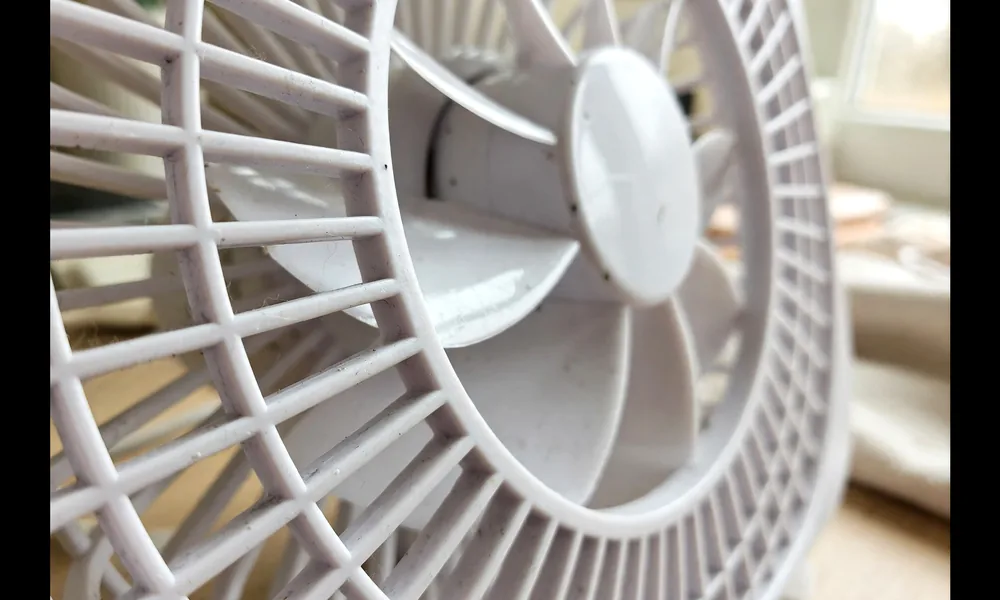
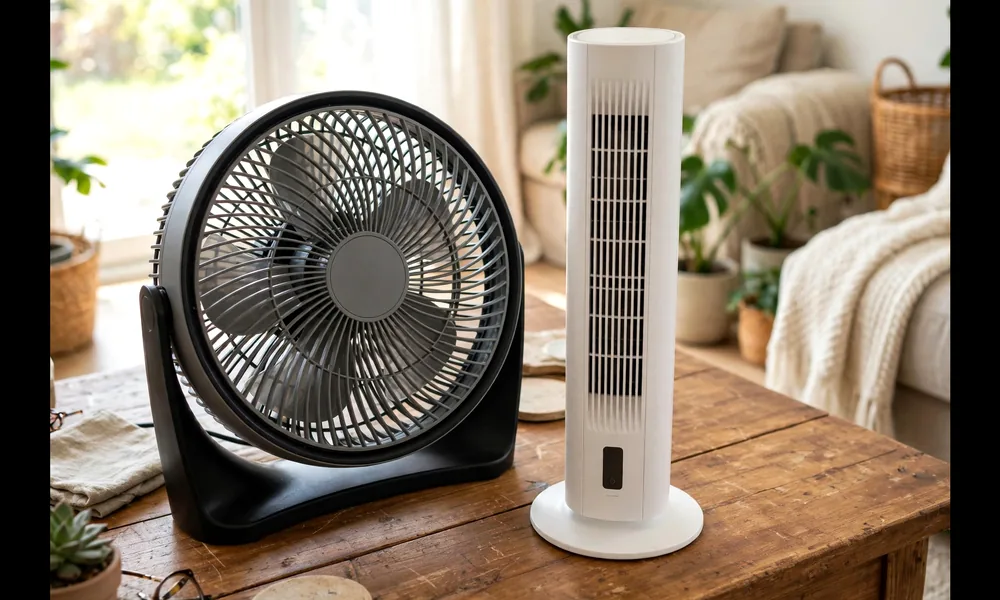
Whole-room circulators are the most powerful domestic type, built to stir the air in rooms of 40 square metres or more. Tower circulators are a slimmer alternative, but their narrow outlet means the stream is less focused than a round-headed circulator. A tower fan is a different machine altogether, and our guide to the best tower fans explains where tower fans beat circulators and where they do not.
Small and USB Circulators
Small USB circulators are really fans with a circulator-style head, and they are best thought of as personal cooling for a desk rather than room circulation. They are quiet, cheap, and easy to move, but they cannot move enough air to change how a room feels.
How to Choose the Right Air Circulator
Start with the size of the room. Manufacturers quote a room size for most circulators, and those numbers are optimistic, so treat them as a maximum rather than a promise. If the room has high ceilings, go one size up, because the volume of air is what matters, not just the floor area.
Next, check the head movement. A circulator that only tilts a little is barely a circulator at all: the whole point is to aim the stream up at the ceiling, across the room, or down a hallway. Look for at least 90 degrees of vertical tilt and, ideally, oscillation that sweeps side to side as well. A remote control is worth having, because a circulator usually sits in a corner.
Air Circulators vs Fans Compared
| Feature | Air circulator | Fan |
|---|---|---|
| Main job | Moves air around a whole room | Blows air at one person |
| Airflow reach | Six metres or more | One to two metres |
| Best room | Stuffy living rooms and bedrooms | Desks, bedsides, outdoors |
| With air conditioning | Excellent, spreads cool air | Good, adds a breeze only |
| In winter | Pushes warm air down from ceilings | Rarely used |
| Noise on medium | Usually under 45 decibels | Varies, often louder |
| Typical price | Medium to high | Low to medium |
The Best Air Circulators of 2026
Our best overall pick is a medium floor circulator with a tilting head, three or more speeds, and a quiet brushless motor. It is big enough to stir a living room, quiet enough to run in a bedroom, and simple enough that you will actually use it every day. If you only buy one air-moving machine for the house, this type is the most useful, because it works in summer with the air conditioner and in winter with the heating.
The best circulator for a bedroom is a small tabletop model with a sleep timer and a genuinely quiet low speed. It sits on a bedside table or a shelf, runs all night without disturbing sleep, and keeps the air moving so the room never feels stale by morning. The best circulator for a large open-plan room is a whole-room floor model with a strong motor and wide oscillation, because smaller machines simply cannot move enough air across that much space.
One thing a circulator cannot do is clean the air. It moves dust and pollen around along with everything else, so if allergies are part of the problem, a circulator alone will not fix it. Our guide to the best air purifiers covers the machines that actually filter the air, and a purifier and a circulator make a sensible pair.
Where to Put an Air Circulator
Placement matters more with a circulator than with a fan, because the machine works with the shape of the room. The usual advice is to put it in a corner, aimed diagonally across the room towards the opposite wall, so the stream travels the longest possible distance and sets the whole room moving. Pointing it straight at the sofa wastes its best quality, because it turns into an expensive fan.
In a bedroom, the best spot is usually opposite the door or the window, aimed slightly upwards so the stream runs across the ceiling and drops down the far wall. In a living room with an air conditioner, place the circulator on the far side of the room from the unit, aimed back towards it, so the cool air gets carried across the whole space.
Keep the path clear. A circulator behind a sofa or a bookshelf cannot move air through furniture, and its stream will die a metre out. Give it a clear line across the room, keep the grille clean, and run it on a medium speed for long periods rather than on full blast for short ones.
Air Circulator Buying Checklist
- Match the size to the room: tabletop for bedrooms, floor models for living rooms over 25 square metres.
- Check the head tilts at least 90 degrees and oscillates, so you can aim the stream across the room.
- Look for three or more speeds and a noise level under 45 decibels on medium.
- Choose a brushless motor for quieter running and a longer life.
- Pick a grille that unclips without tools, so cleaning the blades stays a quick job.
- Buy a remote and a timer if the circulator will live in a bedroom or a far corner.
Frequently Asked Questions
Do air circulators actually cool a room?
They do not lower the air temperature, just as a fan does not. What they do is mix the air in the room, breaking up hot layers near the ceiling and cool layers near the floor, so the whole room feels more even and less stuffy. Paired with an air conditioner, they spread the cool air much further.
Is an air circulator better than a fan?
It depends on the job. A circulator is better for a whole room, for spreading air conditioning, and for winter use. A fan is better when you want a breeze on your skin right now, at a desk or beside a bed. Many homes end up with both, because they solve different problems.
Where should I place an air circulator?
Put it in a corner, aimed diagonally across the room towards the opposite wall, so the stream travels the longest distance. In a bedroom, aim it slightly upwards across the ceiling. Do not point it straight at the sofa, and keep the path across the room clear of furniture.
Are air circulators noisy?
Good ones are quieter than most fans at the same airflow, because they are built to run for hours. Look for a noise rating under 45 decibels on medium for a bedroom. Brushless motors are usually the quietest, and running on medium all evening is quieter than short bursts on full speed.
Can I use an air circulator in winter?
Yes, and it is one of their best uses. Warm air collects near the ceiling in winter, so aim the circulator upwards to push it back down to where you sit. It makes a room feel warmer without turning the heating up.
Do air circulators clean the air?
No. They move air, including dust and pollen, but they do not filter it. If allergies are a concern, pair a circulator with an air purifier: the purifier cleans the air, and the circulator spreads the cleaned air around the room.
The Bottom Line
If your room feels stuffy and uneven, an air circulator is the better buy: it stirs the whole room and spreads air conditioning further. If you just want a breeze on your face at a desk or in bed, a fan does that job better and cheaper.