A heated mattress pad warms your bed from below, not from above, and that one difference decides whether it is the right buy. It is a thin, quilted, electrically heated layer that fits over your mattress like a fitted sheet, with wires running through it and a controller at the side of the bed. Switch it on half an hour before bedtime and you climb into a warm bed; a heated blanket, by contrast, drapes over you once you are already in it. This guide explains why heated mattress pads beat a cold bed in 2026, how to choose the size, controls and safety features that matter, and how they compare with the other warming layers on the market.
Key Takeaways
- A heated mattress pad heats the bed from below and preheats it before you get in; a heated blanket warms you from above once you are in bed.
- Buy the size for your mattress, not your body, and check the pocket depth against your mattress before you order.
- Dual-zone controls, a preheat setting and an auto shut-off timer are the features worth paying for.
- Look for overheat protection, a detachable controller and a washable pad as non-negotiable safety features.
- A heated pad costs only a few pence per night to run.
What a Heated Mattress Pad Actually Is
A heated mattress pad is a fitted, quilted pad with thin heating wires woven through its layers. It sits directly on the mattress, under your fitted sheet, and warms the surface you lie on. A controller sends a small amount of electricity through the wires, and they warm up evenly across the whole sleeping area. Most modern pads heat up in ten to twenty minutes. Switch it on while you brush your teeth and the bed is warm by the time you get in.
That position, under the sleeper, is what makes it different from every other warming product. Our guide to heated blankets covers the alternative: a blanket with wires woven through it that lies on top of you, warming from above. A blanket is better for the sofa; a pad is better for warming the whole bed before you get in, and for sleepers who kick covers off, because the heat stays under them whatever they do with the duvet.
The pad is also different from the unheated layers it resembles. Our guide to mattress pads covers thin, quilted comfort layers that add a little softness to a firm mattress, with cotton, wool and gel fibre fills and no wires at all. And our guide to mattress toppers covers thick comfort layers, usually two to four inches deep, that change how a mattress feels. A topper changes comfort; a heated pad changes temperature. If your mattress is comfortable but cold, you need the pad, not the topper.
Heated Mattress Pads Compared
There are five main types on sale, and they differ in how they heat, how they are controlled, and how they handle washing. The table below compares them.
| Type | Best for | Controls | Washing |
|---|---|---|---|
| Single-zone quilted pad | Single sleepers, tight budgets | One controller, 5 to 10 settings | Machine washable, controller off |
| Dual-zone pad | Couples who disagree on warmth | Two controllers, independent zones | Machine washable, controllers off |
| Low-voltage pad | Safety-first buyers, children’s rooms | One controller, lower top heat | Machine washable, controller off |
| Waterproof pad | Allergy households, spill-prone beds | One or two controllers | Wipe clean; check wash limit |
| Premium preheat pad | Cold bedrooms, early risers | Preheat mode, timer, app on some | Machine washable, controller off |
The single-zone quilted pad is the best starting point for most buyers: it does the core job at the lowest price. The dual-zone pad is the one to buy for a shared bed, because two people rarely agree on warmth. Low-voltage pads trade a little top-end heat for extra safety, which suits households with children or older sleepers. Waterproof pads add a barrier layer that protects the mattress, and premium preheat pads add a fast warm-up mode and a timer.
How to Choose the Right Size and Fit
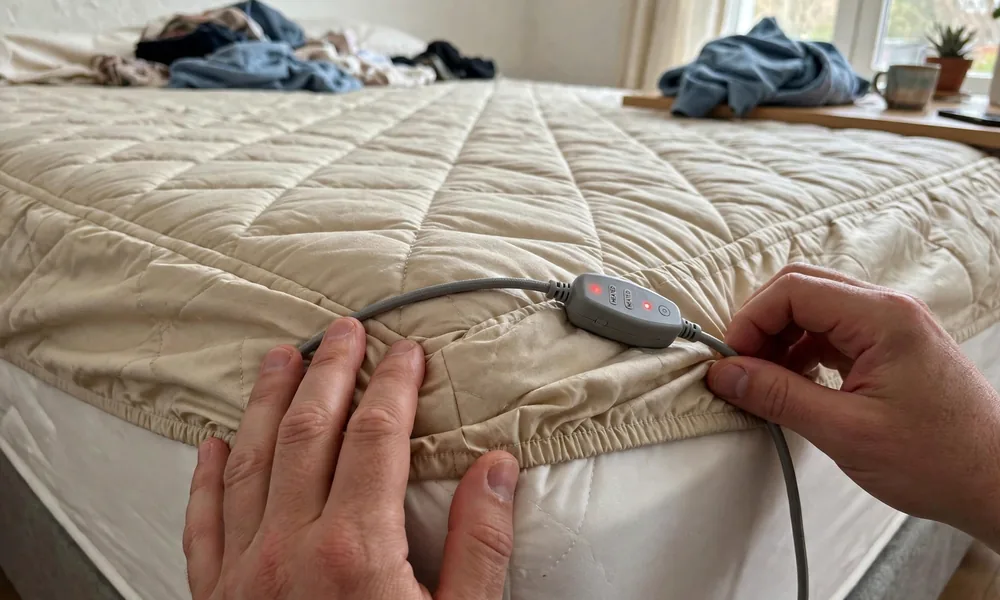
Choose the size for your mattress, not your body. A pad must cover the whole sleeping surface, edge to edge, or the unheated border becomes a cold strip you roll onto in the night. Measure the mattress length and width, and buy the matching size: single, double, king or super king. A pad that is too small leaves cold edges; a pad that is too large bunches up and folds, which can damage the wires inside.
Pocket depth is the number most buyers forget. The pad fits over the mattress with an elasticated skirt, like a fitted sheet, and the skirt has a maximum depth, usually 30 to 40 centimetres. Measure your mattress depth, including any topper already on it, and check it against the skirt. A mattress with a thick topper often needs the deeper skirt, and a pad that does not stretch over the corners will pop off in the night. A heated pad is thin, usually under two centimetres of quilting, so it does not change how the mattress feels. That is the point. If you want both warmth and softness, pair a heated pad with a topper underneath it, never on top, because a thick layer above the pad insulates you from the heat.
Controls That Matter: Heat, Timer, Dual Zones
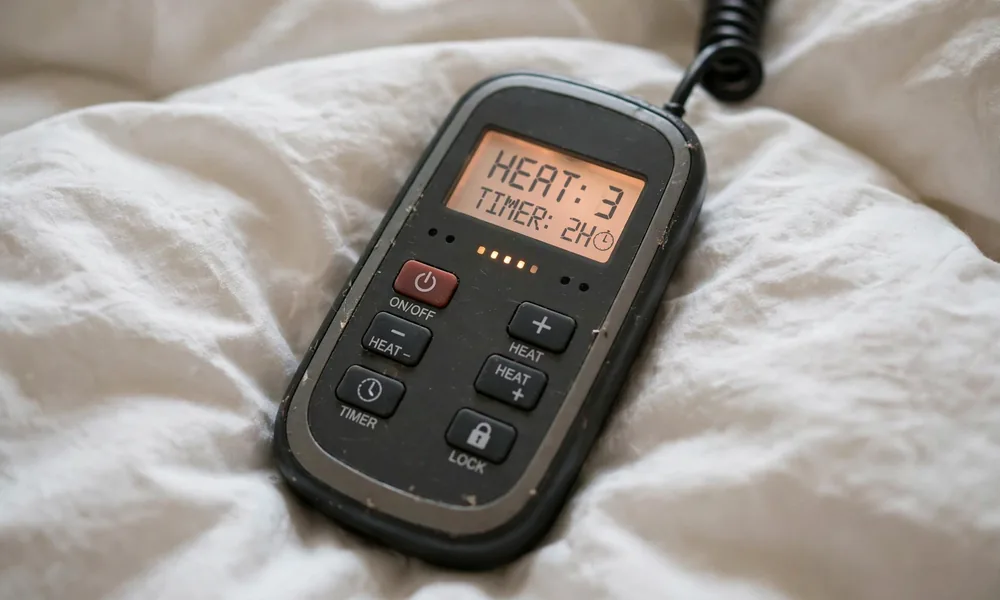
The controller is where a good pad earns its price. Look for at least five heat settings, a preheat mode that runs the pad at full heat for thirty minutes then drops to a lower level, and an auto shut-off timer, usually one to ten hours, that switches the pad off while you sleep.
Dual-zone controls are the single most valuable feature for couples. Each side of a double or king pad has its own controller and its own heat level, so one side can run warm while the other runs cool or off entirely. Check that the controllers are separate units with their own cords, not one controller pretending to be two, and that each cord is long enough to reach the bedside table from your side of the bed. Some premium pads add a phone app or a remote, but these are conveniences, not essentials: a physical controller with clear buttons and a readable display is easier to use half-asleep than any app.
Safety: Auto Shut-Off, Overheat Protection, Washing
Overheat protection is non-negotiable: the pad should have a sensor that cuts power if any part of it gets too hot, and it should be tested to a recognised safety standard. Auto shut-off is the second must-have, because it guarantees the pad cannot run indefinitely if you forget it. Never buy a pad with neither.
Washing is where many buyers get caught out. Most quilted pads are machine washable, but only with the controller detached and the cord removed. Wash on a gentle cycle, dry flat or on a low heat, and never iron the pad or fold it sharply, because creasing can break the wires inside. Check the washing instructions before you buy, not after: a pad that cannot be washed at all is a bad buy for a bed. A few habits keep the pad safe for years. Never use it folded or bunched, never place heavy objects on it, and never use it on a waterbed or an airbed. If the pad ever smells of burning, heats unevenly, or the controller feels hot, stop using it and replace it.
Running Costs and Care
A heated mattress pad costs very little to run. A typical pad draws 60 to 100 watts on full heat, and far less once the bed is warm. An hour of preheating costs roughly one to two pence, and a full night on a low setting costs a few pence. Compare that with heating a bedroom overnight, which costs many times more, and the pad pays for itself in a single cold month.
Care is simple. Air the pad regularly by leaving the bed unmade for an hour in the morning, which lets moisture escape. Wash it every few months, or more often if you sleep hot. Store it flat or loosely rolled in the summer, never folded into a tight square, and keep it somewhere dry. A well-cared-for pad lasts three to five years; a pad that is folded, creased and never washed will fail sooner, usually at a wire joint.

What to Avoid When Buying
Avoid pads with no overheat protection and no auto shut-off. These are the two features that make an electric pad safe to sleep on, and a pad without them is not worth any saving. Avoid pads whose controllers are fixed to the pad and cannot be detached, because you will never be able to wash the pad properly. Avoid buying the wrong size to save money: a single pad on a double bed leaves one sleeper cold, and a pad that is too small slides and bunches. Be wary of pads that promise medical benefits, such as curing back pain. A warm bed feels good and can ease stiff muscles, but a heated pad is not a medical device.
Heated Mattress Pad Checklist: Before You Buy
- Size matched to your mattress, with a pocket depth that fits the mattress plus any topper.
- At least five heat settings, a preheat mode, and an auto shut-off timer.
- Overheat protection and a detachable controller as non-negotiable safety features.
- Dual-zone controls with separate cords if the bed is shared.
- Machine washable with the controller removed, and a cord long enough to reach the bedside table.
- Quilted fabric thick enough that the wires cannot be felt through the sheet.
Frequently Asked Questions
Is a heated mattress pad better than a heated blanket?
They do different jobs. A pad heats the bed from below and preheats it before you get in, so you climb into a warm bed. A blanket warms you from above once you are in bed and is better for the sofa. If you can only buy one, the pad wins for sleep.
Can you sleep on a heated mattress pad all night?
Yes, if it has auto shut-off and overheat protection. Most people preheat the bed, then turn it down or let the timer switch it off. Never sleep on a pad that has neither safety feature.
How much does a heated mattress pad cost to run?
A few pence per night. A typical pad draws 60 to 100 watts on full heat and far less once the bed is warm, so an hour of preheating costs roughly one to two pence. It is far cheaper than heating the bedroom overnight.
Can you wash a heated mattress pad?
Most quilted pads are machine washable with the controller detached and the cord removed, on a gentle cycle. Dry flat or on low heat, never iron it, and never fold it sharply, because creasing can break the wires inside.
Is a heated mattress pad the same as a mattress topper?
No. A topper is a thick comfort layer that changes how a mattress feels, usually two to four inches deep. A heated pad is a thin quilted layer that changes the temperature of the bed. If your mattress is comfortable but cold, you need the pad, not the topper.
Are heated mattress pads safe?
Yes, when they have overheat protection and auto shut-off and are used as designed. Never use a pad folded or bunched or on a waterbed, and stop using it if it ever smells of burning or heats unevenly.
The Bottom Line
A heated mattress pad beats a cold bed because it warms the bed before you get in, stays warm under you whatever you do with the duvet, and costs pennies a night to run. Buy the size for your mattress with a pocket deep enough for the mattress and any topper, insist on overheat protection, a detachable controller and an auto shut-off timer, and choose dual zones if the bed is shared.