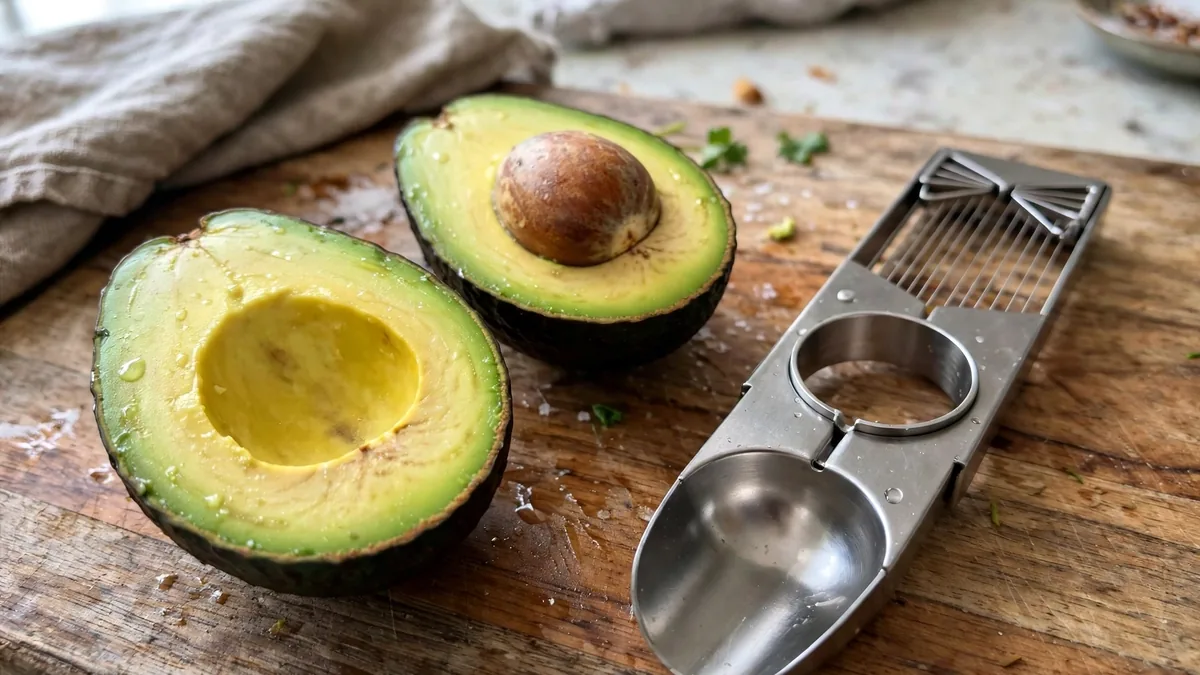
Avocado tools are the small kit that turns a ripe avocado from a fiddly job into a quick one. Most people meet one of them first, the three-in-one slicer. A slicer pits, slices and scoops, and it does those three jobs well, but avocado tools cover more ground than a single gadget: a dedicated pitter that grips the stone safely, a scoop that lifts the flesh out cleanly, a masher that turns the fruit into guacamole, and multi-tool sets that bundle the lot into one drawer-friendly kit. This guide explains how to choose avocado tools that earn their drawer space in 2026, which ones are worth buying on their own, and when a set beats a single tool.
Key Takeaways
- An avocado slicer is one tool, not the whole category: pitters, scoops, mashers and multi-tool sets each do a job the slicer does not.
- Buy for the job you actually do most: neat slices for toast, smooth mash for guacamole, or a bit of both.
- Stainless steel wires and blades cut cleanly through ripe flesh; plastic edges drag, bruise and dull quickly.
- A good pitter grips the stone firmly and releases it safely, keeping your fingers away from anything sharp.
- A masher is the only tool that makes proper guacamole; a slicer is designed for neat slices, not mashing.
What Counts as an Avocado Tool?
An avocado tool is any kitchen tool made for one stage of preparing an avocado: getting the stone out, cutting the flesh, lifting it from the skin, or mashing it. Four jobs, four tools, and most kitchens only need two or three of them. The slicer is the best-known member of the family. Our guide to avocado slicers covers that single tool in full, from three-in-one designs to wire-only slicers, and it is the right read if neat slices for breakfast are all you want. This guide covers the wider set: the pitters, scoops, mashers and bundled kits that sit around the slicer, and how to pick between them.
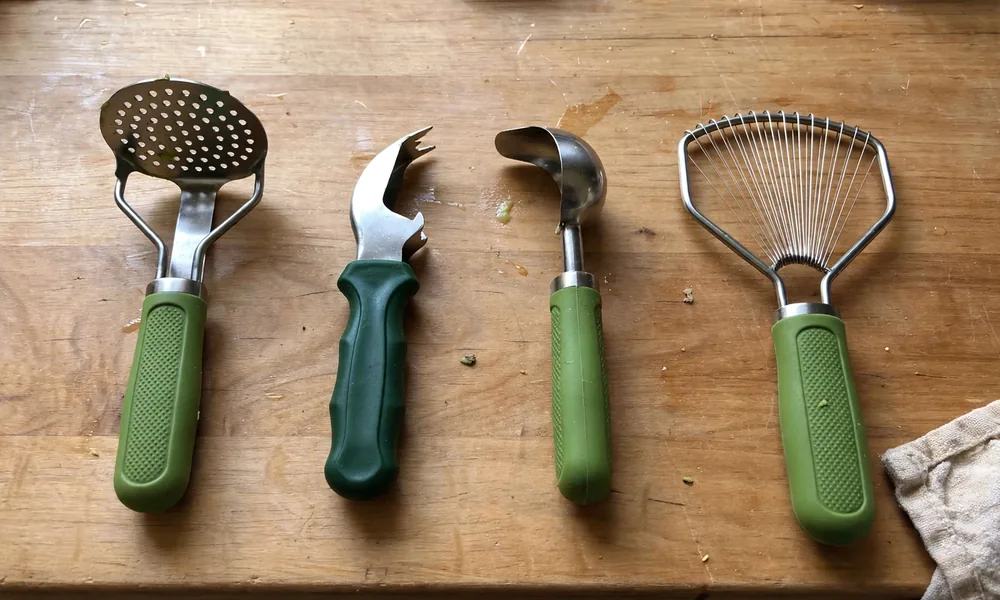
Each tool is shaped for one job. A pitter is a small claw that bites into the stone and twists it out. A scoop is a thin, curved blade that runs between flesh and skin. A masher is a flat, perforated plate that presses the flesh into a smooth spread. None of them is a substitute for the others, and the most common buying mistake is expecting one tool to do every job. If it is sliced avocado on toast a few mornings a week, a three-in-one slicer on its own is enough. If guacamole appears every weekend, a masher earns its place. If you eat avocado daily, a small set covering all four jobs is the better buy.
The Main Avocado Tools Compared
There are six ways to buy into the category, from a single wire slicer to a full set. The table below compares them on the job each one does best, what it cannot do, and what it usually costs.
| Tool | Best for | Limitation | Price range |
|---|---|---|---|
| Three-in-one slicer | Daily breakfast slices | Cannot mash guacamole | Budget |
| Wire slicer only | Neat slices for salads | No pitter or scoop | Budget |
| Dedicated pitter | Safe, fast stone removal | Does nothing else | Budget |
| Scoop | Lifting flesh out whole | No cutting or mashing | Budget |
| Masher | Guacamole and spreads | Useless for neat slices | Budget to mid-range |
| Multi-tool set | Everyday avocado eaters | Pricier; needs drawer space | Mid-range |
The three-in-one slicer wins for most people because it handles the three jobs that come up every time: pit, slice, scoop. The wire-only slicer is a good second tool for salads, where you want perfect slices and already have a way to remove the stone. The masher is the specialist: it does one job, and it does it better than any other tool in the drawer. A multi-tool set makes sense when you eat avocado most days and want every job covered without buying four separate gadgets.

How to Choose the Right Set
Choosing avocado tools starts with the fruit, not the tool. A ripe avocado yields gently to pressure at the stem end and feels heavy for its size. Under-ripe flesh resists wires and comes out in chunks, while over-ripe flesh collapses into mush no matter how good the tool is. Next, match the tool to the meal. Slices belong on toast, in sandwiches and layered in salads, where even pieces look better and stay put. Mash belongs in guacamole and spreads, where texture matters more than shape. If your avocado habit is mostly one of these, buy the tool for that job first; if it is both, a set is cheaper than buying the pieces one at a time.
Materials decide how long the tools last. Stainless steel wires cut cleanly through ripe flesh without tearing, and they stay taut for years if they are not bent. Stainless blades hold an edge and rinse clean. Plastic slicing edges are the weak point in cheap tools: they drag through the flesh, bruise it, and go dull quickly, and once a wire loosens, the slices become uneven. Handles matter too: a comfortable, non-slip handle with enough length for leverage makes the difference between a tool you reach for and one that sits in the drawer. Dishwasher-safe materials are worth having, because avocado flesh sticks to wires and scoops, and a tool that is a chore to clean is a tool you stop using. Size is the last check: a slicer or scoop sized for small Hass fruit will struggle with a large Fuerte, so choose tools that fit the avocados you actually buy.
Mashers: The Tool the Slicer Cannot Replace
Guacamole is where the slicer stops and the masher starts. A slicer is designed to keep the flesh in neat, even pieces, which is the opposite of what guacamole needs. Mashing calls for pressure and a perforated plate that breaks the flesh down into a smooth spread with a few small lumps left for character. Scoop the flesh out with a spoon or a scoop, then press it with the masher in the bowl, a few firm presses at a time. A fork works in a pinch, but a masher covers the whole bowl in half the time and leaves a far more even result.
The best mashers for avocado are small and flat, with a head wide enough to cover a bowl but small enough to store. The plate should have holes or slots sized to break the flesh without turning it to liquid, and the handle should be long enough to keep your knuckles clear of the bowl. Stainless steel is the safe choice: it does not stain, it does not hold smells, and it washes clean. Our guide to potato mashers covers the same pressing action in a bigger format, though a full-size potato masher is too large and too heavy for a small bowl of guacamole. For the finished dish, our guacamole guide shows what to do once the mashing is done, from lime and salt to the extras that lift a plain mash into something worth serving.
Pitters and Scoops: Small Tools, Real Safety
The pitter is the smallest tool in the set and the one that most improves safety. Removing a stone with a knife is the classic avocado injury: the blade slips, or the stone twists, and the knife meets a hand. A pitter avoids that entirely. Press it onto the stone, twist sharply, and the stone comes away cleanly on the tool. Look for a pitter that grips firmly and releases the stone with a lever or a button, so your fingers never go near the sharp edge. Avoid pitters that are just a sharp point, because they are dangerous and ineffective.
The scoop is the quiet workhorse. A thin, curved blade that runs between flesh and skin, it lifts sliced flesh out in one piece instead of leaving half of it behind in the skin. The best scoops are thin enough to follow the curve of the fruit and stiff enough not to flex. A spoon does the same job roughly, but a scoop follows the skin more closely and leaves less waste. If your slicer already has a scoop end, a separate scoop is only worth buying if you mostly mash or dice, where the slicer never comes out.
Both tools are cheap, and both pay for themselves the first week. A pitter that works properly turns the most dangerous step into the easiest one, and a scoop that lifts cleanly means less avocado in the bin and more on the plate.

What to Avoid When Buying
Avoid tools with plastic slicing blades instead of wires or steel edges. They drag through the flesh, bruise it, and go dull quickly, and a dull slicer is worse than no slicer at all. Avoid very cheap three-in-one tools with flimsy handles, because the handle is where your hand meets the tool, and a handle that flexes or cracks makes the whole thing unpleasant to use. Be wary of tools that promise to do everything, including mashing and dicing, because a tool that tries to do too much usually does none of it well. Also avoid sets with pieces you will never use, and never buy on looks alone: pick the tool up, check the weight, flex the handle gently, and look at the wires.
Avocado Tools Checklist: Before You Buy
- Stainless steel slicing wires, evenly spaced and taut, that cut without flexing.
- A pitter that grips the stone firmly and releases it safely, away from your fingers.
- A thin, curved scoop that lifts slices out of the skin in one piece.
- A masher with a flat, perforated plate if you make guacamole more than once a month.
- A comfortable, non-slip handle with enough length for leverage, and dishwasher-safe materials.
- A size that matches the avocados you actually buy, with storage that keeps the wires safe.
Frequently Asked Questions
Are avocado tools worth buying?
Yes, if you eat avocado at least twice a week. A slicer pits, slices and scoops in under a minute, a masher makes guacamole in half the time of a fork, and the set keeps your hands clean and your slices neat.
What is the difference between an avocado slicer and avocado tools?
An avocado slicer is one tool that pits, slices and scoops. Avocado tools is the whole category: slicers, dedicated pitters, scoops, mashers and multi-tool sets. The slicer is the best-known member, but it cannot mash.
Can an avocado slicer make guacamole?
Not well. A slicer is designed for neat slices, not mashing. For guacamole, scoop the flesh out and mash it with a dedicated masher or a fork.
Do avocado tools work on unripe avocados?
No. Under-ripe flesh is too firm for the wires and will come out in chunks. Wait until the avocado yields gently to pressure at the stem end, then slice or mash it.
How do you clean avocado tools?
Rinse them straight after use and brush between the wires to remove stuck flesh. Most are dishwasher safe on the top rack, but hand washing is kinder to plastic handles. Dry the wires before storing so they do not spot.
Is a multi-tool set better than buying tools separately?
It is better if you eat avocado most days and use every job in the set. Buying separately is better if you only need one or two tools, since sets often include a piece you will never use.
The Bottom Line
Avocado tools earn their drawer space when they match the way you actually eat avocado. A three-in-one slicer covers breakfast slices, a masher covers guacamole, and a small set covers both without clutter. Choose stainless steel wires and blades, a pitter that grips and releases safely, and a handle that feels solid in your hand, and skip anything that promises to do every job at once.