
Guacamole that tastes like the restaurant in 2026 is not a mystery, and it is not a recipe you need to memorise. It is four small decisions made in the right order: a ripe avocado, the right amount of lime, salt added early enough to dissolve, and a texture you chose on purpose instead of one you ended up with by accident.
Key Takeaways
- Pick avocados that yield gently to the palm with a green, snug stem cap; hard means not ready, mushy means past it.
- Decide chunky or smooth before you start mashing, because you cannot un-mash a bowl that went too far.
- Add lime and salt early, taste, then adjust; acid and salt are what make avocado taste like guacamole instead of plain mashed fruit.
- Keep guacamole green by limiting air contact: press cling film directly onto the surface and eat it the same day.
- Serve it with food that can carry it — thick tortilla chips, warm bread, grilled chicken, or eggs — and let the dip do the talking.
What Makes Restaurant Guacamole Different
Restaurant guacamole tastes better for reasons that have almost nothing to do with skill. The first is timing: in a good kitchen, guacamole is made in small batches through the service, sometimes right at the table, so it is never more than an hour old. Avocado oxidises the moment it meets air, and even a perfect batch loses its bright edge after a few hours in the fridge.
The second reason is the avocado itself: restaurants ripen cases on a schedule, so the fruit is at its peak. The third is restraint — five or six ingredients, not twelve — so the bowl tastes of avocado first.
Picking Avocados That Are Actually Ripe
Everything in guacamole depends on the avocado, so this is the step to get right. A ripe Hass avocado — the dark, pebbly variety sold almost everywhere — feels heavy for its size and gives slightly when pressed gently with your whole palm. Do not squeeze it with your fingertips; that bruises the flesh and leaves dark spots. If it feels like a firm tennis ball, it needs two or three more days; if it gives easily and springs back, it is ready.

The stem is a useful second check: flick the small cap off the top, and a ripe avocado shows green underneath. Brown means overripe or bruised inside; a cap that will not budge means it needs more time.
If your avocados are hard, ripen them on the counter, not in the fridge — cold slows ripening to a crawl. A paper bag speeds things up by trapping the ethylene gas the fruit gives off, and adding a banana or an apple speeds it up further. Once an avocado is ripe, move it to the fridge, where it will hold for another two or three days. Buy a spare, too: one avocado in four will disappoint you.
Chunky vs Smooth: Choosing Your Texture
The single biggest choice in guacamole is texture, and it should be a choice, not an accident. Chunky guacamole has distinct pieces of avocado, tomato, and onion in every spoonful, and it eats like a salad you can scoop. Smooth guacamole is creamy and spreadable, closer to a sauce, and it suits toast and sandwiches. Neither is better; the mistake is landing somewhere in between without meaning to.
For chunky guacamole, use a fork and stop early. Scoop the flesh into a bowl, add the lime juice and salt first, then mash lightly — five or six presses with a fork, no more. The pieces should be roughly the size of a pea, with some larger chunks still visible. Fold in the onion, tomato, and chilli with a spoon so they stay distinct.
For smooth guacamole, the tool matters more than the effort. A potato masher or the back of a large spoon will get you most of the way. Mash the avocado with the lime and salt until it is almost uniform, then fold in the other ingredients finely diced. A food processor will make it smoother still, but pulse in short bursts — it is easy to overshoot into a thin puree. Taste the avocado first: a rich one needs less help, while a mild one needs more acid and salt.
The Lime and Salt Balance
Lime and salt are the two ingredients that turn mashed avocado into guacamole. Avocado is rich and fatty, and fat needs acid to wake it up. Without lime, guacamole tastes heavy and one-note; without salt, it tastes like nothing at all, however good the avocado is.
Start with the juice of half a lime per two avocados, added at the very beginning, before you mash. Lime juice does two jobs: it seasons the flesh as you work, and it slows the browning that starts the moment the avocado meets air. Mash, taste, and add more in small squeezes. The bowl should taste bright, not sour. If you can taste lime as a flavour on its own, you have added too much; if the bowl tastes rich but dull, you have not added enough.
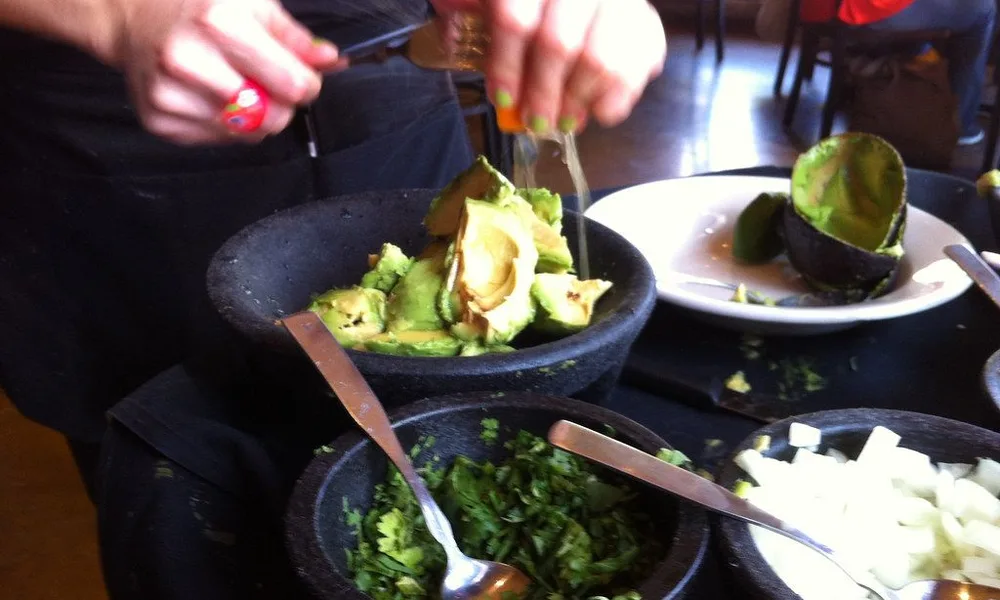
Salt needs to go in early so it dissolves into the flesh rather than sitting on top as grit. Use fine sea salt, about a quarter teaspoon per two avocados to start, and taste after mashing. Salt does not just make guacamole salty; it makes the avocado taste more like itself. Under-salted guacamole is the most common fault in homemade bowls, and the easiest to fix: add a pinch, stir, wait a minute, and taste again.
Chilli and onion are seasoning, not decoration. A finely diced jalapeño adds clean heat — leave the seeds in for more fire, take them out for less. Dice white onion small enough to disappear into a spoonful, and use only tomato flesh, seeded and diced, folded in last so the bowl stays dry.
The Classic Build, Step by Step
With the principles in place, the actual build takes about ten minutes. This is the version most restaurants serve, and it is the one to master before you start experimenting.
Ingredients for a bowl that serves four
- 3 ripe Hass avocados, plus 1 spare
- Juice of 1 lime, plus extra to taste
- Half a teaspoon of fine sea salt, plus extra to taste
- 3 tablespoons of finely diced white onion
- 1 small tomato, seeded and diced
- 1 jalapeño or serrano chilli, finely diced, seeds to taste
- 2 tablespoons of chopped fresh coriander
Method
Halve the avocados, remove the pits, and scoop the flesh into a bowl. Add the lime juice and salt first, then mash to the texture you chose — lightly with a fork for chunky, more thoroughly for smooth. Fold in the onion, tomato, chilli, and coriander, stop as soon as they are mixed through, then taste, adjust, and serve immediately, or cover and eat within the hour.
Keeping Guacamole Green
Guacamole turns brown because air reaches the flesh and an enzyme called polyphenol oxidase goes to work. The browning is harmless — the same process that browns a sliced apple — but it looks tired, and the flavour flattens. Everything that keeps guacamole green is about limiting air contact, and lime juice is only the first line of defence.
The most reliable method is also the simplest. Transfer the guacamole to a container, smooth the surface flat, and press cling film directly onto the surface so no air sits between the film and the dip. A lid alone is not enough, because the air trapped under the lid is plenty to brown the top layer. With the film pressed on, a bowl will hold its colour for several hours in the fridge.
Leaving the pit in the bowl does almost nothing — it only protects the tiny patch of flesh it touches. If guacamole has already browned, scrape off the thin layer or stir it back in.
What to Serve It With
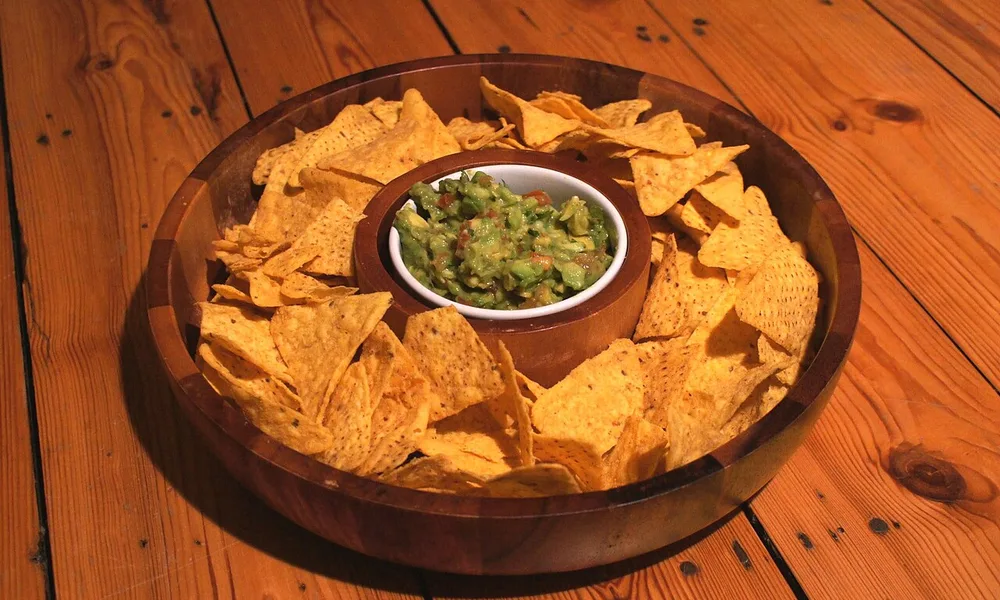
Guacamole is a team player, and the food around it matters almost as much as the bowl itself. Thick, sturdy tortilla chips are the classic partner, because a thin chip snaps under a chunky scoop. For a party, a good salsa belongs on the same table — its bright, tomatoey heat balances guacamole’s rich creaminess. A bowl of hummus rounds out the spread with a smooth, nutty dip for anyone who wants something milder.
Beyond chips, guacamole is at its best where its richness can cut through something else. Spread it thick on warm toast with a fried egg, spoon it over grilled chicken or fish tacos, or use it instead of mayonnaise in a sandwich, where it adds creaminess without the sweetness. Avoid pairing it with food that is already rich and soft — the bowl needs contrast, a crunch or a sharp flavour beside it.
For tacos or a big Mexican spread, a good avocado slicer makes quick work of halving and scooping several avocados, and a wide, shallow bowl shows off the colour better than a deep one. Serve at room temperature, not fridge-cold: ten minutes on the counter makes a noticeable difference.
Guacamole Styles Compared
There is no single correct guacamole, but the styles are different enough that it helps to know which one you are making.
| Style | Texture | Best for | Watch out for |
|---|---|---|---|
| Classic chunky | Distinct pieces, fork-mashed | Dipping with sturdy chips, tacos | Over-mashing turns it smooth by accident |
| Smooth and creamy | Near-uniform, spreadable | Toast, sandwiches, burgers | A food processor can turn it into puree |
| Restaurant tableside | Chunky, made to order | Parties, impressing guests | Needs ripe avocados on the day |
| Spicy | Either texture, extra chilli | Grilled meats, beer food | Heat builds as it sits, so go easy |
| Store-bought style | Very smooth, uniform | Convenience, packed lunches | Often bland, with preservatives |
Guacamole Checklist
- Check every avocado with your palm and the stem test before you cut it open.
- Keep one spare avocado in case a fruit is bruised or bland inside.
- Decide chunky or smooth before you pick up the fork.
- Add lime and salt before mashing, then taste and adjust in small steps.
- Fold tomato and onion in last so they stay distinct and the bowl stays dry.
- Press cling film onto the surface and serve within the hour for the best colour.
Frequently Asked Questions
How long does homemade guacamole last?
Eat it the same day. With cling film pressed onto the surface, it keeps in the fridge for one to two days, though the top will dull.
Can I freeze guacamole?
Yes. Freeze it plain — avocado, lime, and salt only — in a sealed bag with the air pressed out, and add the onion, tomato, and coriander fresh after thawing.
Why did my guacamole turn brown so fast?
Air is the cause, not the recipe. Lime juice slows browning but does not stop it, so the bowl needs a barrier: cling film pressed onto the surface.
Do I need a molcajete to make good guacamole?
No. A fork and a bowl will make excellent guacamole. A molcajete gives a lovely chunky texture, but it is a luxury, not a requirement.
What is the best avocado for guacamole?
Hass, the dark pebbly variety, is the standard: rich, nutty, and creamy when ripe. Larger smooth-skinned varieties are often watery and mild.
Is guacamole healthy?
Guacamole is made from whole, minimally processed ingredients, and avocado brings fibre, potassium, and monounsaturated fats. The dip is nutritious; what it is served with is where the meal gets heavy.
The Bottom Line
Guacamole that tastes like the restaurant comes down to four habits: buy ripe avocados and check them honestly, choose your texture before you start, season with lime and salt early and taste as you go, and keep air away from the bowl until you serve it.


