Top Washcloths for Sensitive Skin in 2026
The best washcloths for sensitive skin in 2026 are the ones you barely notice. They lift away cleanser and the day without dragging, stinging or leaving your face pink. A good washcloth feels soft when it is wet, holds enough water to do the job in one pass, and dries quickly enough that it never smells musty. The worst ones feel fine on the shelf and turn scratchy after three washes, shed lint across your face, or stay damp for hours in a warm bathroom. This guide is about adult washcloths only, for faces and bodies that react easily, and it judges them the way sensitive skin does: by softness, absorbency, drying time and how they behave after months of washing.
Key Takeaways
- Softness when wet matters more than softness on the shelf, so judge a washcloth after it has been soaked, not before.
- Bamboo and fine cotton terry are the safest starting points for sensitive skin, while muslin suits very reactive skin and hot weather.
- A medium-weight cloth around 30 by 30 centimetres suits most adults, big enough to fold into a pad and small enough to control.
- Wash new washcloths before first use, skip fabric softener, and dry them fully between uses to keep them soft and fresh.
- Replace a washcloth when it stays rough after washing, smells even when dry, or its edges start to fray and shed.
Washcloths for Sensitive Skin at a Glance
| Best for | Material | Feel | Drying time | Watch out for |
|---|---|---|---|---|
| Everyday sensitive skin | Fine cotton terry | Soft and plush | Moderate | Cheap terry turns rough |
| Very reactive skin | Bamboo viscose | Silky and smooth | Moderate | Thin bamboo feels flimsy |
| Hot weather and travel | Muslin cotton | Light and airy | Fast | Holds less water |
| Gentle daily cleansing | Microfibre, fine weave | Very soft, grippy | Fast | Can feel too slick |
| Face and body in one | Cotton waffle weave | Textured but gentle | Fast | Less plush than terry |
What Makes a Washcloth Kind to Sensitive Skin
Sensitive skin reacts to friction first and to everything else second. A washcloth that drags across the face, even lightly, can leave redness that lasts an hour. The kindest cloths glide. Their fibres are fine and smooth, the pile is even, and the edges are bound flat so no stiff seam scrapes the cheek. When you press a good washcloth against your skin it should feel like a cushion of water, not like a scrub pad.
Cotton, Bamboo, Muslin and Microfibre Compared
Material decides how a washcloth feels, how much water it holds, and how it behaves after fifty washes. No single material wins on every measure, so the right choice depends on your skin and your routine.
Cotton terry
Cotton terry is the classic washcloth, and for good reason. The looped pile holds plenty of water, feels warm and substantial, and survives hard use and frequent washing. Fine cotton terry, with short even loops, is gentle enough for most sensitive skin. The trouble starts with cheap terry, where long uneven loops catch on dry skin and the cloth turns stiff and scratchy after a few hot washes. If you buy cotton, buy the softest fine terry you can find, and wash it before first use, because new terry is at its roughest straight from the pack.
Bamboo viscose
Bamboo washcloths are the softest of the common materials. The fibres are smooth and fine, so the cloth glides over skin without dragging, and the material holds water well without feeling heavy. Bamboo often stays soft after washing, which is why it suits skin that reacts to rougher fabrics. It can cost a little more than plain cotton, and some bamboo cloths are thinner than they look, so check the weight before you settle on a pack. A bamboo blend with cotton gives you the softness of bamboo with more body and durability.
Size, Thickness and Edges
Most adult washcloths measure between 25 and 35 centimetres square, and that range exists for a reason. A cloth of about 30 by 30 centimetres folds neatly into a pad that fits the palm, covers the cheek and forehead in a few strokes, and is easy to rinse and wring out. Smaller cloths are fiddly to hold when wet and cool too quickly. Larger ones are harder to control around the eyes and nose, and they take longer to dry. If you use a washcloth for your whole body in the shower, a slightly larger cloth, around 35 centimetres, works better, because it covers more skin per stroke.
How to Wash Your Face With a Washcloth
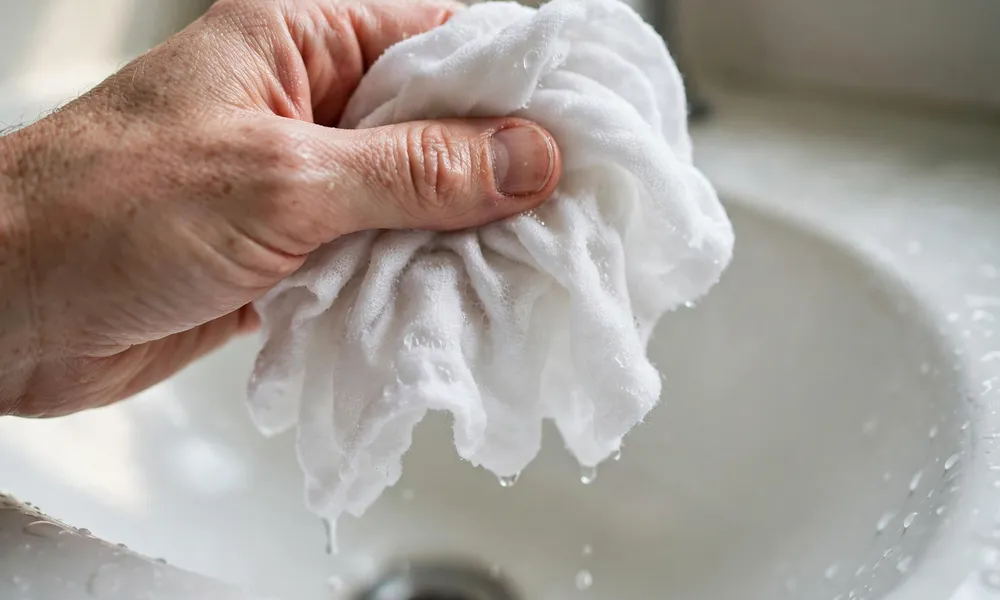
Technique matters as much as the cloth itself, because even the softest washcloth can irritate if it is used like a scrubbing brush. Start with warm water, never hot, and soak the cloth until it is fully wet and warm through. Apply your cleanser to your face with your hands first, then use the cloth to lift it away with light, slow strokes. Let the weight of the wet cloth do the work. There is no need to press hard, and pressing hard is the single most common mistake.
Work in one direction rather than scrubbing back and forth, and rinse the cloth often so you are not dragging cleanser and dirt back across your skin. Use a fresh cloth each time you wash your face, or at least a fresh one each day, because a damp cloth left in a warm bathroom breeds bacteria quickly. Pat your face dry with a clean towel afterwards rather than rubbing, and moisturise while the skin is still slightly damp. If your skin is very reactive, use the washcloth once a day, in the evening to remove the day, and rinse with water alone in the morning. A gentle body wash routine follows the same rule: light pressure, warm water, and a cloth that glides rather than drags.
The Best Washcloths by Need
If you travel often or live somewhere hot, muslin wins on practicality. It dries in an hour, packs flat, and gets softer with every wash. For a full-body wash in the shower, a waffle weave cloth is the most useful, because it covers skin quickly, rinses clean, and dries before your next shower. And if you share a bathroom, buy washcloths in different colours for each person, because sharing a damp cloth is the fastest way to spread spots and irritation. Pairing your washcloths with the right towels matters too, and our guide to the best bath towel sets covers what to look for in the towels that follow the washcloth.
What to Avoid if Your Skin Reacts Easily
Some washcloths are simply wrong for sensitive skin, however good they look. Avoid coarse terry with long stiff loops, because it acts like a mild exfoliator every time you use it, and daily exfoliation is too much for reactive skin. Avoid cloths with rough printed designs or raised patterns on the face side, because the pattern is the part that touches your skin. Avoid heavily dyed cloths in very dark colours, because excess dye can irritate and often bleeds in the first few washes. White, cream and pale colours are the safest choice, and they have the practical advantage of showing when a cloth needs washing.
Skip fabric softener entirely, because it coats the fibres in a waxy layer that reduces absorbency and can irritate skin. Skip scented laundry products on your washcloths for the same reason. And be wary of exfoliating cloths and gloves marketed for sensitive skin, because many of them are far rougher than they claim. If you want gentle exfoliation, our guide to exfoliating gloves explains which textures are genuinely mild and which ones to leave on the shelf. A plain soft washcloth, used gently, is usually all sensitive skin needs.

Laundering: Keeping Washcloths Soft and Hygienic
A washcloth lives a hard life. It is soaked, wrung, left damp, and washed again, sometimes daily. How you launder it decides whether it stays soft for a year or turns into a stiff rag in a month. Wash washcloths in warm water with a mild, fragrance-free detergent, and avoid overloading the machine, because cloths need room to move and rinse properly. Skip fabric softener and dryer sheets, and use a small amount of white vinegar in the rinse occasionally if your water is hard, because it helps dissolve detergent residue that makes terry stiff.
Checklist: Buying Washcloths for Sensitive Skin
- Feel the cloth wet, not just dry, and check that the pile is short, even and smooth.
- Choose bamboo or fine cotton terry for reactive skin, and muslin for very reactive skin or hot weather.
- Pick a medium weight around 30 by 30 centimetres, with a flat edge that will not scratch.
- Buy pale colours in a pack of at least seven so you can use a fresh cloth every day.
- Check the care label: it should survive warm washes without softener and dry fully between uses.
- Replace cloths that stay rough, smell musty after washing, or fray at the edges.
Frequently Asked Questions
Are washcloths good for sensitive skin?
Yes, if the cloth is soft and used gently. A fine cotton, bamboo or muslin washcloth removes cleanser and sunscreen more thoroughly than hands alone, without the friction of a rough cloth. The key is light pressure, warm water, and a fresh cloth. If your skin is very reactive, use the washcloth once a day and rinse with water alone at other times.
What is the softest washcloth material?
Bamboo viscose is usually the softest, with smooth fine fibres that glide over skin. Fine cotton terry is close behind and feels warmer and more substantial. Muslin is the softest after several washes, though it starts out lighter and less plush. The softest material on the shelf is not always the softest when wet, so test a cloth after soaking it.
How often should I wash my washcloth?
A face washcloth should be washed after every use, because it collects cleanser, oil and dead skin, and a damp cloth breeds bacteria quickly in a warm bathroom. A body washcloth can be used once or twice before washing. Hang every cloth unfolded where air can reach it, and never reuse a cloth that smells musty.
Why has my washcloth gone stiff and scratchy?
Stiffness usually comes from detergent residue, fabric softener, or hard water minerals building up in the fibres. Wash the cloths in warm water with a mild detergent, skip softener entirely, and add a little white vinegar to the rinse occasionally. High dryer heat also damages fibres, so dry on low heat or hang them to dry.
Can I use the same washcloth for my face and body?
You can, but it is better not to. Face skin is thinner and more reactive than body skin, and a cloth used on the body picks up more oil and bacteria. Keep separate cloths for face and body, ideally in different colours, and wash face cloths after every use. It costs little and removes a common cause of breakouts.
When should I replace a washcloth?
Replace a washcloth when it stays rough after washing, smells musty even when dry, sheds lint, or frays at the edges. For daily use that is usually after six to twelve months. A cloth that has gone thin in the middle or lost its absorbency is no longer doing its job, however clean it looks.
The Bottom Line
The best washcloth for sensitive skin is a soft, medium-weight cloth in bamboo or fine cotton terry, around 30 centimetres square, with a flat edge and a pale colour. Wash it before first use, skip softener, use it gently with warm water, and replace it when it turns rough or musty. Get those basics right and the humblest item in the bathroom becomes the kindest one too.