Best Baby-Proofing Kits 2026: The Whole-Home Safety Box That Actually Works
The best baby-proofing kits of 2026 make a whole house safer in a single afternoon, without a dozen separate shopping trips. A good kit bundles the essentials: soft corner guards, outlet covers, kitchen cupboard locks, anti-tip straps, and covers for door knobs and toilet lids. The worst kits look generous on the box, then fail within days. This guide explains what belongs in a kit, how to judge one, and the order to fit everything so the worst hazards are covered first.
A kit is a head start, not a magic box. Babies explore long before they can walk, pulling themselves up on anything within reach. A kit bought early beats one bought in a panic after a near miss. The best time to buy is before the baby starts crawling, usually around six months, and the second best time is today.
Key Takeaways
- A baby-proofing kit should cover four hazards first: sharp corners, open outlets, reachable cupboards, and furniture that can tip over.
- Adhesive fittings suit renters and smooth surfaces, but hardware-mounted anchors are the only safe choice for tall furniture.
- Count your outlets, cupboards and corners before you buy, because most kits run short on the pieces you need most.
- Outlet covers must fit your socket type and stay put when a plug is pulled out, or a curious baby will remove them.
- Fit the kit room by room, starting with the kitchen, and re-check every fitting once a month.
What a Baby-Proofing Kit Actually Is
A baby-proofing kit is a boxed set of safety fittings designed to be installed together, in one home, in one go. The typical kit holds ten to forty pieces, and the better ones organise them by room, so you can work through the kitchen, then the living room, then the nursery. Quality varies a lot: some kits use thick guards, strong adhesive, and locks an adult can open one-handed while holding a baby, while cheap bundles of thin foam fail within days. Opening the box also forces a useful walk-through at floor level, where you spot hazards no kit covers, like a trailing lamp cord.
What Belongs Inside a Good Kit
Judge a kit by whether it covers each hazard properly, not by the count on the box.
Corner and Edge Guards
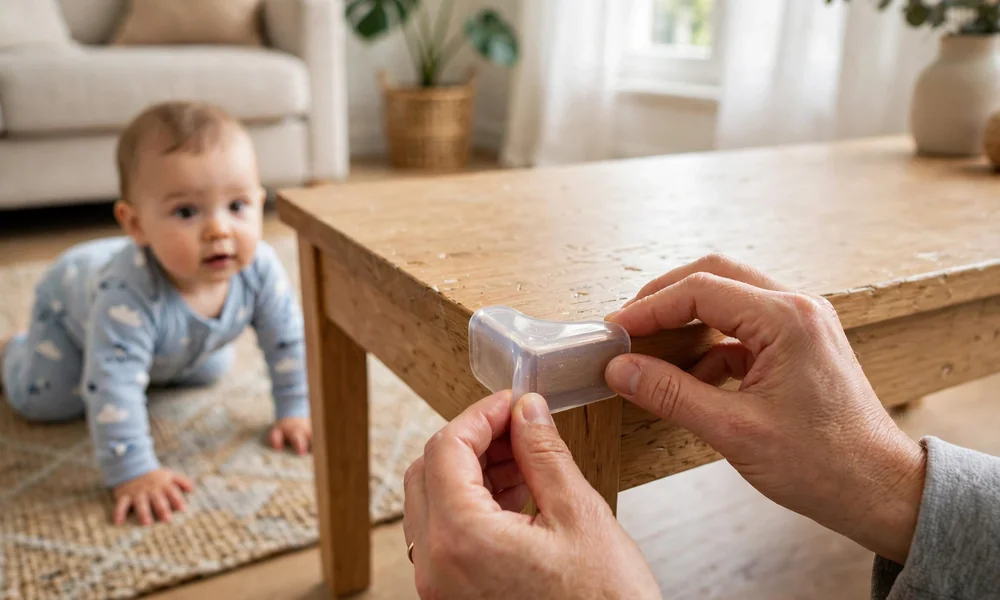
Corner guards are the most-used piece in any kit, because every home has sharp table corners at exactly the height of a toddler’s forehead. A good guard is thick, soft foam or silicone that wraps the corner on both sides. Thin guards look neat but compress to almost nothing on impact. Count your corners first: a coffee table has four, a television stand four more, and most kits include only four to eight guards.
Outlet Covers and Socket Plugs
Outlets fascinate babies, because they are small, round, and exactly at crawling height. A kit should include sliding covers for sockets you use daily and plug-in covers for ones you do not. A sliding cover moves aside when you plug something in and snaps back when you pull the plug out, so the socket is never left open. Look for covers that need an adult grip to remove, and check they fit your socket type before ordering.
Cabinet and Drawer Locks
The kitchen is the most dangerous room in the house, and cabinet locks keep a baby out of it. A good kit includes magnetic locks that hide inside the cupboard and open only with a magnetic key, and adhesive latches that fit on the outside of drawers. Magnetic locks are hardest for a toddler to defeat, because there is nothing visible to pull at, but they need careful fitting. Adhesive latches are easier to fit and remove, so they suit renters better. Lock cleaning products first, then knives, then medicines.
Furniture Anchors and Anti-Tip Straps
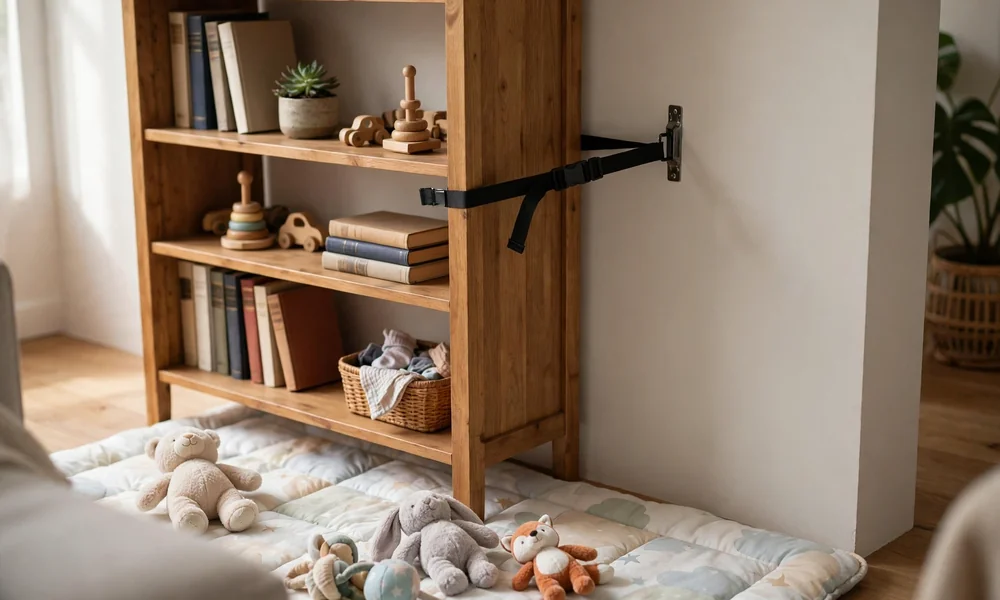
Furniture anchors are the most important piece in the kit and the one most often skipped, because they take the most effort to fit. A tall bookshelf, a chest of drawers, or a television can tip forward when a baby pulls on it, and that is one of the most serious injuries a home can cause. An anchor is a strap screwed into a stud or a solid wall plug, never stuck on with adhesive. Adhesive-only anchors are not anchors at all. If you rent, ask the landlord before drilling; most agree once they understand it is a child-safety fitting.
Door Knob Covers and Toilet Locks
Door knob covers are plastic shells that fit over a round knob and spin freely, so a small hand cannot grip and turn. They stop a toddler wandering into a bathroom or out of the front door. A toilet lock holds the lid down until an adult releases it. Toilets are a drowning risk for a toddler, who can topple head-first into the bowl, so a lock belongs on every toilet a baby can reach.
Kit or Separate Pieces: Which Is Better?
Buying a kit is cheaper and faster than buying pieces separately, but only when the kit matches your home. The table below compares the two approaches.
| Factor | All-in-One Kit | Buying Pieces Separately |
|---|---|---|
| Cost | Lower overall, one price for the whole set | Higher, but you pay only for what you need |
| Fit for your home | Good for standard homes, may miss unusual hazards | Exact fit, every piece chosen for a real hazard |
| Speed | One order, one afternoon to fit everything | Several orders, fitted over days or weeks |
| Quality | Mixed, strong pieces and weak ones in the same box | Consistently high, if you research each piece |
| Best for | First-time parents starting from scratch | Second child, unusual home, or topping up a kit |
The sensible middle ground is a good kit topped up with extra corner guards and outlet covers. Either way, a fitting still in the box protects nobody.
How to Choose the Right Kit for Your Home
Start by walking your home at floor level, the way a crawling baby sees it. The hazards you spot are the ones your kit must cover.
Match the Kit to the Size of Your Home
Small kits suit flats, where the kitchen and living room share one space. Large kits suit bigger homes, where each room has its own hazards. List the corners, outlets, cupboards and tall furniture in each room, then compare that list with the kit’s contents. A kit covering half your hazards is no bargain.
Check the Adhesive Before You Trust It
Most kit pieces are held on with adhesive, and its quality decides whether the kit works or falls off. Good adhesive grips painted wood and laminate and peels off cleanly later; bad adhesive peels away within days, especially on textured or dusty surfaces. Clean each surface, let it dry, press each piece firmly for thirty seconds, and give it a day to cure before testing it like a determined toddler would.
Think About Renting and Removal
If you rent, choose adhesive fittings rather than screws, and keep the packaging to show the landlord what you fitted. Most landlords accept safety fittings and will agree to screw-in anchors once they understand the risk, but get it in writing before you drill. Later, most adhesive pieces peel off with warm air from a hairdryer and a wipe of soapy water.
Do Not Forget the Nursery
The nursery feels safe, but it has its own hazards: a cot with a drop side, a changing table near a window, and a monitor cord within reach. Fit outlet covers and corner guards there too, keep cords out of reach, and anchor tall furniture. Our guide to the worst crib mattresses of 2026 shows what to avoid when choosing where your baby sleeps. Our guide to the best baby monitors of 2026 covers models that watch the room without trailing wires.

Installing Your Kit in the Right Order
Fit the most dangerous hazards first. Start with the kitchen: lock the cupboard under the sink, the knife drawer, and the medicine cabinet, then cover the outlets and fit corner guards. Next, anchor the furniture: fix every tall piece in the living room and nursery to the wall while you have the drill out, because it prevents the worst injuries. Then move to the stairs and doors. A gate at the top of the stairs is the single most important safety buy in most homes, and it is not usually part of a kit. Our guide to the best baby gates of 2026 explains which type belongs where, and why the top of the stairs always needs a gate screwed into the wall. Fit door knob covers and toilet locks, then walk the house once more at floor level and pull at every fitting.
Mistakes That Undo a Good Kit
The most common mistake is fitting the kit and forgetting it. Adhesive weakens, locks wear out, and a baby who could not reach a fitting at nine months can defeat it at eighteen months, so check every fitting once a month and replace anything loose. The second mistake is trusting one fitting to do a job it cannot do: a corner guard softens a bump but does not make a glass table safe. Safety is layers, and a kit is one layer; supervision is the other. The third mistake is buying on piece count alone: forty flimsy pieces are a worse buy than twenty solid ones.
Checklist: Fitting Your Baby-Proofing Kit
- Walk every room at floor level and list every sharp corner, open outlet, low cupboard and tall furniture piece.
- Lock the kitchen first: cleaning products, knives, and medicines, then cover outlets and fit corner guards.
- Anchor tall furniture with screw-in straps, and fit a hardware-mounted gate at the top of the stairs.
- Cover every outlet, including ones behind furniture, and test each cover by pulling at it like a toddler.
- Fit door knob covers and toilet locks, and keep all cords out of reach.
- Re-check every fitting monthly, replace anything loose, and move spares to new hazards as your baby grows.
Frequently Asked Questions
When should I buy a baby-proofing kit?
Before your baby starts crawling, usually around six months, because crawling arrives suddenly. If your baby is already crawling, buy the kit today and fit the kitchen first.
How many pieces do I need?
A typical two-bedroom home needs eight to twelve corner guards, ten to fifteen outlet covers, six to ten cabinet locks, and two to four anchors. Count your own hazards first, and expect to top up with extra corner guards.
Are adhesive fittings safe enough?
Adhesive fittings are safe for corner guards, outlet covers and cabinet locks on clean, smooth surfaces. They are not safe for furniture anchors, which must be screwed into the wall.
Will a kit damage my walls and furniture?
Good adhesive peels off cleanly with a little warm air and leaves paint and wood undamaged. Cheap adhesive can pull paint off, so test one piece in a hidden spot first.
Can I use a kit in a rented home?
Yes, and most landlords welcome it. Choose adhesive fittings, tell the landlord what you plan to fit, and get written agreement before drilling anchors. Keep the packaging for a clean removal when you move out.
When can I remove the kit?
Most fittings can come off gradually between two and three, starting with door knob covers and corner guards. Keep the anchors and the stair gate longest, because climbing and tipping risks last well past that age.
The Bottom Line
The best baby-proofing kit of 2026 matches your home, covers the four big hazards, and gets fitted the weekend it arrives. Count your corners, outlets, cupboards and tall furniture before you buy, choose strong adhesive and screw-in anchors where they matter, and fit the kitchen first. A kit is no substitute for watching your baby, but it is the cheapest way to make the house safer in a single afternoon.