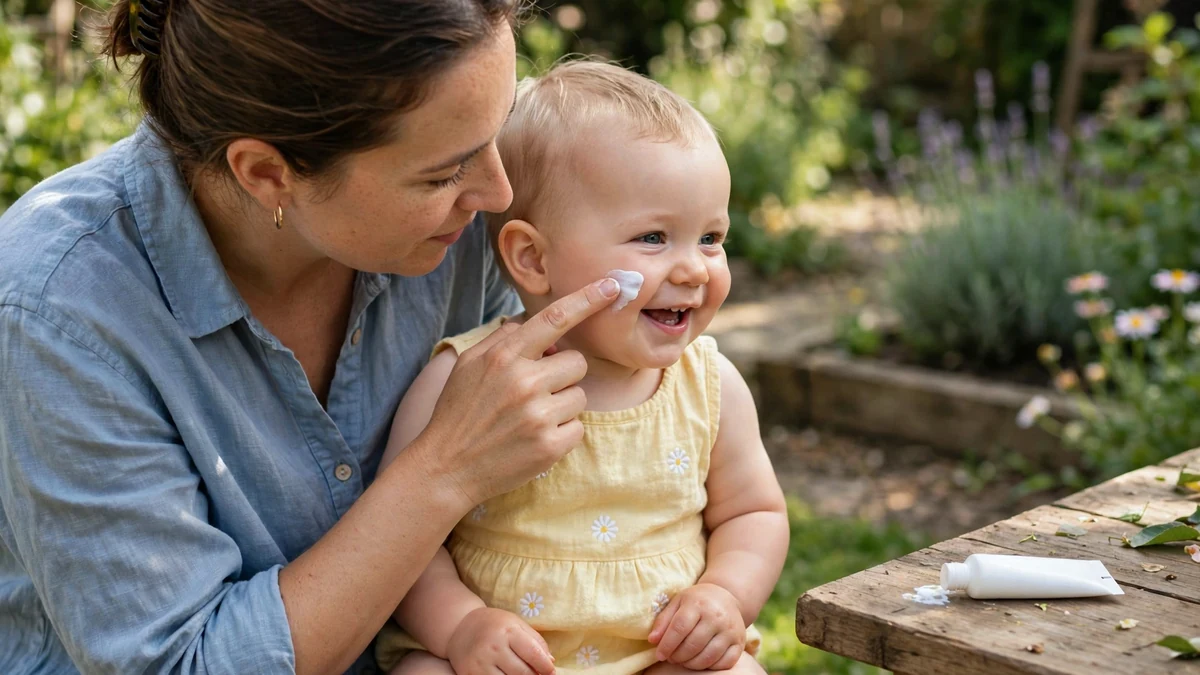
A baby’s skin is thinner, more delicate and far quicker to burn than an adult’s, which is why choosing a sunscreen for a baby is not the same as picking up whatever is on offer at the beach shop. The best baby sunscreens of 2026 are gentle mineral formulas that sit on the skin, rub in without a fight, and do their job without fragrance, sting or fuss. The worst ones are hard to spread, leave a baby sticky and upset, or contain ingredients that parents would rather keep away from very young skin. This guide explains what to look for, how to apply it properly, and how to build a simple sun routine that works on real family days out.
What Makes a Baby Sunscreen Different
A baby sunscreen has a narrower job than an adult one. It needs to protect skin that is still developing, it needs to be kind to skin that may already be dry or sensitive, and it needs to be easy enough to apply to a wriggling baby who would much rather be doing something else. That combination rules out a surprising number of products that look fine on the shelf. A good baby sunscreen is built around those demands from the start, not adapted from an adult formula with a cartoon on the tube.
The first difference is the type of protection. Mineral sunscreens, based on zinc oxide or titanium dioxide, work by sitting on top of the skin and blocking the sun. They start working as soon as they are applied, and they are the type most often recommended for babies and young children. Chemical sunscreens, by contrast, soak into the skin and absorb the sun’s rays, and they usually need around twenty minutes before they become effective. Many parents of babies prefer mineral formulas, and most products made specifically for babies in 2026 are mineral-based for exactly that reason.
The second difference is what is left out. A baby sunscreen should be fragrance-free, because added fragrance is one of the most common causes of irritation on young skin. It should also be free of alcohol that dries the skin, and it should avoid the chemical filters that some parents prefer to steer clear of for babies. A short, readable ingredient list is a good sign. If you need a chemistry degree to understand the label, the product is probably not designed with a baby in mind.
How to Choose a Baby Sunscreen
Start with the sun protection factor, usually written as SPF. For a baby, SPF 50 is the standard choice, and it is what most baby-specific products offer. A higher number does not mean the baby can stay out all day without reapplying, and no sunscreen blocks every ray. What SPF 50 gives you is a strong margin of protection when the sunscreen is applied properly and topped up through the day. Anything below SPF 30 is too little for a baby in strong sun, and there is no good reason to choose it when SPF 50 baby formulas are widely available.
Next, check that the formula is mineral-based and fragrance-free. Look for zinc oxide or titanium dioxide at the top of the ingredient list, and for the words fragrance-free rather than unscented, which can still mean a masking fragrance has been added. If your baby has eczema or very dry skin, look for a formula that also moisturises, with ingredients such as shea butter or glycerin. Our guide to the best baby lotions of 2026 covers everyday moisturisers in detail, and the same gentle, fragrance-free thinking applies when you choose a sunscreen.
Finally, check the age guidance on the packaging and follow it. Most sunscreen makers advise keeping babies under six months out of direct sunlight altogether and using shade and clothing as the main protection, with sunscreen only on small areas that cannot be covered if your doctor advises it. For babies over six months, sunscreen becomes part of the daily routine on sunny days. The age guidance is there for a reason, and if your baby has ongoing skin concerns, or you are unsure what is right for their age, a paediatrician can give advice matched to your child rather than to a general label.
Lotion or Stick: Which Format Suits a Baby
A lotion is the workhorse. It spreads over large areas quickly, it is easy to see where it has been applied and where it has been missed, and it is the format most baby sunscreens come in. The drawback is that it takes two hands and a still baby, which is not always available. A good trick is to apply it before the baby is dressed for the day, when there is less to work around and the baby is usually calmer.
A stick is the specialist. It is best for the face, the ears, the back of the neck and the tops of the feet, the small places that burn first and are hardest to cover with a lotion. A stick also travels well: it does not leak, it does not spill in a hot bag, and it can be used one-handed while holding a baby with the other arm. Many families keep a stick in the changing bag for top-ups and a tube at home for the full application.
How to Apply It So It Actually Works
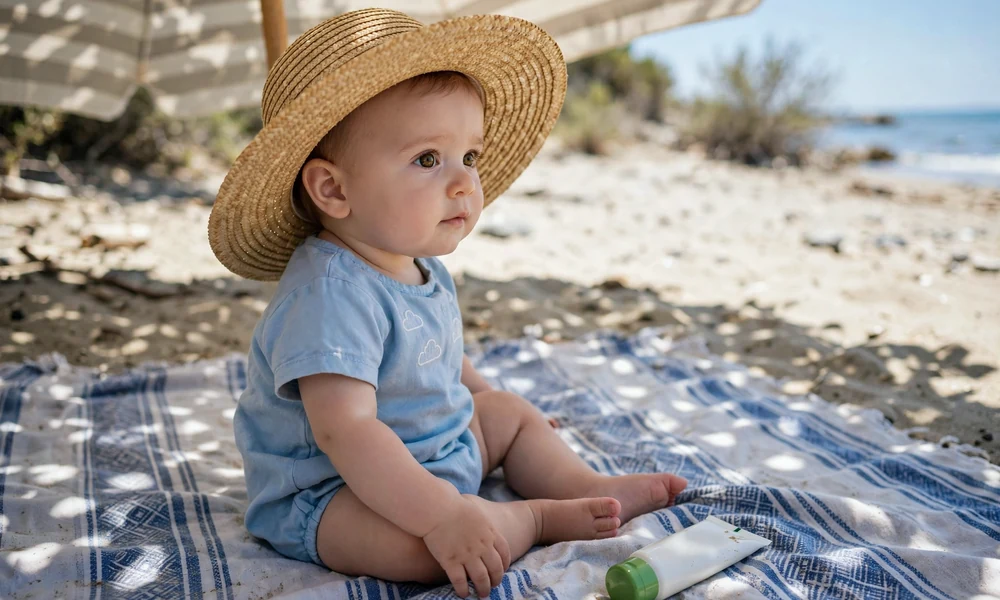
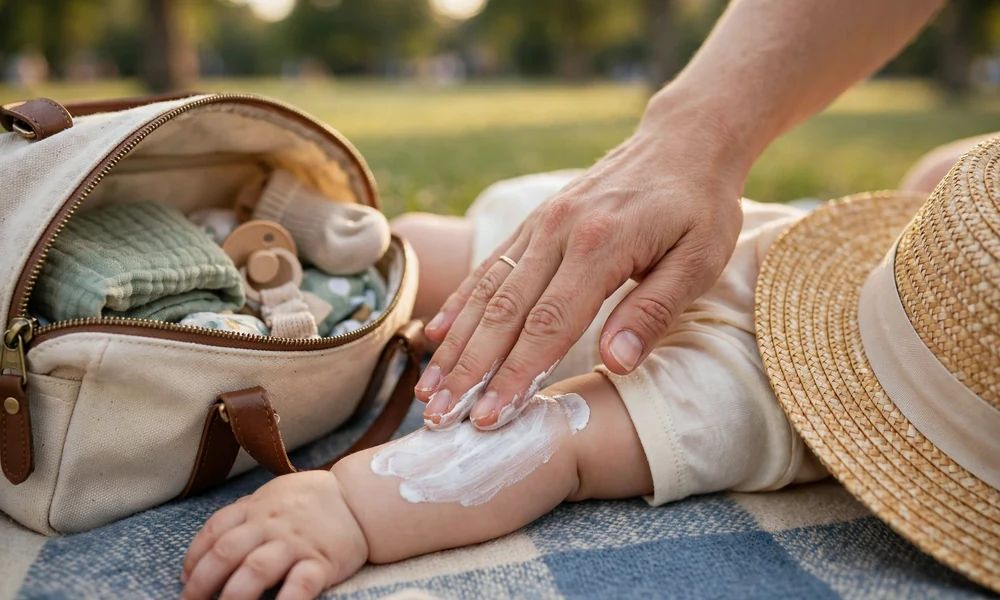
Apply sunscreen before you go out, not when you arrive. A mineral formula works straight away, but applying it at home means you are not trying to hold a baby, a bag and a tube of lotion in a hot car park. Give it a few minutes to settle on the skin, and then dress the baby in light clothing over the top. Apply it to clean, dry skin, and use more than you think you need. Most people, adults included, use about half as much sunscreen as they should, and a thin, patchy layer protects far less than the label suggests.
Reapply through the day. The simple rule is every two hours, and sooner after swimming, sweating or towelling dry. A baby who has been in a paddling pool needs a fresh layer even if the tube says water-resistant, because towelling removes sunscreen along with the water. Set a reminder on your phone if it helps. Reapplying is the part of the routine that most often gets forgotten, and it is the part that matters most once the morning application has worn thin.
Sun Habits That Matter More Than Any Tube
Sunscreen is one part of sun protection, not the whole of it. The strongest protection is shade, especially in the middle of the day when the sun is at its highest. Plan outdoor time for the morning or the late afternoon where you can, and use a parasol, a sunshade on the pushchair or the shade of a tree when you are out at midday. A baby who spends the hottest hours in the shade will need far less sunscreen, and will be cooler and happier as well.
Clothing is the second layer. A lightweight long-sleeved top, loose trousers and a wide-brimmed hat protect far more reliably than any lotion, because they do not rub off, wash off or need reapplying. Swimwear with built-in sun protection is worth having for beach and pool days, and it cuts down the amount of skin that needs sunscreen at all. Our guide to the best sun hats of 2026 looks at hats that actually stay on, which is a bigger challenge than it sounds with a baby who has just learned to pull things off.
What to Avoid When Buying Baby Sunscreen
Avoid sunscreens with added fragrance. Fragrance is the most common unnecessary extra in baby products, and it is also one of the most likely to irritate young skin. Avoid products that describe themselves as tanning oils or low-SPF sun oils: they are not made for babies, and they do not offer the protection a baby needs. Avoid anything that has been open since last summer and smells different or has separated in the tube, because sunscreen does go off, and an old tube may not protect as the label promises.
Sensitive Skin and Eczema
Many babies have sensitive skin, and some have eczema, which makes choosing a sunscreen feel harder than it should. A mineral, fragrance-free formula is usually the safest starting point, because it contains fewer of the ingredients that tend to irritate. Look for products described as suitable for sensitive skin, and check that the formula is also free of common irritants such as alcohol and added colour. A simple formula with a short ingredient list is easier to trust than a long one full of extras.
If your baby has ongoing skin concerns, such as eczema that flares often, skin that reacts to many products, or a rash that keeps coming back, ask a paediatrician before settling on a sunscreen. They can suggest what to look for and what to avoid for your child’s particular skin, and they can tell you whether a sunscreen or a different approach altogether is the right choice. General guidance in a buying guide is useful, but it is no substitute for advice about your own child.
Packing for a Sunny Day Out
Keep the sunscreen in the shade rather than in direct sun or in a hot car, because heat can change the texture and make it harder to spread. Check the tube before you leave: is there enough left, is it still in date, and does it still smell and look as it should? A tube that has spent a summer rolling around in a car boot is not a tube to trust. When you get home, wash the sunscreen off gently with warm water and a mild cleanser. Our guide to the best baby shampoos of 2026 covers gentle washing products, and the same mild, fragrance-free approach suits the end of a sunny day as much as the start of it.
Frequently Asked Questions
Can I use sunscreen on a baby under six months old? The usual guidance is to keep babies under six months out of direct sunlight and to rely on shade and clothing, using sunscreen only on small areas that cannot be covered if a doctor advises it. If you are unsure, ask your paediatrician rather than guessing, because the right answer depends on the baby and the situation.
How often should I reapply sunscreen on my baby? Every two hours as a rule, and sooner after swimming, sweating or towelling dry. Reapplying is the part of the routine that makes the biggest difference, and it is worth setting a reminder so it does not slip your mind during a busy day out.
The best baby sunscreen is the gentle mineral formula that you will actually use, applied generously, topped up through the day, and combined with shade, a hat and light clothing. Choose a fragrance-free SPF 50 lotion, keep a stick handy for small areas, follow the age guidance on the label, and ask a paediatrician if your baby’s skin needs special care. Get those simple things right, and sunny days stay what they should be: easy, relaxed and fun for the whole family.


