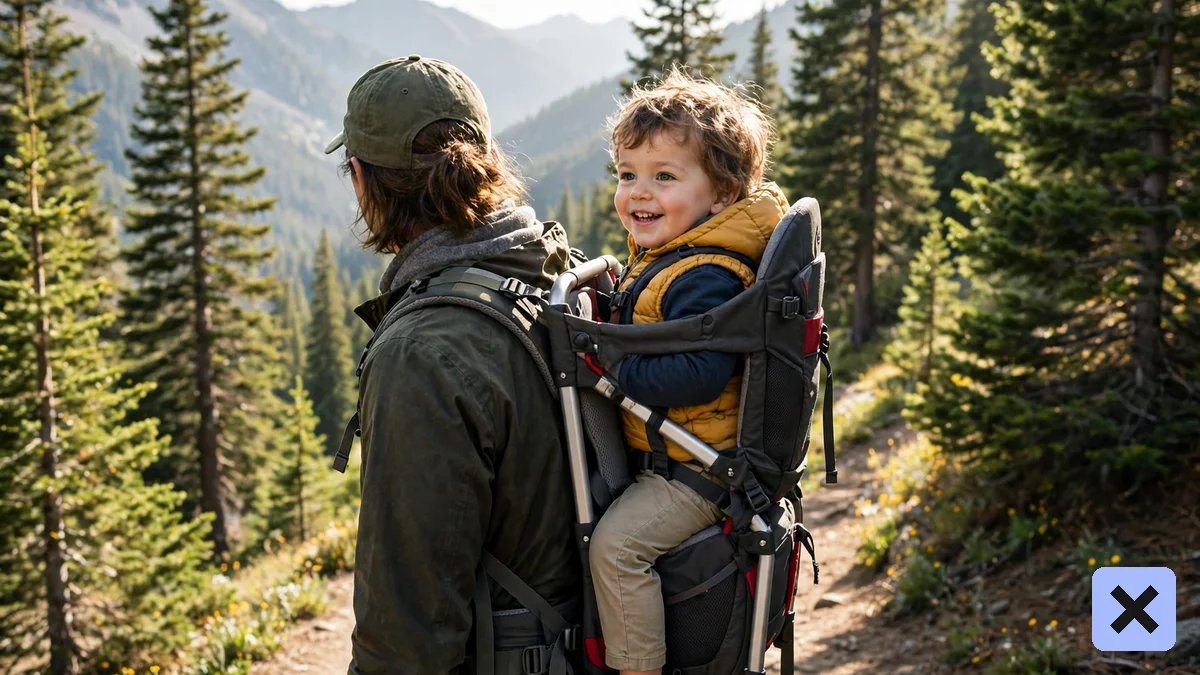
The best backpack baby carriers in 2026 let parents keep hiking, travelling and exploring long after a baby outgrows a front sling. Instead of cutting walks short or leaving the trail behind, you carry your little one high on your back, where they can see the world over your shoulder while your hands stay free and the weight sits where it belongs, on your hips.
A good carrier is not the lightest or the cheapest one on the shelf. It is the one that fits your body, holds your child safely and comfortably, and still feels good after two hours on a steep path. The best backpack baby carriers in this guide were chosen for exactly that balance,
We compared framed carriers, soft-structured carriers and lightweight day carriers across comfort, safety, weight, sun protection, storage and value. Every carrier below suits babies who can sit up on their own, roughly from six months to around four years old,
Key Takeaways
- Choose a framed carrier for long hikes and a soft-structured carrier for short walks, travel and everyday use.
- Your child should be able to sit up unaided before using a backpack carrier, usually from around six months old.
- Fit matters more than brand: the hip belt should carry most of the weight, not your shoulders.
- A built-in sun shade, a five-point harness and a stable kickstand are worth paying extra for.
- Check the maximum child weight, usually 18 to 22 kilograms, and stop using the carrier once your child outgrows it.
How We Chose the Best Backpack Baby Carriers of 2026
We started with the carriers families actually buy and recommend in 2026, then tested them loaded on forest trails, coastal paths, city parks and steep hill climbs. Each carrier was judged on comfort for the parent, comfort and safety for the child, ease of loading, weight, storage, sun protection and value for money.
Comfort came first. A carrier that digs into your shoulders after twenty minutes is useless on a real hike, however clever its pockets are. We looked for wide padded hip belts, adjustable torso lengths, ventilated back panels and load-lifter straps that pull the weight close to your body. The best hiking backpacks taught us the same lesson years ago: a pack that fits properly feels half its weight, and a pack that does not fit feels twice it.

Best Backpack Baby Carriers 2026 at a Glance
| Carrier | Best For | Max Child Weight | Carrier Weight |
|---|---|---|---|
| Osprey Poco Plus | Best overall | 22 kg | 3.5 kg |
| Deuter Kid Comfort Pro | Best for long hikes | 22 kg | 3.4 kg |
| Thule Sapling | Best premium comfort | 22 kg | 3.2 kg |
| Kelty Journey PerfectFIT | Best for growing families | 22 kg | 3.6 kg |
| ClevrPlus Urban Explorer | Best budget framed carrier | 18 kg | 3.1 kg |
| LittleLife Ranger S2 | Best lightweight day carrier | 20 kg | 2.3 kg |
The 6 Best Backpack Baby Carriers of 2026
1. Osprey Poco Plus: Best Overall Backpack Baby Carrier
The Osprey Poco Plus remains the benchmark every other framed carrier is measured against. Its adjustable torso, superbly padded hip belt and ventilated mesh back panel spread the load so evenly that a wriggling toddler feels lighter than the numbers suggest, and the airflow keeps your back far drier on hot climbs. The built-in sun shade pops out in seconds, the rain cover is included, and the storage is generous enough for nappies, snacks, a spare layer and a water bottle without a second bag.
2. Deuter Kid Comfort Pro: Best Backpack Baby Carrier for Long Hikes
The Deuter Kid Comfort Pro is the carrier serious walkers reach for when the day is long and the path is steep. Its Vari Slide back system adjusts to different torso lengths in moments, which matters when two parents of different heights share one carrier, and the Aircomfort back panel moves air across your back on warm ascents. The seat is deep and well padded, with an adjustable height so your child sits comfortably as they grow.
3. Thule Sapling: Best Premium Backpack Baby Carrier
The Thule Sapling feels like the most thoughtfully designed carrier in this guide. Everything about it is smooth and precise, from the ErgoRide child seat with its adjustable height to the fully ventilated back panel and the hip belt that moulds to your waist. Loading is genuinely easy: the kickstand is stable on uneven ground, the side entry is wide, and the harness adjusts with a single pull. Parents who walk in all weathers will love the removable sun shade, which offers excellent coverage without flapping in the wind, and the included rain cover.it costs more than most rivals, but the comfort and build quality justify the price for families who hike every week.
4. Kelty Journey PerfectFIT: Best Backpack Baby Carrier for Growing Families
The Kelty Journey PerfectFIT earns its name with a suspension system that adjusts to fit almost any adult, plus a child seat that rises as your little one grows. That adjustability makes it the best choice when two parents share the carrying, or when the same carrier needs to last from a six-month-old baby to a three-year-old toddler. The five-point harness, padded leg openings and chin pad keep small passengers secure and comfortable. The sun shade is big and easy to deploy, and the kickstand is wide and stable.
5. ClevrPlus Urban Explorer: Best Budget Framed Backpack Baby Carrier
The ClevrPlus Urban Explorer proves you do not need to spend a fortune to carry your baby comfortably on the trail. For roughly half the price of the premium carriers, you get a sturdy aluminium frame, a padded hip belt, a five-point harness, a sun shade and a kickstand that actually works. The child seat is well padded, the side pockets hold bottles and snacks, and the whole carrier folds down for storage. But for park walks, gentle trails, festivals and family holidays, it does the job brilliantly.
6. LittleLife Ranger S2: Best Lightweight Backpack Baby Carrier
The LittleLife Ranger S2 is the lightest framed carrier in this guide, and the difference is obvious the moment you pick it up. At just over two kilograms it feels more like a day pack than a child carrier, which makes it perfect for short walks, travel days and parents who want something easy to throw in the car. The seat is comfortable, the harness is secure, and the sun shade is included. But for children under about fifteen kilograms, and for parents who value lightness above all else, the Ranger S2 is hard to beat.
Framed vs Soft-Structured Baby Carriers: Which Is Right for You?
Framed backpack carriers are the hiking specialists. A rigid aluminium frame holds your child high, keeps their weight balanced, and lets the carrier stand upright on its own for easy loading. The trade-off is weight and bulk: a framed carrier weighs three kilograms or more before your child climbs in, and it takes up real space in the car. Soft-structured carriers are the everyday all-rounders. They strap your child to your chest or back with padded straps and no rigid frame, fold into a small bundle, and work brilliantly for shopping, travel, airports and short walks.
Most active families end up owning one of each. Use the soft carrier for daily life and quick trips, and the framed carrier for proper walks and hikes. If you can only buy one, choose a framed carrier when your weekends are outdoors and a soft carrier when your life is mostly urban. Once your child is old enough to walk part of the way, pair the carrier with the best travel backpacks for toddlers so they can carry their own snacks and toys on the stretches they walk themselves.

What to Look For Before You Buy
Fit and Adjustability
Fit is the single most important factor. Look for an adjustable torso length, a wide padded hip belt that sits on your hip bones, and load-lifter straps that pull the top of the carrier towards you.
Weight Limit and Child Age
Most framed carriers suit children from six months, once they can sit up unaided, up to a maximum of 18 to 22 kilograms, roughly age three to four. Check the limit before you buy, and remember it includes your child plus anything in the pockets.
Sun Shade and Weather Protection
A good sun shade is not a luxury. Babies burn quickly, and a carrier holds them high in direct sun for hours. Look for a shade that deploys in seconds, covers the head and shoulders, and stays put in wind.
How to Fit a Backpack Baby Carrier Properly
Start with the carrier on the ground, kickstand down, and your child already strapped into the seat. Loosen all the straps, then lift the carrier by the shoulder straps and settle the hip belt on top of your hip bones, not on your waist. Tighten the hip belt first, because it should carry most of the weight, then pull the shoulder straps snug, then clip the chest strap at armpit height. Finally, tighten the load-lifter straps so the top of the carrier pulls gently towards your head, and check that your child sits upright with their chin clear of their chest. Good footwear matters just as much as a good fit, so wear proper walking shoes and consider the best hiking boots for toddlers for the stretches when your little one walks beside you.
Packing Checklist for Hiking With a Baby
- Check the harness, buckles and kickstand before every walk, and tighten any loose straps.
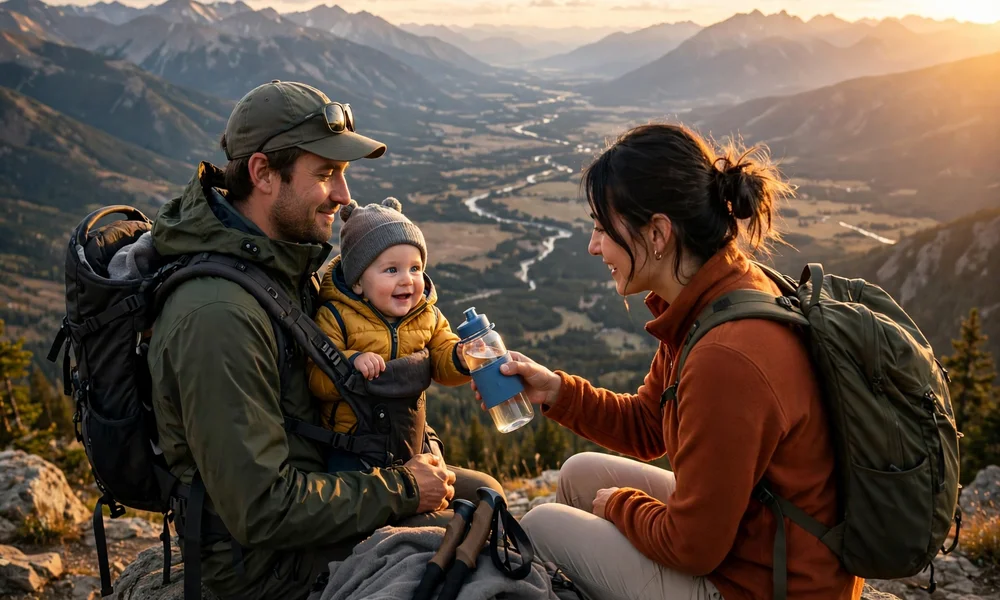
- Pack more water than you think you need, for you and for your child, plus snacks in easy reach.
- Dress your child in layers with a sun hat, and apply sun cream before you set out.
- Carry nappies, wipes and a spare outfit in a waterproof bag inside the carrier.
- Plan shorter walks than you would alone, with a clear turn-back point and regular breaks.
- Take a phone, a small first aid kit and a light rain cover, even when the forecast looks kind.
Frequently Asked Questions
What age can a baby use a backpack baby carrier?
Most framed carriers suit babies from around six months old, once they can sit up unaided and hold their head steady.
How heavy is a backpack baby carrier?
A framed carrier weighs between 2.3 and 3.6 kilograms empty, and a soft-structured carrier weighs under one kilogram.
Are backpack baby carriers safe for hiking?
Yes, when used correctly. Always use the five-point harness, keep your child upright with their chin clear, and stick to paths you can walk steadily on.
Can both parents use the same carrier?
Yes, if the carrier has an adjustable torso length and an easily adjusted hip belt.
Do I need a sun shade on a baby carrier?
Yes. A built-in sun shade protects your child’s head, face and shoulders from direct sun for hours at a time, and it also shelters them from light rain and wind.
How long can a baby stay in a backpack carrier?
Most experts suggest a maximum of around two hours at a time, with a break every hour for younger babies.
The Bottom Line
The best backpack baby carrier is the one that fits you, keeps your child safe and comfortable, and still feels good at the end of a long walk. For most families that means the Osprey Poco Plus. Buy the carrier that matches the walks you actually do, fit it properly, pack well, and the trail stays open to your whole family.


