
Sewing baskets that keep supplies sorted in 2026 are the quiet fix for the most common sewing-room problem: everything you need is somewhere in the house, just never in the same place at the same time. The thread is in a drawer, the scissors are in the kitchen, the buttons are in a jar on a shelf, and by the time you have gathered it all, the ten minutes you had for mending are gone. A good sewing basket ends that hunt. It gives every spool, needle, button and scrap of fabric a fixed home, and it travels to wherever you sit down to sew.
The best sewing baskets of 2026 do more than hold things. They sort them. Compartments keep thread upright and untangled, a lift-out tray keeps the tools you reach for first on top, and a lid that closes properly keeps dust and damp out. A basket that only stores is a box with a handle. A basket that sorts is a sewing room you can carry.
Key Takeaways
- A sewing basket should sort, not just store: divided compartments, a lift-out tray and a closing lid are what separate a useful basket from a pretty one.
- Match the basket to the size of your stash. A basket that is too small forces overflow into drawers, and a basket that is too big becomes a junk box with a handle.
- Woven baskets breathe and look at home in a living room, while hard-sided baskets protect delicate supplies and stack better on a shelf.
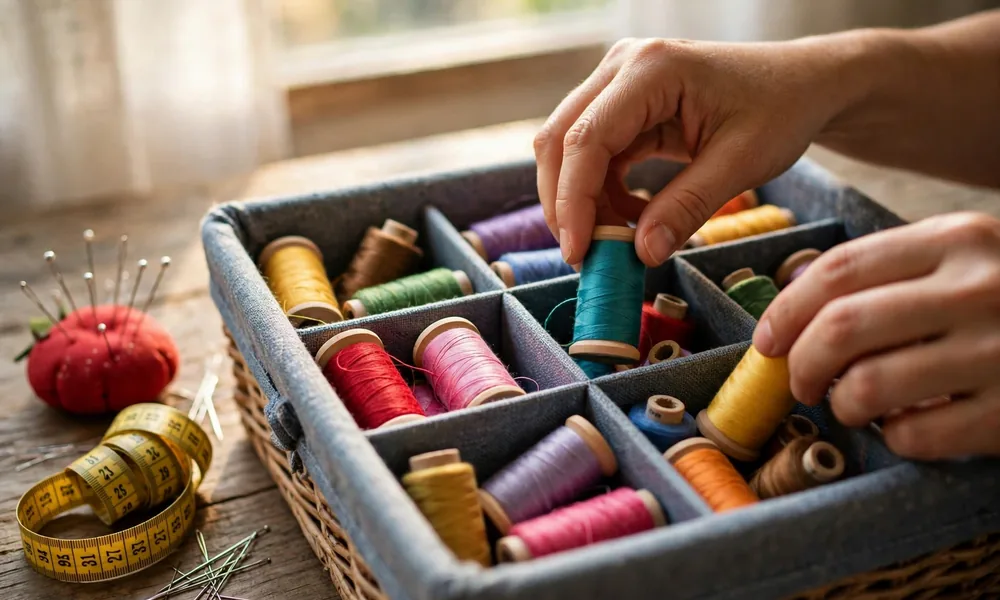
- Keep thread upright in rows, needles in a case or pincushion, and small notions in the tray, so you can see everything at a glance.
- Measure where the basket will live before you buy.
What a Sewing Basket Actually Is
A sewing basket is a portable container designed to hold sewing supplies in order. It is not a sewing kit, which is a small set of tools for mending, and it is not a general storage bin, which holds anything from cables to Christmas decorations. A sewing basket is built around the shapes of sewing things: narrow slots for thread spools, shallow trays for buttons and pins, a pocket for scissors, and room for fabric and works in progress.
That purpose shapes every good design. Thread spools roll, so they need dividers or a snug row. Needles and pins are small and sharp, so they need a case or a pincushion rather than a loose pile. When a basket respects those shapes, using it feels easy. When it does not, supplies tangle and needles vanish.
The Main Types of Sewing Basket
Most sewing baskets fall into four groups, and the right one depends on how much you sew and where the basket will live.
Woven baskets
The classic sewing basket is woven wicker, seagrass, rattan or willow, with a hinged lid and a fabric lining. Woven baskets look like furniture rather than storage, and the weave lets air through, which helps thread stay fresh. Their weakness is structure. A woven basket sags under heavy loads and the weave can snag delicate fabric, so check the lining is removable and washable, because lint and thread ends collect in it fast.
Hard-sided baskets and boxes
Hard-sided sewing baskets are usually wood, sturdy plastic or covered board, with a rigid lid and a fitted interior. They protect what is inside far better than a woven basket: a dropped hard basket keeps its shape. The interiors are often the best part, with a lift-out tray, spool pegs and small lidded compartments. Their weakness is weight and looks. A wooden basket full of supplies is heavy to carry, and a plastic one can look like a toolbox.
Fabric and soft-sided baskets
Soft-sided sewing baskets are made from quilted or padded fabric, often with a zip or drawstring top and external pockets. They are the lightest option by far and fold flat when empty, with outside pockets that are genuinely useful. Their weakness is protection. A soft basket will not stop a heavy book from crushing a spool, and it cannot hold its shape on a shelf.
Divided craft baskets and tote organisers
The fourth group is the organiser: a tote or basket built entirely around dividers, with removable boxes, spool rails and clear pockets. These are the most organised baskets you can buy, and the best choice for a large stash of thread, beads or embroidery supplies. Everything has a labelled place, and you can pull out one small box without unpacking the rest. Their weakness is that they look like craft storage, and they tempt you to buy more supplies simply because there is a space for them.
Sewing Baskets Compared
| Type | Best for | Watch out for | Price in 2026 |
|---|---|---|---|
| Woven | Living rooms, light supplies | Snagging fabric, sagging under weight | Low to mid |
| Hard-sided | Classes, delicate notions, stacking | Heavy when full, can look plain | Mid |
| Fabric and soft-sided | Travel, small projects, packing away | Little protection, no shape when empty | Low |
| Divided organiser | Large stashes, thread and beads | Tempts overbuying, looks like storage | Mid to high |
Materials: What Lasts and What Does Not
The material of a sewing basket decides how long it lasts, how heavy it feels, and how well it protects what is inside. Wicker and seagrass are light, warm and attractive, but they dry out in central heating and can crack if knocked about. Rattan is tougher and holds its shape better under weight. Wood is the most durable option and the heaviest: a wooden basket can last decades, though the weight is a fair trade only when the basket mostly stays in one room. Look for smooth hinges, a lid that closes without a gap, and a lined interior, because unfinished wood can snag thread.
Plastic and covered board are the practical middle ground. They wipe clean, they do not mind damp, and they are light enough to carry to a class. The catch is quality: thin plastic flexes and cracks at the corners. Check the handle fixings before you buy, because a handle that pulls out under a full load is the most common failure on a budget basket. Fabric baskets depend on their padding and stitching: a well-made quilted basket holds its shape and washes well, while a cheap one collapses when empty.
How to Size a Sewing Basket
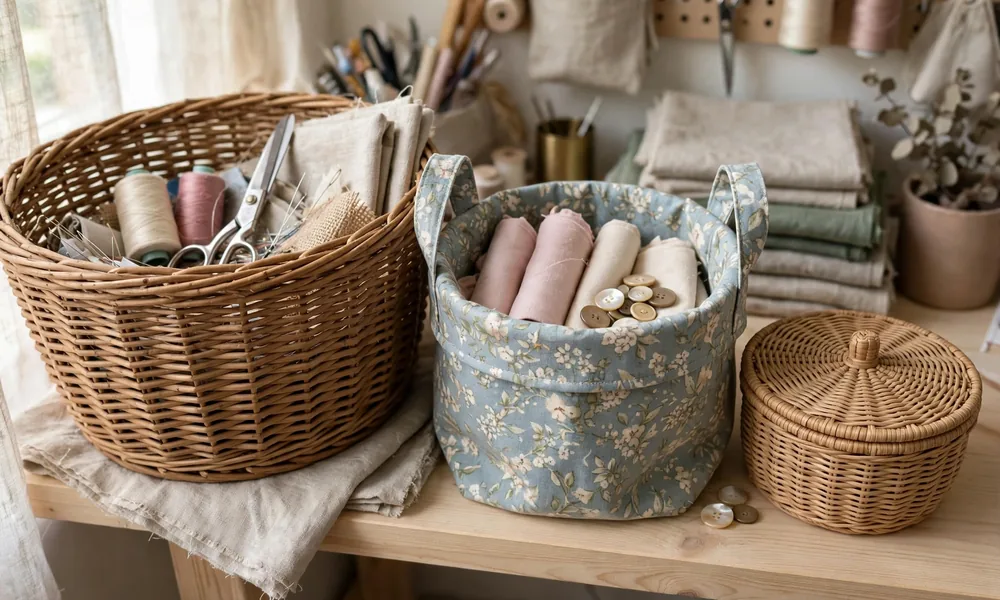
Size is where most sewing basket purchases go wrong, in both directions. A basket that is too small forces overflow into drawers, which defeats the purpose entirely. A basket that is too big invites clutter: every spare button and half-used spool ends up inside, and the things you need sink to the bottom. The right size holds your regular supplies with a little room to spare, and nothing else.
Start by gathering everything you use in a normal month of sewing and laying it out on a table: the thread, needles, scissors, pins, buttons and fabric for the project in progress. That pile is the size of basket you need, plus about a fifth extra for the project after this one. Then measure where the basket will live. A basket a centimetre too wide for its shelf will live on the floor, where it gets kicked and tripped over. Check the height too, including the handle, and remember depth matters: a deep basket swallows small things, so anything under about fifteen centimetres deep needs a tray or dividers.
Sewing Baskets vs Sewing Kits
The nearest neighbour to a sewing basket is the sewing kit, and it is worth knowing the difference before you buy either. A sewing kit is a set of tools for mending: needles, thread, buttons, pins and small scissors, packed into a small box or pouch. A basket is the home those tools live in, plus room for fabric, patterns and projects. A kit mends; a basket organises. Most households need both: the kit is what you grab for a two-minute repair, and the basket is where it lives between repairs.
The same logic applies to general storage. A sewing basket is not a substitute for proper household storage, and a general bin is a poor substitute for a sewing basket. Our guide to the best storage bins covers the ones that tidy a whole house, and the difference is in the details: a storage bin holds anything, while a sewing basket holds sewing things in the shapes they need. A bin full of thread is a tangle waiting to happen.
Mistakes That Ruin a Good Basket
The first mistake is buying for looks alone. A beautiful basket with no dividers and a lid that will not stay shut is a decoration, not a tool. Open the lid in the shop and check the compartments fit the things you own. The second mistake is overfilling. A basket packed to the brim cannot be carried without spilling and hides the things at the bottom.
The third mistake is letting small things go loose. Needles, pins and buttons in the bottom of a basket are a hazard and a waste of time. Keep needles in a case, pins in a pincushion, and buttons in a small lidded box. The fourth mistake is ignoring the lid. A basket without a proper lid collects dust and pet hair, and anything left in it goes grey within weeks. A lid that closes flat also makes the basket stackable and carryable, which is half its job.
Sewing Basket Checklist: Before You Buy
- Dividers and a lift-out tray that fit your spools, scissors and notions.
- A lid that closes flat and stays shut, so the basket can be carried, stacked and kept dust-free.
- A handle fixed firmly enough to lift the basket when it is full.
- A removable, washable lining that will not snag fabric.
- Room for the project in progress, with about a fifth of the space spare for the next one.
- A size that fits the shelf, cupboard or chair-side space where the basket will actually live.
Frequently Asked Questions
What size sewing basket do I need?
Gather everything you use in a normal month of sewing, lay it out, and add about a fifth extra. That pile is the size you need. Most home sewers are well served by a basket twenty to twenty-five centimetres deep with a lift-out tray.
Are woven sewing baskets practical?
Yes, for light supplies in a living room. Woven baskets breathe, look like furniture and are easy to carry. They are less good for heavy loads, because the weave can snag and the basket can sag.
How do I stop thread from tangling in a basket?
Store spools upright in rows with dividers between them, and never drop loose thread into the bottom of a basket. A spool rail or divided tray keeps each spool separate.
Can a sewing basket replace a sewing box?
For most people, yes. A basket does everything a box does and is easier to carry. A hard-sided box is better only for maximum protection, or for baskets that stack neatly.
Where should a sewing basket live?
Where you sew. A basket beside your usual chair will be used every day, while a basket in a cupboard upstairs will be used twice a year. If it must live on a shelf, measure the shelf first.
How do I keep a sewing basket tidy?
Empty it once a month, throw away thread ends and bent pins, and return anything that does not belong. A basket only stays sorted if it holds the current project and its tools.
Bottom Line
The best sewing basket is the one that sorts your supplies, fits where you sew, and is easy enough to carry that it actually gets used. Buy for dividers, a tray and a lid that shuts, not for looks alone, and size it to the supplies you use in a normal month with a little room to spare.


