
A baseball bat looks like the simplest piece of sports equipment there is: a shaped stick, a handle at one end and a barrel at the other. Pick one up, though, and the differences appear at once. One bat feels quick and light in the hands, another feels heavy through the hitting zone, and a third stings the palms on every ball that is not hit perfectly cleanly. The best baseball bats of 2026 are not the ones with the flashiest paint or the biggest price tag. They are the bats that fit the player holding them and keep performing through a whole season without losing their feel.

What Makes a Bat Good
The first thing to judge is balance. A good bat feels like an extension of the arms rather than a weight hanging off the end of them. The barrel should come through the hitting zone quickly and smoothly, without dragging behind the hands or pulling the shoulders open too early. If the bat is too end-loaded, the swing gets long and slow; if it is too light, the ball wins the collision. The right balance lets the player stay short to the ball, keep the hands inside, and drive through contact with confidence.
The second thing is feel on contact. A good bat tells the hands what happened. A ball hit on the sweet spot should feel solid and clean, while a ball hit off the end or near the handle should give a clear signal without punishing the hands. Cheap bats, and bats made from poor materials, send a sharp sting up the arms on every mishit, and that sting makes a player flinch at the ball. A well-made bat forgives the small misses and rewards the good ones, which is exactly what a developing hitter needs most.
The Main Types of Baseball Bat
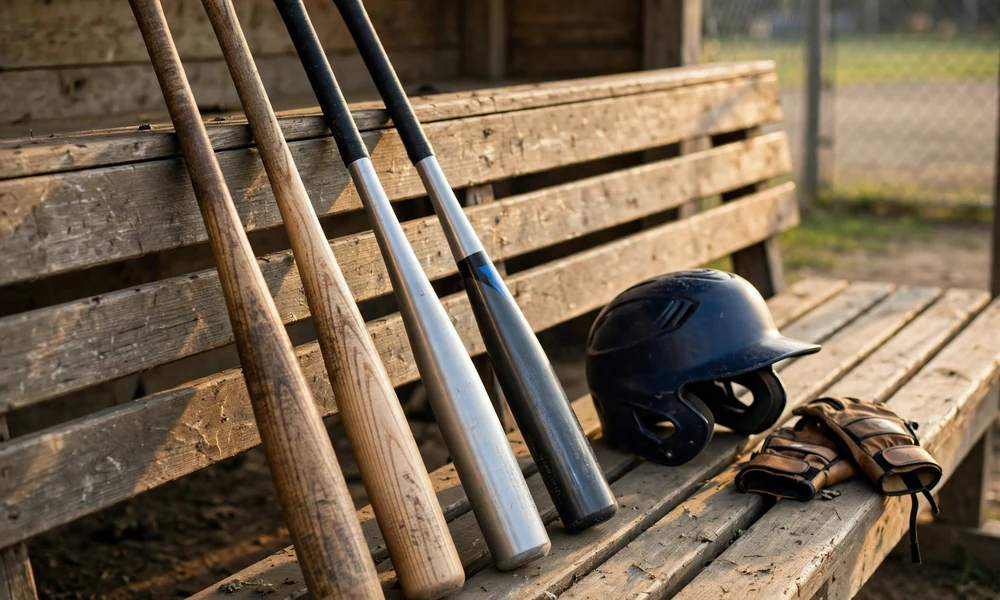
Wood bats are the classic choice and the only type allowed in the professional game. Maple is dense and hard, and it gives a firm, powerful feel with a smaller sweet spot. Ash is lighter and more flexible, with a forgiving feel and a wider margin for error. Birch sits between the two, combining some of maple’s hardness with some of ash’s flex. A wood bat teaches good hitting, because there is nowhere to hide: hit it well and the ball flies, hit it badly and the bat tells you straight away.
Alloy bats are made from aluminium and are the standard choice in most youth and amateur leagues. They are lighter than wood for the same length, which lets a younger or smaller player swing faster, and they do not break when a ball is hit off the end. They are durable, they need no breaking in, and they hold up well to cold weather and heavy cage use, which makes them the practical workhorse of the youth game.
Composite bats are made from carbon fibre and resin, and they are built for players who want the most out of every swing. The barrel flexes slightly on contact and springs back, which can add distance on a well-hit ball, and composite bats tend to have the biggest sweet spots of all. They also cost the most, which is why they suit the serious player who hits several times a week rather than the casual weekend player.
How to Choose the Right Size and Weight
Length is the first decision, and it is mostly about height and reach. A bat that is too long drags through the zone and leaves the player late on fast pitching, while a bat that is too short forces the player to reach and gives away the outside corner of the plate. A simple test is to hold the bat out to the side with one hand: if the arm shakes or the barrel dips, the bat is too heavy or too long for now.
Weight is measured by the drop, which is the length in inches minus the weight in ounces, written as a negative number. Younger players usually need a bigger drop, around drop 10 or drop 12, because the lighter bat lets them swing fast and build good habits. Older and stronger players move toward drop 5 and drop 3, where the extra mass adds power but demands more strength and better timing. The right drop is the heaviest bat the player can swing at full speed without the swing getting long or slow, and it is worth testing several before settling.
The Best Baseball Bats of 2026
The best wood bat for most players this year is a mid-priced maple bat with a balanced profile and a comfortable, slightly tapered handle. It feels firm and honest on contact, it holds up well to regular use, and the barrel is big enough to forgive the occasional mishit without losing the classic wood feel. It suits the adult league player and the serious teenager moving up to wood. It is not the cheapest wood bat on the rack, but it is the one that gives the most good swings for the money.
The best alloy bat of 2026 is a light, well-balanced model built for the player who wants speed through the zone above all else. The barrel is generous, the swing weight feels lighter than the scale says, and the bat stays lively in cold weather and through long cage sessions. It is the bat for the growing youth player and the competitive amateur who wants a bat they can trust without a break-in period. It is durable, consistent and easy to swing, which is why it ends up being the most-used bat in so many kit bags.
The best composite bat is a two-piece design with a big barrel and a smooth, trampoline-like feel on contact. It needs a little patience at first, a hundred hits or so before it opens up fully, but once it does, it rewards the player with distance and a sweet spot that covers most of the barrel. It suits the committed player who trains several times a week and faces good pitching. For the player who lives in the cage and plays a full season, this is the bat that makes the difference.
The best bat for young players is a light alloy bat in a short length with a big drop, sized to the child rather than to the age on the box. It should be light enough that the child can hold it out straight for a few seconds, short enough to control, and forgiving enough that a mishit does not sting the hands and put the child off the game. A good youth bat makes hitting feel easy and fun from the very first session.
The best budget bat of 2026 is a simple alloy bat with no fancy features, just a solid barrel, a comfortable grip and a sensible price. It does everything a beginner needs: it swings easily, it survives being dropped and knocked around in a kit bag, and it hits the ball well enough that a new player can enjoy the game without wondering whether the equipment is holding them back. It is the right choice for the player who is just starting out, or for a reliable spare.

What Else You Need
A bat on its own is only part of the kit. A batting helmet is essential for safety and is required in most leagues, and it should fit snugly without wobbling or pressing on the ears. Batting gloves protect the hands from blisters and improve the grip on hot or sweaty days, and a good pair will last a whole season. A kit bag keeps the bat, helmet, gloves and balls together and stops the bat from getting chipped in the boot of a car. A tee and a bucket of balls turn any patch of grass into a practice ground.
Common Mistakes to Avoid
The biggest mistake is buying a bat that is too heavy. A heavy bat looks impressive in the shop and feels awful at the plate, and it builds habits that are hard to break: the player starts dropping the hands, opening the shoulders early and swinging late on anything with pace. The second mistake is buying for the brand or the colour rather than the fit. A bat that a favourite professional uses is built for that professional’s strength and swing, not for the player buying it, and the logo on the barrel will not fix a swing that is too long. Fit first, brand second, every time.
Another common mistake is neglecting the bat once it is bought. A wood bat should be stored somewhere cool and dry, never left in a hot car, because heat and damp warp the wood. A composite bat should not be used in very cold weather, when the barrel can become brittle and crack. Alloy bats are tougher, but even they benefit from a wipe down after a wet game and a check of the grip, which wears smooth over time and should be replaced when it stops feeling tacky in the hands.
How Baseball Fits a Quiet Weekend
Baseball is one of the few sports that rewards slowing down between the bursts of action. There is time to stand in the outfield and watch the clouds, time to chat in the dugout, and time to enjoy the rhythm of the game without hurry. That calm is part of the appeal. A morning at the ballpark pairs naturally with a relaxed game afterwards, and many players keep a best table tennis paddles evening as their way to wind down once the bats are put away. The same patience that waits for the right pitch makes for a good rally: both reward focus, both are better shared, and neither needs to be competitive to be enjoyable.
The hobby also builds the kind of hand-eye coordination that carries into other games. The steady timing and smooth swing of baseball have a lot in common with the controlled swing of a golf club or the quick wrist of a tennis serve, and players often find they pick up those games faster than expected. Readers who enjoy that kind of timing will find plenty to like in the best golf bags and the best tennis rackets for beginners guides, which cover the same idea from a different angle: the right gear, matched to the player, makes the whole game more fun.
The Verdict
The best baseball bat of 2026 is the one that fits the player holding it. For most people that means a balanced alloy bat: light, forgiving and ready to swing from the first day. For the traditionalist, a well-made maple wood bat is the most rewarding bat in the sport. For the serious player who trains all week, a broken-in composite bat offers the biggest sweet spot and the most distance. Whatever the choice, start with the right length and drop, test the swing before buying, and look after the bat once it is yours. A bat chosen this way will still be hitting well years from now, and every clean hit will feel earned.


