A Guide to Basters That Keep Roasts Juicy in 2026
A baster is a kitchen tool that sucks up the hot juices from the bottom of a roasting pan and squirts them back over the meat, and the best basters of 2026 do that simple job without leaking, dripping or melting. A roast dries out from the outside in, and basting is the cook’s answer: every twenty minutes or so, the juices that have dripped into the pan go back over the skin, keeping it moist, helping it brown evenly, and carrying flavour from the pan back onto the bird.
Key Takeaways
- A bulb baster is the right tool for most roasts: simple, cheap, and easy to clean if you buy one that comes apart.
- Squeeze the bulb before the tip goes into the juices, and release it slowly, or you will suck up air instead of liquid.
- Baste every 20 to 30 minutes, quickly, with the oven door shut again fast, so the oven does not lose its heat.
- Glass and stainless steel tubes handle hot fat better than plastic, and they do not hold smells or stains.
- Clean a baster straight after use in hot soapy water, or the fat sets inside the tube and turns rancid.
What a Baster Does, and Why It Matters
A roast cooks in dry oven heat, and dry heat pulls moisture out of the surface of the meat. The juices that drip into the pan are the moisture the meat has already lost, mixed with fat and the flavour of whatever is roasting alongside it. Basting puts that liquid back where it does the most good, on the skin and the exposed flesh, so the outside stays moist while the inside cooks through. It also evens out browning, because a wet surface browns more slowly and more evenly than a dry patch.
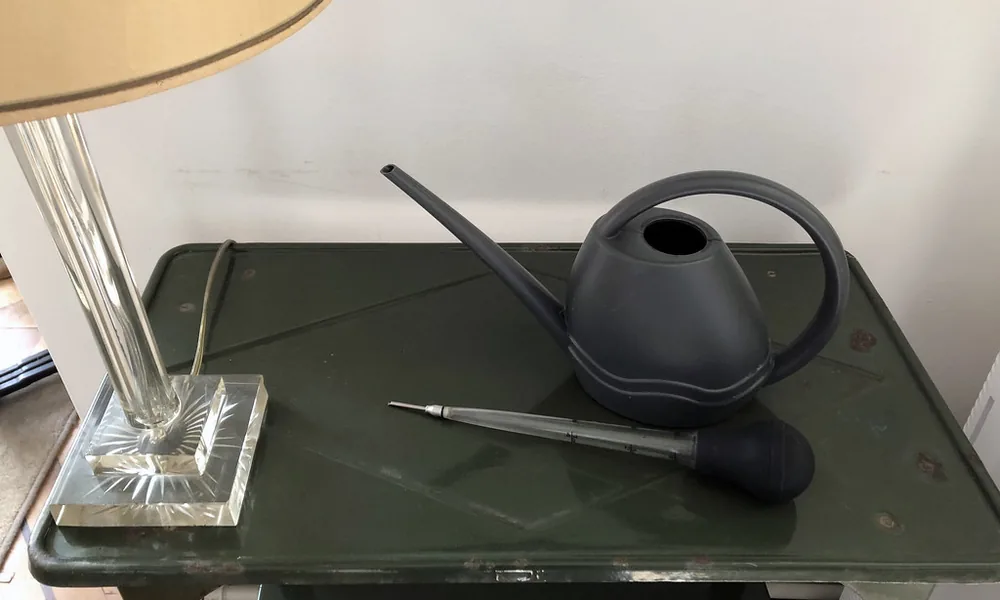
A classic bulb baster: a squeezable bulb, a clear tube, and a tip narrow enough to reach the corners of the pan.
The Main Types of Baster
Every baster falls into one of a few families, defined by how it moves liquid. Each has a clear strength, a clear weakness, and a job it does best.
Bulb basters
The bulb baster is the classic: a rubber or silicone bulb on one end of a tube, glass or plastic, with a narrow tip on the other. Squeeze the bulb, dip the tip in the pan juices, release, and the tube fills. Glass tubes are the best here, because you can see how much liquid you have drawn up, they do not stain, and they handle hot fat without softening. Plastic tubes are lighter and cheaper, but they cloud with use and hold the smell of old fat. The bulb is the part that fails first: rubber perishes and cracks, while silicone lasts far longer.
Silicone basters
Silicone basters are the modern, low-maintenance option. The whole tool is heat-resistant silicone, often with a detachable bulb and a tube that survives temperatures a plastic tube cannot. They never shatter if dropped, they go in the dishwasher, and they do not stain. The weakness is feel: a silicone tube is opaque, so you cannot see how much you have drawn up, and the bulb can be stiffer to squeeze than rubber. They are the best choice for anyone who basts rarely and stores the tool for months between uses, because silicone does not perish the way rubber does.
Injector basters
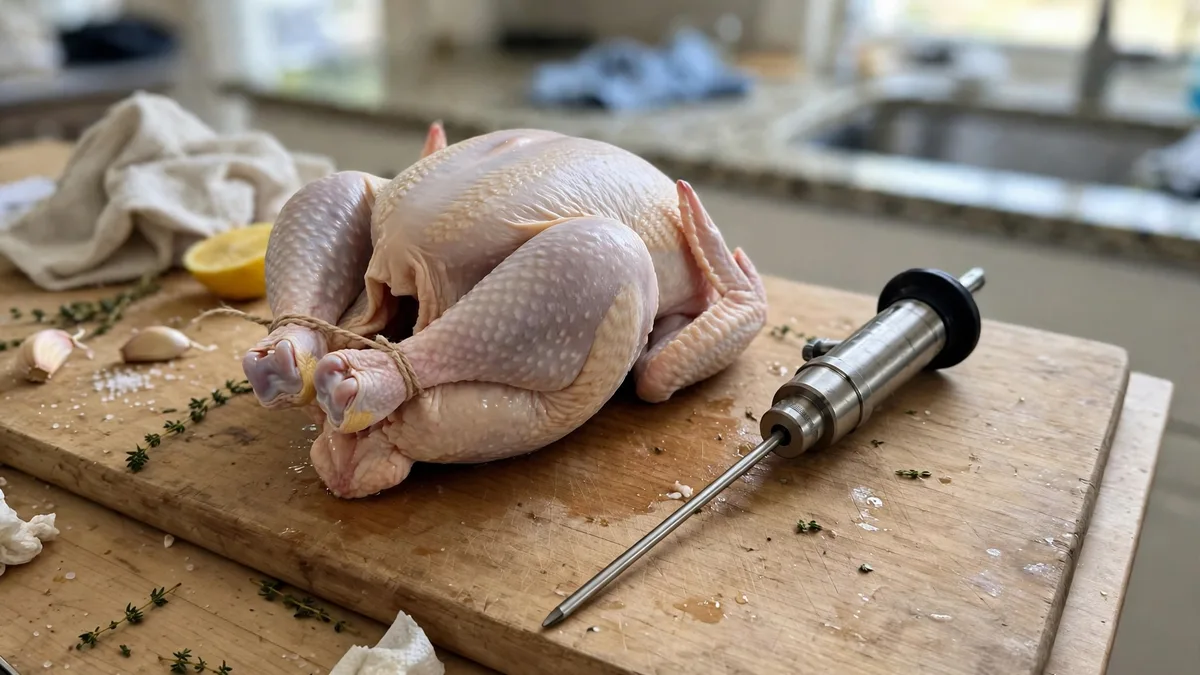
An injector baster, sometimes called a flavour injector, works the other way round: instead of basting the outside, it pushes liquid into the meat. A large syringe with a hollow needle draws up melted butter, stock, wine or marinade and injects it deep into the breast and thighs, seasoning the meat from the inside. Injectors suit large birds and slow roasts. The catch is cleaning: a needle with dried marinade inside it is a hygiene problem, so an injector must come apart and be scrubbed after every use.
Basting brushes and spoons
Not every cook uses a bulb at all. A basting brush paints juices over the roast, and a spoon ladles them, and both have their place. A brush gives a thin, even coat and suits delicate work, while a spoon is faster for a large bird and cannot break or perish. Our guide to the best pastry brushes of 2026 covers brushes in detail, including the silicone ones that double as basting brushes. If you only buy one tool, choose the bulb baster, because it reaches the corners of the pan a spoon cannot and moves more liquid than a brush.
Basters Compared
| Baster type | Best for | Cleaning | Heat tolerance | Price in 2026 |
|---|---|---|---|---|
| Bulb, glass tube | Most roasts, everyday use | Easy if it comes apart | Excellent | Low |
| Bulb, plastic tube | Occasional use, tight budgets | Harder; clouds with use | Moderate | Low |
| Silicone baster | Infrequent use, dishwashers | Easiest | Excellent | Low to mid |
| Injector baster | Large birds, marinades | Needs full dismantling | Good | Low to mid |
How to Use a Baster Properly
Using a baster well is a small skill, and it is mostly about timing and heat. Squeeze the bulb before the tip goes into the liquid, not after: if you dip first and squeeze second, you push air into the juices and suck up foam. Release the bulb slowly, watch the tube fill, then move quickly to the roast and squeeze gently so the juices fall in a rain rather than a jet. A jet washes the seasoning off and splashes fat onto the oven floor.
Time the basting to the roast, not the clock alone. Baste every twenty to thirty minutes, starting after the first half hour, once the skin has begun to set. Work fast and shut the oven door again straight away: every minute the door stands open, the oven loses heat. Do not baste in the last ten minutes, because the skin needs that time dry to crisp up.

Baste quickly and shut the oven door again fast, so the oven holds its heat while the juices go back over the bird.
What to Baste With
The pan juices are the first choice, and for most roasts they are all you need. A knob of butter melted into the juices adds richness and helps the skin brown. A splash of stock stretches the juices when the pan runs dry, and a spoonful of honey in the last baste helps the skin glaze, though it burns easily, so keep it to the final round. Do not baste with anything cold, or any marinade that has touched raw meat without being boiled first.
Choosing the Right Baster
Choose by how often you roast. If you roast a chicken every week, buy a glass-tube bulb baster with a silicone bulb that comes apart for cleaning. If you roast twice a year, buy a silicone baster that survives months in a drawer without perishing, and store it with the bulb off the tube. If you cook large birds, add an injector for the inside work and keep the bulb baster for the outside.
Size matters more than it looks. A standard baster holds about 30 to 45 millilitres, which is enough for a chicken and barely enough for a large turkey. A large-capacity baster holds 60 millilitres or more, but it is heavier when full and harder to aim. Length matters too: the tube must reach the juices at the bottom of a deep roasting pan without your hand going into the hot fat. Our guide to the best roasting pans of 2026 covers the pan those juices collect in, and a rack makes basting easier because the juices pool where the baster can reach them.
Cleaning and Storing a Baster
A baster is only as good as its last clean. Fat sets inside a tube within minutes of cooling, and once it sets it traps bacteria and turns rancid, so clean the tool while the roast rests, not after dinner. Pull the bulb off the tube, run hot soapy water through it by squeezing the bulb with the tip in the water, and use a thin bottle brush for anything that remains. Rinse until the water runs clear, then leave both parts to dry fully. Our guide to the best meat thermometers of 2026 covers the other tool that decides whether a roast is done, and it needs the same treatment.
Store the baster with the bulb off the tube and the tube upright in a jug or a drawer divider, so neither part is squashed and the bulb keeps its spring. Rubber bulbs perish fastest when stored compressed, which is exactly how they end up in a crowded drawer. If the bulb has gone stiff, cracked or sticky, replace it: a bulb that leaks air will not draw up liquid.

The moment basting is for: a golden bird, a pan full of juices, and a baster that draws them up cleanly.
Baster Checklist
- Buy a baster that comes apart, bulb from tube, so it can be cleaned properly inside.
- Choose glass or silicone over plastic for hot fat, and a silicone bulb over rubber for a longer life.
- Squeeze the bulb before dipping the tip, and release it slowly to draw up juice, not air.
- Baste every 20 to 30 minutes, fast, with the oven door shut again straight away.
- Stop basting ten minutes before the end so the skin can crisp up dry.
- Clean the baster in hot soapy water while the roast rests, dry it fully, and store it in two parts.
Basters: Frequently Asked Questions
Do I really need a baster to roast a turkey?
No, but it helps. A roast cooked without basting can still be good if it is brined or cooked at the right temperature, but basting keeps the skin moist, evens out browning, and returns flavour from the pan to the bird. For a large turkey, it is the cheapest way to improve the result.
How often should I baste a roast?
Every 20 to 30 minutes, starting after the first half hour. Baste too often and the oven loses heat every time the door opens; baste too rarely and the skin dries out. Work quickly and shut the door again straight away.
Can I use a baster for anything besides roasting?
Yes. A baster moves small amounts of liquid precisely, so cooks use it to remove fat from the top of stock, to water delicate seedlings, to fill jam jars without spilling, and to add stock to a risotto a spoonful at a time.
Why does my baster not suck up liquid?
Usually the bulb is perished, cracked or not sealing against the tube, so it leaks air instead of drawing liquid. Check the seal first, then the bulb: if it feels stiff or sticky, replace it. Also squeeze the bulb before dipping the tip, not after.
Is a glass baster better than a plastic one?
For most cooks, yes. Glass lets you see how much liquid you have drawn up, it does not stain or hold smells, and it handles hot fat without softening. Plastic is lighter and cheaper, but it clouds with use and can soften in very hot drippings.
How do I clean a baster properly?
Pull the bulb off the tube while the roast rests, run hot soapy water through the tube by squeezing the bulb with the tip in the water, scrub with a thin bottle brush, rinse until clear, and dry both parts fully before storing them apart.
The Bottom Line
A baster is a small, cheap tool that earns its drawer space and repays it in a juicier roast. Buy one that comes apart, with a glass or silicone tube and a silicone bulb, baste every twenty to thirty minutes with the hot pan juices, and clean it while the roast rests. Do that, and the bird that comes out of your oven will be browner, moister and better flavoured than the one that went in dry.