A small bedroom forgives almost nothing. Every centimetre beside the bed has a job to do, and the best bedside tables for small bedrooms in 2026 work hard without crowding the room. The right table holds your lamp, your phone, your book and your glass of water, then quietly disappears into the background.
Too many bedside tables are designed for rooms that do not exist. They are wide, deep and heavy, built for a showroom rather than a flat. In a compact bedroom, a table five centimetres too wide can block a wardrobe door or turn the walk to the bathroom into an obstacle course.
This guide covers the measurements that matter, the six table styles that suit tight spaces, and the styling choices that make a cramped bedroom feel calm.
Key takeaways
- Measure first: keep the table within 5 cm of mattress height and leave 45 cm of walking space.
- Slim one-drawer tables and floating shelves save the most space under 10 square metres.
- A depth of 30 to 35 cm is ideal; deeper tables waste floor space without adding useful storage.
- One drawer plus an open shelf beats three drawers blocked by the bed.
- Light colours, slim legs and open bases make a small bedroom look bigger.

Why Size Matters More Than Style
In a large bedroom, a bedside table is decoration. In a small one, it is infrastructure: the only surface within arm’s reach when you wake at 3 a.m. Start with dimensions, not with looks.
Height comes first: the top should sit level with your mattress, or within about five centimetres of it. Width is where most people go wrong: a table 35 to 45 cm wide fits most small bedrooms. A depth of 30 to 35 cm holds a lamp, a phone and a glass; deeper tables steal floor space you cannot spare. Before buying, mark the footprint on the floor with masking tape.
The Best Bedside Tables for Small Bedrooms 2026
Pick the style that matches your room first, then choose the finish that matches your bed.
Slim One-Drawer Tables
The slim one-drawer table is the default answer: a surface, a drawer for the things you want hidden, and a footprint small enough for almost any bedroom. Look for a drawer that opens fully without hitting the bed frame, and a soft-close runner, because a drawer that slams at midnight wakes everyone in the house.
Floating Wall-Mounted Shelves
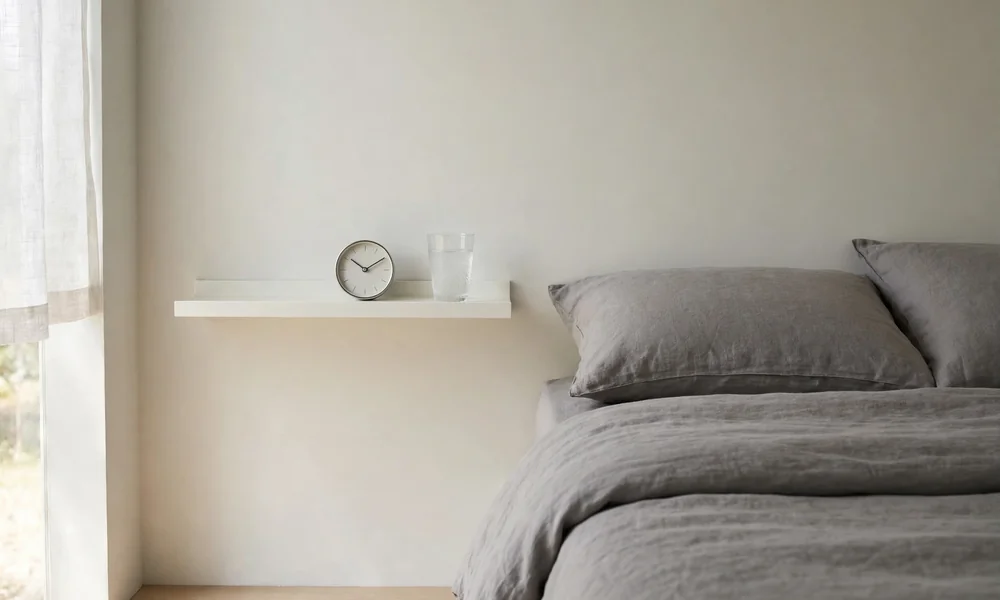
When floor space is scarcest, stop using the floor at all. A floating bedside shelf mounts to the wall beside the bed and leaves the floor clear underneath, which makes a small room feel larger and easier to clean. The trade-off is storage: with no drawer, everything is on display, which suits minimal sleepers who keep only a phone, a glass of water and a small clock beside the bed.
Narrow Two-Drawer Tables
A narrow two-drawer table suits anyone who needs real storage but cannot afford width. At 35 to 40 cm wide and 30 cm deep, it stores twice as much as a one-drawer table in the same wall space: nightly essentials above, spare chargers and sleep masks below. The risk is height, so check the total height against your mattress and choose a solid base if the table is over 60 cm tall.
C-Tables and Tray Tables
A C-shaped side table slides its base under the bed and brings the surface over the mattress edge, which is clever where there is no gap between the bed and the wall. It works best as a second surface, because it has no storage at all. Tray tables with a removable top are a close cousin, and both suit renters, needing no wall fixing and moving easily.
Open Cubby and Shelf Tables
An open cubby table trades a drawer for one or two open shelves. Everything is visible and within reach, which suits people who dislike opening drawers in the dark, and a basket on the lower shelf hides the mess. The downside is dust and visual noise, so keep it disciplined: one basket, one book and one lamp, and nothing else.
Round Pedestal Tables
Round tables have no corners to catch your hip on, which matters in a bedroom where you walk past the table in the dark. A small round pedestal table takes up very little visual space. The compromise is surface area: a 35 cm round top holds a lamp and little else, so it works best as a second table.
Bedside Table Comparison
Use this table to narrow your shortlist to two styles, then choose between them on finish and feel.
| Style | Typical size (W x D x H) | Storage | Best for | Price range |
|---|---|---|---|---|
| Slim one-drawer | 40 x 35 x 60 cm | 1 drawer | Most rooms | £60–£180 |
| Floating shelf | 45 x 25 x 5 cm | Surface only | Tight rooms | £25–£90 |
| Narrow two-drawer | 38 x 32 x 62 cm | 2 drawers | More storage | £80–£220 |
| C-table | 40 x 35 x 65 cm | None | Renters | £40–£120 |
| Open cubby | 40 x 32 x 58 cm | 1–2 shelves | Easy access | £50–£150 |
| Round pedestal | 35 cm diameter x 60 cm | Surface only | No-corner safety | £55–£160 |
How to Measure Before You Buy
Measuring takes ten minutes and saves a return. Start with the gap between the bed and the wall or wardrobe: that gap is your maximum table width, minus five centimetres of clearance so the drawer can open. Then measure the mattress height and the distance to the nearest door swing, because a table that blocks a door will be replaced within a month.
Common Measuring Mistakes
The most common mistake is measuring the room but not the bed: a thick mattress on a tall frame can raise the sleeping surface by 20 cm, which changes the ideal table height completely. The second is forgetting the headboard, which can overlap the wall space where the table should go. The third is buying a pair before testing one: buy one, live with it for a week, then buy the second if the room still feels balanced.
What to Put on Top and What to Leave Off
A bedside table works best with three things on top: a lamp, one book or e-reader, and a glass of water. Everything else belongs in the drawer. A lamp is worth choosing carefully, because it sets the mood of the whole bedroom. The best bedside lamps for reading are compact, dimmable and warm-toned, so they light the page without waking a partner or glaring across the room. For charging, run a single short cable from a socket behind the table, or use a small charging pad that sits flat on the surface. Medicines, tissues and lip balm belong in the drawer, not on display, and a stack of books topples over in real life, so keep one book out and the rest on a shelf.
Choosing the Right Lamp for a Small Table
A small table needs a small lamp: the base should be no wider than a third of the table top, and the shade should not overhang the edge. A lamp that is too big makes the table look smaller, while one that is too small looks lost and gives poor light. Warm light matters more than brightness: a bulb around 2700K feels restful, while a cool white bulb feels like an office. A dimmer lets you read at full light, then drop to a glow before sleep. The best table lamps for bedrooms include several compact designs that pair well with a slim bedside table and a small room.
Storage That Actually Works
A bedside drawer is small, so it needs a system: one corner for charging, one for reading glasses and a notebook, and one for the small items you reach for at night. A shallow tray inside stops everything sliding into a pile. Keep the drawer light, because a crammed drawer sticks, sags and eventually breaks its runners. If it will not close easily, something in it does not belong there: move spare cables and old books out, and keep only what you used in the last fortnight beside the bed.

Styling a Small Bedroom Around Your Table
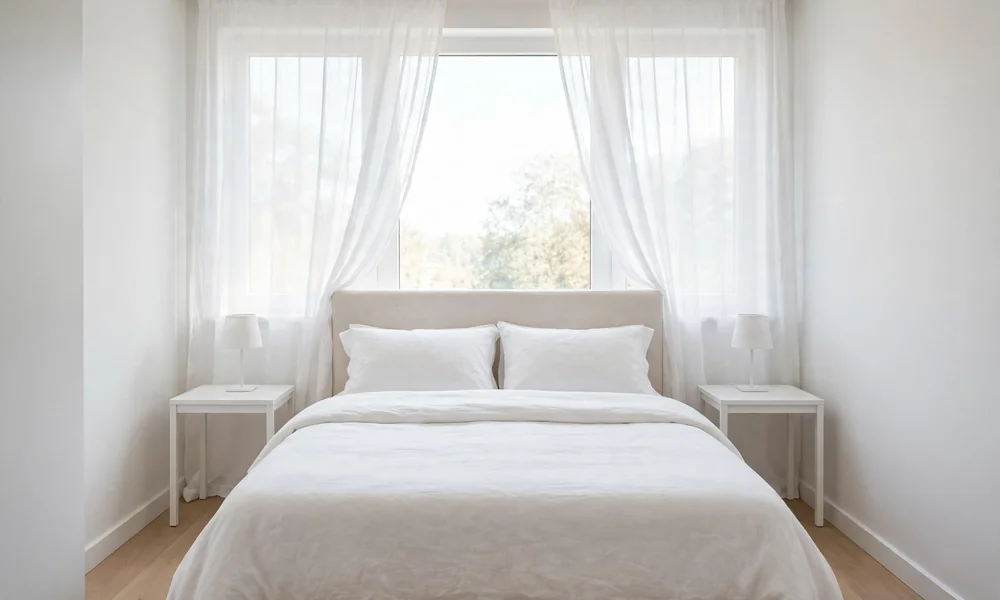
Styling a small bedroom is mostly about restraint. Match the table to the bed frame rather than the wardrobe, because the bed and the table sit side by side and read as one unit. Keep the wall above the table nearly clear: one small framed print is enough, because a gallery wall crowds the corner. Sheer curtains make a small bedroom feel larger, and the best curtains for small windows are light, simple and hung high, so the window looks taller than it is. Pale walls, pale bedding and a pale table make a small room feel open, so keep to one accent colour, in the lamp shade or a cushion, and no more.
Bedside Table Checklist
Run through this checklist before you buy. It takes two minutes and catches the mistakes that lead to returns.
- Measure the mattress height and choose a table within 5 cm of it.
- Mark the footprint with tape and check you can walk past it and open nearby doors.
- Confirm the drawer opens fully without hitting the bed frame.
- Check the depth is 30 to 35 cm, so it holds a lamp and a glass without stealing floor space.
- Check the lamp base covers no more than a third of the table top.
- Match the finish to the bed frame, and keep the top clear except for a lamp, one book and water.
Frequently Asked Questions
What size bedside table is best for a small bedroom?
A table 35 to 45 cm wide, 30 to 35 cm deep and level with your mattress fits most small bedrooms. It holds a lamp, a phone and a glass of water while leaving room to walk past. Under 10 square metres, stay at the smaller end of that range or choose a floating shelf.
Should bedside tables match the bed?
They should coordinate rather than match exactly. A table in the same wood tone or colour family as the bed frame looks settled, while an identical set can look like a showroom. If your bed is upholstered, a painted table in a soft neutral usually works better.
Is one bedside table enough in a small bedroom?
Yes, if one person uses the room or the second side has no space. One good table beats two cramped ones. If two people share the bed, try one full table and one floating shelf on the other side.
Are floating bedside tables a good idea?
They are one of the best ideas for very small bedrooms, because they use no floor space at all and make the room easier to clean. They suit minimal sleepers who keep only a phone, a glass and a clock beside the bed; if you need storage, pair a shelf with a small basket below it.
How high should a bedside table be?
The top should sit level with the top of your mattress, or within about five centimetres above or below it. Measure from the floor to the top of the mattress, topper included. Too low forces you to reach down, and too high looms over the bed.
What should I keep in a bedside table drawer?
Keep only what you use at night: a charger, reading glasses, a notebook, hand cream and bedtime medicines. Use a small tray inside to stop items sliding around. Anything unused in the last two weeks belongs elsewhere in the house.
The Bottom Line
The best bedside tables for small bedrooms in 2026 are slim, well measured and honestly organised: level with your mattress, fitting the gap beside your bed with room to spare, and holding only what you actually use at night. A slim one-drawer table suits most rooms, a floating shelf suits the tightest ones, and a narrow two-drawer table suits anyone needing more storage without more width. Measure first, buy second, and keep the surface clear.