Hard water is the quiet enemy of a good shower. The best shower heads for hard water in 2026 fight back, with silicone nozzles that shrug off limescale, built-in filters, and solid materials that do not crust over after a few months. If your shower head sprays sideways, the water is probably the problem.
Mineral-rich water leaves calcium and magnesium deposits inside every nozzle it passes through. Over time those deposits narrow the openings and weaken the spray. The right shower head is designed around hard water, with nozzles you can wipe clear in seconds.
This guide rounds up the best shower heads for hard water in 2026, from filtered handhelds to wide rainfall heads and dual systems. Every pick was chosen for resistance to limescale, strong and even spray, and a design that is easy to clean.
Key takeaways
- Silicone nozzles are the most useful hard-water feature: limescale rubs away in seconds without tools.
- A built-in filter helps with sediment and chlorine, but it does not soften very hard water on its own.
- Wide rainfall heads feel luxurious, yet they need good water pressure and larger nozzles.
- Chrome, stainless steel, and solid brass resist scale better than cheap plastic.
- A ten-minute vinegar clean every month or two keeps even a basic model spraying like new.

How Hard Water Ruins a Shower Head
Hard water carries a high concentration of dissolved calcium and magnesium. It is not harmful to drink, but it is hard on plumbing and skin. Every time hard water evaporates, it leaves mineral behind, and inside a shower head that mineral builds up in the nozzles first. The damage is gradual: a nozzle starts spraying at an angle, the flow feels weaker, and white crust appears around the face of the head.
What Hard Water Actually Is
Water becomes hard as it passes through rock and soil, picking up calcium and magnesium along the way. White spots on taps, soap that refuses to lather, and a chalky film on the kettle are all giveaways, and a simple test strip will confirm it. Mildly hard water is manageable with silicone nozzles and a monthly clean, while very hard water calls for a filter and a head that comes apart for a soak.
The Signs Your Shower Head Is Losing the Fight
The most obvious sign is an uneven spray. If some nozzles fire sideways or not at all, limescale is blocking them. A second sign is a steady drop in pressure over months. A third is visible crust around the nozzles or the hose connection. Skin and hair give clues too: hard water can leave skin tight and dry, and hair heavy, because minerals coat each strand.
What to Look for in a Shower Head for Hard Water
Shopping for a shower head for hard water is different from shopping for an ordinary one. The features that decide whether a head lasts are the ones that deal with minerals. Start with the nozzles, then look at filtration, materials, and how easy the head is to take apart. A head that cannot be opened or cleaned will eventually clog. If your home also has weak mains pressure, choose a head designed to boost flow. Our guide to shower heads for low water pressure covers models that keep a strong spray.
Silicone Nozzles That Wipe Clean
Silicone nozzles are the headline feature for hard-water homes. Instead of hard holes that trap limescale, these heads use soft rubber tips. When deposits form, you rub the tips with your fingers and the scale flakes away in seconds, with no tools. Look for heads where every nozzle is silicone, and choose one with a removable faceplate for a deeper clean.
Built-In Filtration
Filtered shower heads place a cartridge between the water supply and the nozzles. It usually contains mineral stones, activated carbon, or a vitamin C filter, and it catches sediment and reduces chlorine. Filters have limits, though: a shower filter will not turn very hard water into soft water or remove all the calcium that causes limescale. Replace the cartridge every two to three months, or the filter becomes a blockage itself.
Materials That Resist Scale
Solid brass and stainless steel heads resist scale and corrosion far better than thin chrome-plated plastic, which can pit and crack as deposits build. A well-made metal head costs more, but it is a purchase you make once and keep for years. Polished chrome shows water spots but wipes clean easily, while brushed nickel and matte black hide spots better. Avoid heads with tiny crevices and grooves, where limescale hides.
The Best Shower Heads for Hard Water 2026
The picks below cover the main types that work well with hard water. The best choice depends on your bathroom, your water pressure, and how much maintenance you are willing to do.
Best Overall: Filtered Handheld Shower Head
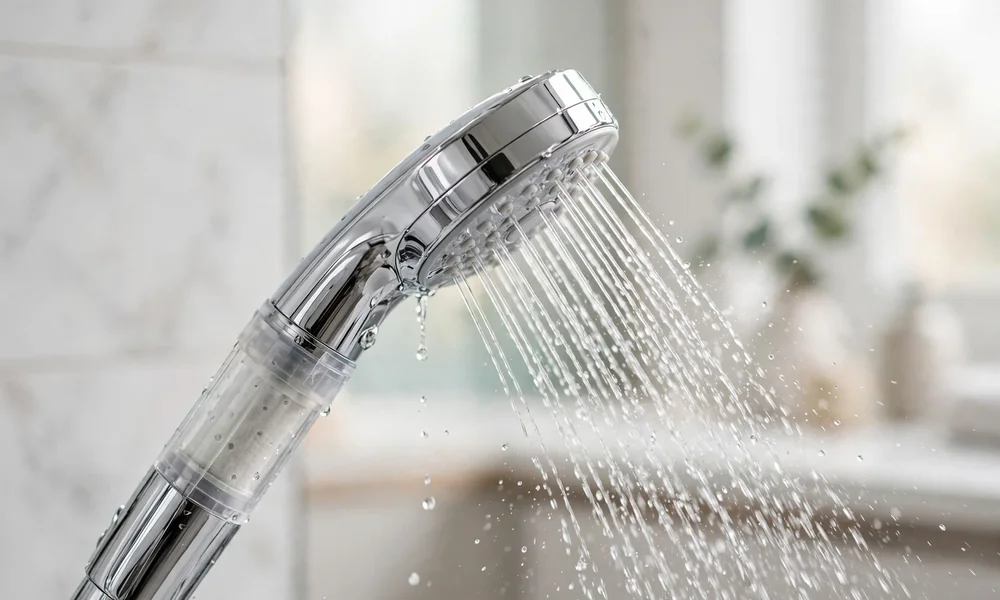
A filtered handheld head is the most versatile choice for hard-water homes, and our best overall pick. The handle holds a replaceable filter cartridge, the face uses full silicone nozzles, and the handheld design lets you aim the spray exactly where you need it. Because the head detaches, cleaning is easy: unscrew it, soak the face in vinegar, and rinse. Choose a model with a metal hose rather than a plastic one, which can stiffen and crack.
Best Rainfall: Wide Rainfall Shower Head
A wide rainfall head turns an ordinary shower into something closer to a spa, and the best ones for hard water use oversized silicone nozzles across a broad face. The wide spray spreads water evenly, so a few blocked nozzles are less noticeable, and the large face is easy to wipe clean. Rainfall heads need decent water pressure, so they suit homes with strong mains pressure best. If your bathroom is compact, a smaller rainfall head gives the same feel without the splash, and our roundup of shower heads for small bathrooms is a good place to compare sizes.
Best Dual System: Rainfall Plus Handheld Combo
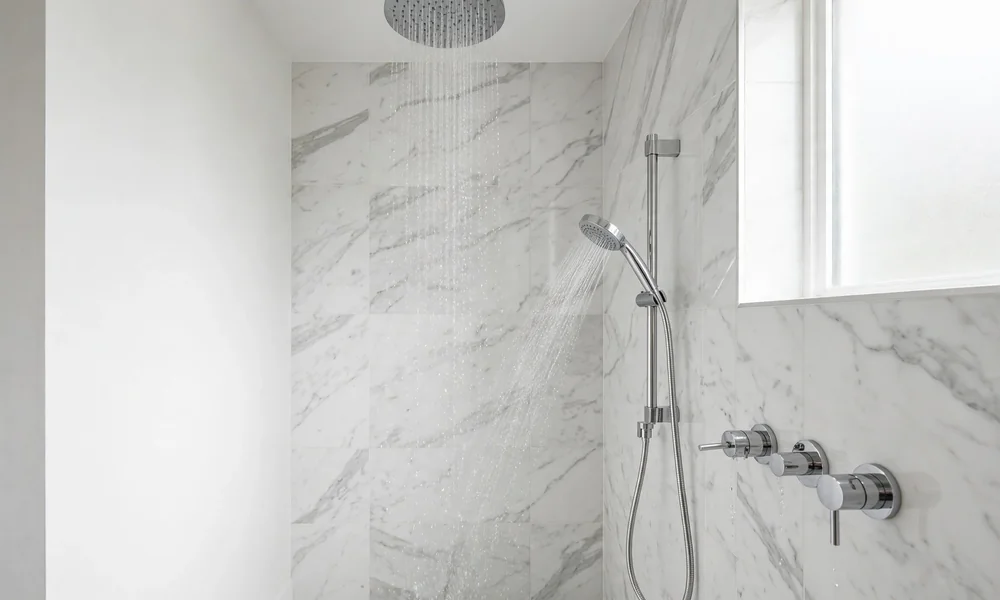
A dual system gives you a fixed rainfall head and a handheld head on the same fitting, with a diverter to switch between them or run both at once. It is the most flexible option for a hard-water household: the luxury of a rainfall spray and the cleaning power of a handheld in one installation. The handheld side is the workhorse, reaching every corner for rinsing and detaching for a quick vinegar soak. Dual systems cost more and need more wall space, but for a renovation in a hard-water area, this upgrade pays off every day.
Best High-Pressure: Anti-Clog High-Pressure Head
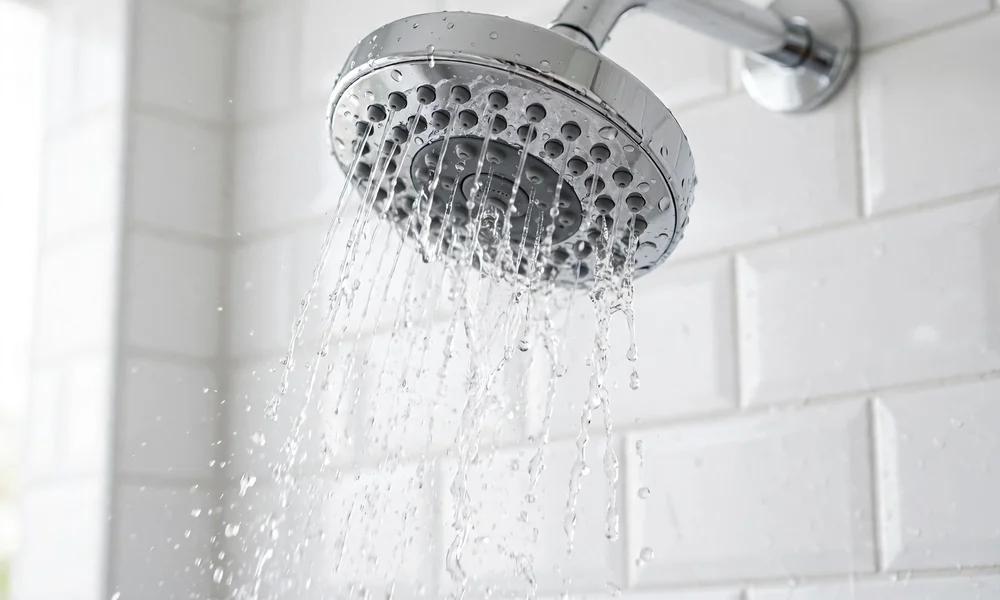
High-pressure shower heads use a smaller face and angled nozzles to concentrate the flow, producing a strong spray even when minerals are narrowing the openings. They are the best choice for homes where hard water and modest pressure make a normal head feel weak. Look for a model with a removable flow restrictor and silicone nozzles throughout. The trade-off is coverage: the spray is narrower than a rainfall head. For a powerful, no-nonsense shower, that is a fair exchange.
Best Budget: Simple Anti-Scale Fixed Head
You do not need to spend a lot to beat hard water. A simple fixed head with a full silicone face, a solid brass fitting, and no filter to replace can last for years with a monthly wipe and a quarterly vinegar soak. It has fewer parts to go wrong and no cartridges to buy. Choose a reputable make with a metal fitting rather than the cheapest plastic option, which cracks and stains as scale builds. For renters and landlords, it is the smartest spend.
Comparison Table
Use this table to compare the five types at a glance.
| Type | Best for | Hard-water feature | Maintenance |
|---|---|---|---|
| Filtered handheld | Most homes | Filter and silicone nozzles | Replace filter every 2 to 3 months |
| Wide rainfall | Large showers | Oversized silicone nozzles | Wipe after use, soak quarterly |
| Dual system | Renovations | Handheld plus rainfall | Clean both heads monthly |
| High-pressure | Weak pressure | Focused nozzles resist clogging | Wipe weekly, soak quarterly |
| Budget fixed | Renters | Full silicone face, simple build | Wipe monthly, soak quarterly |
How to Keep Your Shower Head Scale-Free
Even the best shower head for hard water needs a little care. After each shower, run your fingers across the nozzles to push out soft deposits before they harden. Once a month, unscrew the head and soak the face in white vinegar for an hour: the acid dissolves calcium without damaging chrome or silicone. For stubborn crust, use an old toothbrush after soaking, then rinse and refit. If you cannot remove the head, tie a vinegar-filled plastic bag around it for an hour.
Replace filter cartridges on schedule, because a spent filter restricts flow. Dry the shower after use when you can, since standing water leaves mineral behind as it evaporates. If you are refreshing the rest of the bathroom too, our guide to shower curtains for large bathrooms covers options that hold up well in hard-water homes.
Buyer Checklist
Run through this checklist before you buy.
- Check every nozzle is silicone, not just the ones in the centre.
- Confirm the head fits your existing shower arm or hose.
- Decide whether you want a filter, and check cartridge costs first.
- Match the head to your water pressure: rainfall heads need strong pressure, high-pressure heads suit weaker supplies.
- Choose brass or stainless steel over thin plastic, which cracks as scale builds.
- Check the head comes apart easily for a vinegar soak.
Frequently Asked Questions
Do filtered shower heads soften hard water?
Partly. A shower filter reduces sediment and chlorine and can soften water slightly, but it cannot turn very hard water soft. Combine a filtered head with silicone nozzles and a regular vinegar clean.
How often should I clean a shower head in a hard-water area?
Wipe the nozzles after each shower and soak the head in vinegar once a month. In very hard-water areas, a soak every two to three weeks keeps the spray strong. If the spray has already gone weak, a soak of a few hours will usually restore it.
Can I use vinegar on a chrome shower head?
Yes. White vinegar is safe for chrome, stainless steel, and silicone, and dissolves limescale well. Soak for up to an hour, or a few hours for heavy buildup. Avoid strong descaling chemicals on plated finishes, and never use abrasive pads, which scratch chrome.
Will a new shower head fix low water pressure?
It can help, but it cannot create pressure that is not there. A high-pressure head concentrates the flow and feels stronger, and a clean head sprays better than a clogged one. If your pressure is very low, a plumber can check the plumbing for blockages.
How long does a shower head for hard water last?
A well-made metal head with silicone nozzles can last five to ten years. Filtered heads last just as long, but their cartridges need replacing every two to three months. Cheap plastic heads often fail within a year or two, because scale cracks the fittings.
Are rainfall shower heads bad for hard water?
Not if you choose the right one. A rainfall head with oversized silicone nozzles and a removable faceplate copes well with hard water, as long as your pressure is strong enough. Cheap rainfall heads with small hard nozzles clog quickly, so check the nozzle material before you buy.
The Bottom Line
The best shower heads for hard water in 2026 treat limescale as a design problem, not an afterthought. Silicone nozzles you can wipe clean, a filter that catches sediment, solid materials that resist corrosion, and a head that comes apart for a soak are the features that matter. For most homes, a filtered handheld head is the best all-round choice. For larger bathrooms with strong pressure, a wide rainfall head or a dual system is hard to beat. Pick the type that fits your bathroom, keep it clean with a monthly vinegar soak, and hard water will stop ruining your shower.