What is the best bidet attachment for your toilet in 2026? The honest answer is that the best bidet attachments are the ones that fit your toilet, match your water pressure, and give you a spray you actually enjoy using every day. A bidet attachment is a slim add-on unit that fits under your existing toilet seat and turns an ordinary toilet into a washing one, without replacing the seat or calling a plumber.
This guide is strictly about retrofit bidet attachments and bidet sprayer attachments: the under-seat units and handheld sprayers that bolt onto the toilet you already own. It does not cover full electric bidet seats or standalone bidet basins, which are a different purchase with different costs. If you are still deciding whether a bidet suits you at all, our guide to what a bidet is and whether it is worth installing covers the whole idea first.
Key Takeaways
- A bidet attachment fits under your existing toilet seat and connects to the cistern supply, so most people install one in under an hour with a spanner.
- Under-seat attachments are the best choice for hands-free washing; handheld sprayers suit rinsing, cloth nappies, and cleaning the bowl.
- Check your toilet shape first: round, elongated, and square bowls, plus short bowls, all fit attachments differently.
- Cold water only is normal for non-electric attachments, so a gentle first spray and adjustable pressure matter more than extra features.
- Stainless steel nozzles, a metal T-valve, and a braided steel hose last far longer than all-plastic fittings.
How a Bidet Attachment Actually Works
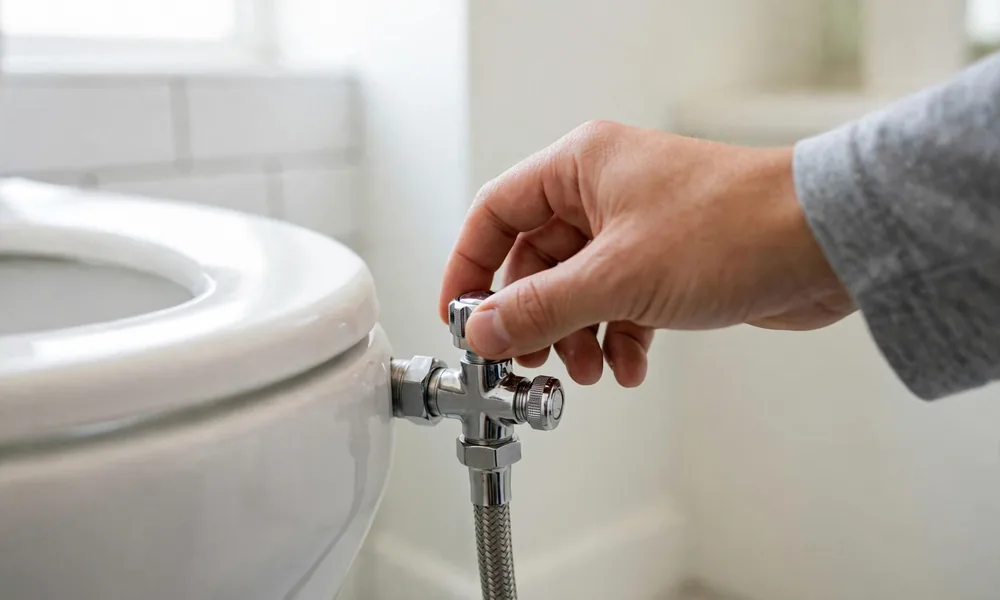
A bidet attachment is a thin plate, usually less than a centimetre thick at the back, that sits between your toilet bowl and your seat. Two nozzles sit inside it, folded away when not in use. When you turn the control dial, water from the cistern supply is diverted through a T-shaped valve into the attachment, the nozzles swing down into position, and a focused stream washes you. Turn it back and the nozzles retract.
The water is cold, because a non-electric attachment has no heater and taps the same cold supply as the cistern. The spray is brief and the water is room temperature most of the year, so most people adjust within a week. If warm water is a deal-breaker for you, that is a sign to look at an electric seat instead, not to buy a fancier attachment.
There are two broad families. Under-seat attachments do the washing for you while you sit, with a dial on the side of the bowl. Handheld sprayers, sometimes called shattaf sprayers, are a small shower head on a hose mounted beside the toilet, and you aim them yourself. Both are renter-friendly, coming off again with no trace.
The Best Bidet Attachments of 2026
The six types below cover every home, from a rented flat with a round bowl to a family bathroom with high water pressure. Pick by toilet shape and spray control first, then by nozzle material and extras.
1. Dual-Nozzle Under-Seat Attachment: Best Overall
The dual-nozzle under-seat attachment is the one to buy if you only buy one. Two nozzles, one for a rear wash and one for a front wash, give you a proper choice. A dial on the side controls pressure from a gentle rinse to a firm stream, and the best models let you angle the spray slightly. Stainless steel nozzles are worth paying a little extra for: they stay cleaner, they do not stain, and they retract smoothly after years of use. It fits most elongated and round bowls and installs in about half an hour.
2. Single-Nozzle Under-Seat Attachment: Best Budget Pick
A single-nozzle attachment does one job and does it well. One nozzle, one dial, one spray pattern, at often half the price. The spray is fixed in position, so it suits people whose toilet and seating position are standard, and it is the easiest type to fit because there is less to align. The trade-off is flexibility: there is no separate front wash, and the pressure range tends to be narrower. For a first bidet, a spare bathroom, or a household that wants to test the idea cheaply, this is the sensible starting point.
3. Self-Cleaning Nozzle Attachment: Best for Hygiene
Self-cleaning models rinse their nozzles before and after every use, and some add a guard that shields the tips from the bowl. The cleaning cycle runs automatically when you turn the dial, so there is nothing to remember and nothing to switch on. These attachments usually pair the self-cleaning nozzles with dual spray modes and a slightly sturdier build, which is why they cost a little more. Wipe the nozzles by hand once a month anyway, because no automatic rinse replaces an occasional wipe.
4. Adjustable-Pressure Attachment: Best for Sensitive Skin
Adjustable-pressure attachments use a fine control dial that goes from barely-there to firm in small steps, with no sudden jump. That matters if you have sensitive skin, piles, or you are buying for an older relative who will be put off by one startling blast. The best of these also offer a wide, soft spray pattern rather than a single needle jet, which spreads the water and feels gentler at the same pressure. This is the kindest attachment in the round-up and the one most likely to convert a sceptic.
5. Handheld Bidet Sprayer: Best for Versatility
A handheld sprayer is a small trigger-operated head on a hose, mounted beside the toilet. You aim it yourself, so it works for washing, rinsing cloth nappies, and cleaning the bowl. It is also the easiest type to install on an awkward toilet, because there is no plate to align under the seat. The catch is that it needs a hand to operate, so it is less convenient for the everyday wash than an under-seat unit, and a sprayer left on with the trigger squeezed can leak, so the shut-off valve matters.
6. Warm-Water Ready Attachment: Best for Cold Bathrooms
A few non-electric attachments can mix in warm water from a nearby basin supply, using a second hose and a mixing valve. They do not heat water themselves, so they only work if a hot supply is close enough to reach. But if your basin is beside the toilet and your bathroom is cold in winter, this type solves the one real complaint about attachments: the cold first spray. Installation takes longer, usually an hour or so, and you need to be comfortable connecting two supply lines.

Bidet Attachment Comparison
| Type | Best For | Spray Control | Install Time | Price Range |
|---|---|---|---|---|
| Dual-nozzle under-seat | Most homes | Rear + front, dial | 30 minutes | Mid |
| Single-nozzle under-seat | Budget first try | One jet, dial | 20 minutes | Low |
| Self-cleaning nozzle | Shared bathrooms | Dual, auto-rinse | 30 minutes | Mid to high |
| Adjustable-pressure | Sensitive skin | Fine dial, wide spray | 30 minutes | Mid |
| Handheld sprayer | Versatility, awkward bowls | Trigger, aim by hand | 20 minutes | Low to mid |
| Warm-water ready | Cold bathrooms | Dual, mixed supply | 60 minutes | High |
How to Pick the Right Bidet Attachment
Start with the toilet, not the attachment: measure the distance between the two seat-bolt holes, note whether your bowl is round, elongated, or square, and check the fit range before you order. Short bowls are the most common problem: the nozzle can end up too far forward, so the spray misses. Square and D-shaped bowls can also leave the plate sitting awkwardly. Most good attachments list the bowl shapes they fit, and a quick measure saves a return. Your existing seat matters too, so read our guide to the best toilet seats for comfort and easy cleaning if yours is worn out.
Next, check your water pressure. Very low pressure gives a weak, dribbly spray, and very high pressure can make even the lowest dial setting feel fierce. Most homes sit in the comfortable middle, but if your taps are notably weak or strong, choose an attachment with a wide pressure range and a fine dial. Then check the parts list: stainless steel nozzles, a metal T-valve, and a braided steel hose are the signs of a kit built to last. Finally, think about who uses it: children and older relatives need a gentle lowest setting and a simple dial.
Installing a Bidet Attachment in Under an Hour
Installation is straightforward and needs no special skill. Turn off the water at the cistern supply valve, flush the toilet, and sponge out the water left in the cistern. Unscrew the flexible hose from the cistern inlet, fit the T-valve in its place, and reconnect the hose to the T-valve. Lift the toilet seat, set the attachment plate on the bowl, and refit the seat bolts through the plate. Connect the attachment hose to the T-valve, turn the water back on slowly, and check every joint for drips before you sit down.
Two details catch out first-timers: do not overtighten the plastic nuts, and test the spray into the bowl at the lowest pressure before using it properly. If a joint weeps, turn the water off, dry the joint, add a wrap of plumber’s tape, and retighten gently.
Mistakes to Avoid With Bidet Attachments
The most common mistake is buying before measuring the bowl, so the spray lands in the wrong place. The second is choosing the cheapest all-plastic kit, which leaks at the valve within a year. The third is forgetting the attachment when cleaning: nozzles need a wipe and the plate needs a clean under the seat, just like the rest of the toilet. Our guide to toilet cleaners that cut through grime covers products that clean well without damaging fittings.
Bidet Attachment Buying Checklist
- Measure the seat-bolt spacing and confirm your bowl shape fits the attachment.
- Choose under-seat for hands-free washing or handheld for versatility and rinsing.
- Pick stainless steel nozzles, a metal T-valve, and a braided steel hose.
- Check the lowest pressure setting is gentle enough for sensitive skin.
- Confirm the kit includes every fitting, including the T-valve and hoses.
- Test the spray into the bowl at low pressure before first proper use.
Frequently Asked Questions
Do bidet attachments fit all toilets?
Most, but not all. Standard round and elongated two-bolt toilets fit nearly every attachment. Very short bowls, square bowls, some one-piece toilets, and toilets with the cistern supply in an unusual place can be a problem,
Is the water cold?
Yes, on a standard non-electric attachment the water comes from the cold cistern supply. It is room temperature rather than icy for most of the year, and most people stop noticing it within a week. Warm-water-ready models exist, but they need a hot supply nearby.
Do I need a plumber to install one?
Usually not. If you can turn off a valve and use a spanner, you can fit an attachment in under an hour.
Can renters use a bidet attachment?
Yes, and this is one of their biggest advantages. An attachment fits without drilling or permanent changes and comes off again when you move, leaving the toilet exactly as it was.
How do I clean a bidet attachment?
Wipe the nozzles and plate weekly with a mild cleaner and a soft cloth, and run the self-cleaning cycle if your model has one. Avoid harsh bleach and abrasive pads, which damage nozzles and seals.
Does a bidet attachment replace toilet paper?
Mostly, but not entirely. You still need a small amount of paper to pat dry, unless you add a dryer, which attachments do not have. Most households cut their paper use by well over half, which is where the savings come from.
The Bottom Line
The best bidet attachment in 2026 is the dual-nozzle under-seat model for most homes: it fits in under an hour, costs little, washes properly, and comes off again if you move. The single-nozzle version is the cheapest first try, and a handheld sprayer suits awkward bowls. Measure the toilet first, choose metal fittings over plastic, start the spray low, and you will wonder why you waited so long.