How to Choose the Best Bike Tires in 2026
Choosing the best bike tires in 2026 starts with an honest look at where you actually ride, not where you wish you rode. A road tyre feels fast on tarmac, then slides and punctures on the first gravel track. A knobby mountain bike tyre grips mud and roots, then buzzes, drags, and wears quickly on the daily commute. The right tyre matches your roads, your weather, and your willingness to trade a little speed for grip, or a little grip for speed.
These are bicycle tires, and that distinction is worth stating plainly. Car tires are built for tonnes of weight and high speeds; bike tires carry a rider and a frame, and are chosen by width and tread pattern. The best bike tires in 2026 are light, supple, and specific: a road tyre, a gravel tyre, and a mountain bike tyre are three different tools, and the wrong one will make every ride harder than it needs to be.
Key Takeaways
- Match the tire to the surface you ride most: slick for tarmac, file tread for gravel, knobby for trails.
- Width changes the ride more than brand does: wider tires roll more comfortably at lower pressure.
- Tread depth is your simplest check: a worn center line means the tire should be replaced.
- Puncture protection is worth the small weight penalty for commuting and touring, where a flat costs you time.
- Check the size on your current tire sidewall before ordering, and confirm your frame has clearance for wider tires.
Start With the Surface You Ride Most
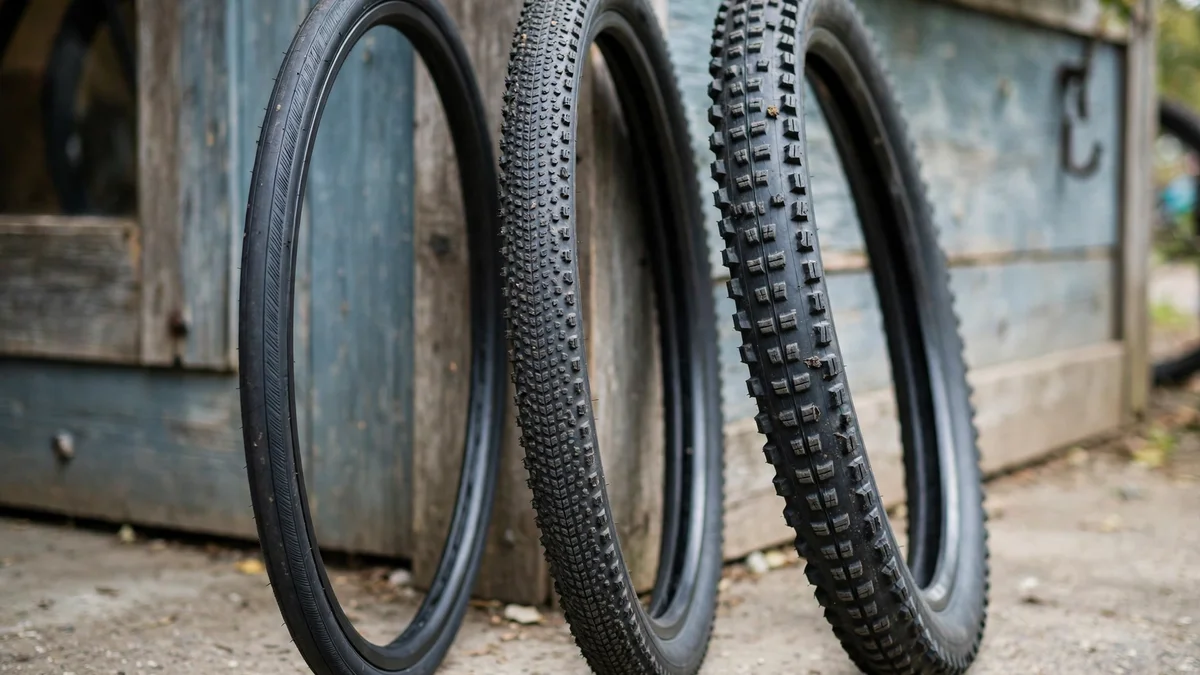
Road riding rewards a slick or nearly slick tread. On smooth tarmac, grip comes from the rubber compound touching the road, not from tread blocks, so a smooth tire puts the most rubber down and rolls with the least resistance. Deep knobs on a road tire only add noise, drag, and wear. If nine rides out of ten are on tarmac, buy a road tire and accept that the tenth ride will be slower.
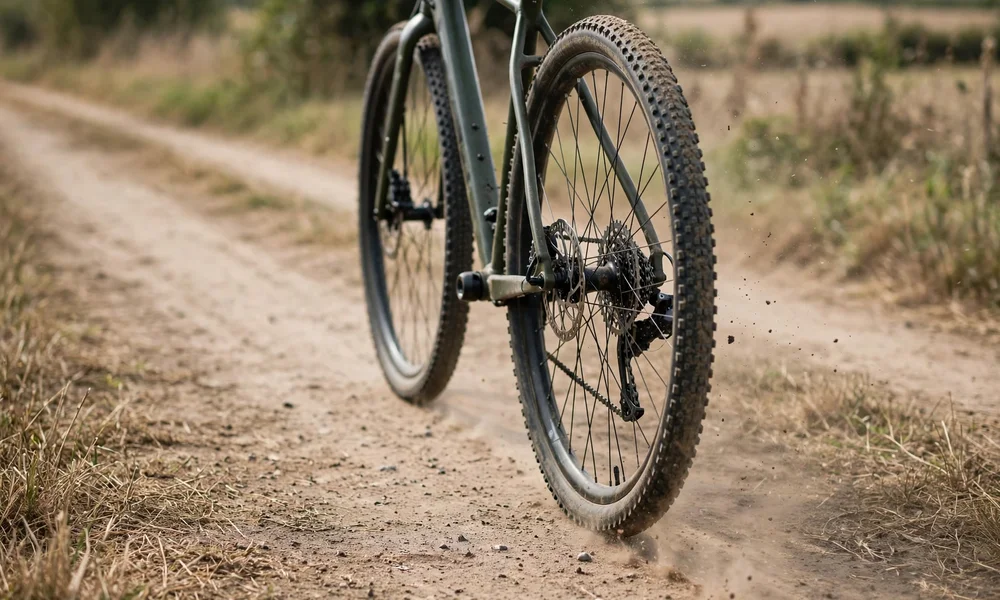
Gravel riding sits in the middle. A gravel tire needs a fast-rolling center so it does not drag on hardpack, with side knobs that bite when the surface loosens or the corner tightens. Go too knobby and the tire feels sluggish on the road sections between trails; go too slick and the first loose descent will remind you of the compromise.
Mountain biking needs real knobs. Loose dirt, roots, mud, and rocks demand tread blocks tall enough to dig in and spaced widely enough to shed mud. Front and rear tires can even differ: a grippier tire up front for steering and braking, a faster-rolling tire at the back for pedalling efficiency. Commuting rewards a tire with a puncture protection belt and a reflective sidewall, because the fastest commute is the one without a flat in the rain.

Width: The Change You Will Actually Feel
Width is the single biggest choice after tread, and the trend in 2026 is wider than it used to be. Road riders who once ran 23-millimetre tires now commonly ride 28 or 30, and gravel riders run 40 or more. A wider tire holds more air, so it can run at lower pressure without pinching, and lower pressure means the tire deforms around bumps instead of bouncing over them. The result is a smoother ride on real roads, which are never as smooth as a velodrome.
Lower pressure also means more grip. A wider tire at the right pressure puts a larger contact patch on the road, and that patch is shorter front to back, which rolls more efficiently than the long, narrow patch of a skinny tire at high pressure. The old idea that narrow and hard is always faster has not survived contact with real-world testing. Wider is not always better, though: go too wide and the tire rubs the frame, the forks, or the mudguards.
Before you order a wider tire, check two numbers. First, the clearance on your frame and fork: most road frames now accept 30 or 32 millimetres, but older frames may stop at 25. Second, the internal width of your rims, because a tire that is too wide for a narrow rim sits lightbulb-shaped and handles poorly. The tire sidewall prints the size, and your frame maker lists the maximum clearance. Measure before you buy, not after.
Reading the Tread: What the Pattern Tells You
A tire tread is a map of its intentions. A slick center with fine grooves is built for tarmac and wet roads, where the grooves channel water away. A file tread, a dense pattern of tiny raised squares, is built for hardpack gravel, where it adds bite without much drag. Widely spaced square knobs are built for loose dirt and mud, where each knob digs in and the gaps clear debris. Side knobs larger than the center knobs are built for cornering grip, biting when the bike leans.
Wear shows in the tread too. On a road tire, the center line goes smooth and shiny as the rubber thins. On a knobby tire, the leading edges of the knobs round off and the knobs start to tear at the base. A tire with worn tread grips less in the wet, punctures more easily because there is less rubber to stop a thorn, and is more likely to fail suddenly. Replace a tire when the tread is visibly worn, not when it finally gives up.
Cuts and bulges are a more urgent warning than wear. A cut that shows the threads underneath can blow out under pressure, and a bulge means the casing cords have broken. Either one means the tire comes off the bike now. Inspect your tires once a week, running a cloth over the tread to catch embedded glass and flints before they work through to the tube.
Compounds, Casings, and Puncture Protection
The rubber compound decides how a tire grips and how long it lasts. Softer compounds grip better, especially in the wet, but wear faster. Harder compounds last longer but can feel slippery on damp roads. Most good tires use two or three compounds: a harder center for durability and softer shoulders for cornering grip. The threads per inch, or TPI, of the casing decides how supple the tire feels. A high-TPI casing, 120 or more, conforms to the road and feels fast; a low-TPI casing is stiffer and tougher, which suits touring and rough use.
Puncture protection is a layer built into the tire, usually a band of tough fabric or rubber under the tread. It stops most thorns and shards of glass before they reach the tube, and for commuters and tourers it is the best money in cycling. The cost is a little weight and a slightly stiffer ride, which is a fair trade when a flat means being late for work. Racers often skip it, accepting the risk for the speed, but they also have a team car behind them.
| Tire type | Tread | Typical width | Best for |
|---|---|---|---|
| Road | Slick or light file tread | 25-32 mm | Tarmac, speed, long rides |
| Gravel | File center, knobbed shoulders | 35-45 mm | Mixed surfaces, rough lanes |
| Mountain | Tall, widely spaced knobs | 2.1-2.6 in | Trails, mud, loose dirt |
| Commuter | Slick with protection belt | 32-40 mm | Daily riding, wet roads |
Pressure: The Free Upgrade
Pressure matters as much as the tire itself, and it is free to get right. Too high and the tire bounces over bumps, grips less, and transmits every jolt to your hands. Too low and the tire squirms in corners, rolls slowly, and risks pinch flats against the rim. The right pressure depends on your weight, the tire width, and the surface, so the number printed on the sidewall is a maximum, not a target. Start near the middle of the recommended range and adjust by feel.
Check pressure with a gauge, not your thumb: a tire can feel firm at half its proper pressure, and guessing is how pinch flats happen. A floor pump with a gauge at home and a mini pump on the bike cover both ends. Our guide to the best bike pumps covers floor and mini pumps in detail, and a small gauge is the other half of the job: see the best tyre pressure gauges for the most accurate options. When a flat does strike, a tire repair kit can get you home, though for bike tires a spare tube is usually the faster fix.
When to Replace Your Bike Tires
Tires do not last forever, and the signs are easy to read. The tread wears thin in the center, the sidewalls crack with age and sun, and small cuts accumulate until one of them goes through. A tire that has done several thousand miles owes you nothing, and replacing it before it fails is cheaper than the crash or the long walk home that follows a blowout. Rubber hardens over years even if the tire has not been ridden, so a tire that has sat in a shed for five years is not a new tire.
Rotate your tires if the rear wears faster than the front, which it usually does, because the rear carries more weight. Move the front tire to the rear and fit the new tire on the front, where grip matters most for steering and braking. Never put a worn tire on the front wheel: a front blowout is far harder to control than a rear one.
Keep a spare tire at home if you ride often. Tires fail at inconvenient times, and a spare on the shelf turns a ruined weekend into a twenty-minute job. A spare tube alongside it, already checked for the right size and valve, completes the kit.
Before You Buy: A Quick Checklist
- Note the size printed on your current tire sidewall before shopping.
- Pick the tread for the surface you ride most.
- Check frame, fork, and rim clearance for the width you want.
- Choose puncture protection for commuting and touring; skip it only for racing.
- Check the tire for cuts, bulges, and worn tread every week.
- Set pressure with a gauge, and re-check it before every long ride.
Frequently Asked Questions
What size bike tires do I need?
Read the numbers on your current tire sidewall. The first number is the wheel diameter and the second is the width. Match the diameter exactly, and stay within the width your frame and rims can accept.
Are wider bike tires slower?
Not on real roads. A wider tire at the right pressure has a shorter, wider contact patch that rolls efficiently and absorbs bumps instead of bouncing.
How long do bike tires last?
A road tire typically lasts 2,000 to 4,000 miles. Replace any tire with a worn tread, cracked sidewalls, or a cut that shows the casing threads.
Can I put a wider tire on my current rims?
Usually, within limits. A tire far wider than the rim handles poorly, so check your rim maker’s range and frame clearance first.
Do I need tubeless tires?
Not necessarily. Tubeless tires seal small punctures by themselves, which suits gravel and mountain biking. A good tire with an inner tube is simpler and cheaper, and still the right choice for many riders.
Why do my tires keep getting flats?
Check three things: pressure, because soft tires pinch; the tire, because an embedded thorn keeps puncturing every new tube; and the rim tape, because a spoke can wear a hole from the inside.
The Bottom Line
The best bike tires in 2026 are the ones that fit your riding, not someone else’s. A slick road tire for tarmac, a file-tread gravel tire for mixed surfaces, a knobby tire for trails, and a protected tire for the daily commute. Get the size right, set the pressure with a gauge, and replace the tire when the tread tells you it is done.