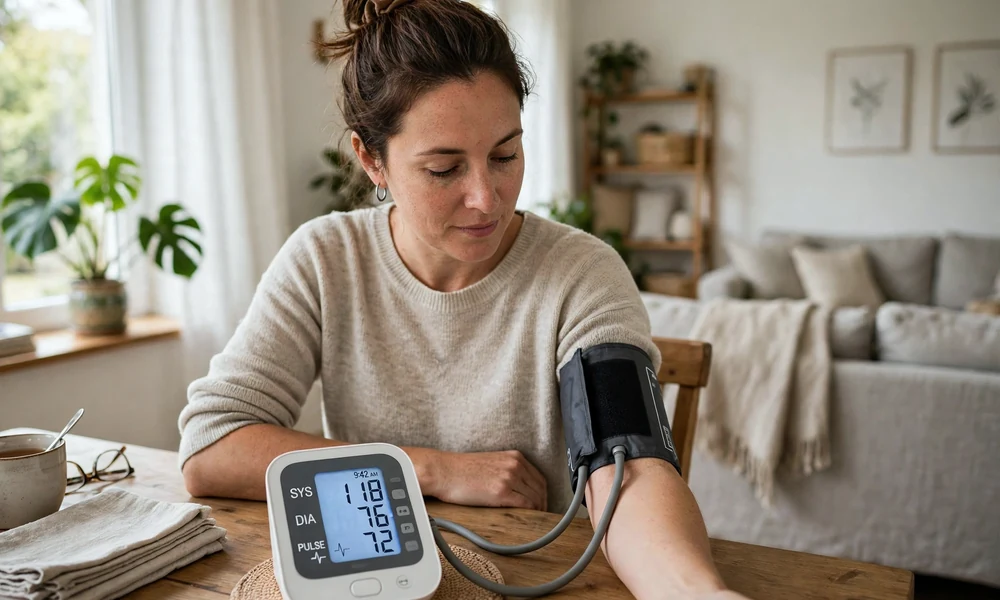
A good blood pressure monitor does one job well: it gives you a clear, repeatable reading at home without fuss. The best blood pressure monitors of 2026 are the ones that fit your arm properly, inflate smoothly, show large easy-to-read numbers, and store your readings so you can see a pattern over time rather than fixating on a single number. This guide compares the types, explains what actually affects accuracy, and helps you pick a monitor you will actually use.
Before you compare brands, start with your arm. Cuff size matters more than almost any feature on the box. A cuff that is too small squeezes too tightly and can read high; a cuff that is too loose can read low. Measure around the middle of your upper arm and match that number to the cuff size range printed on the packaging. Many monitors now ship with a wide-range cuff that covers most adult arms, and that is a sensible default if you are buying for a shared household.
Consistency matters as much as a single reading. Blood pressure changes through the day, after meals, after exercise, and when you are rushed or cold. That is why most guides suggest taking readings at a similar time of day, sitting quietly for a few minutes first, with your feet flat on the floor and your arm supported at heart level. A monitor with a generous memory, or one that averages several readings, helps you see the trend instead of reacting to one unusual number.
Upper-arm monitors: the default choice
Upper-arm monitors are the most common recommendation for home use, and for good reason. The upper arm is a stable measurement site, the cuffs come in a wide range of sizes, and the machines are simple to operate. Most have a large display, a single start button, and a memory that holds dozens or even hundreds of readings for one or two users. If two people in the house will share one monitor, a two-user memory is a genuinely useful feature, not a gimmick.
Display quality is easy to overlook until you use the monitor every morning. Large digits, strong contrast, and a backlight make a real difference in a dim bedroom. Some models add a simple colour indicator next to the reading, and some show an irregular heartbeat symbol if the rhythm looks uneven during measurement. These are prompts to repeat a reading or mention it to a healthcare professional, not diagnoses in themselves.
Wrist monitors: small, portable, and fussier
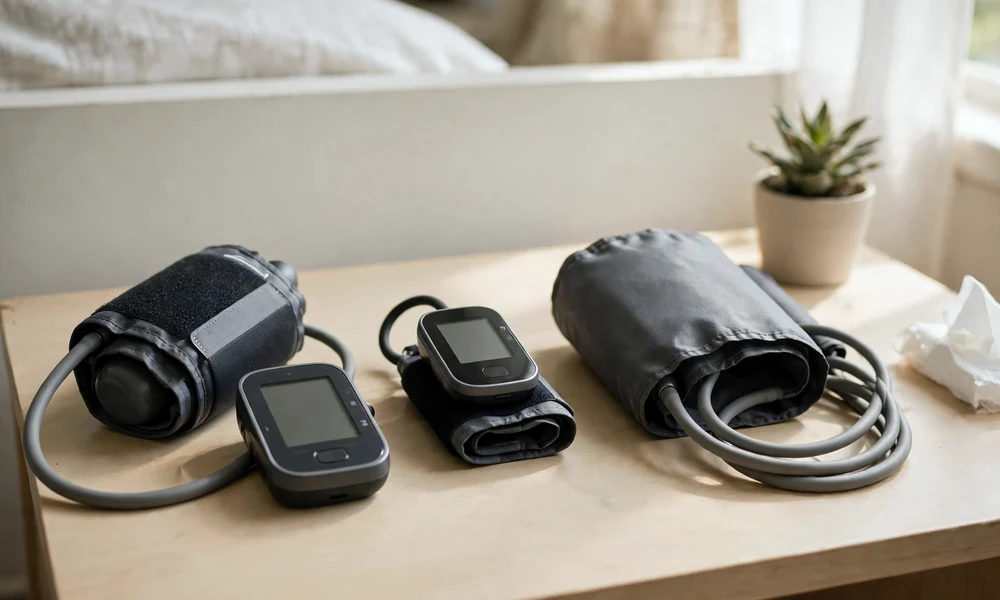
Wrist monitors appeal to travellers and to anyone who finds an upper-arm cuff uncomfortable. They are light, they pack into a small case, and they work well in a hotel room or an office drawer. The trade-off is position: the wrist must be held at heart level, and even a small tilt changes the result. Some wrist models include a position sensor that warns you when your wrist is too high or too low, and that feature is worth having if you go this route.
For most households, an upper-arm model is the safer first purchase, with a wrist model as a second monitor for travel. That combination covers both daily use at home and readings away from home, without asking one device to do everything.
Cuff fit: the detail that decides everything
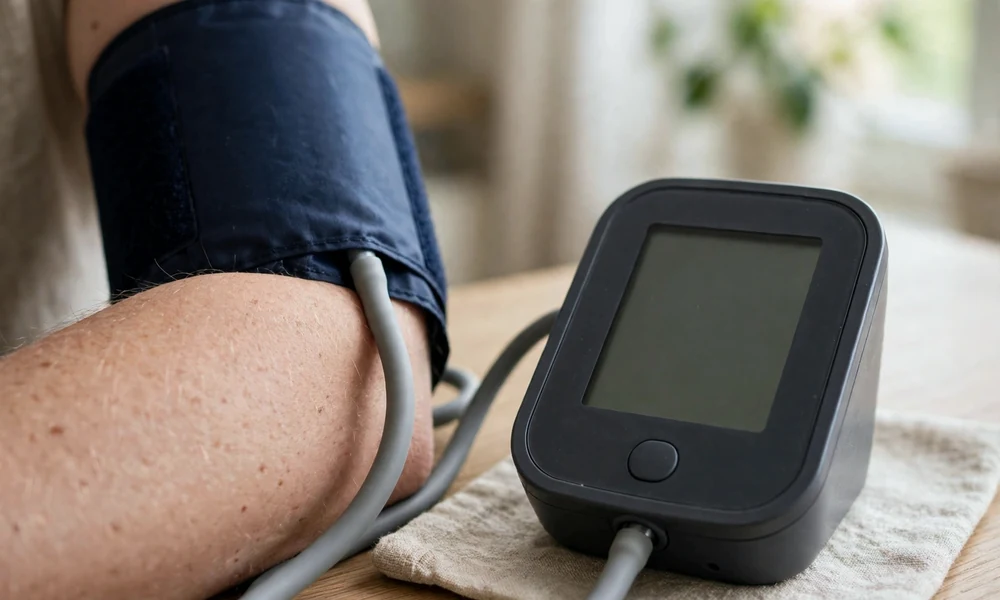
Getting the cuff right is a practical skill, not a mystery. Sit down, rest for a few minutes, and put the cuff on bare skin if you can, or over a thin sleeve at most. The cuff should sit about two centimetres above the elbow, with the tube or marker lined up with the inside of your arm. It should feel snug but not tight: you should be able to slide two fingertips under the edge, but not much more.
Children and very slim or very large adults need a cuff matched to their arm, not the one that happened to come in the box. Using the wrong size is one of the most common reasons home readings look inconsistent, and it is also one of the easiest to fix. Measure once, write the number down, and check it against the size chart every time you buy a new cuff.
What affects a reading at home
A simple routine solves most of it. Sit in the same chair, at a similar time, after a short rest. Keep your feet flat, your back supported, and your arm on a table so the cuff is roughly level with your heart. Take two readings a minute or two apart and note both, or use a model that averages them for you. Over a week, the pattern tells you far more than any single morning.
It also helps to keep the monitor itself in good order. Check the batteries or charge regularly, keep the cuff clean and dry, and store the machine somewhere it will not be knocked about. A cuff that is kinked, cracked, or frayed should be replaced, and a monitor that has been dropped is worth checking before you trust its next reading. Like the scales in the bathroom, a home health device works best when it is treated as a household tool and looked after: our guide to the best bathroom scales 2026 covers the same idea of a simple, repeatable daily routine.
Features worth paying for
Beyond the basics, a few features earn their price. A large memory with date and time stamps lets you review a week at a glance. An averaging mode takes the guesswork out of repeat readings. Bluetooth and a companion app can log readings automatically, which is handy if you like charts or want to share a summary with a healthcare professional. None of these change the measurement itself, but they change whether you keep using the monitor.
What is not worth paying for is a long list of exotic extras you will never open. A monitor is a daily tool, not a gadget collection. Spend your budget on cuff quality, display clarity, and a memory you can actually read back. If an app is part of the deal, check that it works with your phone and that exporting your readings is simple before you commit.
Apps, memory, and sharing your readings
Connected monitors have become common, and the best apps do three things well: they save each reading automatically, they show a clear trend over days and weeks, and they let you export or share a simple summary. If you already track steps, sleep, or activity, a blood pressure app that sits alongside those records can make the habit stick. Our roundup of the best vs worst fitness trackers 2026 looks at the same question of which health gadgets actually get used after the first month.
For households that share one monitor, look for separate profiles or a clear way to mark whose reading is whose. Mixing two people’s readings into one average is a common frustration, and it is entirely avoidable with a two-user memory or a simple notebook habit alongside the machine.
How to choose for your household
Start with who will use the monitor and where. A single user at home needs a comfortable upper-arm cuff in the right size, a clear display, and a memory of at least a few dozen readings. A couple sharing one machine needs two-user memory and possibly two cuff sizes. A frequent traveller needs a compact wrist model or a small upper-arm unit that packs flat.
Finally, consider power. Mains-powered monitors never run flat mid-reading, but they need a socket nearby. Battery models are portable and simple, and rechargeable ones save on disposable batteries over time. Whichever you choose, keep spare batteries or a charger where you keep the monitor, so a flat battery never becomes the reason you skip a week.
Care, storage, and when to replace
A blood pressure monitor is a low-maintenance device, but it still benefits from a little care. Wipe the cuff with a damp cloth if it gets dusty, let it dry fully before storing, and keep the tube loosely coiled rather than sharply bent. Store the monitor in its case or on a shelf where it will not be knocked off, and keep it away from heat and damp.
Most monitors last for years, but cuffs wear out first. If the fabric frays, the hook-and-loop fastening stops gripping, or the cuff no longer holds its shape, replace the cuff rather than the whole machine if the manufacturer sells spares. A monitor that gives wildly different readings from one minute to the next, despite a steady routine, is worth checking against another machine or asking a healthcare professional to look at it.
It is also worth keeping a small home health kit together, so the monitor, its spare batteries, and a simple log live in one place. Our guide to the best first aid kits 2026 covers the same habit of keeping everyday health essentials organised and easy to reach.
Common mistakes to avoid
The most common mistake is measuring once, in a rush, and treating that number as the whole story. A single reading is a snapshot, and snapshots vary. Two readings, taken calmly, tell you more, and a week of them tells you more still. Building a short routine is the single most useful thing a home monitor can teach.
The second mistake is the wrong cuff size, which we have already covered, but it is worth repeating because it is so common. If you are between sizes, most manufacturers suggest the larger cuff, and a wide-range cuff is a good compromise for a shared household. Do not guess your size from your shirt size; measure your arm.
The third mistake is comparing readings from different arms, different positions, or different machines and worrying about the gap. Arms can differ slightly, wrist and upper-arm readings can differ, and two monitors can disagree by a few points. That is why a consistent routine with one monitor matters more than owning several. Pick your main monitor, use it the same way each time, and let the trend do the talking.
The verdict
For most people, the best blood pressure monitor in 2026 is a validated upper-arm model with a wide-range or correctly sized cuff, a large backlit display, a memory that holds at least a month of readings, and a simple one-button operation. That combination covers daily home use, suits a shared household, and keeps the habit easy enough to maintain.
Add a wrist model only if you travel often or need something genuinely portable, and choose one with a position sensor so the fussier measurement site does not undermine the result. Skip manual monitors unless you already know how to use one, and skip feature-heavy models whose apps you will never open.
Whatever you buy, the monitor itself is only half the purchase. The other half is the routine: the same chair, the same time of day, a short rest first, and a cuff that fits. Get those right, and any good monitor from this guide will give you a clear, useful picture over time. This is general product information, not medical advice; if you have questions about your own readings or your health, talk to a healthcare professional.