
The best camping cups of 2026 are the ones you reach for without thinking: light enough to toss in a pack, tough enough to survive a drop on rocks, and pleasant enough to hold while you watch the morning fog lift off the lake. A good camping cup is a small thing, but it is in your hand at the best moments of a trip — the first coffee of the day, cocoa by the fire, water at a dusty trailhead. Get it wrong and every drink is a small annoyance: a rim that burns your lip, a cup that cools in minutes, a base that tips on uneven ground.
This guide compares the best camping cups of 2026 across the materials and designs that matter outdoors: classic enamel, single-wall stainless steel, insulated steel, titanium, and tough plastic. Every cup was judged on weight, durability, heat handling, packability, ease of cleaning, and how good it feels to drink from. Whether you camp by car with the whole family or hike light with everything on your back, you will find a cup here that fits your kit and your budget.
Key Takeaways
- Insulated stainless steel keeps drinks hot the longest, often for over an hour, and is the safest all-round choice for most campers.
- Titanium cups are the lightest option for backpackers, often under 100 grams, yet they conduct heat quickly and need a careful grip.
- A 12-ounce cup suits most solo campers, while 14 to 16 ounces suits slow mornings, soup, and shared cocoa rounds.
What Makes a Great Camping Cup
A camping cup earns its place by solving outdoor problems, not by looking good on a shelf. At home, a cup only needs to hold a drink and look pleasant. At camp, it must hold heat through a slow conversation, resist chips and dents, pack without wasting space, and clean up with a splash of water. The wrong cup cools your coffee in ten minutes, burns your hands on the rim, or cracks the first time it meets a rock.
Material is the first decision. Enamel over steel is the traditional camp cup: it can sit near a fire, goes straight onto a camp stove to reheat, and costs very little. Stainless steel is tougher and will not chip, and double-wall insulated versions keep drinks hot far longer. Titanium is feather-light for hikers who count every gram. Hard plastic cups are cheap, light, and safe for children, though they cannot go near heat and they stain over time.
The 10 Best Camping Cups of 2026
1. The Classic Enamel Camp Cup
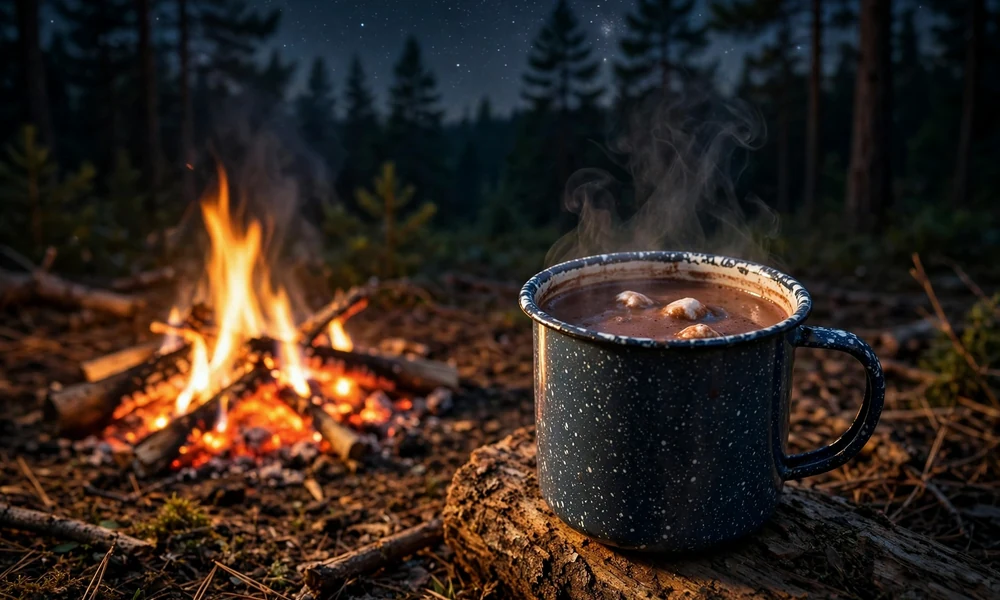
The enamel camp cup is the image most people carry in their heads when they think of camping, and it is still one of the best camping cups you can buy. A steel core coated in speckled enamel, it shrugs off drops, sits happily on a camp stove, and costs less than a campsite coffee. It cools drinks quickly and the rim can get hot, so sip carefully, but for car camping and fireside evenings it is hard to beat. Buy one per person and let the chips tell the story of your trips.
2. The Insulated Steel Cup
If you only buy one camping cup, make it an insulated stainless steel one. Double-wall vacuum insulation keeps coffee hot for well over an hour, the outside stays cool to the touch, and the steel shrugs off drops that would shatter ceramic. It is heavier than enamel or titanium, and it must never go directly on a fire, but for slow mornings at a picnic table it is the most forgiving cup on this list. Look for a version with a splash-proof lid if you drink on the move.
3. The Ultralight Titanium Cup
For backpackers, the titanium cup is the obvious winner. At under 100 grams it weighs less than a chocolate bar, it will not rust or break, and it nests neatly inside a cook pot. The trade-off is heat: titanium conducts it fast, so the rim and walls get hot with boiling water, and drinks cool quickly in cold air. Pair it with a silicone grip or a simple cloth sleeve and it becomes a superb trail cup. It is the cup for people who measure their kit in grams, not ounces.

4. The Single-Wall Steel Cup
The single-wall steel cup is the workhorse of the camp kitchen. It is nearly indestructible, easy to clean, and cheap enough to buy in sets for the whole family. It can be heated directly over a stove or held near coals to warm a drink, which makes it genuinely useful beyond drinking: heat water, melt snow, or warm soup in it. It does not keep drinks hot for long and the outside gets hot, so it suits campers who drink fast and pack light rather than slow sippers.
5. The Stackable Camp Cup Set
A set of cups that nest into a single neat stack solves the oldest family camping problem: four people, four cups, and no room in the box. Stackable steel or plastic cups pack into the space of one, weigh almost nothing extra, and mean nobody is left drinking from a water bottle. Choose a set with slightly different colours or markings so everyone knows their cup. The best sets include a mesh bag for storage, which keeps the stack together and lets wet cups dry on the way home.
6. The Insulated Cup With Lid
A lid changes a camping cup from a fireside luxury into an all-day tool. It keeps heat in, keeps ash, dust, and insects out, and stops spills when the cup rides in a car door pocket or a backpack side pocket. Insulated cups with lids are the best choice for road trips, beach days, and campsites with curious toddlers. Check that the lid seals well, comes apart for cleaning, and does not trap smells after a day of coffee. A sliding sip opening is easier to use with cold hands than a small spout.

7. The Collapsible Silicone Cup
The collapsible silicone cup is the most packable cup on this list: it flattens to the thickness of a coaster and fits in a jacket pocket. It is ideal as a backup cup, a kids cup, or a second cup for tastings at a campfire cookout. It will not keep drinks hot for long and it needs a flat surface to stand on, so it is not a replacement for your main cup. But for hikers and travellers who want a cup that disappears when it is not needed, nothing else comes close.
8. The Big 16-Ounce Camp Cup
Some campers want a cup that holds a proper serving: a big mug of cocoa, a bowl of soup, or a slow second coffee that lasts through a long conversation. The 16-ounce camp cup, usually in enamel or insulated steel, is that cup. It is too large and heavy for ultralight hiking, but for car camping and family trips it is the most satisfying size on this list. A wide, stable base matters more at this size, since a full big cup tips more easily on soft ground.
9. The Kids Camping Cup
Children need their own cup at camp, and the best kids camping cups are small, light, and nearly impossible to break. Hard plastic or small steel cups in bright colours, around 8 to 10 ounces, fit small hands and survive being dropped, stepped on, and left in the dirt. Avoid glass and thin ceramic, and skip lids with small parts that get lost in the grass. A cup a child likes is a cup a child will actually use, so let them pick the colour.
10. The Double-Wall Enamel-Look Cup
The double-wall enamel-look cup gives you the classic camp look with modern insulation: a speckled finish outside and a vacuum-insulated steel core inside. It keeps drinks hot far longer than a traditional enamel cup while looking right at home on a wooden camp table. It costs more than plain enamel and it cannot go on a fire, but if you love the look of the classic camp cup and hate cold coffee, this is the best of both worlds.
How to Choose the Right Camping Cup
Start with how you camp, not with the cup. A backpacker, a car camper, and a family on a weekend site need different things, and the best cup for one trip can be a poor choice for another. Backpackers should choose titanium or single-wall steel and accept faster cooling in exchange for grams saved. Car campers can afford the weight of insulated steel or a big enamel cup and will enjoy the comfort. Families should buy stackable sets so every person has a cup without filling the whole storage box.
Size is the next decision. A 12-ounce cup suits most solo campers and is the most versatile size for coffee, tea, and water. Go to 14 or 16 ounces if you sip slowly, take milk, or use the cup for soup and oatmeal. Smaller 8 to 10 ounce cups suit children and ultralight hikers. Remember that a large uninsulated cup cools fast, so only go large if the cup is insulated or you drink quickly. If you are building a full camp kitchen, pair your cups with the rest of your gear: the best camping essentials make a good checklist, and a reliable stove matters too — see the best camping stoves for heating water and reheating drinks at camp.
Finally, think about what else the cup has to do. If you brew your own coffee at camp, your cup needs to work with your brewer, so check the best coffee makers for camping and make sure the cup fits under the spout. If you drink on the move, a lid is worth more than insulation. If you camp in cold weather, insulation matters more than weight. And if you camp with children, buy one extra cup — somebody always loses one in the grass.
Caring for Your Cups at Camp
Good care keeps a camping cup tasting clean for years. Rinse it soon after use, since dried coffee oils turn bitter quickly. A drop of biodegradable soap and a quick scrub is enough; avoid harsh pads on enamel, which scratch the coating and invite rust at the chips. Dry cups upside down on a clean cloth or hang them from a line, and never pack a wet steel cup sealed inside a bag, where it will smell by morning.
Frequently Asked Questions
What size camping cup is best? Twelve ounces suits most adults for coffee and tea. Choose 14 to 16 ounces if you sip slowly or use the cup for soup, and 8 to 10 ounces for children or ultralight hiking. Bigger cups are best in insulated steel so the drink stays hot.
Are enamel camping cups safe to drink from? Yes, provided the enamel coating is intact and food-grade. Avoid cups with rust or flaking inside the drinking surface, and replace a badly chipped cup rather than drinking from exposed steel.
The best camping cup is the one that is in your hand when the kettle boils and the fire is lit. Pick a cup that matches how you camp, buy one for every person on the trip, and let it earn its chips and dents. A good cup does not need replacing every season; it needs using, and the best ones only get better with every trip.


