Canned anchovies are the smallest tin in the supermarket and the one that does the most work in the kitchen. The best canned anchovies for pasta and pizza in 2026 are the tin whose fish were cured properly and packed in good oil.
Most people who dislike anchovies have only met them badly: a whole salty fillet dropped on a pizza, or a tin that had gone soft and fishy in the cupboard. Used well, anchovies disappear into a dish and leave behind a deep savoury flavour that tastes of the sea without tasting fishy. This guide explains how canned anchovies are made, how oil-packed fillets differ from salt-packed fish and paste, and what to cook with each style.
Key Takeaways
- Anchovy fillets in olive oil are the most versatile tin: mild, ready to use, and the best choice for pasta and pizza.
- Salt-packed anchovies taste stronger and firmer, but they need rinsing and filleting before you cook with them.
- Anchovy paste is the fastest option for sauces and dressings, but it cannot replace whole fillets on a pizza.
- Look for anchovies as the first ingredient, with olive oil and salt, and avoid tins padded out with flavourings and colourings.
- Once opened, anchovies keep for one to two weeks in the fridge, covered in oil in a sealed container, never in the opened tin.
What Is Actually in the Tin?
A tin of canned anchovies holds small oily fish, usually European anchovies, that have been caught, salted and cured, then packed in oil or left in salt. Curing is what makes an anchovy an anchovy: fresh anchovies are mild, while cured ones are intensely savoury, salty and rich, with flesh that melts when it meets heat. Drop a fillet into hot olive oil with garlic and it dissolves within a minute, leaving flavour and no fish at all.
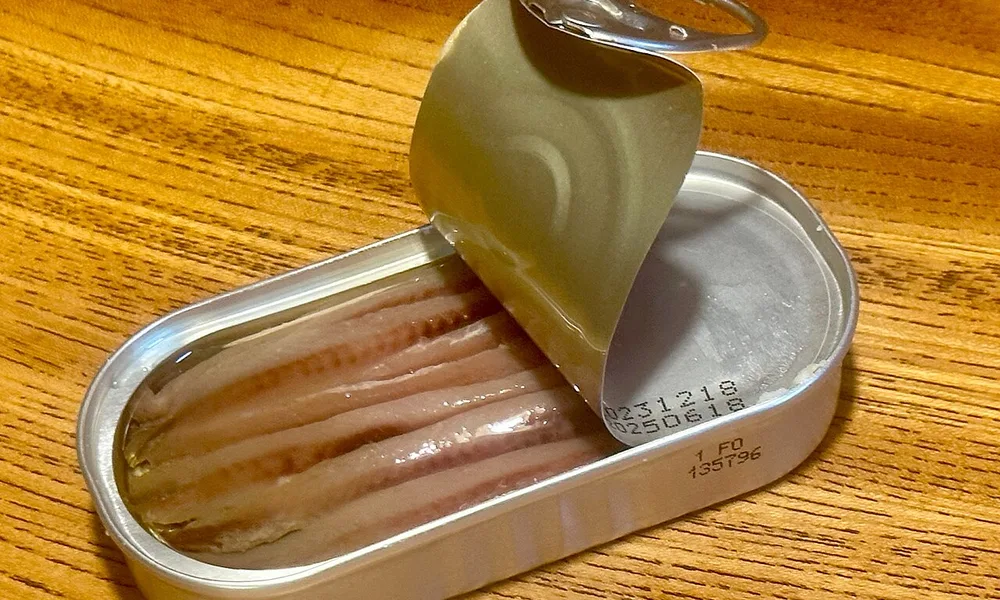
Most tins hold fillets: the fish split open, cleaned and laid flat, skin on, in neat rows. The oil in the tin matters as much as the fish: it keeps the fillets moist, carries their flavour, and protects them for years. Do not throw it away, it is seasoned oil, good in dressings and pasta.
Anchovies are not sardines, though the two tins sit side by side on the shelf. Sardines are larger, milder and sold whole, while anchovies are smaller, saltier and sold as fillets. Our guide to the best canned sardines for quick, healthy meals covers the bigger fish in detail, and the contrast is useful: sardines are the main event on toast, while anchovies are the seasoning that makes everything else taste better.
In Oil vs Salt-Packed: The Big Choice
The first decision is how the anchovies were packed. Fillets in olive oil are the classic tin and the right first buy. They are ready to eat straight from the tin, mild enough to lay on a pizza, and soft enough to melt into pasta sauce. If the label says “in olive oil”, check the back: some producers blend it with cheaper sunflower oil, and the blend tastes plainer.
Salt-packed anchovies are the traditional tin, and they are stronger in every way. The fish are layered in coarse salt in a jar or tin, and they cure further in the salt, becoming firmer, drier and more intensely flavoured. They need work before you use them: rinse off the salt under cold water, split each fish open, lift out the spine, and pat the fillets dry. That takes ten minutes, and it is worth it when the anchovy is the star, like a bagna cauda or a salad. For everyday pasta and pizza, the oil-packed tin does the same job with no preparation.
Fillets vs Paste: Which Form to Buy
The second decision is the form. Whole fillets are the most useful, because they do everything paste does and more. A fillet melts into a sauce, lays neatly on a pizza, and can be chopped into a salad. Buy fillets first.
Anchovy paste is fillets ground with oil and salt into a smooth, spreadable paste, sold in a tube. It is the fastest way to get anchovy flavour into a dish: squeeze a centimetre into a dressing, a soup or a pan sauce, and stir. It keeps for months in the fridge once opened, far longer than a tin of fillets. Its weakness is texture: paste cannot be laid on a pizza, so it suits background flavour rather than a topping.
Canned Anchovies, Compared
| Style | Flavour | Best for | Watch out for |
|---|---|---|---|
| Fillets in olive oil | Rich, mild, savoury | Pasta, pizza, toast | Check it is pure olive oil |
| Salt-packed | Intense, firm, very salty | Salads, bagna cauda | Needs rinsing and filleting |
| Anchovy paste | Smooth, salty, strong | Sauces, dressings, soups | Cannot replace whole fillets |
| Fillets in sunflower oil | Plain, mild, clean | Cooking, draining first | Less flavour than olive oil |
Price is a rough guide to quality, but only rough. Very cheap tins often hold smaller, softer fish in bland oil, while mid-priced tins from Spain, Italy or Morocco, the countries with the longest anchovy-curing traditions, are usually the sweet spot. Expensive tins are worth it for eating the fillets plain on toast; for melting into pasta, a mid-priced tin does the same job.
Flavour: What Good Anchovies Taste Like
Good anchovies taste deep and savoury, a little salty, with a clean finish. Bad ones taste muddy or stale, and the flavour lingers unpleasantly.
Salt is the number to watch. Anchovies are cured in salt, and a tin can hold a large share of a day’s salt in a few fillets. That is not a reason to avoid them: you use two or three fillets in a dish that serves four, and the salt seasons the whole pan. But it is a reason to taste before adding more salt, and to rinse salt-packed fish well.
Seasoning is the step most people skip, and it is the step that matters most. Anchovies straight from the tin taste flat and one-note. A squeeze of lemon, a drizzle of good olive oil, a crack of black pepper and a little chopped parsley lift them enormously. Capers, garlic and chilli are the classic partners: they are all strong flavours that stand up to the fish instead of being drowned by it. What makes a great pasta sauce is the same balance of salt, acid and fat, as our guide to what makes a great pasta sauce explains, and anchovies supply the salt and the savoury depth in one ingredient.
Pasta: Where Anchovies Earn Their Keep
Pasta is the best use of canned anchovies, because the fish melt away and leave only flavour. The classic dish is spaghetti with anchovies, garlic, chilli and breadcrumbs: warm olive oil, add sliced garlic and chilli, lay in three or four fillets and stir until they dissolve, toss with cooked spaghetti and pasta water, and finish with toasted breadcrumbs and parsley.
The same method works for puttanesca, the tomato sauce built on anchovies, capers, olives and chilli. Here the anchovies go in early, melted into the oil before the tomatoes, so their flavour runs through the whole sauce. Use two fillets per person, no more: the sauce should taste savoury and deep, not fishy.

Pizza: Less Is More
Pizza is where anchovies have their worst reputation, and it is entirely a question of quantity. A whole fillet per slice is too much: the pizza tastes of nothing but salt and fish. Three or four fillets across a whole pizza is right. Lay them on after the cheese, with tomato, mozzarella, olives, capers or red onion, and their salt seasons the cheese around them.
Anchovies suit thin, simple pizzas best. A margherita with two or three fillets is a classic for a reason. They also work on a white pizza with mozzarella and garlic, where there is no tomato to compete with them. What they do not suit is a pizza already loaded with salty toppings: pepperoni, ham and anchovies together is a salt pile, and none of the flavours survive it. Our guide to the best vs worst pizzas of 2026 makes the same point about balance: the best pizzas are the ones where every topping earns its place, and anchovies earn theirs only when they are used sparingly.
If you are serving anchovies to people who think they dislike them, do not announce it. Melt the fillets into the sauce instead of laying them on top, and let the pizza speak for itself. Most anchovy sceptics have only ever met a whole fillet on a takeaway pizza, and they change their minds quickly when the fish is doing its work invisibly.
Buying and Storing Anchovies
Anchovies keep for years unopened, which is why they are such a good pantry staple. Check the date, but do not worry if a tin is a year old. Avoid tins that are dented, swollen or rusty: a dent on the seam can break the seal, a swollen tin means gas inside, and rust can eat through the metal.
Once opened, anchovies keep for one to two weeks in the fridge, covered in oil in a sealed container. Never store them in the opened tin. If the oil runs low, top it up with fresh olive oil so the fillets stay covered: exposed anchovies dry out and go sharp within a day.

Checklist: Before You Buy
- Choose fillets in olive oil for pasta and pizza, and salt-packed fish only when you are happy to rinse and fillet them.
- Read the ingredients: the tin should list anchovies, oil and salt, and little else.
- Compare drained weight, not tin weight, and favour tins from Spain, Italy or Morocco.
- Use two or three fillets per dish for four people, and taste before adding any more salt.
- Keep the oil from the tin: it is seasoned, and it is good in dressings and pasta.
- Once opened, move leftovers to a sealed container, keep them covered in oil, and use them within two weeks.
Frequently Asked Questions
Are canned anchovies healthy?
Yes, in the amounts you actually eat. They are rich in protein, omega-3 fatty acids, vitamin D and calcium, and low in mercury because anchovies are small fish. Watch the sodium: use a few fillets per dish and let them season the whole pan.
Do I need to cook canned anchovies before eating them?
No. Anchovies are fully cured during production, so they are safe to eat straight from the tin. They taste much better cooked: a fillet melted into hot oil with garlic disappears into a sauce, while a fillet eaten cold tastes far saltier.
What is the difference between anchovies and sardines?
Anchovies are smaller, saltier and sold as fillets, while sardines are larger, milder and sold whole. Anchovies are a seasoning that melts into a dish; sardines are eaten as the fish itself. They are not interchangeable.
Why do my anchovies taste too salty?
Anchovies are cured in salt, so a whole fillet eaten alone will always taste salty. Use two or three fillets in a dish for four people, and let them season the pan. A squeeze of lemon balances the salt.
How long do canned anchovies last once opened?
One to two weeks in the fridge, in a sealed container, covered in oil. Never store them in the opened tin. Anchovy paste keeps for months once opened.
Can I use anchovy paste instead of fillets on pizza?
Not well. Paste is excellent melted into sauces and dressings, but it cannot be laid on a pizza as a topping. For pizza, use whole fillets, three or four across the whole pizza.
The Bottom Line
The best canned anchovies for pasta and pizza in 2026 are fillets in olive oil, with nothing on the label but anchovies, oil and salt. Use two or three fillets per dish: melt them into hot oil with garlic and chilli for pasta, or lay three or four across a pizza with tomato, mozzarella and olives.