
Best Cat Carriers 2026
A cat does not travel the way a dog does. A dog will usually trot to the car and jump in, but a cat reads a carrier as a trap, and the five minutes before a vet visit can undo months of trust. The right carrier changes that entirely: it feels like a den, not a cage, and the cat walks in on its own.
These are the best cat carriers of 2026, chosen for the things that matter to cats specifically: escape-proof zips, airflow a nervous cat can breathe through, a shape that fits under an aeroplane seat, and a door wide enough to lift a stiff older cat out without a struggle.
Key Takeaways
- Measure your cat before you shop, because a carrier that is too small is stressful and a carrier that is too large lets a frightened cat slide around.
- Soft-sided carriers suit most cats and most flights, while hard shells suit vet visits, anxious cats, and anyone who needs to hose the carrier clean.
- Escape-proof zips matter more than any other feature, since a cat that learns to nose a zip open will do it again at the worst moment.
- Check your airline’s under-seat dimensions before you buy, because a carrier that fits one airline may be too tall for another.
- Leave the carrier out at home with the door open, so the cat treats it as furniture long before it has to travel in it.
Cat Carriers 2026 at a Glance
| Best for | Carrier type | Typical weight limit | Standout strength |
|---|---|---|---|
| Best overall | Soft-sided shoulder carrier | 7 kg | Light, flexible, and airline friendly |
| Best for vet visits | Hard-shell top loader | 9 kg | Sturdy, easy to clean, lifts out easily |
| Best for flights | Expandable soft carrier | 8 kg | Expands at the gate, folds under the seat |
| Best for nervous cats | Hard shell with privacy cover | 8 kg | Dark, quiet, and hard to escape from |
| Best for walking | Backpack carrier | 7 kg | Hands free and well ventilated |
| Best for large cats | Extra-large soft carrier | 11 kg | Room to turn around and lie flat |
What a Cat Carrier Is Really For
A cat carrier does three jobs at once. First, it keeps the cat safe in a car, on a train, and through an airport. Second, it gives a frightened animal somewhere to hide, because a cat that can see a way out and choose to stay is far calmer than one that feels cornered. Third, it protects the vet, the driver, and the cat itself from a panicked escape.
It helps to know the difference between a cat carrier and its close cousins. A general pet carrier covers cats and dogs together and is usually judged on travel comfort, and our guide to pet carriers that travel comfortably in 2026 covers that shared ground. A cat carrier is the narrower, cat-specific version, and the right choice depends on your cat’s size, temperament, and how often it travels.
Getting the Size Right
Size is where most cat carrier purchases go wrong. A cat should be able to stand up, turn around, and lie down in a natural position, with a little room to spare but not so much that it slides from side to side in the car. Measure your cat from nose to base of tail, then from the top of the ears to the floor while it is sitting, and add five centimetres to each number.
Most adult cats fit a carrier around 45 centimetres long, 30 centimetres wide, and 30 centimetres tall, but a large Maine Coon or a long-legged Bengal may need a carrier built for a small dog. Weigh your cat too, and check the carrier’s weight limit against the real number, not the number you hope for. A carrier rated for seven kilos will sag and strain under a nine-kilo cat.
The Main Types of Cat Carrier
Cat carriers fall into a handful of types, and each suits a different kind of cat and a different kind of trip. The right choice depends less on taste than on how your cat behaves when it is frightened.
The soft-sided shoulder carrier is the safest choice for most homes: a light fabric box with mesh windows, a shoulder strap, and a zip that opens on two sides. Its strength is flexibility, since it squashes a few centimetres to fit under a seat. Its weakness is cleaning, because fabric holds smells and a sick cat can ruin a soft carrier in one journey.
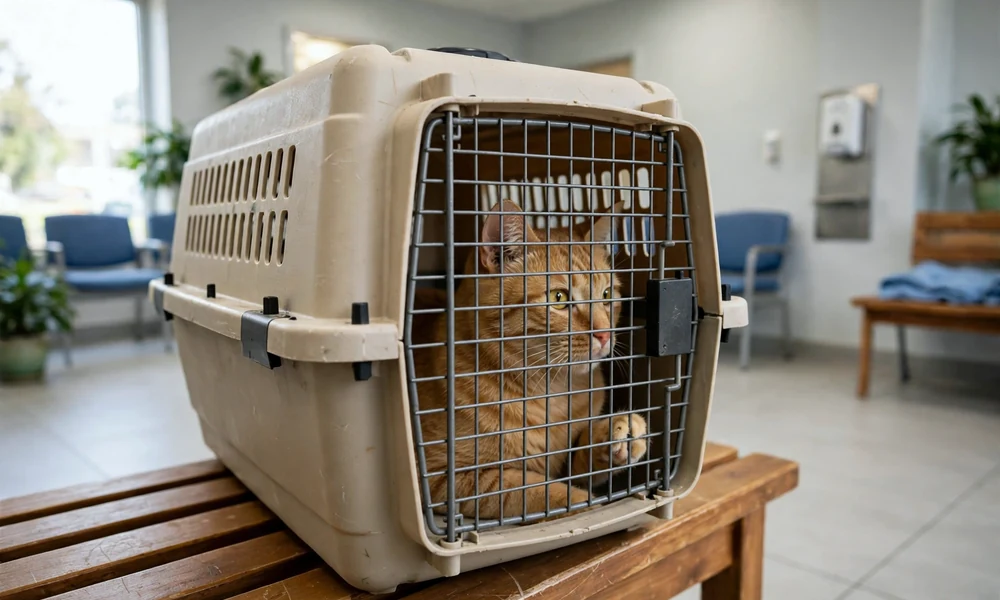
The hard-shell carrier is the classic vet-visit box, usually plastic with a metal door, and it is the best choice when the cat is strong, anxious, or likely to be sick. The top-loading versions are worth the extra money: you lower the cat in from above instead of pushing it through a small front door, and the vet can lift the top half off without dragging the cat out. A dog-only version of the same idea is covered in our guide to the best dog carriers for travel in 2026, which shows how differently the two animals need to be handled.
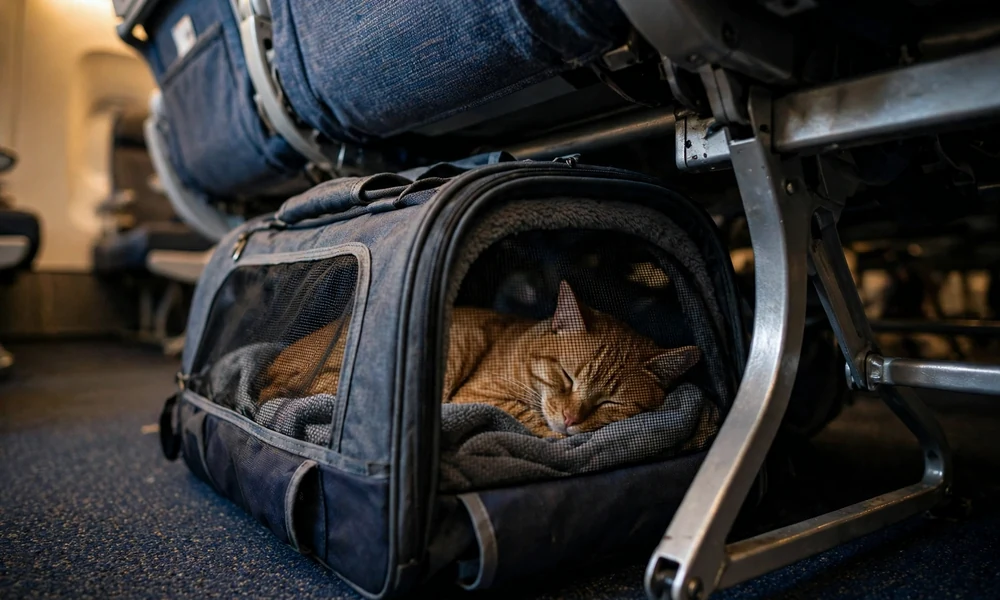
The expandable carrier is the clever option for flights. It looks like a normal soft carrier until you reach the gate, then one side unzips into a small mesh extension that gives the cat room to stretch. Wheeled carriers suit owners who cannot carry weight, but the wheels add bulk and noise, and a frightened cat dislikes the vibration. The litter-box carrier, with a small tray built into one end, suits very long car journeys, and it pairs with the right home setup, which our guide to the best cat litter boxes of 2026 covers in detail.
Escape-Proof Zips and Latches
A cat can open a surprising number of closures. The classic failure is a single zip with a loose pull: the cat noses the pull, the zip walks open a few centimetres, and a paw follows. Look for zips with locking pulls that clip together, or with a small metal clasp that holds both pulls in one place.
Ventilation, Comfort, and Calm
Airflow is the difference between a carrier and a box. A cat pants when it is hot or frightened, and a carrier with one small mesh window will fog up and heat up within minutes. Look for mesh on at least three sides, plus a top window the cat can see out of, because a cat that can watch what is happening stays calmer than one in darkness.
Airline Rules for Cats
Most airlines allow a small cat in the cabin, but the rules are tighter than most owners expect. The carrier usually has to fit under the seat in front of you, which means a maximum height of about 25 to 28 centimetres, and the cat and carrier together often have to weigh under eight kilos. Measure the under-seat space for the exact aircraft, not the airline in general, because the same airline flies planes with different seat pitches.
Vet Visits and Getting the Cat Used to the Carrier
The vet visit is the trip most cats make most often, and it is the one they dread most. A top-loading hard shell is the kindest choice here, because the vet can examine a cat that stays in the bottom half of the carrier instead of dragging it out. Tell the vet in advance if your cat is a known escaper or biter, and bring the carrier in with the door facing away from other animals in the waiting room.
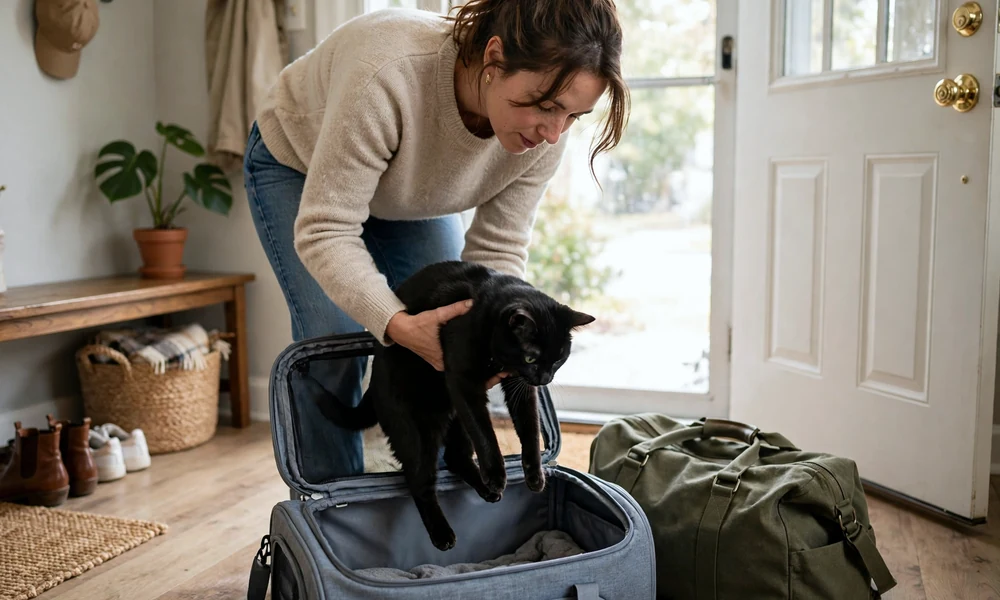
Training matters more than the carrier itself. Leave the carrier out in the living room with the door open and a treat inside, and let the cat explore it for a week before the first trip. Feed the cat near the carrier, then inside it, then with the door closed for a minute. A cat that has slept in its carrier at home will walk into it at the vet, while a cat that only sees the carrier on travel day will fight it every time.
Common Mistakes to Avoid
The most common mistake is buying the carrier the morning of the trip: the cat has never seen it, it smells of plastic, and the whole day starts with a chase around the house. The second is buying too small, so the cat cannot turn around. The third is trusting a single zip with no lock. The fourth is forgetting water on a long journey, especially in summer. The fifth is putting the carrier in the boot, where the cat bakes or freezes with no airflow. Finally, do not carry a cat in a cardboard box, however short the trip: a determined cat can tear through cardboard in minutes, and a box offers no protection in a sudden stop.
Before You Buy: A Short Checklist
- Measure your cat’s length and sitting height, and add five centimetres to each.
- Test the zips or latches by pushing from the inside and pulling from the outside.
- Check mesh on at least three sides, and a top window the cat can see out of.
- Measure your airline’s under-seat space for the exact aircraft you will fly on.
- Leave the carrier out at home for a week before the first trip, door open, treat inside.
Frequently Asked Questions
What size carrier does my cat need? Most adult cats need a carrier around 45 centimetres long, 30 wide, and 30 tall, but measure your own cat first. Add five centimetres to its nose-to-tail length and its sitting height, and check the weight limit against the cat’s real weight.
Are soft or hard cat carriers better? Soft carriers are lighter, flex to fit under seats, and suit flights and calm cats. Hard shells are sturdier, easier to clean, and better for vet visits, anxious cats, and any cat likely to be sick on the journey.
Can my cat fly in the cabin? Usually yes, if the cat and carrier together weigh under about eight kilos and the carrier fits under the seat, but the limits vary by airline and aircraft. Book the cat when you book your ticket, and carry the carrier’s dimensions in writing.
How do I get my cat used to a carrier? Leave it out at home with the door open and a treat inside for a week before the trip. Feed the cat near it, then inside it, then with the door closed for a minute at a time, so the carrier smells of home before it ever moves.
The Bottom Line
The best cat carrier of 2026 is the one your cat will walk into without a fight: the right size, with locking zips, mesh on three sides, and a floor that smells of home. It is a den first and a bag second, and the cat should meet it in the living room, not on the morning of the vet visit.
Start with the tape measure, not the catalogue. Measure the cat, weigh it, check the airline’s under-seat dimensions, and then choose the type that fits: a soft shoulder carrier for most trips, a hard top loader for the vet, an expandable carrier for flights, or a backpack for walks.


