
Frozen passion fruit is the sharpest tool in the freezer aisle. A spoonful of its golden pulp can lift a flat smoothie, rescue a dull dessert, or turn sparkling water into something worth serving to guests. The best frozen passion fruit in 2026 is the kind that tastes like the fresh fruit: bright, fragrant and properly sour, with nothing added to soften it.
The catch is that passion fruit is sold frozen in several very different forms, and the wrong one can ruin a drink. The forms behave very differently. This guide explains pulp versus juice, how to handle the seeds, and how to use frozen passion fruit in drinks and desserts so its tartness works for you rather than against you.
Key Takeaways
- Buy pulp or puree, not sweetened juice: pulp is the real fruit, while juice is usually diluted and sweetened.
- Seedless puree is the best choice for smooth drinks and desserts, while pulp with seeds suits toppings and sauces where the crunch is a feature.
- A little goes a long way. Start with two tablespoons per drink and taste before adding more, because passion fruit is far tarter than mango or banana.
- Balance the tartness with something sweet or creamy: mango, banana, coconut, honey or yoghurt all soften passion fruit without hiding it.
- Thaw slowly in the fridge and use the same day. Thawed pulp loses its perfume fast, so plan the drink or dessert before you open the bag.
Why Frozen Passion Fruit Is Worth Buying
Fresh passion fruit is expensive, seasonal and fiddly. Frozen passion fruit solves all three problems at once. It is picked ripe and frozen within hours, it costs far less per spoonful than fresh fruit, and it is ready whenever you need it. That is the same advantage that makes frozen fruit worth a spot in your freezer in the first place, and passion fruit may be the best example of it.
Freezing is unusually kind to passion fruit. Its flavour lives in aromatic compounds and acidity, both of which survive freezing well, and its texture barely matters, because the pulp is already a soft, seedy liquid. A spoonful of thawed frozen pulp tastes very close to a spoonful of fresh pulp, and in a blended drink the difference is almost impossible to spot. The risk is not the freezing. It is what gets added before freezing: sugar, water and flavourings that turn a sharp, fragrant fruit into something sweet and flat.
Pulp, Puree, Juice or Whole Fruit: Which Form to Buy
The most important choice when buying frozen passion fruit is the form, because the names on the bag are confusing. Pulp is the fresh pulp of the fruit, seeds and all, frozen in tubs or pouches. Puree is pulp that has been blended and strained, so the seeds are gone and the texture is smooth. Juice is pulp mixed with water and usually sugar,
Pulp with seeds is the most versatile form for cooking. The seeds are edible and add a pleasant crunch, and they are a feature in toppings, sauces and desserts where you can see them. Seedless puree solves that problem. It blends instantly, needs no straining, and gives the smoothest sorbet, the cleanest cocktails and the glossiest dessert sauces.
Sweetened juice is the form to skip. It is mostly water and sugar with some passion fruit, and it makes drinks taste diluted and desserts taste candied. Whole frozen fruit is the least useful form: the shell takes up most of the weight, thawing is slow, and you still have to scoop the pulp out yourself. Buy pulp or puree and skip the shell.

Frozen Passion Fruit at a Glance
| Form | Best for | Texture once thawed | Watch out for |
|---|---|---|---|
| Pulp with seeds | Toppings, sauces, desserts | Juicy, crunchy seeds | Seeds add grit to drinks |
| Seedless puree | Smoothies, cocktails, sorbet | Smooth and silky | Costs more per gram |
| Sweetened juice | Drinking as it is | Thin and sweet | Diluted, too sweet for cooking |
| Whole frozen fruit | Nothing much | Slow to thaw | Shell is most of the weight |
| Unsweetened puree | Everything, with sugar added | Thick and tart | Very tart; taste before sweetening |
Frozen Passion Fruit in Drinks: Where It Earns Its Keep
Drinks are the best use for frozen passion fruit, and the reason most people buy it. The simplest is passion fruit soda: two tablespoons of thawed puree stirred into sparkling water with a squeeze of lime and a little honey, served over ice. It takes a minute, and it tastes like a cafe drink.
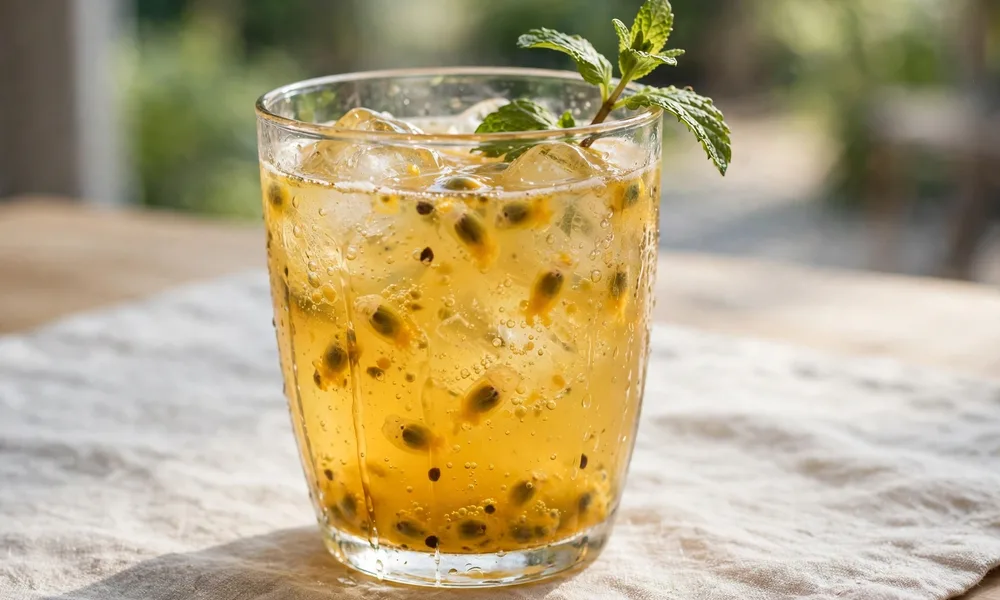
For smoothies, use seedless puree, and use it frozen rather than thawed. Start with two tablespoons of puree, half a banana and half a cup of mango or yoghurt, then adjust. Passion fruit is far tarter than the other fruit in the blender, so start small and taste before adding more. In cocktails and mocktails, passion fruit puree is the shortcut to a tropical drink that actually tastes tropical. It works in margaritas, spritzes, punches and daiquiris, Add it last, stir gently, and taste before adding more sugar.
Frozen Passion Fruit in Desserts: Sorbet, Cheesecake and More
Desserts are the second-best use for frozen passion fruit, and the one where its tartness is an advantage rather than a problem. Passion fruit sorbet is the showcase: puree, a little sugar and water, churned or frozen and stirred, gives a sorbet with a bright gold colour and a sharp, fragrant flavour that no other frozen fruit matches.
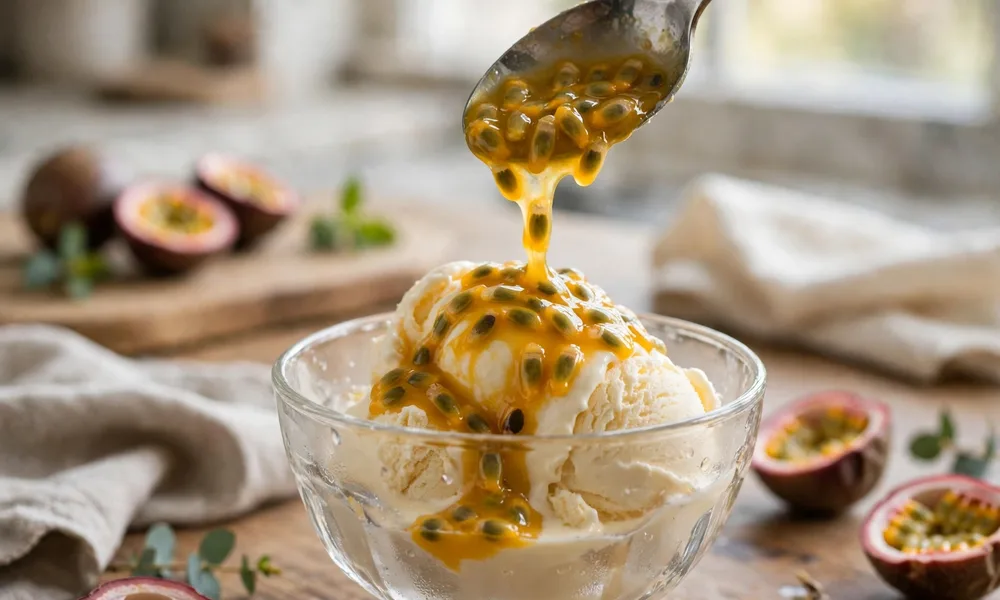
For cheesecake and creamy desserts, passion fruit works best as a topping or a sauce rather than the main filling. Warm pulp with a little sugar until it loosens, strain it if you want it smooth, and spoon it over cheesecake, panna cotta or ice cream. Passion fruit also makes a good curd: cooked gently with egg yolks, butter and sugar, it sets into a sharp, golden spread for toast, tarts and cakes. If you want a dessert built on a milder tropical fruit, our guide to frozen papaya for smoothies and baking covers a gentler fruit that pairs well with passion fruit in mixed desserts.
What to Look For on the Bag
Reading the bag takes thirty seconds and saves a disappointing dessert. First, read the ingredients. The list should say passion fruit and nothing else, or passion fruit and a little ascorbic acid, which keeps the colour bright. If sugar, syrup or juice concentrate appears, the bag is sweetened, and it will make everything you cook with it sweeter than you planned. Also, look at the colour through the bag. Good frozen passion fruit pulp is deep gold, not pale yellow. Pale pulp has been diluted or made from under-ripe fruit, and it will taste flat.
Fourth, check the size. Buy a tub or pouch you will use within three months of opening, because opened pulp loses its perfume faster than most frozen fruit. A large tub opened and refrozen several times will taste tired by the end, while small pouches stay fresh.
Thawing and Storage: Keeping Passion Fruit at Its Best
Thaw passion fruit pulp slowly in the fridge, in a bowl, and use it the same day. Slow thawing keeps the flavour bright and the perfume intact, while thawing at room temperature or in the microwave leaves it flat. For smoothies, skip thawing altogether and use the puree frozen, straight from the bag.
At home, keep tubs and pouches sealed tightly, squeeze out the air before closing them, and lay pouches flat in the freezer. Use opened pulp within three months for the best flavour. Never refreeze pulp that has thawed. Once thawed, the pulp softens, and refreezing makes it watery and flat. If a tub has thawed by accident, use it within a day: blend it into a drink, cook it into a sauce, or stir it into yoghurt. The same care applies to our round-up of the best smoothie bowls and the rest of the freezer aisle.
What to Skip and the Mistakes That Ruin It
The worst frozen passion fruit is not a particular brand. It is a bag bought for the wrong job or used the wrong way. The most common mistake is using too much. Passion fruit is far tarter than mango or banana, and a smoothie with a quarter cup of puree will taste sour no matter how much honey you add. Start with two tablespoons, taste, and add more only if the drink needs it.
The third mistake is buying sweetened juice without noticing. Check the ingredients: if sugar appears on the list, the product is sweetened, and it will flatten the tart edge that makes passion fruit interesting. The fifth mistake is pairing passion fruit with nothing to balance it. On its own, passion fruit is very tart. With mango, banana, coconut or yoghurt, it is the best fruit in the freezer aisle.
Your Frozen Passion Fruit Checklist
- Buy pulp or puree, not sweetened juice: pulp is the real fruit, while juice is usually diluted and sweetened.
- Choose seedless puree for smooth drinks and desserts, and pulp with seeds for toppings and sauces where the crunch is a feature.
- Start with two tablespoons per drink and taste before adding more, because passion fruit is far tarter than mango or banana.
- Read the ingredients: passion fruit should be the only ingredient, with no added sugar, syrup or juice concentrate.
- Thaw slowly in the fridge and use the same day, or use the puree frozen straight from the bag for smoothies.
- Keep opened tubs and pouches sealed, use them within three months, and never refreeze pulp that has thawed.
Frequently Asked Questions
Is frozen passion fruit as healthy as fresh passion fruit?
Yes, in most cases. Frozen passion fruit is picked ripe and frozen quickly, so it keeps most of its vitamin C, fibre and flavour. The difference is what gets added afterwards: plain frozen pulp has nothing added, while sweetened juice carries extra sugar.
What is the difference between passion fruit pulp and puree?
Pulp is the fresh pulp of the fruit, seeds and all. Puree is pulp that has been blended and strained, so the seeds are gone and the texture is smooth. Pulp suits toppings and sauces where the seeds are a feature; puree suits smooth drinks, sorbet and desserts.
Should I buy passion fruit with seeds or seedless?
Buy seedless puree for smoothies, cocktails, sorbet and sauces, because the seeds add grit to a smooth drink. Buy pulp with seeds for toppings, compotes and desserts where the crunch is part of the dish, or where you will strain the sauce anyway.
How much passion fruit should I use in a smoothie?
Start with two tablespoons of puree per serving and taste before adding more. Passion fruit is far tarter than mango or banana, and a quarter cup will overpower the drink.
Can I use frozen passion fruit in baking?
Yes, but use it in fillings, curds, glazes and sauces rather than folded through a batter, where the pulp can make the crumb wet. Passion fruit curd and passion fruit glaze are the easiest baked desserts to start with,
How long does frozen passion fruit last?
Unopened tubs and pouches keep for six to twelve months in a freezer that stays at a steady temperature. Once opened, use the pulp within three months for the best flavour and perfume;
The Bottom Line
The best frozen passion fruit for drinks and desserts in 2026 is plain pulp or seedless puree, bought with nothing added, used in small amounts and balanced with something sweet or creamy. Read the ingredients, buy small pouches you will use within three months, thaw slowly and use the pulp the same day.


