The Best Frozen Papaya for Smoothies and Baking in 2026
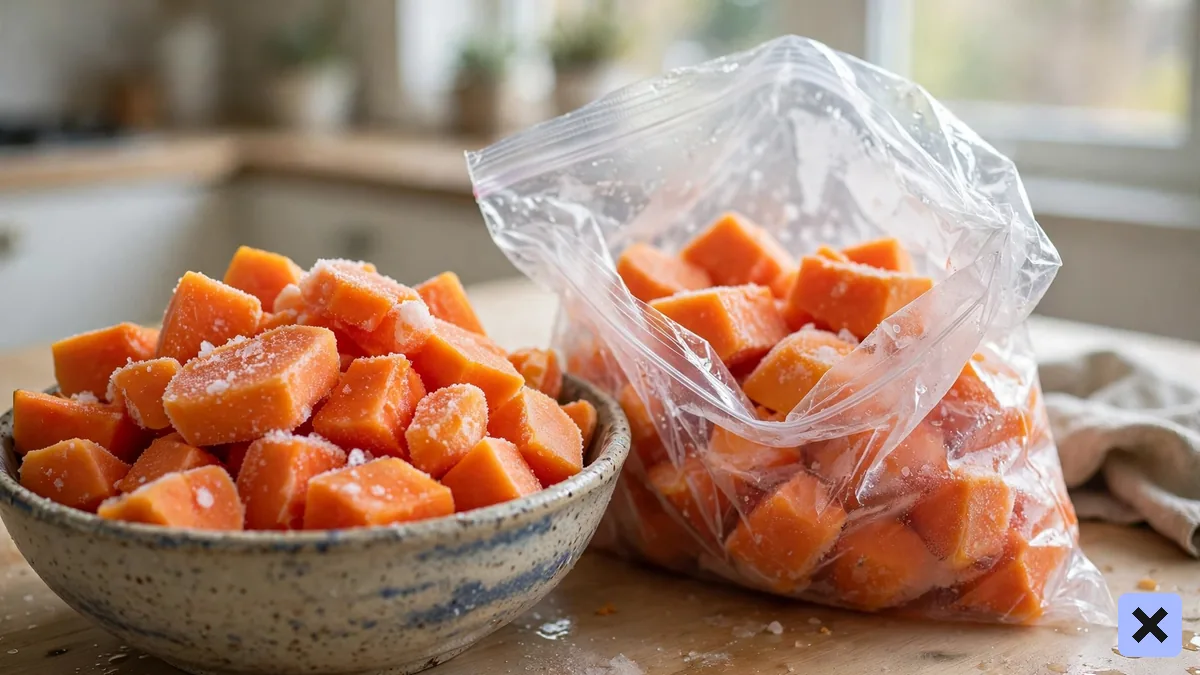
Frozen papaya is the tropical shortcut most freezers are missing: sweet, golden, and soft, with a mellow flavour that turns a plain smoothie silky and gives a fruit bake a warm, honeyed note. A good bag opens onto bright orange chunks, loose enough to pour, that smell faintly of melon and taste ripe even in January. The difference is rarely the brand on the front. It is how ripe the papaya was when it was frozen, whether it was frozen as chunks or puree, and whether anything was added. This guide explains how to pick frozen papaya worth stocking.
Fresh papaya is a gamble outside the tropics: dear, often picked under-ripe so it survives shipping, and quick to spoil once it ripens. Frozen papaya solves that. The fruit is picked ripe, peeled, seeded, cut, and frozen within hours of harvest, so a bag in the freezer means papaya smoothies in winter and tropical baking all year. Our guide to frozen fruit puts papaya among the tropical fruits that freeze best, provided you buy the right cut for the job.
Key takeaways
- Buy ripe papaya: deep orange flesh and a sweet smell beat pale yellow fruit every time.
- Chunks are the most useful cut: they blend thick, hold their shape in a bake, and thaw evenly.
- Buy plain papaya with one ingredient on the label. Added sugar or syrup costs more and limits what you can cook.
- Use frozen papaya straight from the freezer for smoothies and baking. Thawing first makes smoothies thin and bakes soggy.
- Squeeze the bag first. Loose, free-flowing fruit was frozen properly; a solid block has thawed and refrozen.
What frozen papaya actually is
Frozen papaya is fresh papaya washed, peeled, seeded, cut, and frozen quickly, usually within hours of being picked. Fast freezing forms small ice crystals that do little damage to the fruit’s cells, so colour, flavour, and most of the nutrition survive far better than with slow freezing. Papaya is rich in vitamin C and vitamin A, and freezing preserves most of both; the fibre survives almost completely.
What freezing changes is texture. A thawed papaya chunk is never as firm as a fresh one, because ice crystals soften the flesh. That softness is a flaw in a fruit salad and a virtue in a smoothie, a sauce, or a bake, where the fruit is meant to break down anyway. Papaya also contains papain, an enzyme that breaks down protein, which is why fresh papaya dissolves dairy and stops gelatine setting. Frozen papaya still contains it, so it will still turn a milk smoothie bitter and ruin a jelly if you use it raw and thawed. Heat tames it: a minute in a hot pan or a bake in the oven switches the enzyme off.
Ripeness: the one thing that decides flavour
Ripeness matters more for papaya than for almost any other frozen fruit. An under-ripe papaya is pale, hard, and almost flavourless, and freezing cannot fix that: it locks in whatever the fruit tasted like on the day it was picked. A ripe papaya is deep orange, soft, and sweet, with a musky, melon-like smell. A bag rarely says how ripe the fruit was, so judge by the colour through the window: deep orange means ripe, pale yellow means picked too early.
The best bags come from fruit frozen at full ripeness, and you can taste the difference at once. Ripe papaya needs no added sugar, which is why the ingredients list matters: a bag of plain papaya with one ingredient was confident about its fruit. A bag with added sugar or syrup is usually covering for under-ripe fruit, and it costs more for a worse result. If the chunks in the bag are different colours, the batch was mixed from fruit at different stages; it will still work in a smoothie, but it is a poor choice for a bake where you want one even flavour.
Chunks vs puree: the cut that decides the job
After ripeness, the cut decides what the fruit is good for. Chunks are the most versatile: even pieces about the size of a thumb that blend into a thick smoothie, hold their shape in a bake, and thaw quickly in a bowl. Puree is papaya blended before freezing, sold in pouches or tubs, and it is a different product altogether: useful for sauces, sorbet, drinks, and baby food, but useless where you want visible fruit.
Buy chunks if you only buy one bag. They do the most jobs: smoothies, bowls, bakes, and sauces. Whatever the cut, the pieces should be separate and free-flowing in the bag. A bag that rattles when you shake it was frozen properly. A bag that feels like one solid lump has thawed on the way to the shop and refrozen, and the fruit inside will be soft, icy, and dull.
How the cuts compare
| Cut | Best for | Texture | Watch out for |
|---|---|---|---|
| Chunks | Smoothies, baking, breakfast bowls | Even, holds shape when thawed | Uneven sizes thaw at different speeds |
| Slices | Bowls, garnish, quick thawing | Thin, thaws fast and evenly | Can tear and go limp in the blender |
| Puree | Sauces, dressings, frozen desserts | Smooth, pourable once thawed | Browns fast; cannot be refrozen |
| Halves | Stuffing, roasting, presentation | Firm outside, soft inside | Rare, and slow to thaw through |
Frozen papaya in smoothies
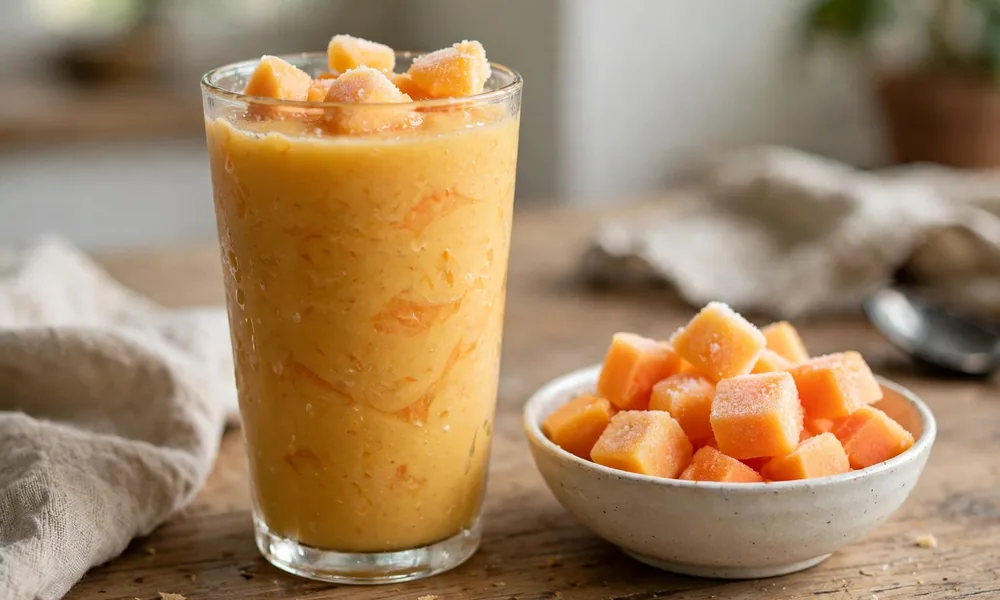
Smoothies are where frozen papaya earns its place. Use it straight from the freezer: frozen fruit chills and thickens the drink, so you need less ice and the flavour stays strong. Add the papaya first, nearest the blades, so it blends evenly instead of riding on top.
The one trap is dairy. Papaya’s papain enzyme breaks down milk protein, and a smoothie left sitting for twenty minutes can turn bitter and thin. The fix is simple: drink it straight away, or use a non-dairy base such as oat milk, coconut water, or orange juice. Our guide to frozen mango follows the same rule for the same reason, since mango and papaya are both soft tropical fruits that punish a slow drinker. For a smoothie that stays bright orange, blend briefly; over-blending warms the fruit and dulls the colour.
Frozen papaya in baking
Papaya is a gentle, generous fruit for baking, and it rewards a little care. Its mellow sweetness suits muffins, loaf cakes, and tropical upside-down cakes, where it adds moisture and a warm golden colour. Toss the chunks in a spoonful of flour first; the coating helps them stay suspended instead of sinking to the bottom.
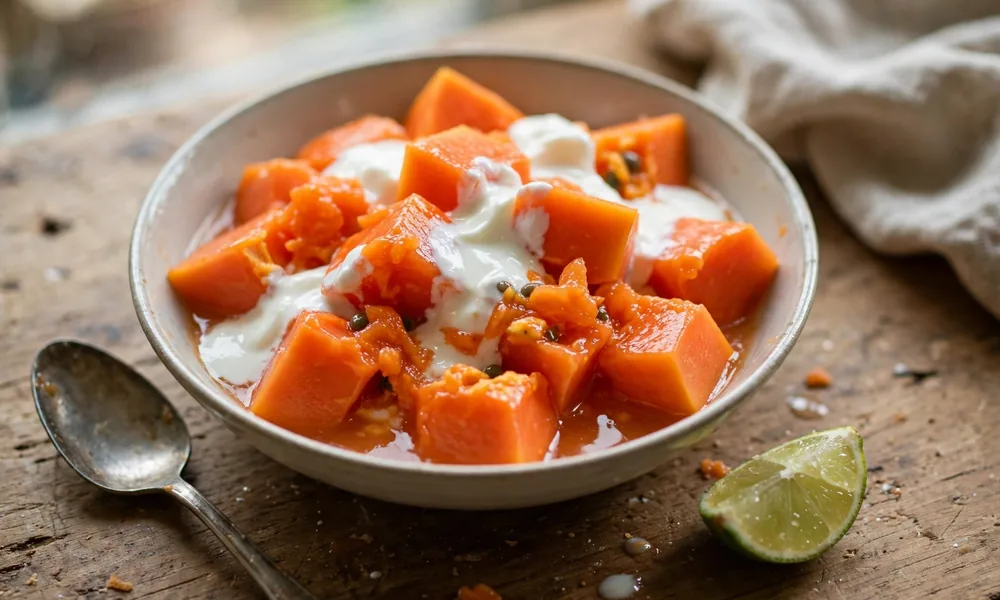
Two rules keep a papaya bake from going wrong. First, heat the fruit if it will touch gelatine or set cream: a minute in a hot pan switches off the papain enzyme that would otherwise stop a jelly setting or turn cream bitter. Second, do not expect papaya to carry a bake on its own. Its flavour is mild, so it works best alongside a sharper partner: lime zest, passion fruit, or a little ginger. A loaf cake with papaya and lime is the classic pairing, the citrus lifting the papaya’s mellow sweetness. For another tropical bake that holds its shape well, frozen pineapple pairs beautifully with papaya, its sharpness balancing the papaya’s softness.

Thawing frozen papaya properly
Most of the time you should not thaw frozen papaya at all: smoothies, baking, and sauces all take it frozen. When you do need it thawed, for a breakfast bowl or a fruit topping, do it slowly in the fridge. A cup of chunks thaws in about an hour, keeping its shape and colour. Thawing at room temperature is faster but leaves the outside soft while the middle is still icy, and the fruit weeps juice as it warms.
Once thawed, eat it the same day. Thawed papaya softens quickly, and its deep orange fades within hours as air reaches the cut flesh. A squeeze of lime juice on the chunks slows the browning, and keeping them covered in the fridge helps too. Never refreeze thawed papaya: the second freeze makes large ice crystals that turn the flesh to mush, . If you thawed too much, turn the rest into a sauce or a smoothie rather than putting it back in the freezer.
How to pick a good bag: the checklist
- Check the colour: deep orange flesh means ripe fruit; pale yellow means it was picked too early.
- Read the ingredients: one ingredient, papaya. Added sugar, syrup, or ascorbic acid means the fruit needed help.
- Squeeze the bag: loose, free-flowing pieces were frozen properly; a solid block has thawed and refrozen.
- Check the cut matches the job: chunks for smoothies and baking, puree only for sauces and desserts.
- Smell the bag if you can: ripe papaya smells faintly sweet and musky, .
- Check the date and the seal: buy the freshest bag with an intact seal, and use it within six months for the best flavour.
Storage and shelf life
Frozen papaya keeps well: six to eight months in a home freezer at minus eighteen degrees, and up to a year before the flavour fades noticeably. Keep the bag sealed and squeeze the air out before you close it; air is what causes freezer burn, the dry white patches that make fruit taste stale. If the bag is large, decant what you need into a smaller tub so the main bag stays sealed.
Watch for the signs of a bag past its best: pieces stuck together in one lump, white frosty patches on the fruit, or a sour, flat smell when the bag is opened. Any of those means the bag has thawed and refrozen somewhere along the way, and the fruit inside will be soft and dull.
Frequently asked questions
Is frozen papaya as healthy as fresh papaya?
Almost. Freezing preserves most of the vitamin C and vitamin A and nearly all of the fibre. The fruit loses a little vitamin C in freezing and thawing, but a ripe frozen papaya still beats an under-ripe fresh one that spent a week in transit.
Can you eat frozen papaya straight from the bag?
Yes, and it is good that way: half-thawed chunks are firm, cold, and refreshing, like a natural ice lolly. Ripe papaya is sweet enough to eat as it stands; under-ripe fruit eaten frozen is bland and watery.
Why does frozen papaya make jelly not set?
Fresh and frozen papaya both contain papain, an enzyme that breaks down the protein in gelatine and dairy. Heat switches it off, so simmer the papaya for a minute before adding it to jelly, custard, or cream.
Does frozen papaya go brown when thawed?
Yes, slowly. Cut papaya fades from deep orange toward pale yellow within hours as air reaches the flesh. A squeeze of lime juice and a covered container in the fridge slow it down.
Are papaya chunks or puree better for smoothies?
Chunks, for most people. They blend into a thick drink, chill it as they blend, and let you control the amount. Puree works too, but it is harder to measure, browns faster once opened, and cannot be refrozen.
How long does frozen papaya last in the freezer?
Six to eight months at minus eighteen degrees for the best flavour, and up to a year before it fades. Keep the bag sealed with the air squeezed out, and do not refreeze fruit that has thawed.
Bottom line
Frozen papaya is worth stocking if you buy it with ripeness in mind. Choose deep orange chunks with one ingredient on the label, squeeze the bag to check the pieces run loose, and use it straight from the freezer whenever you can. In smoothies it brings sweetness and colour; in baking it brings moisture and a warm golden note. Do that, and a bag of frozen papaya becomes one of the easiest tropical shortcuts in your freezer: sweet, ripe, and ready in any season.


