Frozen guava should taste like guava: floral, musky and sweet-tart, with the tropical perfume that fills the kitchen the moment the bag opens. Too often it tastes faintly of cold water and sugar instead. The difference is the variety in the bag, the form it was frozen in, and whether anything was added before freezing.
Guava is harder to freeze well than a blueberry or a mango: its flavour lives in delicate aromatic compounds that fade fast, and its soft flesh and tiny seeds can turn gritty or watery. This guide explains how to tell pink guava from white, when to buy chunks and when to buy puree, and how to use frozen guava so it tastes like the fruit itself.
Key Takeaways
- Pink guava is the flavourful choice: sweeter, more floral and more aromatic than white guava, and the one to buy when the label names the variety.
- Buy puree for drinks and smoothies, and chunks for desserts and cooking, because each form behaves very differently once thawed.
- Plain guava with nothing added beats sweetened guava every time: added sugar hides dull fruit and limits what you can make with it.
- Check for seeds before you buy. Seeded chunks are fine for cooking and straining, but seedless puree is the better choice for smooth drinks.
- Thaw guava slowly in the fridge and use it the same day. Thawed guava softens fast, so plan the drink or dessert before you open the bag.
Why Frozen Guava Disappoints So Often
Fresh guava is a short-season fruit in most places, and supermarket guavas are often picked hard and under-ripe so they survive shipping. They can taste sour and gritty, with little of the perfume that makes guava worth eating. Frozen guava solves the ripeness problem, because it is picked ripe and frozen within hours, exactly the advantage that makes frozen fruit worth a spot in your freezer in the first place.
The first risk is variety. Much frozen guava is white guava, which is milder, paler and less aromatic than pink guava. The second risk is form: large, uneven chunks thaw unevenly, leaving icy centres and soft edges. The third risk is sugar. Sweetened puree and guava in syrup taste candied rather than fresh. A good bag of plain frozen pink guava puree is one of the best tropical ingredients in the freezer aisle.
Pink Guava vs White Guava: The Choice That Matters Most
The most important choice is which variety is in the bag, because pink and white guava are genuinely different fruits to cook with. Pink guava has deep rose flesh, a strong floral perfume, and sweetness balanced by gentle tartness. White guava has pale cream flesh, a milder flavour and a softer aroma.
Pink guava is the better choice for almost everything where guava is the star: smoothies, agua fresca, sorbet, cocktails and desserts where you want the dish to taste unmistakably of guava. White guava suits dishes where guava plays a supporting role, blended with mango or banana, or cooked into a sauce where its gentleness is a virtue. A bag that says pink guava on the front is usually proud of it. A bag that just says guava is most often white guava or a mix, so judge it on price and the ingredients list.
Chunks, Puree or Nectar: Which Form to Buy
Frozen guava is sold in three main forms, and choosing the wrong one is the most common reason a dish fails. Chunks are pieces of flesh, frozen loose. Puree is guava blended smooth and frozen in tubs or pouches, sometimes with the seeds strained out. Nectar is a sweetened drink, and it is not really a cooking ingredient at all.
Chunks are the most versatile form for cooking. They hold their shape well enough for compotes, sauces and desserts, and they give you control: you can blend them, cook them down or strain them. Their weakness is the seeds. Guava seeds are small, hard and numerous, and frozen chunks usually still contain them. That is fine when you will strain the cooked fruit, but it is a problem in a smoothie, where seeds add grit. Puree solves that problem, because good puree is strained before freezing.
Frozen Guava at a Glance
| Form | Best for | Texture once thawed | Watch out for |
|---|---|---|---|
| Pink guava chunks | Compotes, sauces, baking | Soft, holds shape briefly | Seeds; strain for smooth dishes |
| White guava chunks | Blended drinks, mixed fruit | Soft and mild | Can taste bland on its own |
| Pink guava puree | Smoothies, sorbet, cocktails | Smooth and thick | Added sugar in sweetened tubs |
| Seedless puree | Drinks, desserts, glazes | Silky, no grit | Costs more per gram |
| Guava nectar | Drinking as it is | Thin and sweet | Too dilute and sweet for cooking |
Frozen Guava in Drinks: Where It Earns Its Keep
Drinks are the best use for frozen guava. Guava has a flavour that survives blending and chilling better than most tropical fruit, The classic is agua fresca: blend a cup of thawed pink guava puree with two cups of cold water, a squeeze of lime and a little sugar, strain it, and serve over ice.
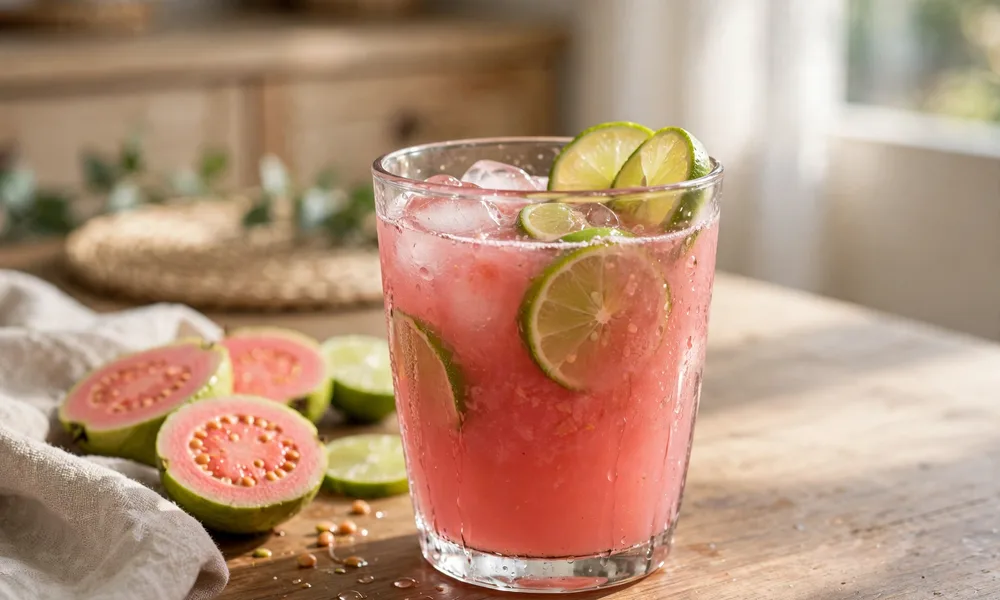
For smoothies, use puree rather than chunks, and use it frozen rather than thawed. Frozen puree chills and thickens the smoothie without ice, and ice waters the flavour down and dulls the perfume. Start with half a cup of frozen puree, half a banana and half a cup of milk or yoghurt, then adjust. In cocktails and mocktails, guava puree needs less sugar than most fruit purees because pink guava brings its own sweetness.

Frozen Guava in Desserts: Sorbet, Cheesecake and More
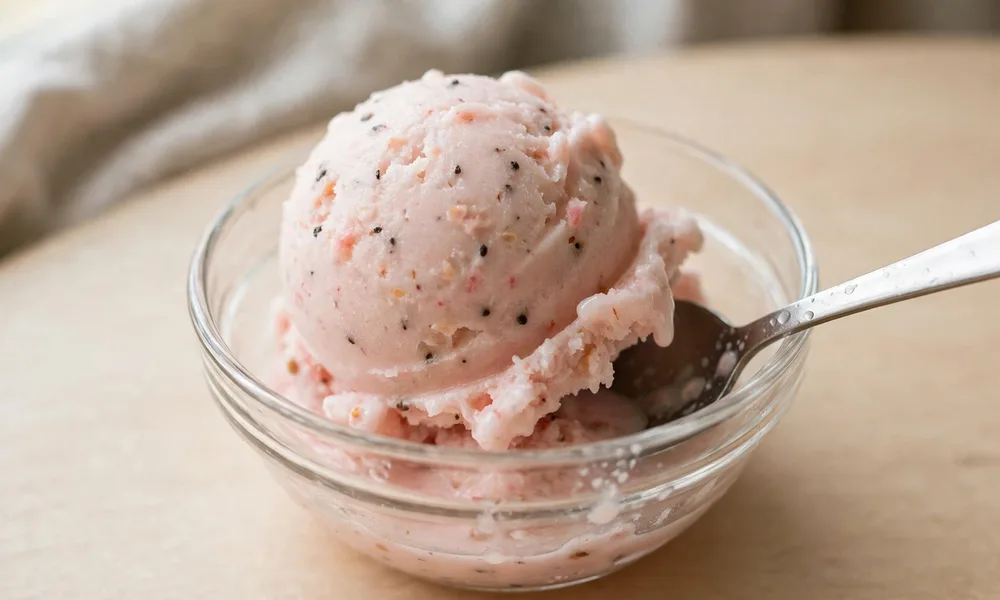
Desserts are the second-best use for frozen guava, and the one where the variety matters most. Pink guava sorbet is the showcase: puree, a little sugar and lime, churned or frozen and stirred, gives a sorbet with a deep rose colour and a perfume no other frozen fruit matches.
For cheesecake and creamy desserts, guava works best as a topping or a swirl rather than the main filling. Cook chunks down with a little sugar and lime into a thick sauce, strain it, and spoon it over cheesecake or panna cotta. Guava also makes a good jam and a good glaze: simmered with sugar, it sets softly and keeps its perfume. Baking with guava needs care, because thawed chunks release juice into batter, so use guava in fillings and toppings rather than folded through a cake. If you want a tropical dessert built on a different fruit, our guide to frozen papaya for smoothies and baking covers a milder fruit that pairs well with guava.
What to Look For on the Bag
Reading the bag takes thirty seconds and saves a disappointing dessert. First, read the ingredients. The list should say guava and nothing else, or guava and a little ascorbic acid, which keeps the colour bright. If sugar, syrup or juice concentrate appears, the bag is sweetened, and it will make everything you cook with it sweeter than you planned. Second, look at the fruit through the bag. Good chunks are separate, loose and brightly coloured, with no pale freezer-burned patches. A bag that feels like a single solid block has thawed and refrozen.
Thawing and Storage: Keeping Guava at Its Best
Thaw guava slowly in the fridge, in a bowl, and use it the same day. Slow thawing keeps the flesh firm and the juice inside, while thawing at room temperature or in the microwave leaves it soft and watery. For smoothies, skip thawing altogether and use the puree or the chunks frozen, straight from the bag.
At home, keep bags sealed tightly, squeeze out the air before closing them, and lay them flat in the freezer. Use opened bags within three months for the best flavour. After that the fruit is still safe, but the perfume fades and freezer burn sets in: dry, pale patches where cold air has dried the surface. Never refreeze guava that has thawed: once thawed, the flesh softens, and refreezing turns it to mush. If a bag has thawed by accident, use it within a day. The same care applies to frozen dragon fruit for smoothie bowls and the rest of the freezer aisle.
What to Skip and the Mistakes That Ruin It
The worst frozen guava is not a particular brand. It is a bag bought for the wrong job or used the wrong way. The most common mistake is using chunks in a smoothie without straining: the seeds add grit, and the drink tastes rough no matter how good the fruit is. Use seedless puree for drinks, or blend chunks and strain them.
The third mistake is thawing guava and leaving it in the fridge for days. Thawed guava softens fast and loses its perfume within a day or two, so plan the drink or dessert before you open the bag.
Your Frozen Guava Checklist
- Buy pink guava by name when guava is the star of the dish, and white guava only when it plays a supporting role.
- Choose puree for drinks and smoothies, and chunks for cooking, sauces and desserts where you will strain the seeds out.
- Read the ingredients: guava should be the only ingredient, with no added sugar, syrup or juice concentrate.
- Squeeze the bag before you buy it. Loose, free-flowing pieces are fresh-frozen; a solid icy block has thawed and refrozen.
- Thaw slowly in the fridge and use the same day, or use the fruit frozen straight from the bag for smoothies.
- Keep opened bags sealed and flat, use them within three months, and never refreeze guava that has thawed.
Frequently Asked Questions
Is frozen guava as healthy as fresh guava?
Yes, in most cases. Frozen guava is picked ripe and frozen quickly, so it keeps most of its vitamin C, fibre and flavour. Fresh guava shipped long distances is often picked under-ripe, and it can lose more in transit than frozen guava loses in the freezer.
What is the difference between pink and white guava?
Pink guava has rose-coloured flesh, a strong floral perfume and a sweet-tart flavour. White guava has pale flesh, a milder flavour and a softer aroma. Pink guava is the better choice when guava is the main flavour; white guava suits mixed drinks and dishes where it plays a supporting role.
Should I buy guava chunks or puree?
Buy puree for drinks, smoothies, sorbet and cocktails, because it blends smoothly and good puree is strained, so there are no seeds. Buy chunks for cooking, compotes and desserts where you can strain the seeds out.
Do I need to remove the seeds from frozen guava?
For smooth drinks, yes. Guava seeds are small and hard, and they add grit to a smoothie or a cocktail. Use seedless puree, or blend chunks and strain them through a fine sieve. For cooked sauces, the seeds matter less, because you will strain the sauce anyway.
Can I use frozen guava in baking?
Yes, but use it in fillings, toppings and glazes rather than folded through a batter, where thawed chunks can leave wet pockets. Cook chunks down into a thick sauce first, strain it, and use the sauce as a filling or a topping.
How long does frozen guava last?
Unopened bags keep for six to twelve months in a freezer that stays at a steady temperature. Once opened, use the fruit within three months for the best flavour; after that it is still safe, but freezer burn and flavour loss set in.
The Bottom Line
Frozen guava that actually tastes like guava in 2026 is pink guava, bought plain, in the right form for the job: seedless puree for drinks and smooth desserts, chunks for cooking and sauces where you can strain the seeds out. Read the ingredients, buy loose free-flowing bags, thaw slowly and use the fruit the same day.