Best Chainsaws 2026
A good chainsaw turns a fallen tree into an afternoon’s work. The bar bites cleanly, the chips fly, and a trunk that looked immovable becomes a neat stack of logs. A bad chainsaw stalls in the cut, vibrates until your hands go numb, and turns a simple job into a long, tiring wrestling match with a machine that does not want to cooperate.
That is the difference this guide is built around. We tested chainsaws the way homeowners and landowners actually use them: cutting firewood, clearing storm damage, trimming fallen branches, and felling small trees, in wet winter weather and dry late summer, with hands that were tired by the third hour. These are the best chainsaws of 2026, chosen for cutting power, safety, and reliability that lasts beyond the first season.
Key Takeaways
- Bar length decides what you can cut, because a bar must be longer than the trunk it has to pass through.
- Battery saws now suit most homeowners, since they start instantly, run quietly, and need almost no maintenance.
- Petrol saws still win for heavy felling, because no battery yet matches a big petrol engine for hours of hard cutting.
- Safety gear is part of the saw, not an extra, because a chain moving at full speed forgives nothing.
- A sharp chain matters more than a powerful engine, since a blunt chain makes even the best saw cut slowly and dangerously.
Chainsaws 2026 at a Glance
| Best for | Typical bar | Power type | Standout strength |
|---|---|---|---|
| Best overall | 40 cm | Battery | Clean cuts, quiet running, easy starts |
| Best for firewood | 45 cm | Petrol | Fast cutting through hardwood logs |
| Best for small gardens | 30 cm | Battery | Light, compact, one-handed control |
| Best for felling | 50 cm | Petrol | Serious power for large trunks |
| Best budget | 35 cm | Electric, corded | Low price, steady power, simple to use |
| Best for professionals | 45 cm | Petrol | All-day reliability, fully serviceable |
How We Picked the Best Chainsaws
We judged every saw on the cut first. A saw that bogs down in hardwood was out, however comfortable it felt, because cutting is the whole job. We tested on green softwood, seasoned hardwood, and storm-fallen branches, and looked closely at the speed and cleanliness of each cut. Power out of the box mattered, but so did how the saw behaved after an hour of steady work.
Comfort came next, because chainsaw work is tiring and a bad handle punishes you quietly. We looked for saws that balance well in the hands, vibrate little, and can be started without a fight. Our picks were matched to the jobs people actually do, and to the rest of the garden kit — clearing a garden often starts with cutting back overgrowth, and our guide to the best pruning shears of 2026 covers the hand tools that handle everything too small for a saw.
1. Best Overall: The Battery Saw That Does Everything Well
The best overall chainsaw is a mid-sized battery saw with a 40-centimetre bar, a brushless motor, and a battery that lasts through a full load of firewood cutting. It handles logs up to about 35 centimetres across, which covers firewood, storm damage, and most garden trees in an ordinary home. It is the saw to buy if you only want one.

2. Best for Firewood: A Petrol Saw That Eats Hardwood
Firewood cutting is the hardest regular job a homeowner asks of a chainsaw. Seasoned oak, ash, and beech are dense, and a saw that is fine on soft pine will stall and smoke on a hardwood log. The best firewood saw we tested is a petrol model with a 45-centimetre bar and an engine that holds its revs through the cut instead of fading when the bar bites deep.
3. Best for Small Gardens: Light, Compact, and Easy to Control
Most garden jobs do not need a big saw. Trimming a fallen branch, cutting back a storm-damaged shrub, or sectioning a small tree are all jobs for a light saw, and a heavy petrol model is overkill that tires your arms and scares you into mistakes. The best small-garden saw we found is a compact battery model with a 30-centimetre bar that weighs little more than a large drill.
4. Best for Felling: Serious Power for Large Trunks
Felling a tree is the most demanding job a chainsaw does, and it is the job where the wrong saw is genuinely dangerous. A bar that is too short forces you to cut from both sides, a weak engine stalls mid-cut, and a saw that cannot hold a straight line leaves a hinge that does not behave. The best felling saw we tested is a large petrol model with a 50-centimetre bar and the torque to drive it through a wide trunk in one pass.
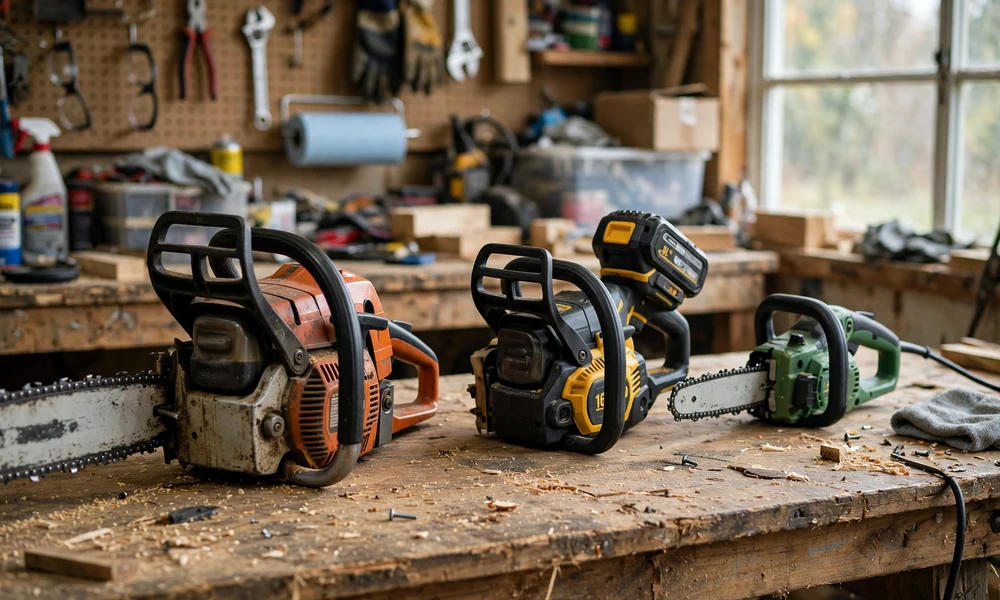
5. Best Budget: Steady Power at a Price Anyone Can Afford
A good budget chainsaw does not pretend to be a professional tool. It is a straightforward corded electric saw with a 35-centimetre bar, a decent motor, and a price that makes it easy to buy without worrying about the cost. The best budget option we tested arrived ready to cut, sliced through logs up to about 30 centimetres, and stayed reliable through a full season of weekend use.
6. Best for Professionals: Built to Be Worked Hard and Serviced
Professional tree work means cutting all day, every day, and it needs a saw that can be taken apart, sharpened, and rebuilt rather than thrown away. The best professional saw we found is a petrol model with a 45-centimetre bar, a magnesium crankcase, and every part replaceable: bar, chain, sprocket, filter, and clutch. It is the kind of tool that gets better with use, as the controls wear to fit the hands that hold them.
Battery, Petrol, or Corded: Which Type Do You Need?
Most homeowners need a battery saw first, and that is where almost every buyer should start. Battery saws cut most garden wood cleanly, start instantly, and need almost no maintenance. Buy a petrol saw second, for firewood in volume or for felling, where the engine’s endurance matters. Buy a corded saw if your cutting happens near a socket and you want the lowest possible price.
The mistake is buying the wrong type for the job and then blaming the tool. A small battery saw on a hardwood trunk will stall, however good the saw. A big petrol saw for trimming a shrub is heavy, loud, and hard to control. Match the saw to the wood, keep the chain sharp, and the tool will do the rest. The same thinking applies to the bigger kit — our guide to the best lawn mowers of 2026 covers the machines that keep the rest of the garden in order once the cutting is done.
Getting the Fit Right
Bar length is the most overlooked part of buying a chainsaw. A bar that is too short cannot pass through the trunk, so you end up cutting from both sides and the cuts never meet cleanly. A bar that is too long is heavy, hard to control, and more likely to kick back. The rule is simple: the bar should be a little longer than the thickest trunk you expect to cut, and no longer.
Staying Safe With a Chainsaw
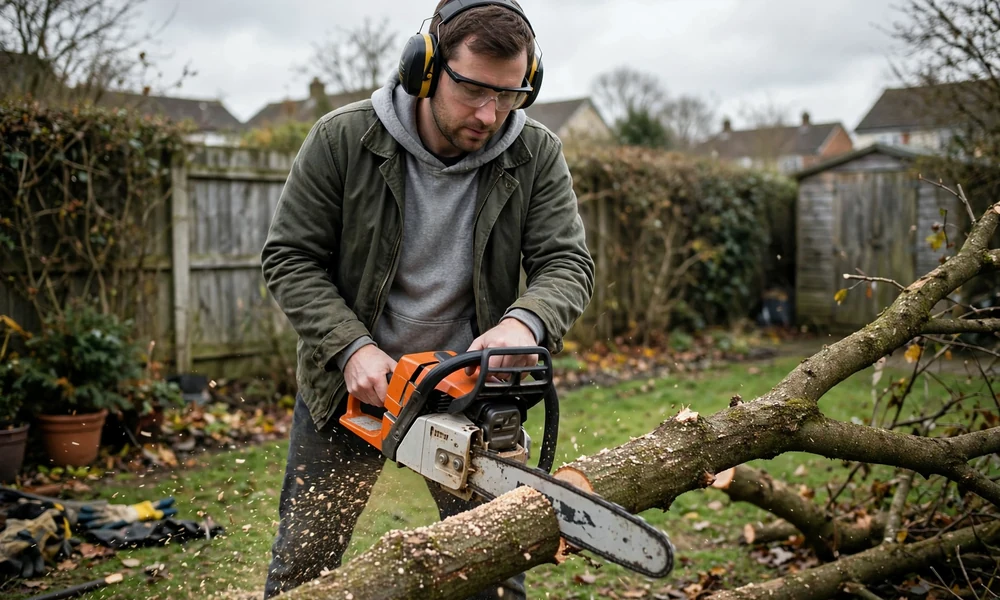
A chainsaw is the most dangerous tool most homeowners will ever own, and it deserves respect. Always wear a helmet with a visor, ear protection, gloves, and cut-resistant trousers. The chain brake should be tested before every session, and the chain should never be touched while the saw can start. Most accidents happen to experienced users who got careless, not to beginners who were careful.
Kickback is the danger to understand first. It happens when the tip of the bar catches the wood, and the saw jerks up toward your face in a fraction of a second. Never cut with the tip, keep both hands on the saw at all times, and stand to the side of the cut rather than behind it. If a tree is leaning the wrong way, or is hung up in another tree, leave it to a professional: a hung-up tree can kill, and no saw is worth that risk.
Keeping Your Chainsaw Sharp
A sharp chain is safer than a blunt one, because it cuts where you want it to and does not force you to push the saw into the wood. Sharpening is a small job: a few passes with a round file on each tooth, following the angle the tooth already has, is usually enough. A sharp chain throws long chips; a blunt one throws fine dust and makes the saw work twice as hard.
Cleaning matters as much as sharpening. Sap and sawdust clog the bar groove and the oiler, so clean the bar after each session and check that oil is reaching the chain. A drop of oil on the sprocket keeps it turning freely. The cuttings are worth dealing with properly too — our guide to the best pressure washers of 2026 shows how to clean up the mess a big cutting session leaves behind.
Mistakes That Ruin Good Chainsaws
The most common mistake is running a saw with a dry bar. The chain oil is not optional: without it, the chain overheats, the bar wears out, and the chain can seize in the cut. Check the oil level every time you fill the fuel or charge the battery. The second mistake is cutting into the ground, which blunts a chain in seconds on a single stone. Keep the bar out of the dirt, and use a log to lift the trunk off the ground before you cut.
Frequently Asked Questions
What size chainsaw should I buy? For most homeowners, a saw with a 35 to 40-centimetre bar is the right size. It handles firewood, storm damage, and garden trees, and it is light enough to control safely. Go larger only if you regularly fell trees or cut hardwood trunks wider than 35 centimetres.
Are battery chainsaws powerful enough? Yes, for most home jobs. A modern battery saw cuts logs up to about 35 centimetres quickly and cleanly, and it starts instantly with no fuel or pull cord. Petrol still wins for all-day felling and very large hardwood, but for firewood and garden work a battery saw is now the easier choice.
How often should I sharpen the chain? Sharpen it whenever it stops throwing clean chips and starts making fine dust, or whenever you have to push the saw to make it cut. For most homeowners that means a quick file after every few hours of cutting, and a new chain once a season if the saw sees heavy use.
Can I cut a tree down myself? Small trees in open ground, yes, if you know how to make a proper felling cut and have an escape route planned. Large trees, trees near houses or power lines, and trees leaning the wrong way should always be left to a professional tree surgeon.
A chainsaw is a tool that rewards respect and punishes carelessness, and the best saw is the one that fits your hands, your wood, and your habits. Buy the right size, keep the chain sharp, wear the gear, and the saw will serve you for years. The work is hard and the chips fly, but there is nothing quite like turning a fallen tree into a winter’s worth of firewood with a saw you trust.