
The best charcoal starters in 2026 are the tools that turn a pile of cold briquettes into a bed of cooking coals in about twenty minutes, without lighter fluid. A charcoal starter is a chimney starter, an electric starter or a firelighter that lights charcoal for a grill. It is not a fire starter for campfires and fireplaces, though the two get confused, and it is not the grill itself. Its job is simpler: get the charcoal lit evenly and get out of the way so you can cook.
That narrow job is what makes or breaks a charcoal cookout. Charcoal that is only half lit cooks unevenly, smokes badly and leaves food tasting of lighter fluid. Charcoal lit properly burns clean, holds a steady heat and gives food the flavour that keeps people cooking with charcoal. This guide compares the best charcoal starters of 2026 by speed, safety, ease and cost, and explains which type suits your grill and your fuel.
Key Takeaways
- A charcoal starter lights charcoal for a grill; a fire starter lights campfires and fireplaces.
- A chimney starter is the best all-round charcoal starter: fast, cheap, reliable and free of lighter fluid.
- Electric starters suit cooks with a power socket nearby, but they are useless away from mains power.
- Natural firelighters are the cleanest way to light a chimney; gel and fluid starters are faster but can taint food.
- Wait until the coals are grey at the edges before cooking, or food put on too early picks up smoke and soot.
What a Charcoal Starter Actually Does
A charcoal starter concentrates heat and airflow on a small amount of fuel until it catches, then lets that heat spread through the rest of the charcoal. A chimney starter does this with a metal tube: firelighters underneath light the bottom briquettes, hot air rises through the tube, and the whole load is glowing within twenty minutes. An electric starter does it with a heating loop buried in the coals. A firelighter does it with a slow-burning block that gives the charcoal time to catch. The principle is the same: a small, steady flame beats a big, brief one.
The distinction from fire starters is worth making plainly. A fire starter is designed to light kindling, logs and campfires, and it is judged on whether it works in wind and rain at a campsite. A charcoal starter is designed to light briquettes and lumpwood in a grill, and it is judged on speed, even lighting and whether it leaves any taste on food. A natural firelighter cube works in both settings, but the jobs are different. This guide covers the grill job only. If you want the cooker itself, our guide to the best charcoal grills of 2026 covers kettles, kamados and portable models in full.
The Main Types of Charcoal Starter
There are four main ways to light charcoal, and each suits a different kind of cook. Speed, cost, safety and convenience pull in different directions. Here is how the four types compare in real use.
Chimney Starters
The chimney starter is a tall metal cylinder with a grate near the bottom, a handle on the side and holes for airflow, and it is the best charcoal starter for most grillers. You fill it with briquettes, put one or two firelighters underneath, light them, and wait. Hot air rising through the tube lights the whole load evenly. A standard chimney holds enough charcoal for a kettle grill and is ready in fifteen to twenty minutes. Look for a sturdy handle, a heat shield and a size that matches your grill.
Electric Starters
An electric starter is a metal loop on a handle that you bury in the charcoal and plug in. It heats the briquettes around it until they catch, usually in about ten to twelve minutes, and then you pull it out and spread the coals. It is clean, simple and cheap to run, and it suits cooks who grill on a patio with a socket nearby. The limits are obvious: it needs mains power, so it is useless at a campsite, and the loop itself gets extremely hot. It also lights a smaller area than a chimney, so the coals need more arranging afterwards.
Natural Firelighters
Natural firelighters are blocks of wood wool or sawdust soaked in wax, and they are the cleanest way to start charcoal. They burn for eight to twelve minutes, long enough for briquettes to catch, and they leave no chemical taste on food. They are cheap, light and easy to store, which makes them the natural partner for a chimney starter: one or two cubes underneath, and the chimney does the rest. Their only weakness is wind, so shield the base of the chimney on a breezy day.
Gel and Fluid Starters
Gel starters and lighter fluid are the fast option: squeeze or pour, light, and the charcoal is burning within minutes. They work in wind and on damp charcoal, and they need no extra equipment. The cost is flavour and safety: fluid can leave a chemical taste on food if the coals are not fully ashed over, and a bottle of flammable liquid near a hot grill is a risk. If you use fluid, use as little as possible, never add it to a lit fire, and wait until every briquette is grey before any food goes on the grate.

How We Judged the Best Charcoal Starters
We judged every type of charcoal starter on a normal evening. The first test was lighting speed: how long from lighting to a full load of coals ready to cook on. The second was evenness: whether every briquette was lit. The third was flavour: whether food cooked on the coals tasted clean or carried a chemical note. Finally we weighed safety, cost and convenience. A starter that is fast but taints the food is not a best buy, however cheap it is.
Comparison Table: The Best Charcoal Starters at a Glance
| Type | Best For | Key Strength | Watch Out For |
|---|---|---|---|
| Chimney starter | Most grillers | Fast, even, no fluid taste | Needs firelighters underneath |
| Electric starter | Patio cooking near power | Clean and simple | Needs mains power, hot loop |
| Natural firelighters | Clean flavour, camping | No chemical taste, portable | Can blow out in wind |
| Gel and fluid | Wind, damp charcoal | Fastest in bad conditions | Can taint food, fire risk |
Matching the Starter to Your Grill and Fuel
The grill and the fuel decide the starter. A kettle grill pairs naturally with a standard chimney, which holds exactly the load a kettle needs. A kamado, which uses less charcoal and holds heat longer, suits a smaller chimney or a single electric starter, since a full chimney would overshoot the temperature. A portable grill needs the smallest chimney you can find. If you are still weighing fuel types, our comparison of gas versus charcoal grills sets out the flavour, speed and effort trade-offs in full.
Fuel matters just as much. Briquettes are uniform, easy to light and predictable, which makes them the best partner for a chimney starter. Lumpwood burns hotter and faster but varies in size, so it needs more care to load evenly. Damp charcoal is the enemy of every starter: store it dry, in a sealed bin or indoors. Our roundup of the best BBQ tools for grilling in 2026 shows where the starter fits alongside tongs, thermometers and grill brushes.
How to Use a Chimney Starter
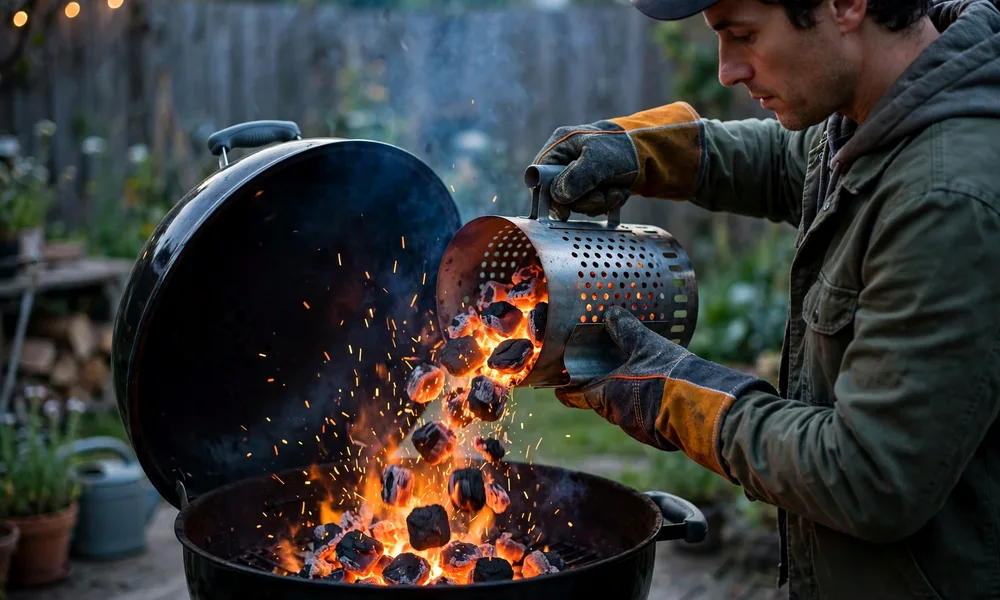
Using a chimney starter is simple, but the order matters. First, fill the chimney with the charcoal you need, leaving a little space at the top. Second, place one or two natural firelighters on the charcoal grate and set the chimney on top. Third, light the firelighters and leave the chimney alone: do not shake it, do not add charcoal, and do not lift it to check. After fifteen to twenty minutes the top briquettes will be grey at the edges. Then, wearing heat-resistant gloves, lift the chimney and pour the coals into the grill, spreading them into one or two zones. Put the empty chimney somewhere fireproof to cool.
Safety With Hot Charcoal
Hot charcoal deserves respect, and most accidents come from rushing. Always light the grill outdoors, never in a garage or under a low cover, because charcoal gives off carbon monoxide as it burns. Keep children and pets away from the chimney while it is lit. Wear heat-resistant gloves when you pour, and never add lighter fluid to coals that are already lit. When the cookout ends, close the vents, let the ash cool, and only then dispose of it in a metal container.
Mistakes That Spoil a Charcoal Cookout
The most common mistake is cooking too early. Food put on coals that are still black and smoking picks up soot and bitter flavours, and it cooks unevenly because the heat is not stable yet. Wait until the coals are grey at the edges and the smoke has thinned. The second mistake is using too much lighter fluid, which makes a steak taste like a petrol station. The third is overloading the chimney, which blocks the airflow and leaves the top briquettes unlit. The fourth is lighting the grill on a windy day without shielding the firelighters, so the flame blows out before the charcoal catches.
Checklist: Choosing the Right Charcoal Starter
- Pick a chimney starter first, unless you grill only beside a power socket.
- Match the chimney size to your grill, so one load covers a normal cookout.
- Use natural firelighters for the cleanest flavour, and keep a spare box.
- Check the handle has a heat shield and feels secure before you lift hot coals.
- Store charcoal somewhere dry, since damp fuel defeats even the best starter.
- Wait until the coals are grey before cooking, and never add fluid to a lit fire.
Frequently Asked Questions
How long does a chimney starter take?
About fifteen to twenty minutes for a full load of briquettes. Lumpwood is a little faster, and cold or damp conditions add a few minutes. The top coals turning grey is the sign it is ready.
Do I need lighter fluid with a chimney starter?
No. A chimney starter is designed to work with one or two firelighters underneath, and it lights the charcoal with rising hot air alone. That is the point: clean heat with no chemical taste.
What is the best charcoal starter for a kamado grill?
A small chimney starter or a single electric starter suits a kamado best, because kamados need less charcoal than a kettle grill.
Can I use a charcoal starter indoors?
No, never. Charcoal gives off carbon monoxide as it burns, and it needs open air. Light the grill outside, away from walls and low covers, and keep it there until the ash is cold.
Are natural firelighters better than lighter fluid?
For flavour, yes: natural firelighters leave no chemical taste, while fluid can taint food if the coals are not fully ashed over. Fluid is faster in wind and on damp charcoal, but use as little as possible.
How much charcoal should I put in a chimney starter?
Fill it to the level your cook needs: about three-quarters full for a family grill of burgers and chicken, less for a small cook. Overfilling blocks airflow and leaves the top unlit.
The Bottom Line
The best charcoal starters in 2026 are the ones that light your charcoal evenly, safely and without leaving a taste on the food. For most grillers that means a chimney starter with natural firelighters: cheap, reliable and clean. An electric starter is a fine second choice if you always grill near a socket, and gel or fluid is the backup for wind and damp charcoal, used sparingly. Whichever you choose, give the coals time to turn grey before you cook. A good starter does not just save twenty minutes of frustration: it is the difference between smoke flavour and lighter fluid.


